By
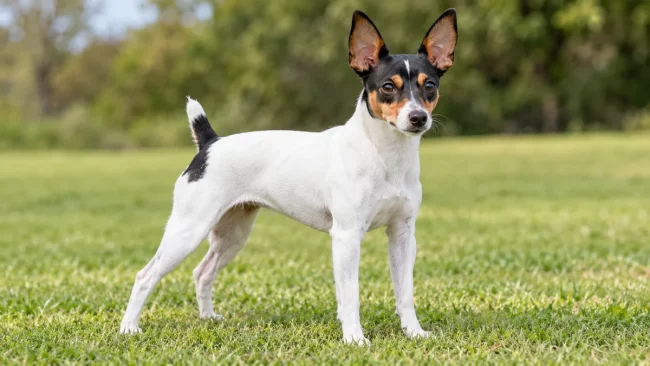
The Toy Fox Terrier is a tiny American dog with two very different sides to its personality. It has the compact size and strong attachment to people often associated with toy breeds, but it also retains the alertness, confidence, athleticism and hunting instincts of a true terrier.
That combination makes the breed much more than a small lapdog. A Toy Fox Terrier can enjoy curling up beside you at home and then immediately become an energetic walking, training or play companion when something interesting happens.
Its small body can fit comfortably into apartments and compact homes, and its short coat is relatively easy to maintain. However, prospective owners should still plan for regular exercise, mental stimulation, consistent training, dental care and careful handling appropriate for a dog that may weigh less than 10 pounds.
If you are exploring terriers more broadly, visit our Terrier Dog Breeds guide to compare different terrier sizes, coats and working styles.
Toy Fox Terrier at a Glance
| Trait | Typical Toy Fox Terrier |
|---|---|
| AKC Group | Toy Group |
| Origin | United States |
| Height | 8.5–11.5 inches |
| Weight | About 4–9 pounds |
| Life Expectancy | About 13–15 years |
| Coat | Short, smooth and glossy |
| Grooming | Low coat-maintenance requirement |
| Temperament | Alert, intelligent, friendly, confident and playful |
| Exercise | Active daily play and walks |
| Training | Highly intelligent and generally eager to learn |
Where Did the Toy Fox Terrier Come From?
The Toy Fox Terrier is an American breed developed from Smooth Fox Terrier stock and smaller toy dogs.
During the early twentieth century, American breeders worked with the smallest Smooth Fox Terriers and crossed them with toy breeds including Chihuahuas and Italian Greyhounds.
The goal was not simply to make a Fox Terrier smaller. The resulting dogs retained useful terrier qualities while becoming compact companion dogs with a somewhat milder toy-dog side to their temperament.
Toy Fox Terriers historically worked as barnyard ratters, controlling small rodents around farms and buildings.
Their intelligence and agility also helped them become popular performers in traveling dog acts and circuses.
The American Kennel Club eventually recognized the Toy Fox Terrier as its 148th breed.
Toy Fox Terrier Size and Appearance
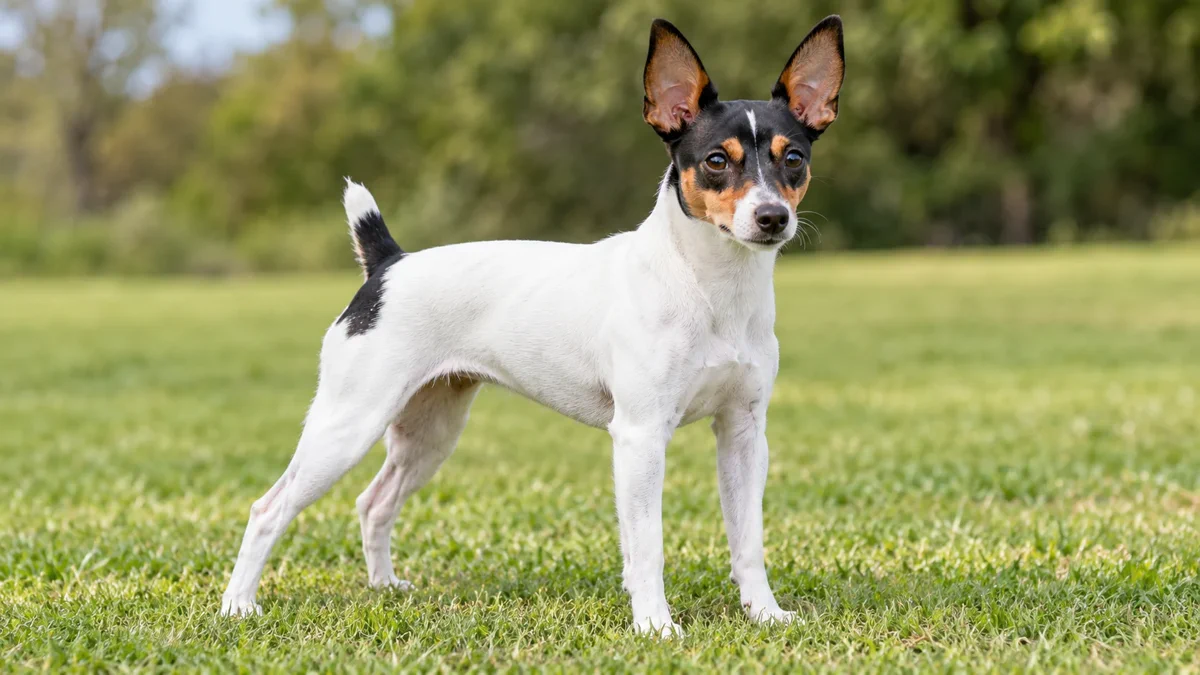
The Toy Fox Terrier is extremely small, but its body should still look athletic and balanced.
According to the current AKC breed standard, adult height ranges from approximately 8.5 to 11.5 inches at the shoulder.
AKC breed information lists typical adult weight at roughly 4 to 9 pounds.
The body should be approximately square, meaning its height and body length are similar.
Important physical traits include:
- A small but muscular frame
- Large erect ears
- Dark, alert eyes
- A smooth outline
- A short glossy coat
- A predominantly white body
- A confident, animated carriage
The breed should look like a tiny athlete rather than a fragile miniature ornament.
Toy Fox Terrier Coat and Colors
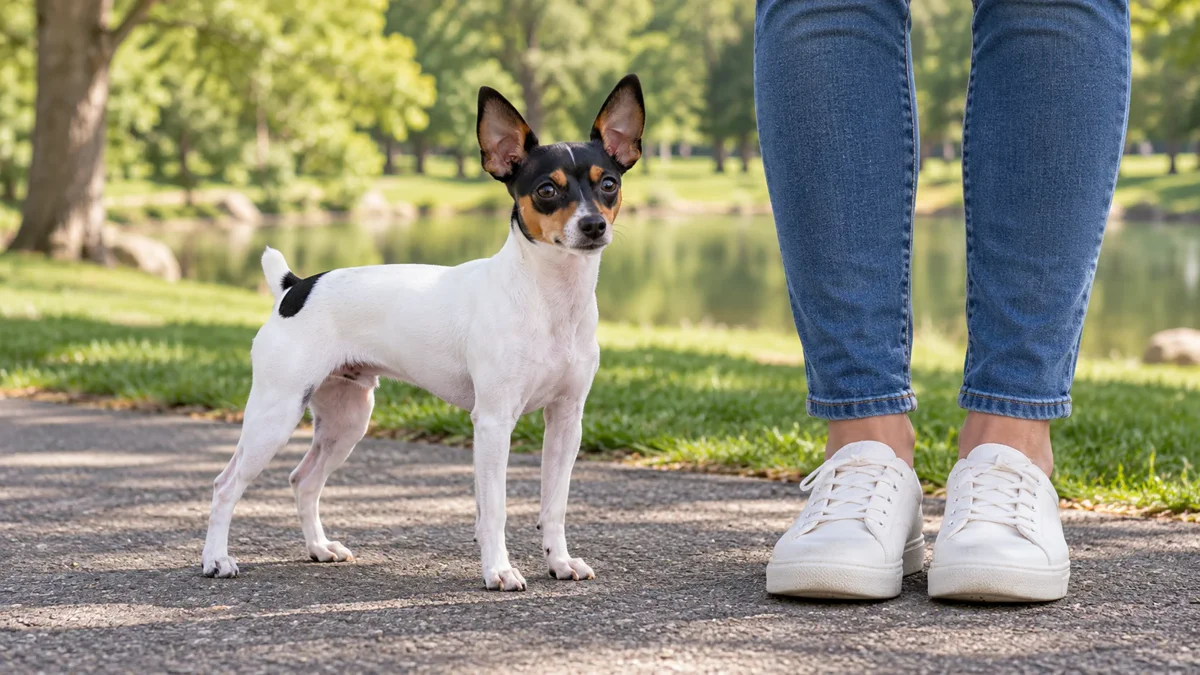
The Toy Fox Terrier has a short, fine and smooth coat that lies close to the body.
White should dominate much of the body, while colored markings appear primarily on the head and in patches.
Common accepted color combinations include:
- White, black and tan
- White and black
- White and tan
- Other standard-approved combinations involving white and darker head markings
Because the coat is short and naturally neat, owners do not need the clipping or extensive coat maintenance required by many longer-haired small breeds.
Temperament and Personality
The Toy Fox Terrier is often described as a dog that is genuinely both a toy and a terrier.
The current breed standard emphasizes traits including intelligence, courage, animation, devotion and alertness.
AKC temperament guidance describes the breed as alert, friendly, eager to please, confident, playful and entertaining.
In daily life, that can produce a dog that is:
- Closely attached to family
- Highly observant
- Quick to learn routines
- Playful well into adulthood
- Confident despite its size
- Interested in movement and small animals
- Happy to relax after activity
Individual dogs still vary. Genetics, socialization, training and early experiences all contribute to adult temperament.
Is the Toy Fox Terrier Really a Terrier?
Yes in heritage and behavior, even though the AKC currently places the breed in the Toy Group.
The breed retains many classic terrier characteristics, including:
- Alertness
- Confidence
- Persistence
- Prey interest
- Fast reactions
- Playfulness
This distinction matters because someone expecting only a quiet lapdog may be surprised by how active and investigative a Toy Fox Terrier can be.
At the same time, its toy-breed ancestry contributed to its compact size and strong companion orientation.
Are Toy Fox Terriers Affectionate?
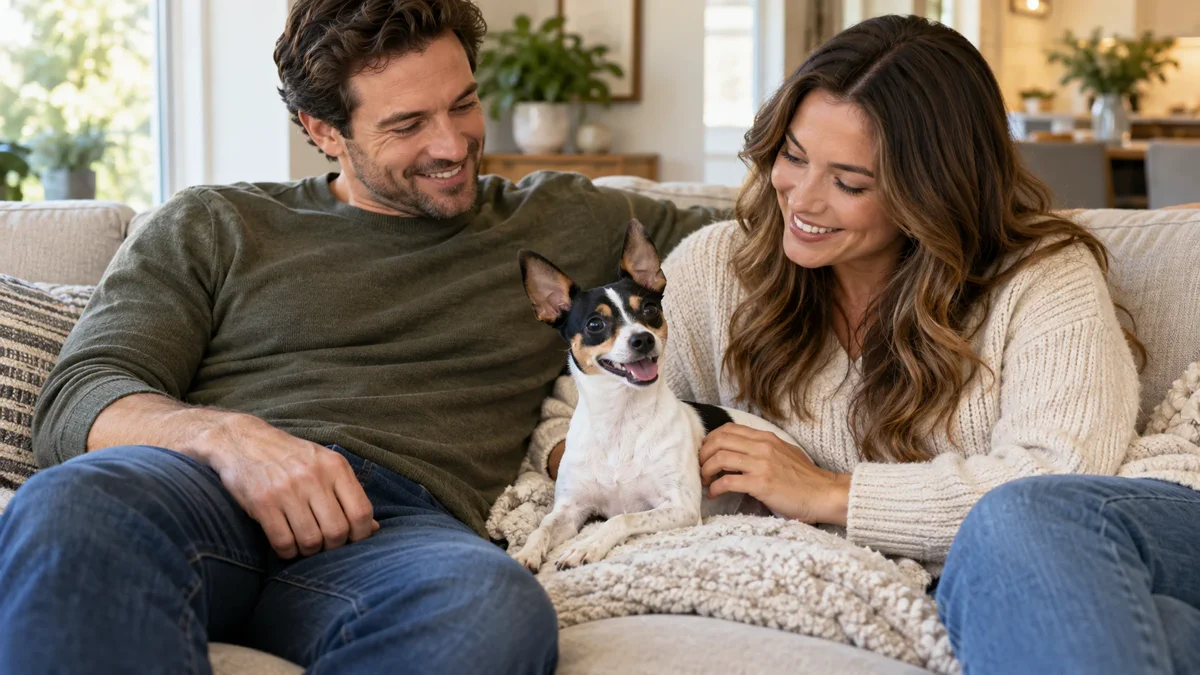
Toy Fox Terriers typically form strong attachments to their owners.
Many enjoy physical closeness, sitting beside family members and participating in whatever is happening around the home.
Their affectionate side does not remove their independence or curiosity. A Toy Fox Terrier may be cuddling one minute and investigating a sound or movement the next.
Are Toy Fox Terriers Good Family Dogs?
They can be excellent companions in the right household.
Their small size makes them easy to include in everyday family life, and their playful personality can be highly entertaining.
However, very young children can be challenging for such a small dog.
AKC specifically notes that, like many toy breeds, Toy Fox Terriers are not generally recommended for very small children.
The concern is not necessarily aggression. A dog weighing only a few pounds can be accidentally injured by:
- Being dropped
- Rough handling
- Being stepped on
- Jumping from someone’s arms
- Unsupervised play
Older children who understand how to interact gently with a small dog may be a better fit.
Are Toy Fox Terriers Good With Other Dogs?
Many can live successfully with other dogs when introductions and socialization are handled appropriately.
Their confidence can sometimes make them behave as though they are much larger than they really are.
That means interactions with large dogs deserve particular supervision because an accidental collision can injure a Toy Fox Terrier even when neither dog intends harm.
What About Cats and Small Pets?
The breed’s historic ratting background matters here.
Toy Fox Terriers may show strong interest in small, fast-moving animals.
A dog raised with a household cat may learn to coexist successfully, but small mammals such as hamsters, gerbils or pet rodents can trigger hunting behavior.
Use secure management rather than assuming the dog’s tiny size eliminates prey drive.
Terrier Instinct and Prey Drive
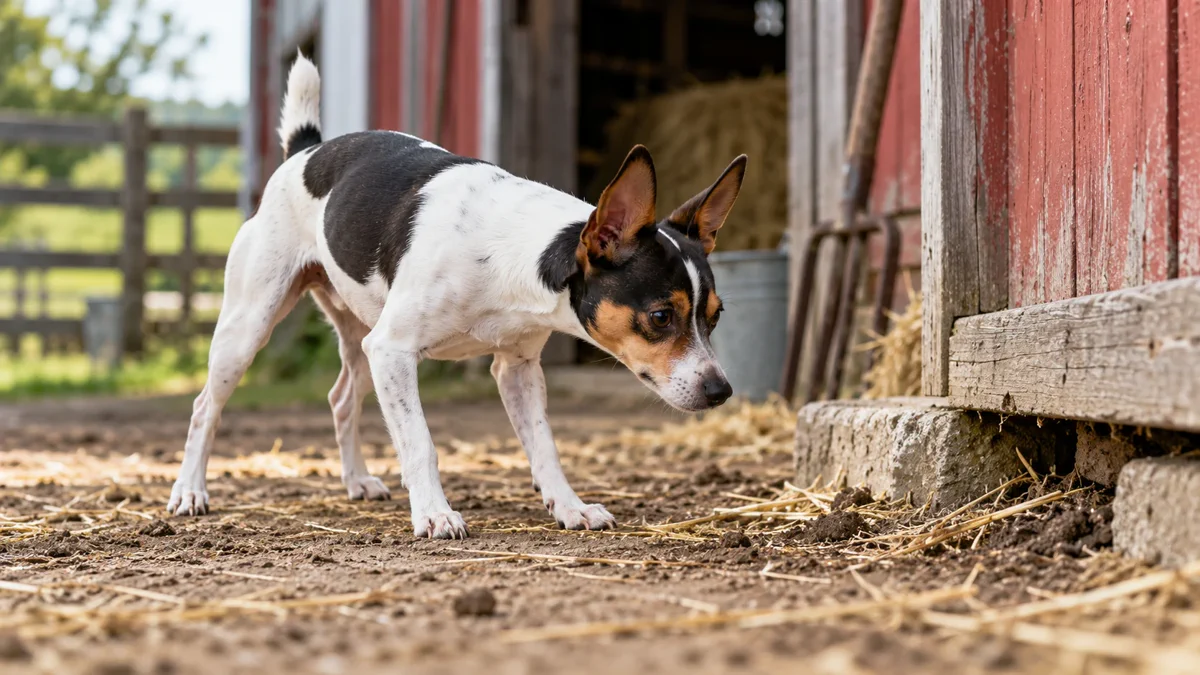
Toy Fox Terriers were originally useful barnyard ratters.
That history helps explain why some dogs remain highly interested in:
- Mice
- Squirrels
- Small wildlife
- Fast-moving toys
- Interesting scents around the yard
A secure leash or fenced area is safer than expecting reliable off-leash behavior around wildlife.
Exercise and Training Needs
A Toy Fox Terrier does not require the same amount of physical exercise as a large endurance breed, but it is not a sedentary dog.
The breed is athletic, quick and playful.
Useful daily activities include:
- Neighborhood walks
- Indoor play
- Fetch
- Food puzzles
- Short training sessions
- Safe hiking
- Agility-style activities appropriate for the dog’s size
AKC notes that Toy Fox Terriers enjoy walking, running, hiking and energetic play.
The small body simply means owners can provide a significant portion of that activity in a relatively compact space.
Are Toy Fox Terriers Easy to Train?
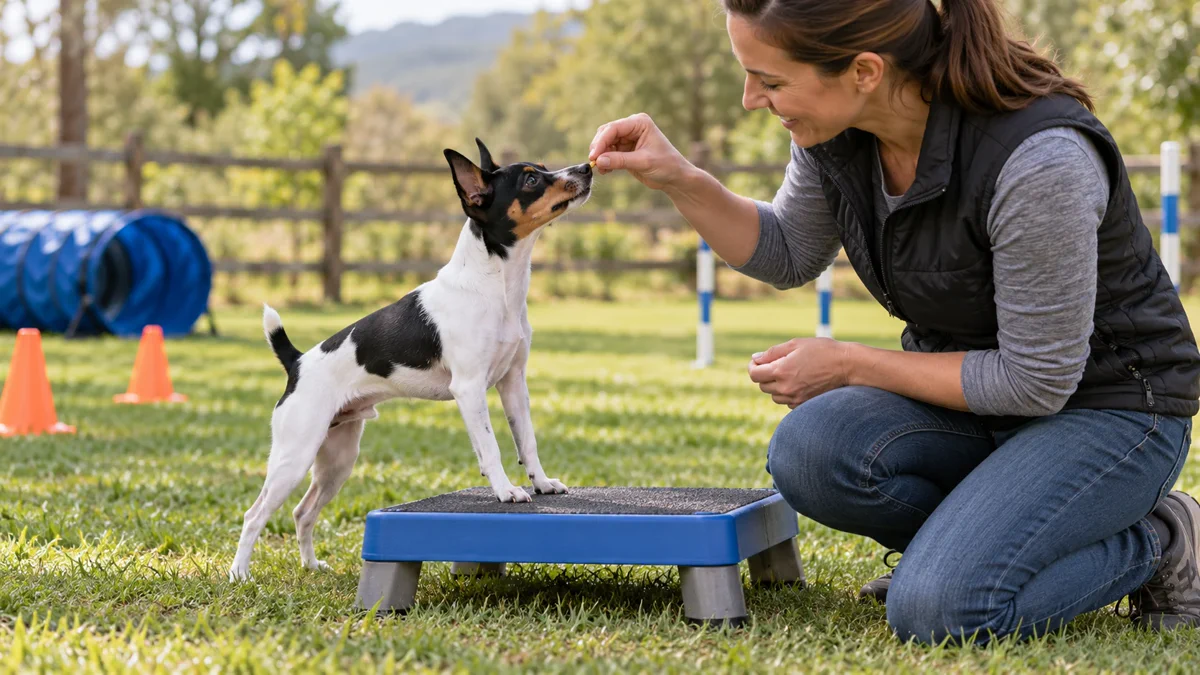
Generally, they are highly intelligent and capable learners.
Their history includes not only vermin control but also performance work, obedience and agility.
Reward-based training works especially well because the breed tends to be alert and engaged with its owner.
Prioritize practical behaviors such as:
- Recall foundations
- Loose-leash walking
- Waiting at doors
- Calm greetings
- Handling for grooming
- Settling quietly
- Leaving unsafe objects alone
Short sessions are often more useful than repetitive drilling.
House Training a Toy Fox Terrier
Small dogs have small bladders, so young puppies may need frequent toilet opportunities.
AKC notes that Toy Fox Terriers can be trained for normal outdoor elimination and can also learn indoor potty-pad routines when needed for travel or difficult weather.
Consistency matters more than punishment.
Use a predictable schedule, supervision and immediate reinforcement for correct behavior.
Are Toy Fox Terriers Good Apartment Dogs?
Their physical size makes them well suited to compact homes and apartments.
They do not require a huge yard, and much of their play can happen indoors.
However, apartment suitability also depends on behavior.
Toy Fox Terriers are alert and can react vocally to:
- People outside the door
- Hallway sounds
- Dogs outside the window
- Unexpected movement
Early training can help teach calm responses to normal apartment noise.
Can a Toy Fox Terrier Be Left Alone?
The breed tends to enjoy close involvement with its people.
That does not mean an adult dog can never spend time alone, but independence should be taught gradually.
Provide:
- A safe resting area
- Appropriate chew items
- Food puzzles
- Predictable routines
- Age-appropriate periods of separation
A dog that spends most of every day isolated may not be getting the companionship and mental engagement this social breed enjoys.
Grooming and Shedding
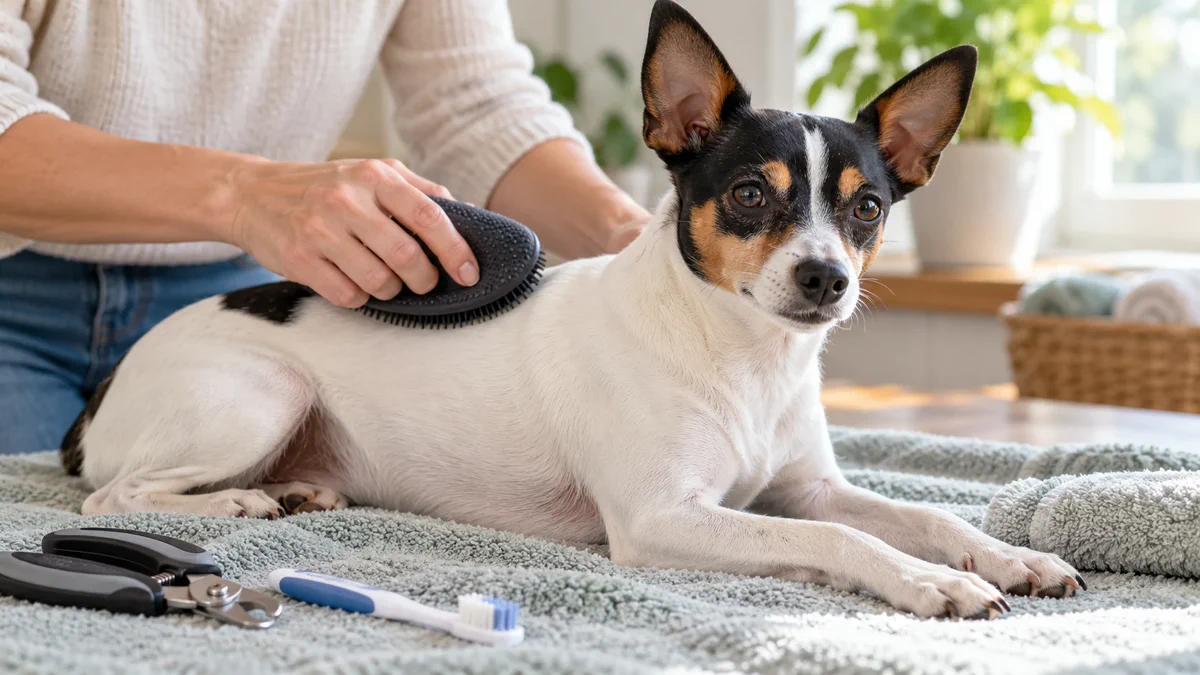
Coat care is one of the easiest parts of Toy Fox Terrier ownership.
The smooth short coat requires minimal grooming compared with long-haired toy breeds.
A small grooming glove or shedding comb can help remove loose hair.
Bathing is generally needed only occasionally or when the dog becomes dirty.
Do Toy Fox Terriers Shed?
Yes.
The short coat is easy to maintain, but low grooming effort does not mean completely non-shedding.
Regular light brushing can remove loose hair before more of it ends up on clothing and furniture.
Nail and Dental Care
Routine care should include more than brushing the coat.
Because Toy Fox Terriers are so small, allowing nails to become excessively long can interfere with normal movement and comfort.
Start nail trimming or grinding early so the dog learns that paw handling is normal.
Dental care is also particularly important in small dogs.
A veterinarian can help you establish an appropriate home dental routine and decide when professional dental cleaning is needed.
Toy Fox Terrier Health Considerations
Toy Fox Terriers are generally long-lived dogs, with AKC listing an average life expectancy of approximately 13 to 15 years.
However, every breed has health issues that responsible breeders and owners should understand.
The current national breed-club testing recommendations listed by AKC include:
- Patella evaluation
- Thyroid evaluation
- Primary Lens Luxation, or PLL, testing
Health screening cannot guarantee that an individual puppy will never develop a problem, but it helps breeders make more informed breeding decisions.
Weight Management Matters
AKC specifically identifies obesity as an important concern in Toy Fox Terriers.
With a dog weighing only a few pounds, small daily calorie excesses can become meaningful over time.
Treats used during training should therefore be tiny and included within the dog’s overall calorie intake.
Ask your veterinarian to help you evaluate body condition rather than relying only on a number on the scale.
Toy Fox Terrier Puppies
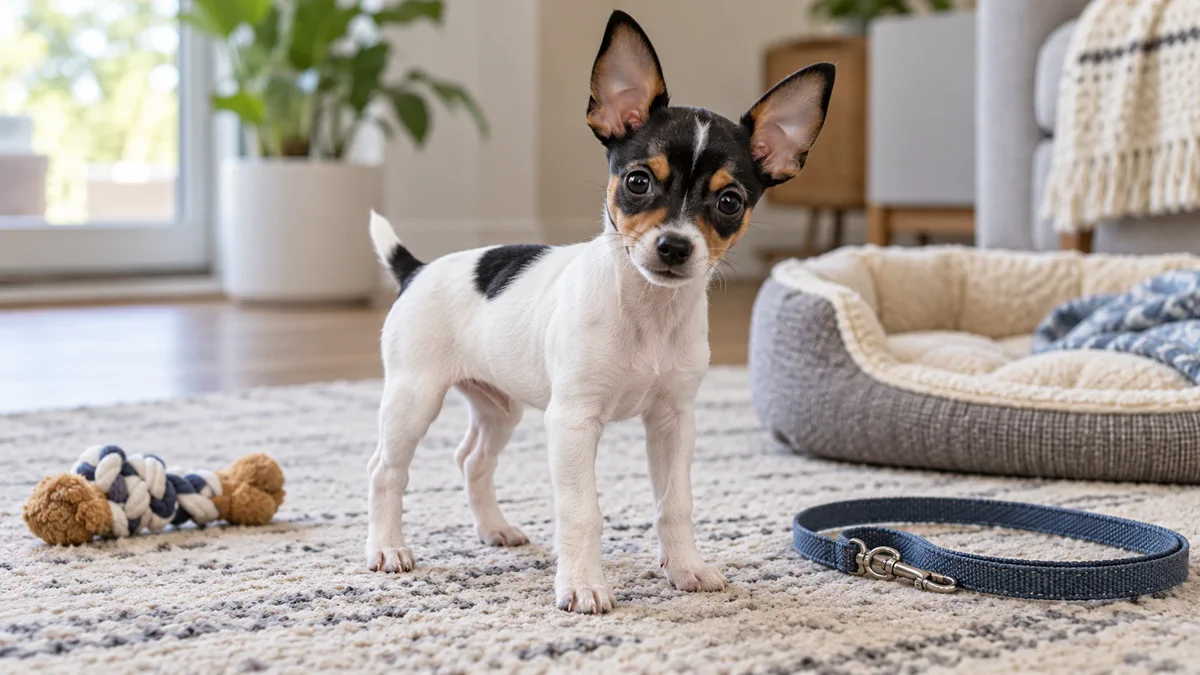
Toy Fox Terrier puppies are extremely small, so household safety deserves special attention.
Early priorities include:
- Safe socialization
- House training
- Gentle handling
- Recall foundations
- Comfort with grooming
- Appropriate chew toys
- Learning to settle
Avoid unnecessary jumping from high furniture while a tiny puppy is still learning how to navigate the home.
Also teach family members to look before stepping backward, closing doors or moving furniture.
Feeding a Toy Fox Terrier
Feed a complete diet appropriate for the dog’s life stage and maintain a healthy body condition.
Because portions are small, guessing can easily result in overfeeding.
Measure meals rather than continually topping up the food bowl.
Fresh water should always be available.
Ask your veterinarian before making major diet changes or using supplements, particularly if the dog has a health condition.
Cold Weather and Small Body Size
The Toy Fox Terrier has a short coat and very small body, so some individuals may become uncomfortable quickly in cold or wet conditions.
Keep winter outings appropriate for the individual dog and weather.
A lightweight dog coat may be useful for some dogs during cold walks, but clothing should fit safely and should never replace appropriate indoor shelter.
Hot Weather
Although the breed has a short coat, every dog can overheat.
During hot weather:
- Walk during cooler times of day
- Provide shade
- Provide fresh water
- Avoid hot pavement
- Reduce strenuous activity during high temperatures
Exercise should always reflect actual weather and the individual dog’s condition.
Is a Toy Fox Terrier Good for First-Time Owners?
A Toy Fox Terrier can work well for a committed first-time owner who understands that small size does not remove the need for training.
Advantages include:
- Compact body size
- Easy coat maintenance
- High intelligence
- Strong attachment to people
- Good adaptability to small homes
Potential challenges include:
- Terrier prey drive
- Alert barking
- Physical vulnerability because of size
- Need for mental stimulation
- Potential dental care requirements
Toy Fox Terrier vs Larger Terriers
The Toy Fox Terrier offers much of the quick, confident personality associated with terriers in a dramatically smaller package.
That can make it attractive to people who like terrier characteristics but cannot comfortably manage a 20- or 30-pound dog.
However, individual terrier breeds differ significantly in coat, intensity, prey drive and independence.
Our Terrier Dog Breeds guide can help you compare the wider group.
Toy Fox Terrier vs Australian Terrier
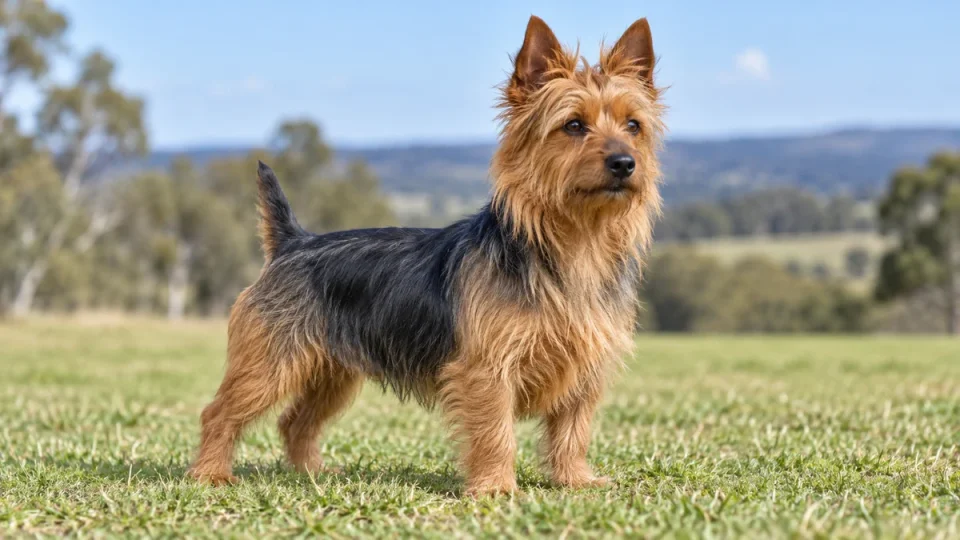
The Australian Terrier is another small terrier, but the two breeds have noticeably different physical presentations.
The Toy Fox Terrier is substantially smaller and has a short, smooth coat.
The Australian Terrier has a rougher weather-resistant coat and a more traditionally rugged terrier appearance.
Both can be alert, intelligent and lively, but coat maintenance, body size and working background differ.
For a full comparison point, see our upcoming Australian Terrier breed guide.
Who Is the Toy Fox Terrier Best For?
This breed may be a good match if you want:
- A very small companion
- A playful intelligent dog
- A short easy-care coat
- A dog suitable for a compact home
- A breed that enjoys training
- A small dog with an athletic personality
- A close household companion
Who May Prefer Another Breed?
Think carefully if you want:
- A dog comfortable with rough handling from toddlers
- A very quiet dog
- A dog with little interest in chasing small animals
- A highly independent companion
- A dog suited to spending most of the day alone
- A larger, physically sturdier dog for a very active household
Is a Toy Fox Terrier Right for You?
Before choosing a Toy Fox Terrier, ask yourself:
- Am I comfortable managing a dog under 10 pounds?
- Can I provide daily walks, games and training?
- Can I protect a tiny dog from accidental injury?
- Am I prepared for terrier prey drive?
- Can I work on alert barking when needed?
- Will the dog spend significant time with the household?
- Can I maintain regular dental and nail care?
- Have I researched responsible breeders and recommended health testing?
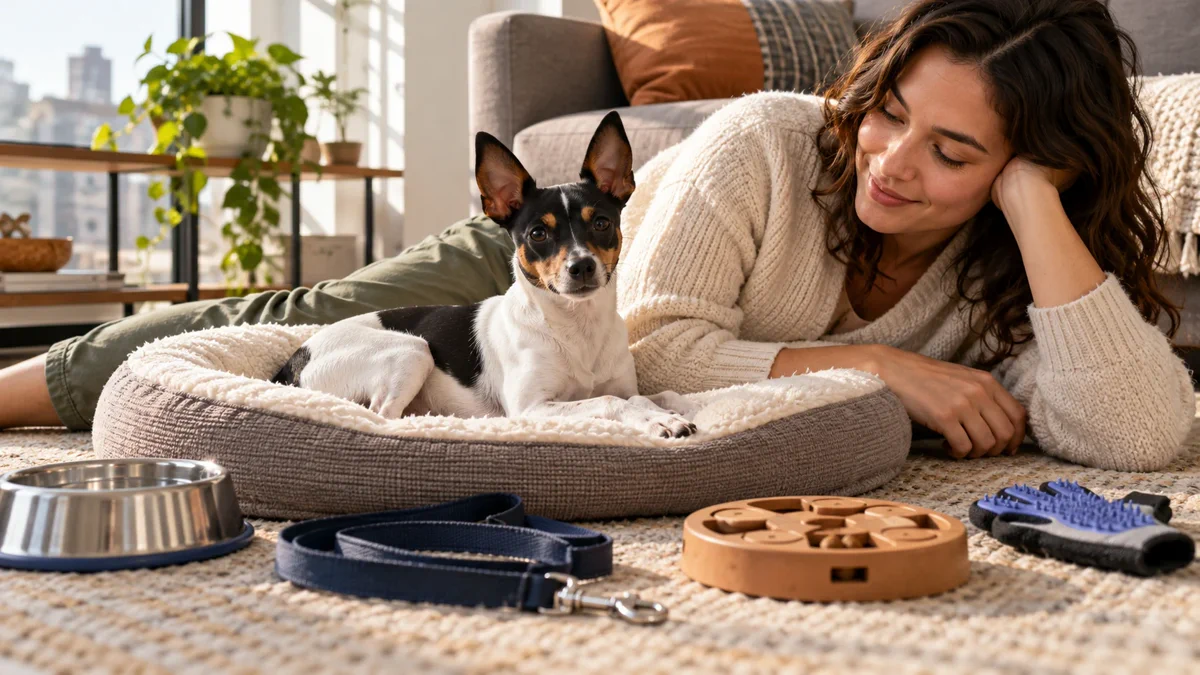
If those needs fit your lifestyle, the Toy Fox Terrier can combine the convenience of a tiny companion dog with a surprising amount of intelligence, athleticism and terrier personality.
Final Thoughts
The Toy Fox Terrier is a small dog with a remarkably complete working-dog personality.
Its smooth coat and compact body make daily physical care relatively straightforward, while its intelligence and playful temperament make it much more interactive than a decorative lapdog.
Successful ownership means respecting both sides of the breed. Treat it like the physically small toy dog it is when managing children, falls and accidental injury, but also provide the exercise, training and mental engagement expected by an alert terrier.
For the right home, that combination creates a companion that can be affectionate on the sofa, animated during play and surprisingly capable in training despite weighing only a few pounds.