By
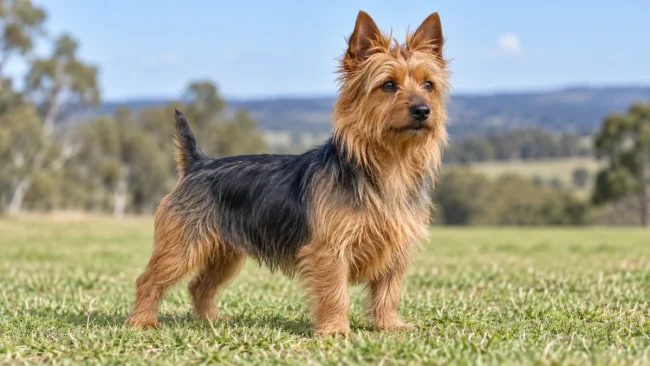
The Australian Terrier is a small, sturdy working terrier developed to handle jobs far larger than its body might suggest. Originally bred in Australia from British terrier stock, the breed helped control vermin, alert families to activity around rural homes, work around livestock and serve as a close household companion.
Modern Australian Terriers still carry that combination of independence, confidence and devotion. They are small enough to fit comfortably into many homes, but their personality is much closer to a traditional working terrier than to a quiet decorative lapdog.
An Aussie can be affectionate and strongly attached to family while also being alert, energetic, curious and highly interested in small animals. Their harsh weather-resistant coat is relatively easy to maintain, but they still need daily activity, training, mental stimulation and secure management of their hunting instincts.
If you are comparing terriers more broadly, visit our Terrier Dog Breeds guide for more breed types, sizes and working styles.
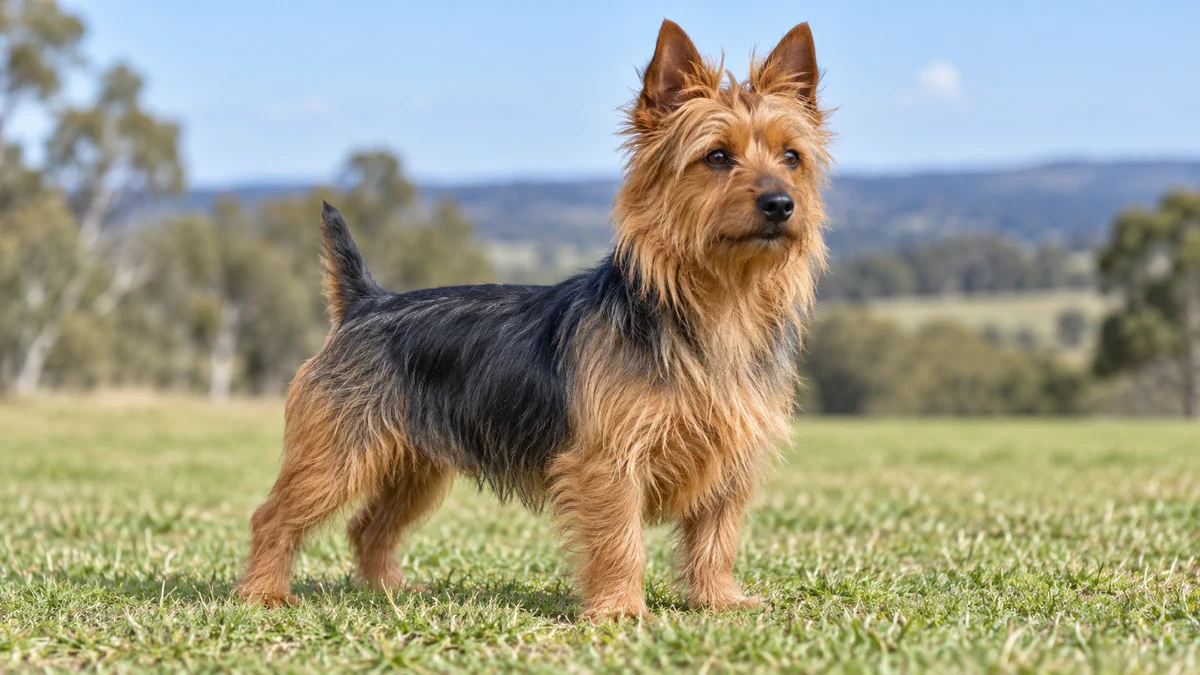
Australian Terrier at a Glance
| Trait | Typical Australian Terrier |
|---|---|
| AKC Group | Terrier Group |
| Origin | Australia |
| Height | 10–11 inches |
| Weight | 15–20 pounds |
| Life Expectancy | About 11–15 years |
| Coat | Harsh, weather-resistant double coat |
| Colors | Blue and tan, sandy, or red |
| Temperament | Spirited, courageous, confident, friendly and affectionate |
| Exercise | Active daily exercise and play |
| Grooming | Weekly brushing with relatively simple maintenance |
Where Did the Australian Terrier Come From?
The Australian Terrier developed in Australia during the nineteenth century from working terriers brought by British settlers.
Life in early Australian settlements demanded a practical dog rather than a purely ornamental companion.
Australian Terriers were expected to perform several jobs, including:
- Controlling rats and other vermin
- Going to ground after quarry
- Alerting families to unfamiliar activity
- Helping around livestock
- Living closely with the household
That combination created a small dog with a surprisingly complete working personality.
The Australian Terrier became the first Australian breed to be formally recognized and shown in its native country and was admitted to the American Kennel Club registry in 1960.
Australian Terrier Size and Appearance
The Australian Terrier is small, but the official breed standard does not describe it as delicate.
Adult height should be approximately 10 to 11 inches at the shoulder, while typical adult weight is about 15 to 20 pounds.
The body is slightly longer than it is tall, creating a sturdy, practical outline suitable for ground-level terrier work.
Important physical characteristics include:
- Medium bone
- A sturdy working body
- Pricked ears
- A keen expression
- A harsh outer coat
- A distinctive neck ruff and apron
- A softer topknot
The overall impression should be an alert, confident working terrier in a compact package.
Australian Terrier Coat and Colors
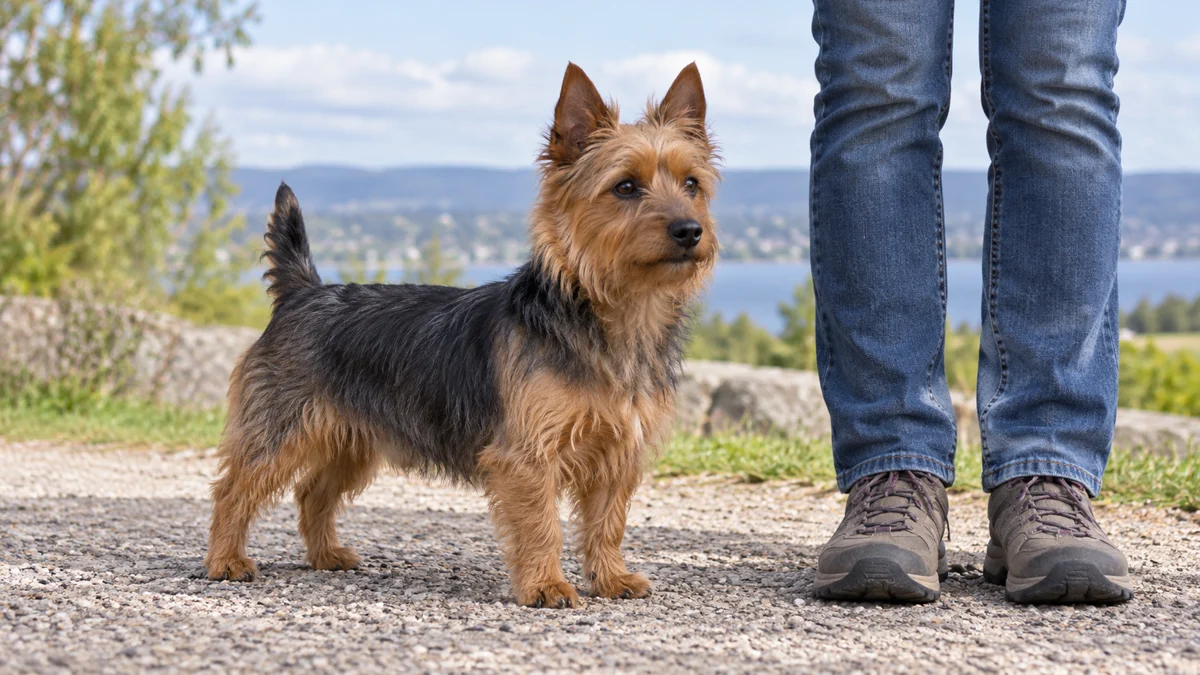
The Australian Terrier has a double coat designed for practical protection rather than dramatic softness.
The outer coat is harsh, straight and weather resistant, while the undercoat provides additional insulation.
One of the breed’s most distinctive features is the difference in texture around the head.
The topknot is softer and silkier than the rough body coat.
Recognized coat colors include:
- Blue and tan
- Solid sandy
- Solid red
This coat structure helped working dogs tolerate rough conditions without requiring the constant coat maintenance associated with many long-haired companion breeds.
Temperament and Personality
The Australian Terrier breed standard describes the ideal dog as spirited and self-assured.
Current AKC temperament guidance characterizes the breed as:
- Spirited
- Courageous
- Confident
- Friendly
- Affectionate
A well-adjusted Australian Terrier should not be shy or unnecessarily aggressive.
In everyday life, owners often see a dog that is devoted to its household while still maintaining the alertness and independence expected from a working terrier.
Are Australian Terriers Affectionate?
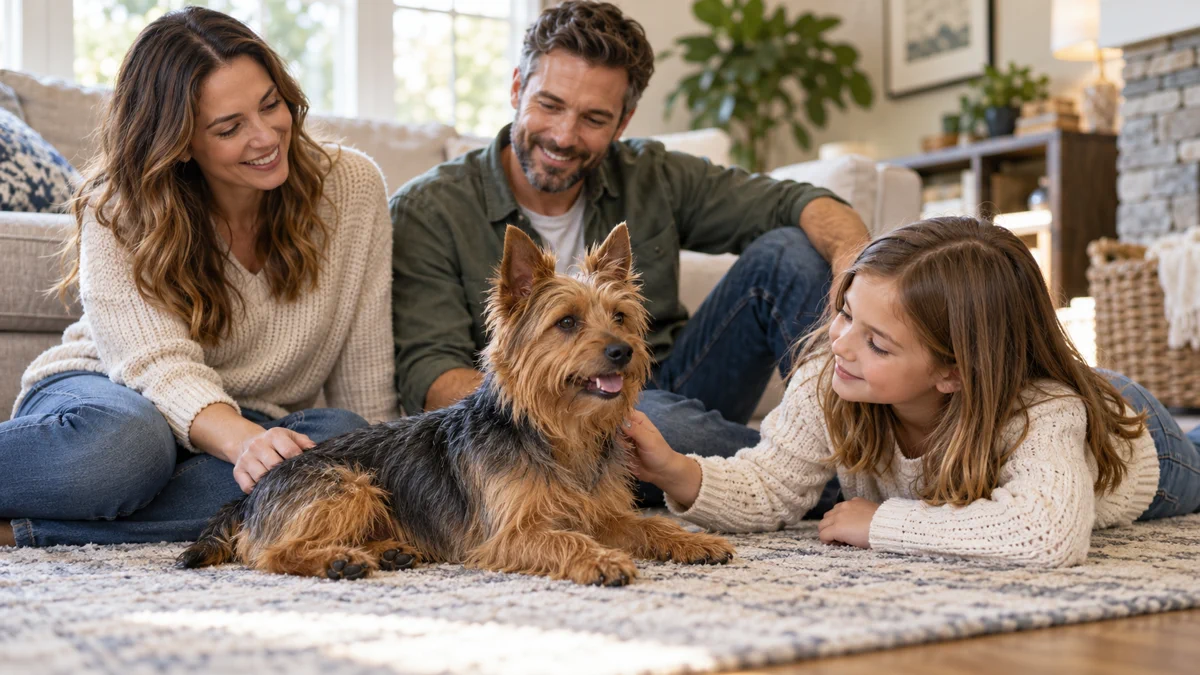
Yes. Australian Terriers tend to form strong bonds with their families.
The breed was developed not only as a working dog but also as a household companion, which separates it from the idea of a terrier that simply works independently outdoors.
Many Aussies enjoy following family members around the home, participating in everyday activities and resting close to their people after exercise.
That attachment also means they are generally happiest when included in family life rather than being left alone in a yard for long periods.
Are Australian Terriers Good Family Dogs?
They can be excellent family companions in households that appreciate an active terrier personality.
Their relatively sturdy body can make them physically easier to manage than very tiny toy breeds, but children should still learn respectful dog handling.
Teach children to:
- Leave the dog alone while eating or sleeping
- Avoid pulling the coat or ears
- Avoid chasing the dog
- Respect the dog’s resting area
- Interact calmly
Adults should supervise interactions between dogs and young children regardless of breed.
Are Australian Terriers Good With Other Dogs?
Compatibility varies by individual dog.
Like many terriers, Australian Terriers can be confident and somewhat assertive around other dogs.
The Australian Terrier Club of America notes that care should be taken when introducing another dog into the household.
Early socialization and controlled introductions are more useful than assuming every Australian Terrier will naturally enjoy every other dog it meets.
What About Cats and Small Pets?
This is where the breed’s working history becomes especially important.
Australian Terriers were bred to hunt vermin, and that instinct remains strong in many modern dogs.
Small, fast-moving animals may trigger chasing.
Some individuals can live successfully with cats when raised and managed appropriately, but owners should be cautious around:
- Hamsters
- Gerbils
- Rabbits
- Other small mammals
Management is more reliable than assuming training will completely remove inherited prey drive.
Prey Drive, Digging and Terrier Instinct
Australian Terriers are genuine earth-working terriers.
Their historical work involved pursuing vermin and going to ground after prey.
Modern Aussies may still enjoy:
- Digging
- Investigating holes
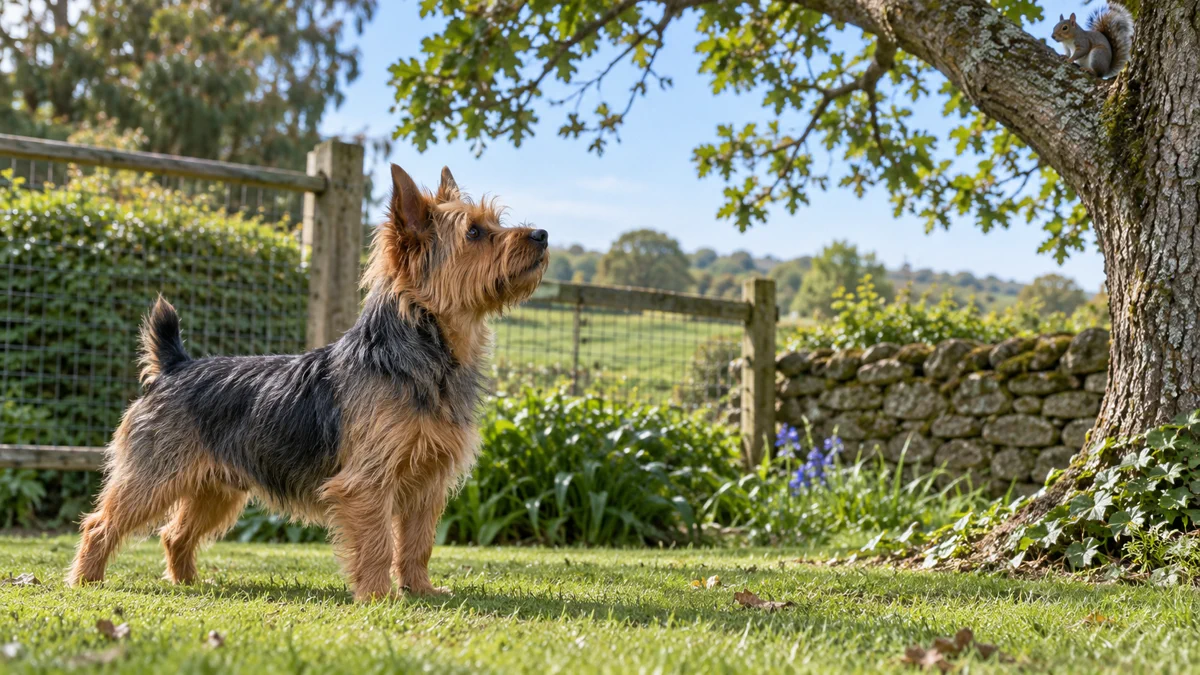
- Chasing squirrels
- Searching for rodents
- Following interesting scents
The breed club specifically warns that the hunting instinct can be strong enough for an Aussie to chase an animal far from home.
For that reason, walks should generally be on leash and free running should take place only in securely enclosed areas.
Exercise and Training Needs
Australian Terriers are active dogs despite their compact size.
They generally need daily opportunities to move, play, investigate and use their brains.
Useful activities include:
- Neighborhood walks
- Interactive play
- Fetch
- Food puzzles
- Scent games
- Short obedience sessions
- Terrier-oriented dog sports
- Safe hiking
A yard can be useful, but a yard alone does not replace interaction.
Bored Australian Terriers may create their own entertainment, which can include barking, digging or investigating places you would rather they ignore.
Are Australian Terriers Easy to Train?
They are intelligent and capable learners, but their terrier independence can influence training style.
The breed club notes that Australian Terriers can become bored by repetitive routines.
That means effective sessions are usually:
- Short
- Consistent
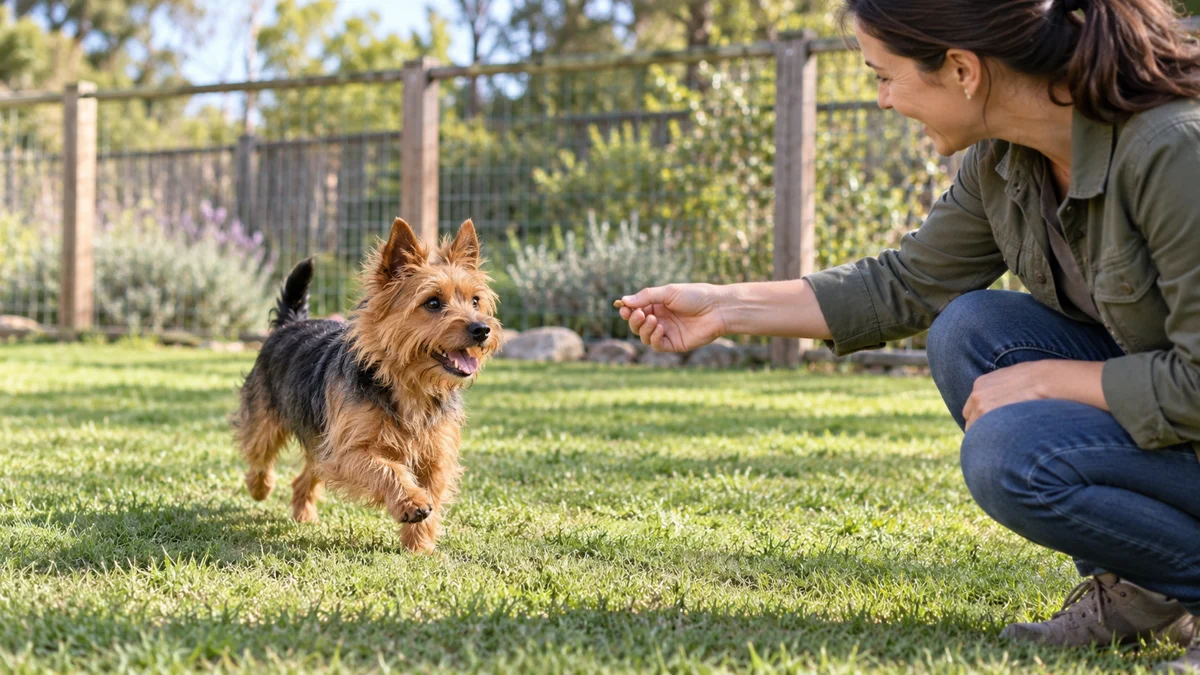
- Reward based
- Varied
- Mentally engaging
Useful rewards include small treats, toys and enthusiastic praise.
Training priorities should include:
- Recall foundations
- Loose-leash walking
- Leave-it skills
- Calm greetings
- Handling for grooming
- Settling indoors
- Door and gate manners
Why Recall Training Is Especially Important
Recall is valuable for every dog, but a strong hunting instinct makes it particularly important for terriers.
Even a well-trained Australian Terrier can become intensely focused on a squirrel, rabbit or cat.
Practice recall in controlled environments, but do not treat training as a replacement for physical safety.
A secure fence and leash remain important tools.
Do Australian Terriers Bark a Lot?
Australian Terriers are alert watchdogs and may quickly notice unfamiliar sounds, visitors or movement around the home.
That can make barking useful as an alert behavior, but it can become excessive if the dog is bored or repeatedly rehearses barking at windows and fences.
Owners can help by:
- Providing adequate exercise
- Using enrichment
- Blocking repetitive visual triggers when needed
- Rewarding calm behavior
- Teaching a predictable response to visitors
Are Australian Terriers Good Apartment Dogs?
Their compact size can make them adaptable to apartment living.
However, successful apartment life depends on more than square footage.
Consider:
- Daily exercise access
- Barking
- Hallway and elevator traffic
- Nearby dogs
- Opportunities for mental stimulation
An active Australian Terrier that receives walks, play and training can be easier to live with in a small home than a bored Aussie with access to a large but unstimulating yard.
Can Australian Terriers Be Left Alone?
Australian Terriers tend to enjoy close contact with their families.
The breed club specifically notes that they are not suited to spending long hours isolated outside or alone in a run.
Adult dogs can learn normal periods of household separation, but independence should be built gradually.
Provide a safe environment and appropriate enrichment rather than expecting a social working terrier to entertain itself indefinitely.
Grooming and Coat Care
The Australian Terrier’s coat looks rugged, but routine maintenance is relatively straightforward.
The harsh double coat naturally repels a significant amount of dirt and mud.
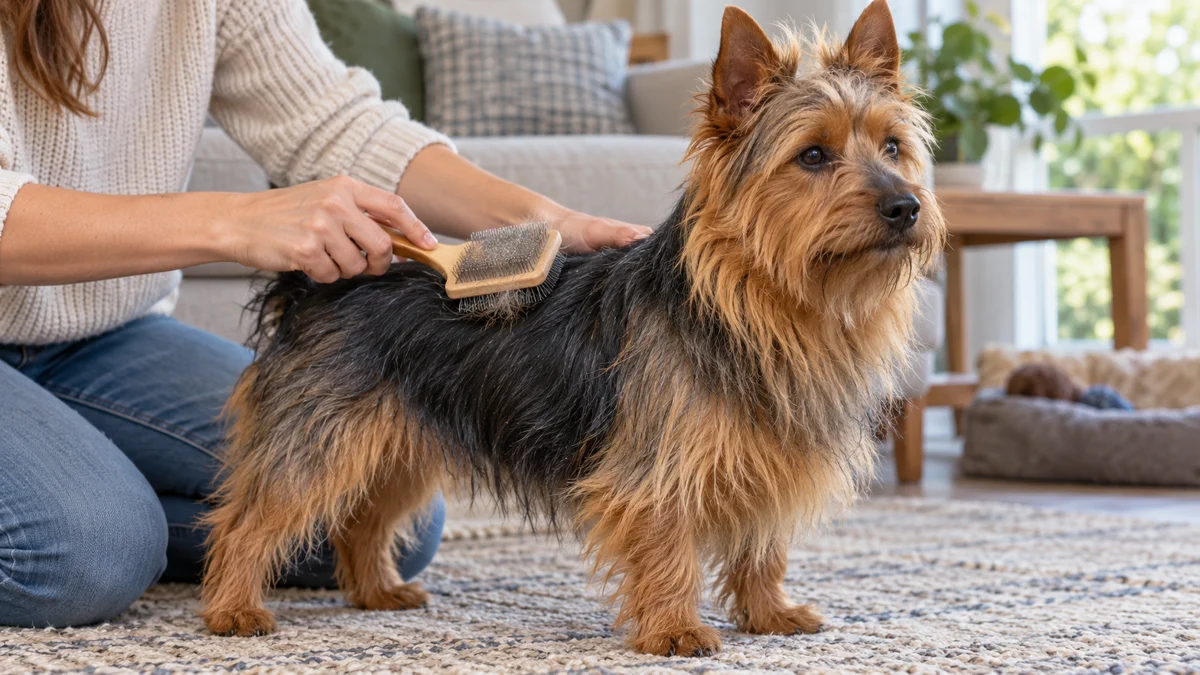
Both AKC and the national breed club recommend approximately weekly brushing for normal companion maintenance.
Routine care should also include:
- Nail trimming
- Ear checks
- Dental care
- Keeping excess hair around the eyes controlled
- Checking paws and coat after outdoor activity
How Often Should You Bathe an Australian Terrier?
Usually only when needed.
Frequent shampooing is not automatically beneficial for this breed.
The breed club explains that excessive bathing can soften the naturally harsh outer coat and may contribute to dry, flaky skin.
For an ordinary companion dog, brushing and spot cleaning often handle everyday dirt between baths.
Do Australian Terriers Shed?
Yes, although the coat is generally considered manageable.
The breed has a double coat, so loose hair still occurs.
Weekly brushing can help remove dead hair and keep the coat tidy.
If low shedding is an important requirement for your household, do not assume a rough terrier coat means completely hair-free furniture.
Does an Australian Terrier Need Professional Grooming?
Many pet Australian Terriers can be maintained primarily at home.
The national breed club notes that companion Aussies seldom require extensive additional grooming.
Owners interested in maintaining a traditional show-style coat may use more specialized coat techniques, but an ordinary family companion does not need elaborate cosmetic grooming.
Australian Terrier Health Considerations
Australian Terriers are generally described as sturdy dogs, but responsible breeding and preventive care still matter.
Current national breed-club recommendations listed by AKC include:
- Patella evaluation
- Ophthalmologist evaluation
- Thyroid evaluation
AKC also notes that the breed can be affected by issues including luxating patella, Legg-Calvé-Perthes disease and some itchy skin conditions.
These references are reasons to work with responsible breeders and veterinarians, not a prediction that an individual Australian Terrier will develop a particular condition.
Why Breeder Health Testing Matters
When purchasing an Australian Terrier puppy, ask the breeder which health evaluations have been completed on the parents.
A responsible breeder should be willing to discuss:
- Recommended health screening
- Pedigree health history
- Temperament
- How puppies are raised and socialized
- What kind of household fits the breed
The Australian Terrier Club of America specifically encourages breeders to use breed-specific health testing and current CHIC recommendations.
Australian Terrier Puppies
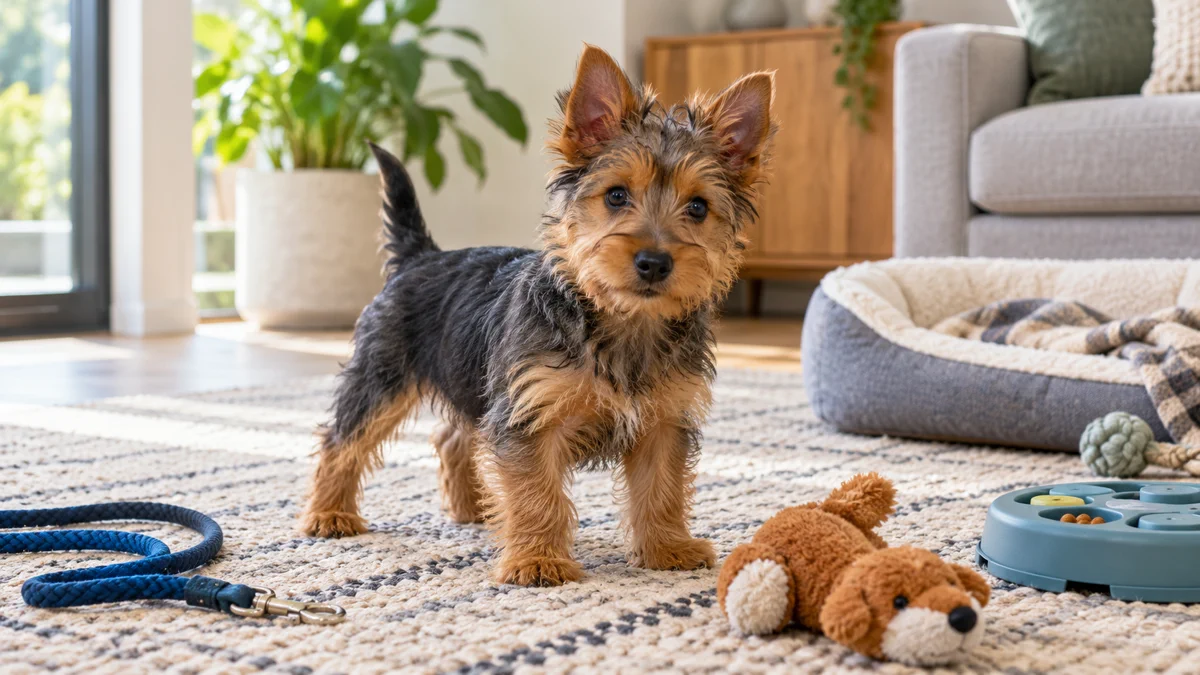
Australian Terrier puppies are small but bold, curious and active.
Early priorities should include:
- House training
- Safe socialization
- Handling practice
- Recall foundations
- Leash skills
- Appropriate chewing outlets
- Comfort with grooming
- Learning to settle
Socialization should expose puppies gradually to normal people, places, sounds, surfaces and friendly dogs without overwhelming them.
Because prey drive and confidence are part of the breed, early training should focus on communication and self-control rather than waiting for unwanted habits to become established.
Feeding an Australian Terrier
Feed a complete diet appropriate for the dog’s life stage and maintain a healthy body condition.
Australian Terriers are small enough that frequent treats can add significant calories over time.
When using food for training, keep rewards small and consider them part of the dog’s daily intake.
Fresh water should always be available.
Ask your veterinarian for individualized guidance if your dog has weight, digestive or other health concerns.
Australian Terriers and Hot Weather
The breed’s harsh coat provides environmental protection, but no dog is immune to overheating.
During hot weather:
- Exercise during cooler hours
- Provide shade
- Provide fresh water
- Avoid excessively hot pavement
- Reduce strenuous activity during high temperatures
Do not remove the coat simply because summer arrives. Routine coat care is preferable to drastic shaving unless a veterinarian recommends clipping for a medical reason.
Australian Terriers and Cold Weather
The weather-resistant double coat provides more protection than the short single coat of many small dogs.
However, body size, wind, rain, health and individual tolerance still matter.
No dog should be expected to remain outside indefinitely simply because its breed was developed for rugged working conditions.
Is an Australian Terrier Good for First-Time Owners?
A motivated first-time owner can succeed with an Australian Terrier, but understanding terrier behavior is important.
Advantages include:
- Compact body size
- Manageable grooming
- Intelligence
- Strong family attachment
- Adaptability to many homes
Potential challenges include:
- Strong prey drive
- Digging
- Alert barking
- Independent decision-making
- Possible assertiveness around other dogs
- Need for regular exercise and mental stimulation
An owner who expects a passive small companion may find the breed more intense than anticipated.
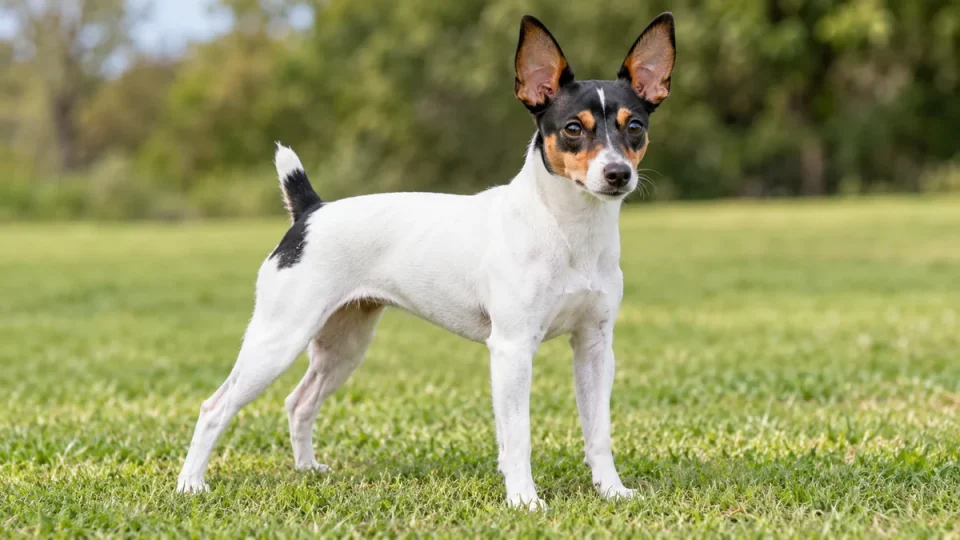
Australian Terrier vs Toy Fox Terrier
Both breeds are small, confident terriers, but their physical construction differs considerably.
The Toy Fox Terrier is much smaller at roughly 4 to 9 pounds and has a short, smooth coat.
The Australian Terrier typically weighs 15 to 20 pounds and has a harsh, weather-resistant double coat with a distinctive ruff and topknot.
Both can be intelligent, alert and interested in chasing small animals.
If you prefer an even smaller, smooth-coated companion, see our Toy Fox Terrier breed guide.
Who Is the Australian Terrier Best For?
The breed may suit you if you want:
- A small but sturdy dog
- A genuine terrier personality
- An affectionate household companion
- A dog that enjoys training and play
- A relatively easy-care coat
- A compact dog for an active lifestyle
- An alert watchdog
Who May Prefer Another Breed?
Consider another breed if you strongly prefer:
- Very low prey drive
- No digging tendency
- A dog that rarely alerts or barks
- A highly passive lapdog
- A dog that can safely roam off leash around wildlife
- A breed that naturally welcomes every unfamiliar dog
Is an Australian Terrier Right for You?
Before choosing an Australian Terrier, ask yourself:
- Can I provide daily walks and interactive play?
- Am I comfortable managing strong prey drive?
- Can I keep the dog leashed or securely fenced around wildlife?
- Do I enjoy training an intelligent but independent dog?
- Can I manage alert barking?
- Am I prepared for weekly coat care?
- Will the dog live as part of the family rather than primarily outdoors?
- Can I supervise introductions to other pets?
- Have I researched recommended breeder health testing?
If those needs match your household, an Australian Terrier can provide a rare combination of compact size, working-dog toughness, intelligence and close family companionship.
Final Thoughts
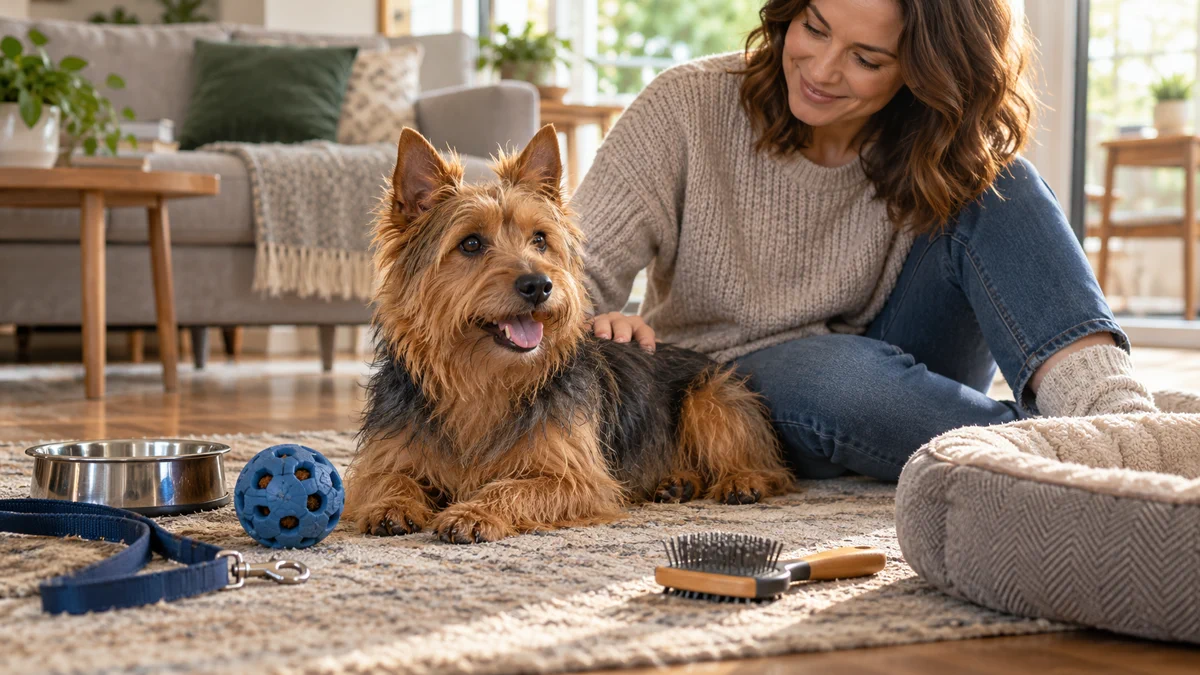
The Australian Terrier may be small, but almost nothing about its personality is fragile or passive.
It was developed as a practical Australian working dog capable of hunting vermin, watching over the household, helping around farms and then living closely with the same people it worked beside.
That heritage remains visible today in the breed’s confidence, curiosity, prey drive, intelligence and attachment to family.
Owners gain a relatively compact dog with manageable grooming requirements, but they also need to provide daily exercise, interesting training, secure management around wildlife and enough companionship to keep an energetic terrier involved in family life.
For someone who wants a small dog that still feels unmistakably like a working terrier, the Australian Terrier deserves serious consideration.