By
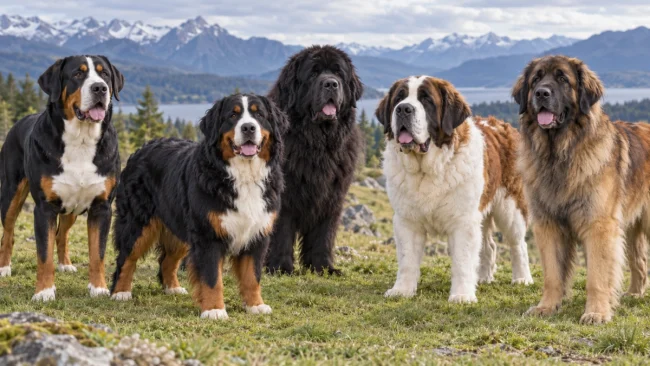
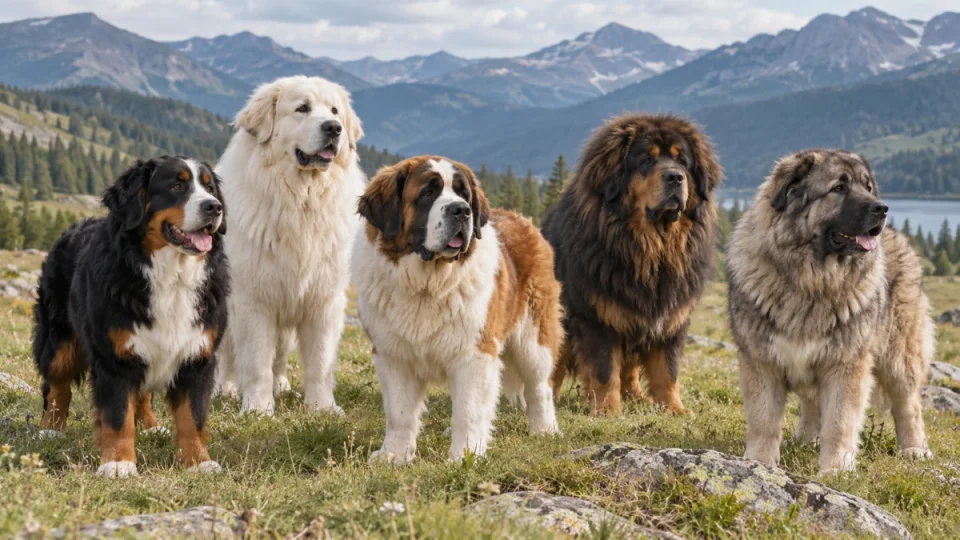
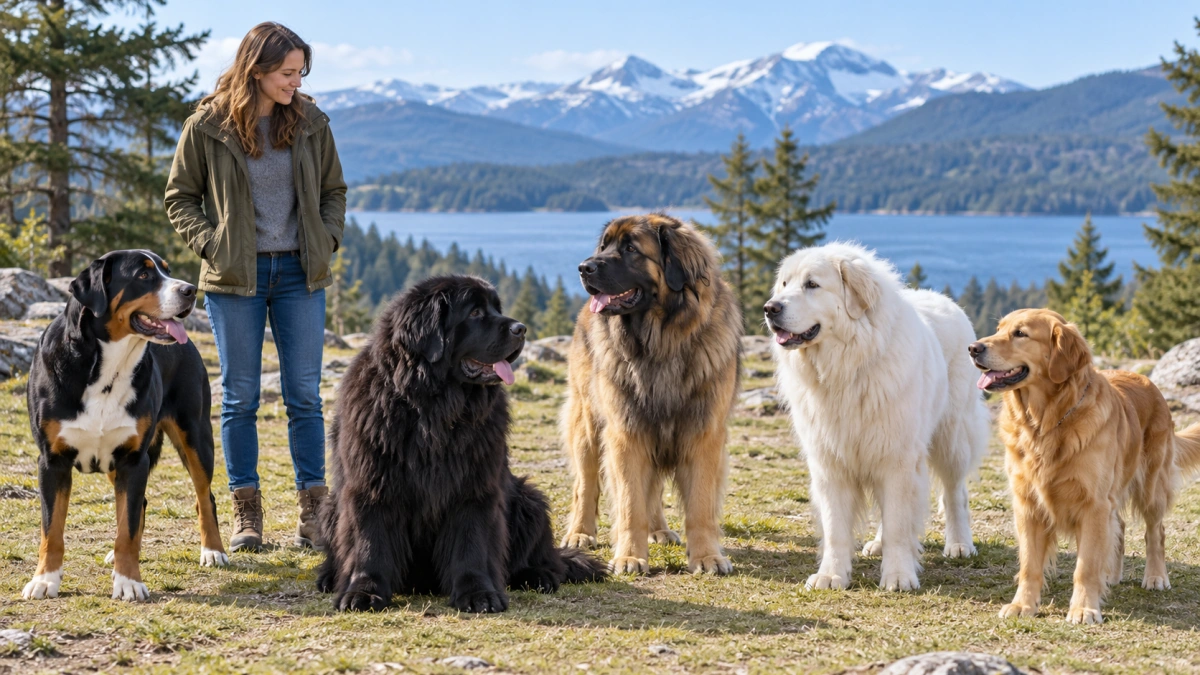
If you love the Bernese Mountain Dog but are still comparing breeds, several dogs share part of the Berner’s appeal. Some have the same Swiss farm-dog heritage and tricolor markings, while others offer a similar combination of large size, thick coat, family attachment, calm temperament, or cold-weather working ability.
However, “similar” does not mean interchangeable. A Greater Swiss Mountain Dog is closely related in origin and appearance but has a short coat and heavier build. A Newfoundland may offer the gentle giant personality many people admire in Berners, while a Great Pyrenees adds a much more independent livestock-guardian temperament.
The best alternative therefore depends on what you actually like about the Bernese Mountain Dog: its appearance, size, affection toward family, trainability, mountain-dog history, coat, or working background.
If you are still learning about the breed itself, start with our Bernese Mountain Dog breed guide. You can also explore more options in our Dog Breeds section and Large Dog Breeds guide.
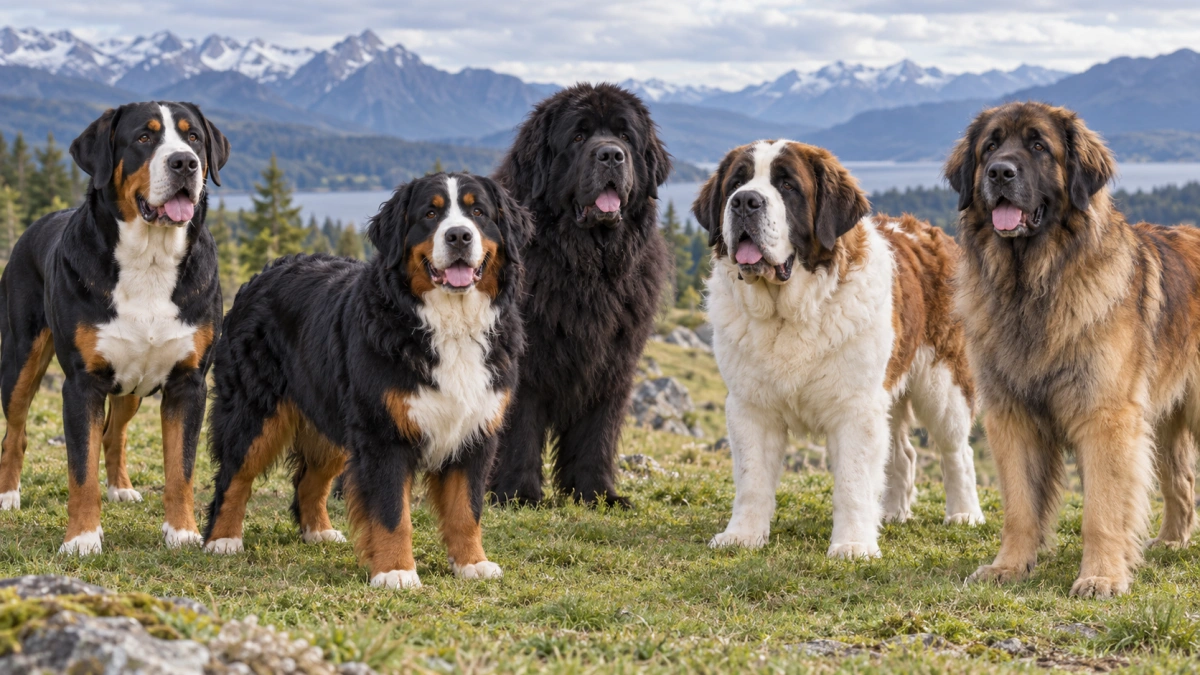
Quick Comparison: Breeds Like the Bernese Mountain Dog
| Breed | Most Similar Because | Main Difference From a Berner |
|---|---|---|
| Greater Swiss Mountain Dog | Swiss origin, tricolor coat, draft and farm history | Shorter coat and generally heavier build |
| Newfoundland | Large, affectionate, gentle working dog | Heavier, water-working history and different coat colors |
| Saint Bernard | Alpine heritage, giant size, calm family presence | Much heavier and more massive |
| Leonberger | Large, long-coated, people-oriented working companion | Usually larger and lacks Berner tricolor markings |
| Great Pyrenees | Large mountain dog with thick weather-resistant coat | More independent guardian temperament |
| Entlebucher Mountain Dog | Swiss Sennenhund heritage and tricolor pattern | Much smaller and considerably more energetic |
| Appenzeller Sennenhund | Swiss farm-dog origin and tricolor appearance | Smaller, highly active and more intense working style |
| Golden Retriever | Affectionate, trainable and strongly family-oriented | Sporting breed with different appearance and higher activity needs |
What Makes a Breed Similar to a Bernese Mountain Dog?
There are several ways a dog can resemble a Berner.
The closest comparisons usually share one or more of these traits:
- Large or giant size
- Working-dog history
- Strong attachment to family
- Thick double coat
- Cold-weather suitability
- Mountain or farm origins
- Drafting or livestock work
- Calm or good-natured temperament
- Black, white and rust tricolor markings
No alternative shares every characteristic. Decide which qualities matter most before narrowing your shortlist.
1. Greater Swiss Mountain Dog
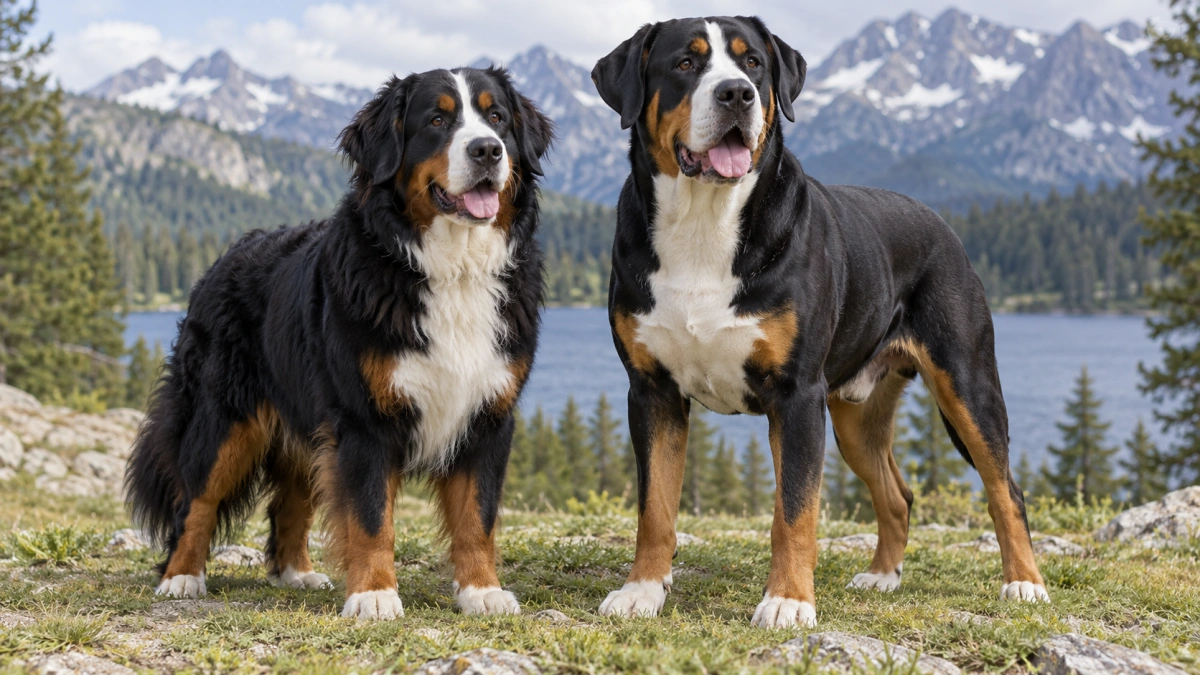
The Greater Swiss Mountain Dog is the closest overall comparison to the Bernese Mountain Dog.
Both breeds originated in Switzerland and belong to the traditional group of Swiss mountain dogs known as Sennenhunde. They were versatile farm workers used for jobs including drafting, moving livestock and watching over farm property.
The visual similarity is obvious. Both are large dogs with striking black, white and rust or red tricolor markings.
The biggest visual difference is the coat.
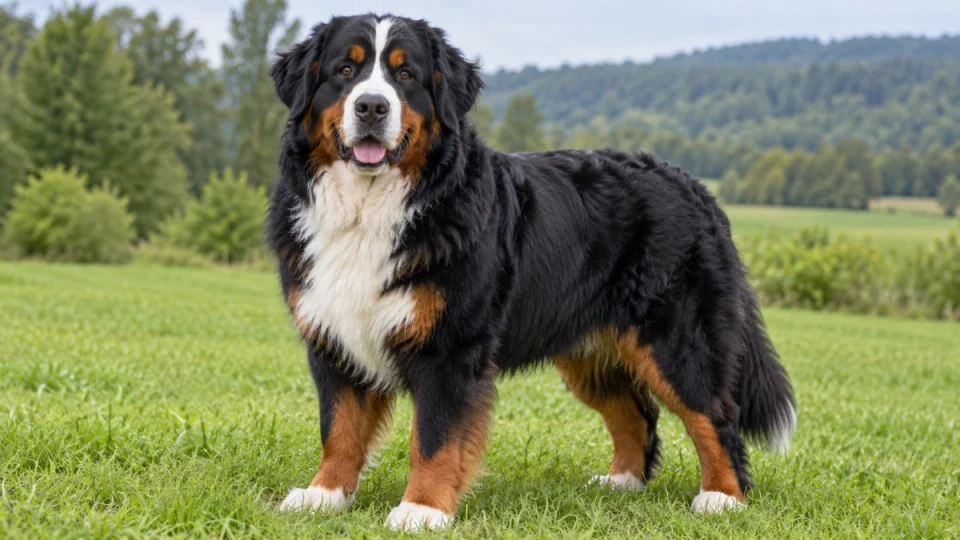
The Bernese has a moderately long, thick coat, while the Greater Swiss Mountain Dog has a much shorter dense double coat.
The Swissy is also generally heavier. AKC lists adult Greater Swiss males at approximately 115 to 140 pounds, compared with 80 to 115 pounds for male Bernese Mountain Dogs.
Why Choose a Greater Swiss Mountain Dog?
- You love the Swiss tricolor appearance
- You want similar farm and draft-dog heritage
- You prefer a shorter coat
- You are comfortable managing an even heavier dog
- You want a dependable large working companion
Why Might a Berner Suit You Better?
Choose the Bernese if the long coat and softer, more feathered appearance are central to what you love about the breed.
2. Newfoundland
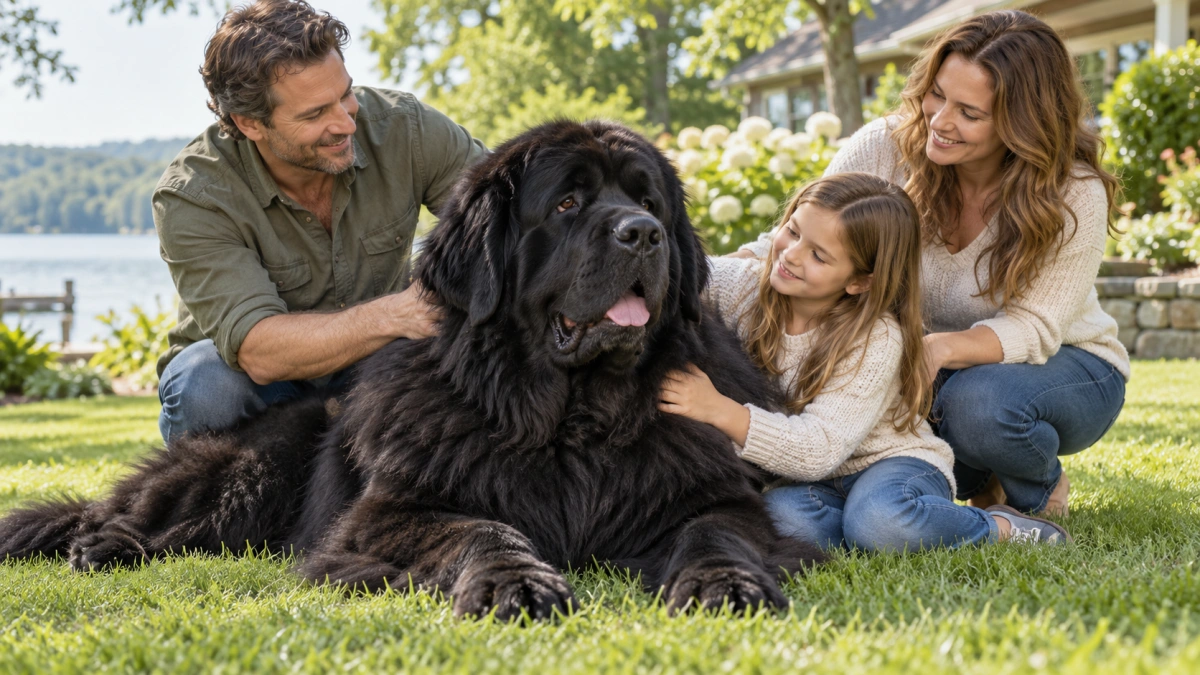
The Newfoundland is a strong alternative for people who mainly love the Bernese Mountain Dog’s gentle giant personality.
Newfoundlands are massive working dogs known for being devoted, sweet and patient. Historically, however, their work was very different from the Berner’s Swiss farm duties. Newfoundlands developed around fishing communities and became famous for water work and rescue ability.
They are also heavier.
AKC lists male Newfoundlands at roughly 130 to 150 pounds and females at about 100 to 120 pounds.
Both breeds have substantial double coats and significant grooming and shedding requirements.
Why Choose a Newfoundland?
- You want a very large family-oriented dog
- You value a gentle, patient disposition
- You are comfortable with a heavy coat
- You like water-working breeds
- You have room for a giant dog
Main Trade-Off
Expect more total body mass and potentially more household management than with an already large Berner.
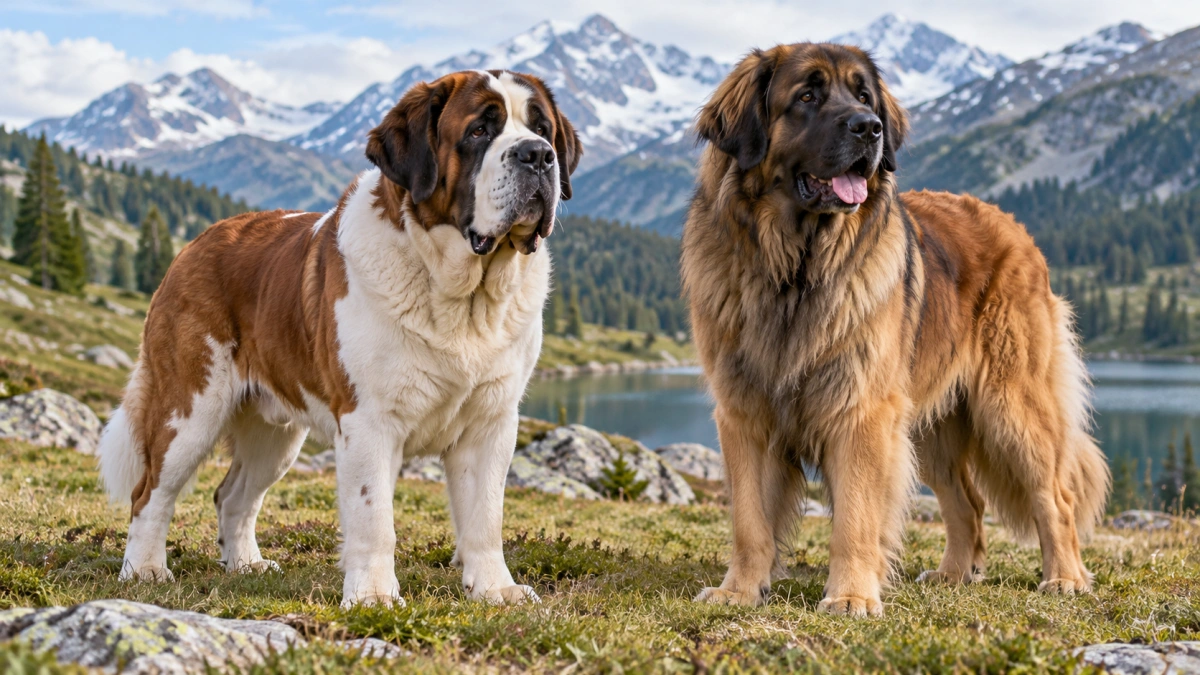
3. Saint Bernard
The Saint Bernard shares perhaps the strongest Alpine association with the Bernese Mountain Dog.
Saints developed in the Swiss Alps and are famous for their historical connection with the Great Saint Bernard Pass.
They also share the heavy-boned mountain-dog look that attracts many Bernese enthusiasts.
But Saint Bernards are true giant dogs.
AKC lists adult males at approximately 140 to 180 pounds and females at about 120 to 140 pounds. That can make them substantially heavier than most Berners.
Their temperament is commonly described as watchful and patient, and they can be affectionate family companions.
Why Choose a Saint Bernard?
- You want an even larger Alpine breed
- You like a powerful, substantial dog
- You value a patient family companion
- You are comfortable with giant-breed costs and space requirements
Main Difference
The extra size changes almost every practical aspect of ownership, including food, transportation, equipment, veterinary handling and household space.
4. Leonberger
The Leonberger is another excellent choice if what you love about the Bernese is the combination of impressive size, long coat and affectionate family companionship.
Leonbergers were developed in Germany and are large Working Group dogs with a double coat and a characteristic black facial mask.
The breed standard emphasizes a calm, non-aggressive and quietly confident dog whose most important modern role is being a reliable family companion.
Leonbergers are typically larger than Berners. AKC weight information places the breed broadly around 90 to 170 pounds, depending on sex and individual structure.
Why Choose a Leonberger?
- You want a long-coated giant breed
- You value a people-oriented temperament
- You want a dog with working ability as well as family companionship
- You do not specifically need Bernese tricolor markings
Main Trade-Off
A Leonberger can require even more physical space and coat maintenance because of its giant size and substantial double coat.
5. Great Pyrenees
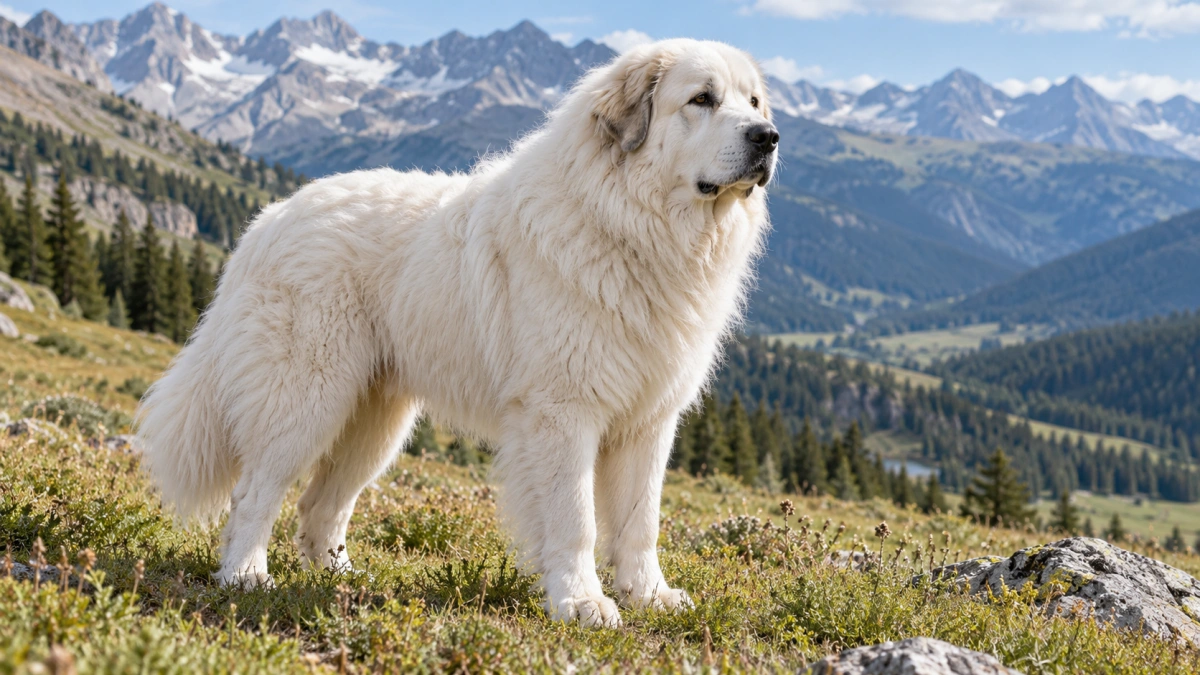
The Great Pyrenees is a good comparison for people attracted to the Bernese Mountain Dog’s large size, mountain heritage, thick coat and calm presence.
However, the personality difference is important.
The Great Pyrenees developed primarily as a livestock guardian. That work required independent judgment rather than waiting for continuous human direction.
Modern Pyrs can be affectionate family dogs, but they tend to be more independent, protective and self-directed than the typical Berner.
AKC lists males at 100 pounds and up and females at 85 pounds and up.
Why Choose a Great Pyrenees?
- You like large mountain breeds
- You want a calm but protective guardian
- You appreciate independent dogs
- You are comfortable with a heavy white coat
Why Might a Berner Be Easier?
If you strongly prefer a cooperative dog that is more focused on working directly with its owner, the Bernese may be a better behavioral match.
Swiss Mountain Dog Alternatives
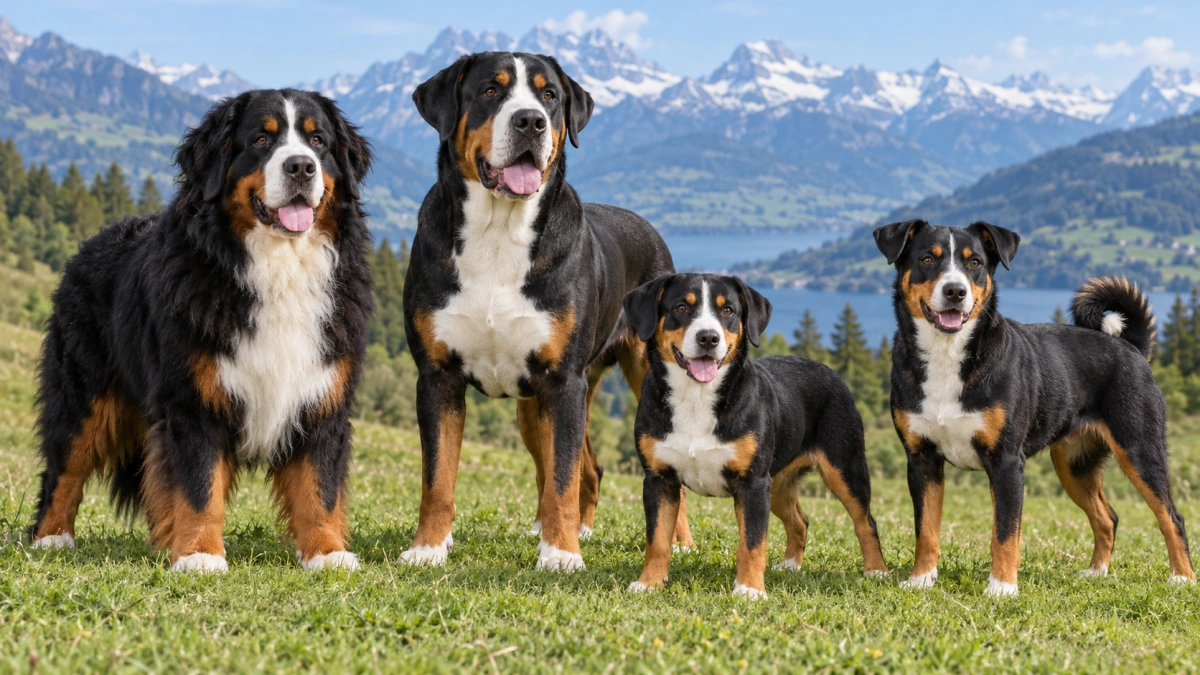
The Bernese Mountain Dog is one of four traditional Swiss Sennenhunde.
The other three are:
- Greater Swiss Mountain Dog
- Entlebucher Mountain Dog
- Appenzeller Sennenhund
All four developed as versatile Swiss farm dogs and share recognizable tricolor patterns, but they differ significantly in size, coat and working intensity.
6. Entlebucher Mountain Dog
The Entlebucher Mountain Dog is the smallest of the four Swiss mountain breeds.
If you love the Berner’s Swiss history and tricolor appearance but want a substantially smaller dog, the Entlebucher deserves consideration.
AKC lists adult males at approximately 50 to 65 pounds and females at about 40 to 55 pounds.
Do not assume the smaller body means an easier lifestyle.
Entlebuchers are athletic cattle dogs. They are energetic, intelligent and happiest when given significant exercise and mental work.
Why Choose an Entlebucher?
- You want a smaller Swiss mountain dog
- You prefer a short coat
- You enjoy active training and dog sports
- You want an energetic hiking or activity partner
Main Difference
The Entlebucher usually requires substantially more activity and structured engagement than someone seeking the Berner’s comparatively calmer presence may expect.
7. Appenzeller Sennenhund
The Appenzeller Sennenhund is another member of the Swiss mountain-dog family.
It preserves the black, white and tan appearance that makes the group recognizable, but it is a medium-sized, highly athletic herding and farm breed.
AKC lists the Appenzeller at approximately 20 to 22 inches tall and 48 to 70 pounds.
The breed is described as lively, high-spirited, self-assured and watchful.
Like the Entlebucher, the Appenzeller is not simply a miniature Bernese Mountain Dog.
Why Choose an Appenzeller?
- You want Swiss Sennenhund heritage
- You like the tricolor appearance
- You want a smaller, faster working dog
- You enjoy training and substantial daily activity
Main Difference
The Appenzeller’s energy, vigilance and working intensity can be much higher than the relaxed family-dog image many people associate with Berners.
8. Golden Retriever
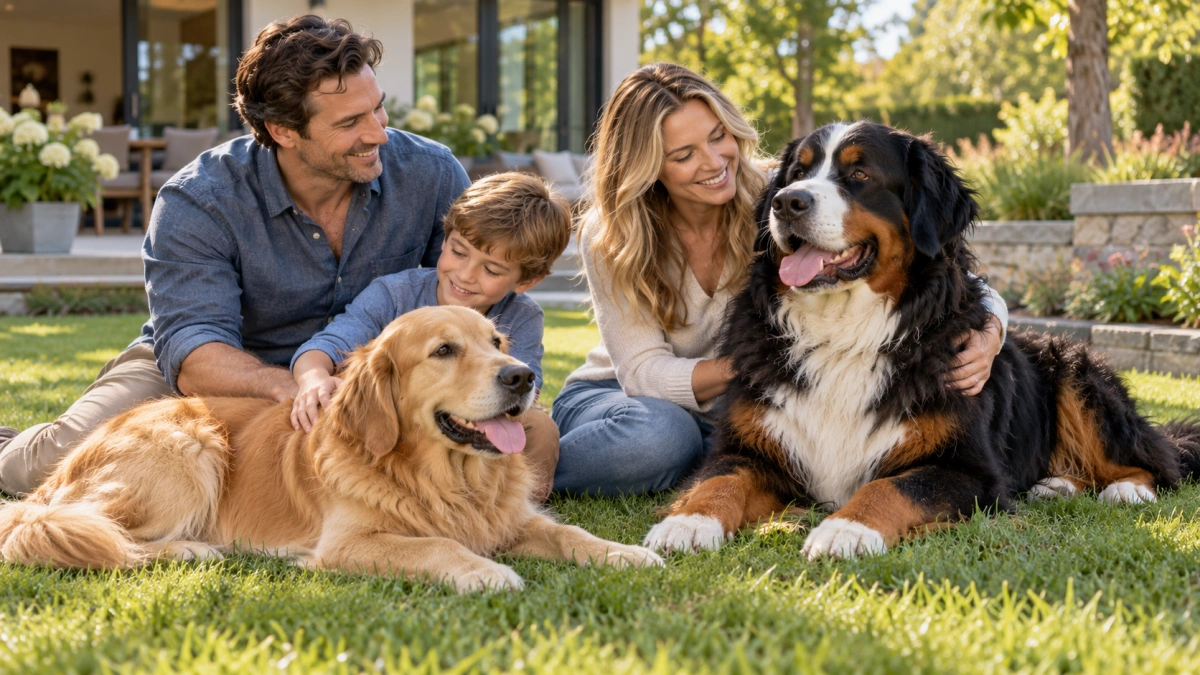
A Golden Retriever does not look much like a Bernese Mountain Dog, but it can be one of the most useful alternatives if temperament is what attracted you to the Berner.
Both breeds can be affectionate, strongly attached to people and rewarding to train.
Goldens are smaller. AKC lists males at approximately 65 to 75 pounds and females at 55 to 65 pounds.
They are Sporting Group dogs rather than mountain farm dogs, so their exercise style is different. Goldens tend to be enthusiastic, playful and active, with retrieving, swimming and training often forming a major part of daily life.
Why Choose a Golden Retriever?
- You care more about friendly family temperament than mountain-dog appearance
- You want a somewhat smaller dog
- You enjoy active training, fetching and outdoor activities
- You prefer a highly people-oriented breed
Main Difference
A Golden is typically more energetic and socially outgoing, and it lacks the Bernese Mountain Dog’s mountain-dog build and tricolor appearance.
Which Breed Looks Most Like a Bernese Mountain Dog?
The Greater Swiss Mountain Dog is the closest visual match.
Both breeds share:
- Swiss origin
- Black, white and rust or red markings
- Substantial build
- Farm-dog history
- Drafting background
The major giveaway is coat length: the Swissy is short-coated while the Berner is the only one of the four Swiss Sennenhunde with the characteristic long coat.
Which Breed Has the Most Similar Temperament?
There is no exact behavioral copy of a Bernese Mountain Dog.
If you mainly value a gentle, affectionate family companion, consider:
- Newfoundland
- Leonberger
- Golden Retriever
If you value the Swiss working background and loyalty more than softness of temperament, the Greater Swiss Mountain Dog is the more direct historical comparison.
Which Similar Breed Is Smaller Than a Bernese?
The most obvious Swiss options are the Entlebucher Mountain Dog and Appenzeller Sennenhund.
Both retain the tricolor Swiss farm-dog appearance in substantially smaller bodies.
The trade-off is energy. These breeds are not downsized calm Berners; they are more athletic herding and working dogs.
A Golden Retriever can also be somewhat smaller than a typical Berner while retaining a strongly family-oriented personality.
Which Similar Breed Is Bigger Than a Bernese?
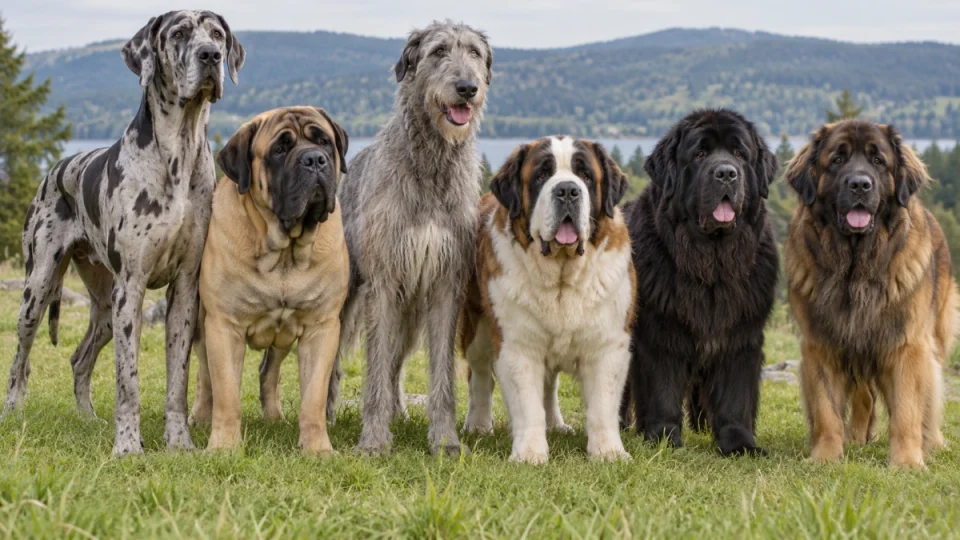
Several breeds in this guide commonly exceed the Bernese Mountain Dog in body mass:
- Greater Swiss Mountain Dog
- Newfoundland
- Saint Bernard
- Leonberger
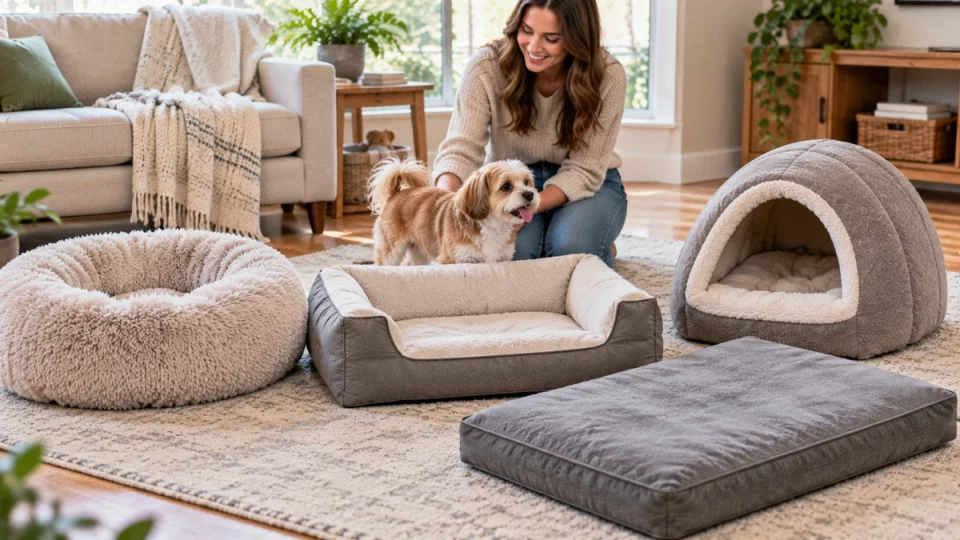
Before deliberately choosing a larger breed, consider the practical effect of additional size on:
- Food
- Transportation
- Dog beds and crates
- Veterinary care
- Training
- Physical handling
Which Breed Has Less Coat Maintenance?
If you like the Swiss appearance but do not specifically want the Bernese Mountain Dog’s longer coat, consider the Greater Swiss Mountain Dog.
The Entlebucher and Appenzeller also have shorter coats.
Shorter does not mean non-shedding. All of these breeds still require normal coat care and can shed significantly.
Which Similar Breeds Are More Independent?
The Great Pyrenees stands out.
Livestock guardians historically had to make decisions without constant instructions from a handler, so independence is part of the job.
That can be appealing for experienced owners who appreciate guardian breeds, but frustrating for someone expecting Golden Retriever-style eagerness to follow every cue.
Which Similar Breeds Need More Exercise?
The Entlebucher and Appenzeller generally move toward the more active end of this comparison.
Golden Retrievers also typically need substantial daily physical exercise and interactive activity.
If you want a dog mainly because you perceive the Bernese as relatively calm, do not assume every Swiss tricolor alternative will offer the same activity level.
Which Bernese-Like Breed Is Right for You?
| If Your Priority Is… | Consider… |
|---|---|
| Closest overall match | Greater Swiss Mountain Dog |
| Gentle giant family temperament | Newfoundland |
| Massive Alpine breed | Saint Bernard |
| Long-coated giant family companion | Leonberger |
| Independent mountain guardian | Great Pyrenees |
| Smaller Swiss working dog | Entlebucher Mountain Dog |
| Highly active Swiss farm dog | Appenzeller Sennenhund |
| Family temperament without mountain-dog appearance | Golden Retriever |
Questions to Ask Before Choosing a Bernese Alternative
Before choosing a breed because it resembles a Berner, ask:
- Do I want the appearance or the temperament?
- How much adult weight can I realistically manage?
- How much daily exercise can I provide?
- How much shedding and grooming am I comfortable with?
- Do I want a cooperative companion or an independent guardian?
- Am I prepared for a giant breed?
- Do I need a dog that is easier to transport?
- Do I want a short or long coat?
- How important is lifespan to me?
- Am I willing to research breed-specific health testing?
Similar appearance should be the beginning of the comparison rather than the end.
Final Thoughts
The Greater Swiss Mountain Dog is the closest breed to the Bernese Mountain Dog in origin, markings and historic farm work. If you want the most direct Berner alternative, start there.
If temperament matters more than tricolor appearance, the Newfoundland and Leonberger offer compelling gentle-giant alternatives, while a Golden Retriever provides a smaller, highly people-oriented family dog with a very different working background.
Saint Bernards suit people drawn to massive Alpine dogs, while Great Pyrenees appeal more to owners who appreciate an independent guardian temperament.
The Entlebucher and Appenzeller are especially interesting if you want Swiss mountain-dog heritage in a smaller package, but both bring considerably more working intensity than the Bernese stereotype suggests.
Choose the breed whose daily needs match your life rather than the dog whose photograph looks most like a Berner. Coat, size, exercise, training style and temperament will affect your household every day long after the visual similarity stops being the main consideration.