By
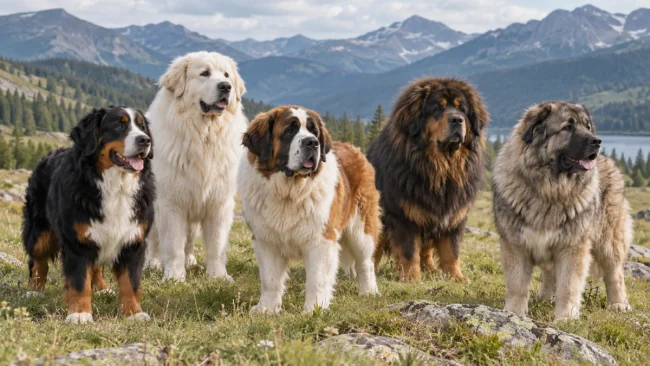
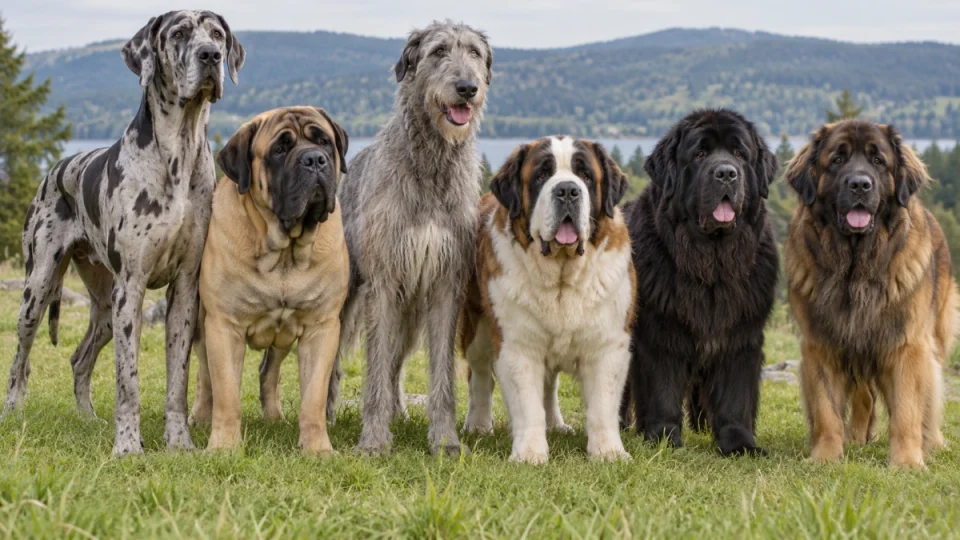
Mountain dog breeds were shaped by some of the most demanding working environments in the dog world. Across the Alps, Pyrenees, Tibetan Plateau, Caucasus, Anatolia, and other rugged regions, people relied on strong dogs to guard livestock, move cattle, pull carts, protect farms, and work in cold or difficult terrain.
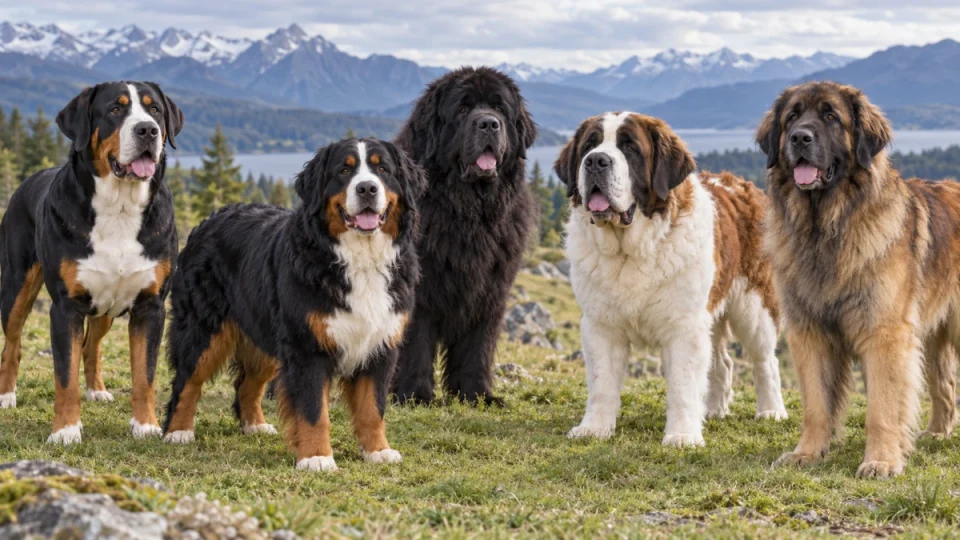
But “mountain dog” is not one official breed group. The term covers several very different working traditions. A Bernese Mountain Dog was developed as a versatile Swiss farm and draft dog, while a Great Pyrenees was expected to protect livestock with far more independence. A Saint Bernard developed around Alpine working and rescue history, while Tibetan and Caucasian guardian breeds were selected for very different protective roles.
That means coat, temperament, trainability, activity level, size, and guardian instinct can vary dramatically even when two breeds are both described as mountain dogs.
If you are mainly comparing dogs by body size, start with our Large Dog Breeds guide. For the most extreme sizes, see our guide to giant dog breeds.
What Is a Mountain Dog Breed?
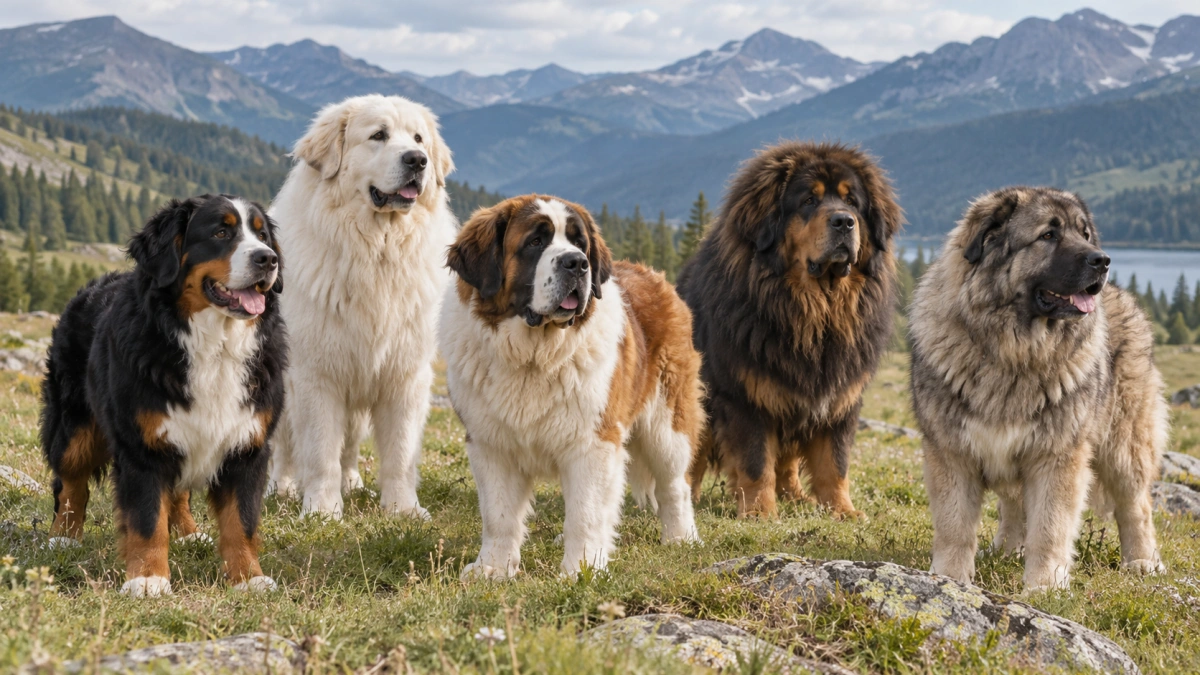
There is no universal kennel-club category called “Mountain Dog Breeds.” The label is a useful way to describe breeds whose development is closely connected with mountain farms, highland grazing, Alpine transport, livestock guarding, or rugged cold-weather work.
Many large mountain dogs fall into the Working Group, but others may belong to different registry classes or remain in development programs depending on the kennel club.
Their historical jobs commonly included:
- Guarding sheep, goats, cattle, or property
- Driving cattle
- Pulling carts
- Moving supplies
- Watching remote farms
- Working independently around predators
- Traveling over rough terrain
- Operating in cold or rapidly changing weather
Those original jobs still matter because they influenced modern temperament.
Quick Comparison of Mountain Dog Breeds
| Breed | Region | Historic Role | General Working Style |
|---|---|---|---|
| Bernese Mountain Dog | Switzerland | Farm work, drafting, cattle work | Cooperative and people-oriented |
| Greater Swiss Mountain Dog | Switzerland | Drafting, herding, farm work | Powerful and dependable |
| Saint Bernard | Swiss Alps | Alpine monastery and rescue-related work | Large, steady working companion |
| Great Pyrenees | Pyrenees | Livestock guarding | Independent guardian |
| Pyrenean Mastiff | Spanish Pyrenees | Livestock guarding | Independent, calm guardian |
| Tibetan Mastiff | Tibetan Plateau / Himalayas | Flock and property guarding | Reserved and independent |
| Anatolian Shepherd Dog | Anatolia | Livestock guarding | Protective, territorial, self-directed |
| Caucasian Shepherd Dog | Caucasus | Livestock and property guarding | Serious, powerful guardian |
| Tornjak | Bosnia and Herzegovina / Croatia | Livestock guarding | Calm, watchful, independent |
| Kuvasz | Central European guardian tradition | Flock guarding | Independent and protective |
Swiss Mountain Dog Breeds
Switzerland produced one of the most recognizable mountain-dog families: the Sennenhunde.
The four traditional Swiss mountain dogs are:
- Bernese Mountain Dog
- Greater Swiss Mountain Dog
- Entlebucher Mountain Dog
- Appenzeller Sennenhund
They share Swiss farm-dog heritage and characteristic tricolor coloring, but they are not the same size or temperament.
The Bernese and Greater Swiss are the largest and most relevant to a large-dog comparison. Entlebuchers and Appenzellers are smaller and typically more athletic and intense.
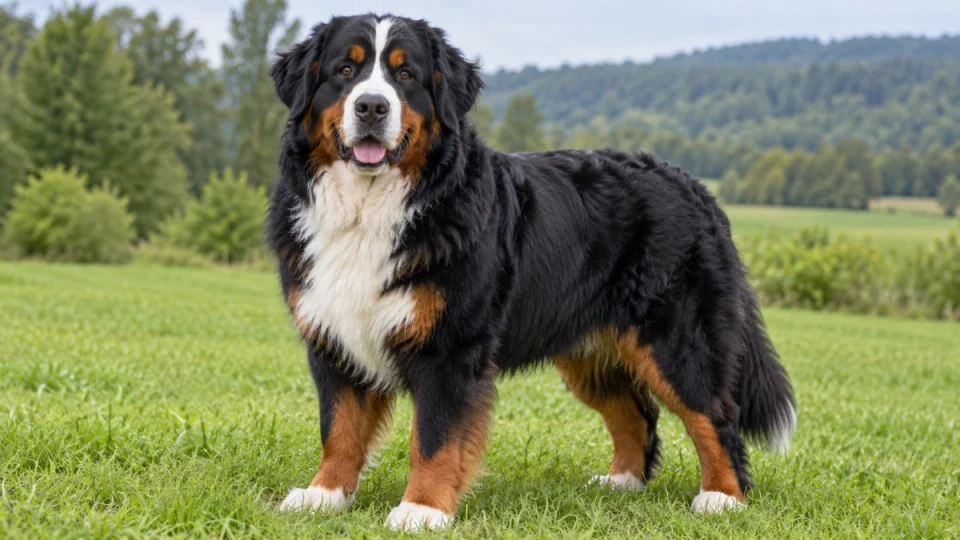
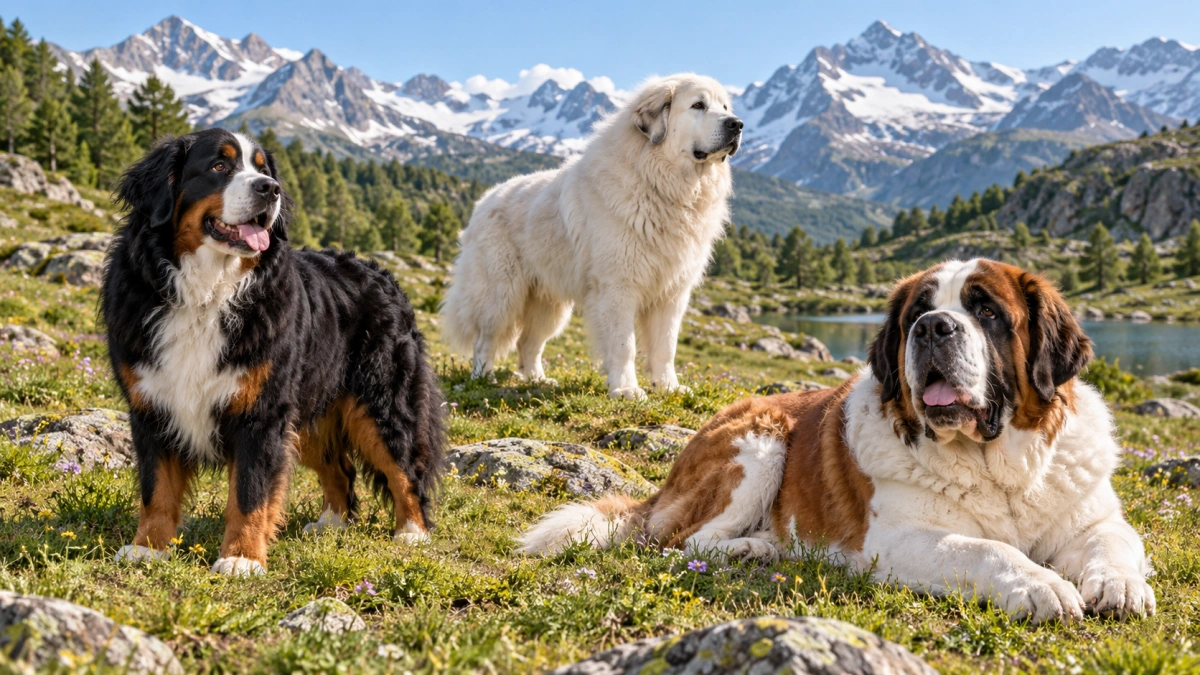
1. Bernese Mountain Dog
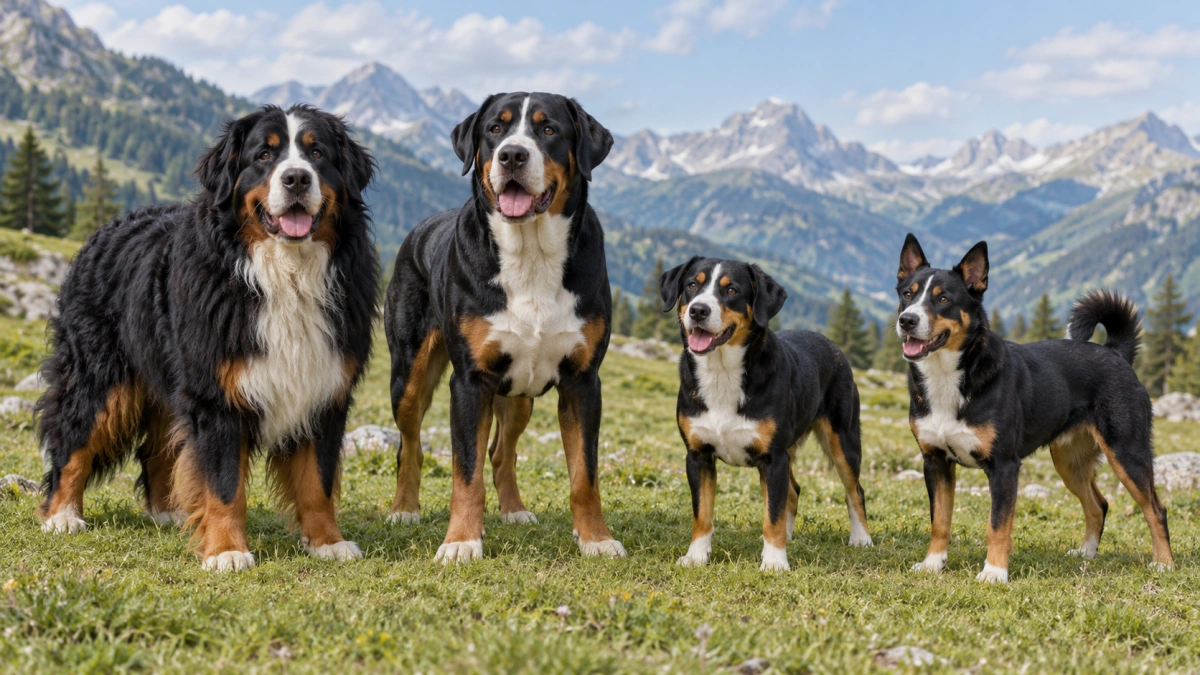
The Bernese Mountain Dog is one of the best-known mountain breeds in North America.
Adult males typically stand about 25 to 27.5 inches and weigh approximately 80 to 115 pounds, while females are smaller.
Berners were versatile Swiss farm dogs capable of helping with cattle, farm work, and drafting.
Modern Berners are commonly valued for a good-natured, calm temperament and strong connection with family.
They have a thick, moderately long tricolor coat that requires regular brushing and produces substantial shedding.
If this breed is your main interest, see our complete Bernese Mountain Dog breed guide.
2. Greater Swiss Mountain Dog
The Greater Swiss Mountain Dog is another powerful Swiss Sennenhund, but it differs noticeably from the Berner.
Adult males generally stand about 25.5 to 28.5 inches and weigh approximately 115 to 140 pounds.
Swissies historically worked as:
- Draft dogs
- Herders
- General farm dogs
Their dense short coat makes them visually different from long-coated Berners while preserving the striking black, white, and red tricolor pattern.
For an owner who likes Swiss farm-dog heritage but prefers a shorter coat, the Greater Swiss is one of the most logical alternatives.
3. Saint Bernard
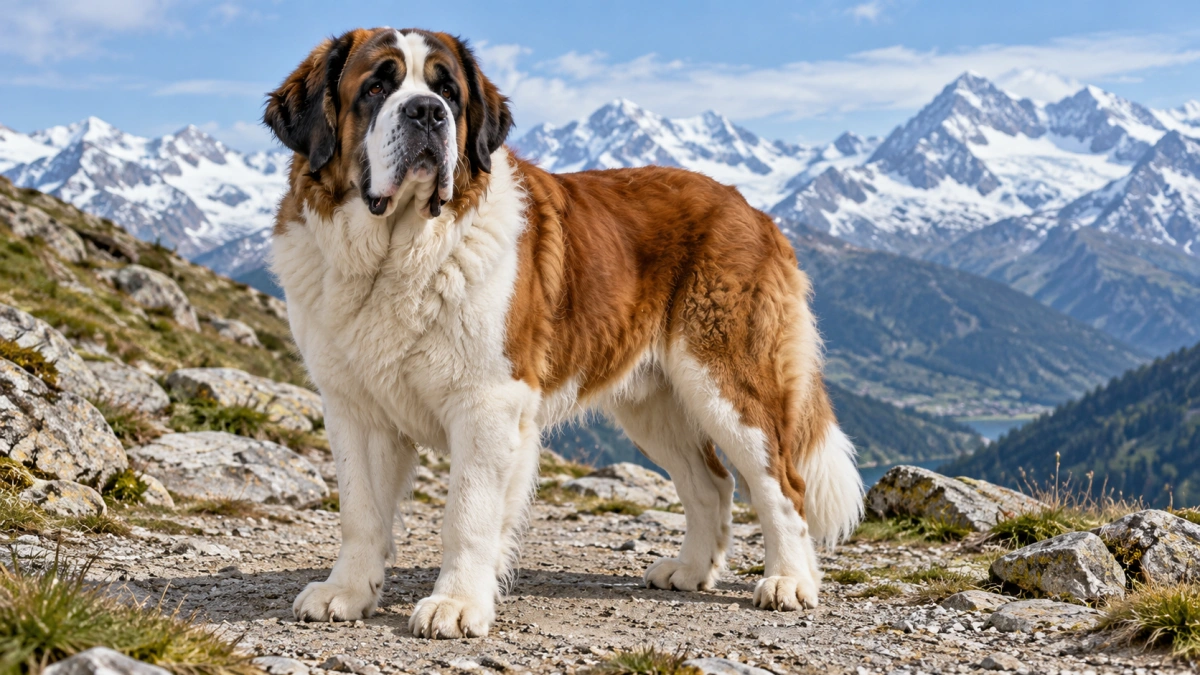
The Saint Bernard is closely associated with the Swiss Alps and the Great Saint Bernard Pass.
Adult males generally stand about 28 to 30 inches and weigh roughly 140 to 180 pounds.
The breed’s enormous frame, thick coat, and Alpine history make it one of the clearest examples of a giant mountain dog.
Saint Bernards are much heavier than Bernese Mountain Dogs and require owners prepared for giant-breed logistics such as transportation, large beds, grooming, food, and veterinary handling.
Pyrenean Mountain Guardians
The Pyrenees region produced a different kind of mountain dog.
Instead of farm drafting or direct handler-oriented work, these dogs were expected to protect livestock over large territories where people could not supervise every decision.
That history encouraged independence, patience, territorial awareness, and the ability to react to potential threats without waiting for detailed commands.
4. Great Pyrenees
The Great Pyrenees is one of the most recognizable livestock guardian breeds.
Adult males generally stand 27 to 32 inches and weigh 100 pounds or more.
Its dense white coat helped it work outdoors, while its temperament reflects generations of independent livestock protection.
Great Pyrenees are often described as calm and patient, but calm should not be confused with easy obedience.
A livestock guardian was historically expected to make its own decisions, and modern owners should expect more independence than they would from many retrieving or herding breeds.
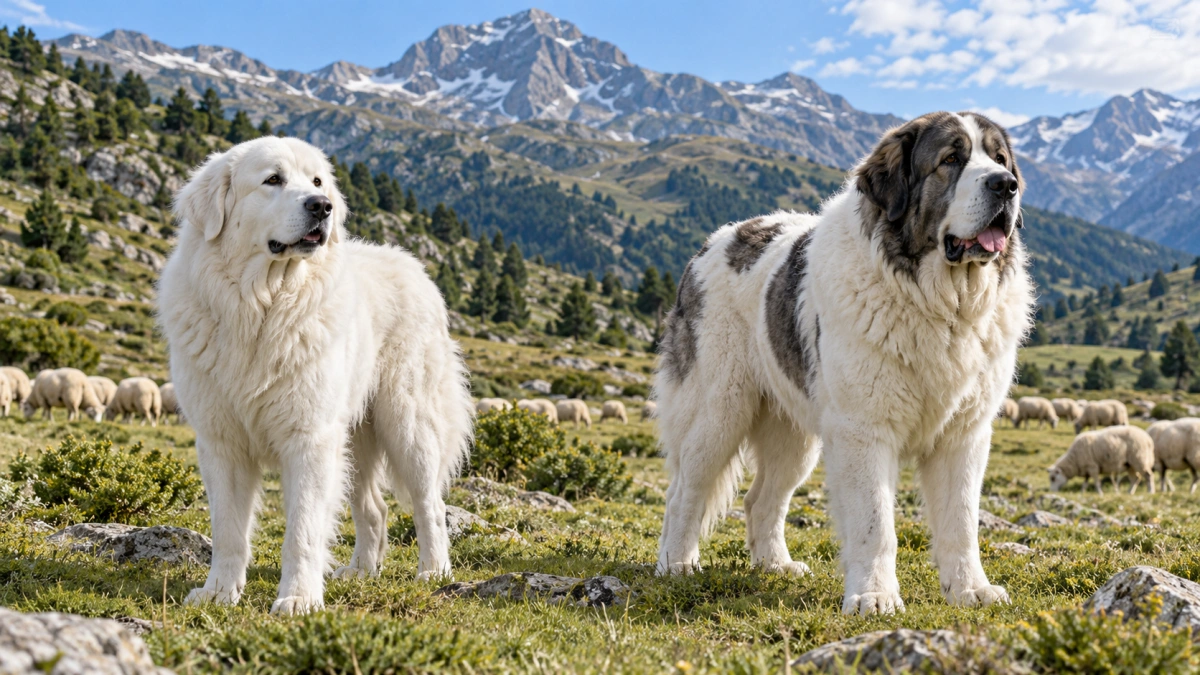
5. Pyrenean Mastiff
The Pyrenean Mastiff developed on the Spanish side of the Pyrenees as a livestock guardian.
It is a true giant breed, with current AKC information listing approximately 120 to 190 pounds.
The breed historically protected flocks against large predators and thieves.
Modern Pyrenean Mastiffs are described as calm and gentle with their people while remaining confident guardians when necessary.
Because of their enormous body mass and independent guardian heritage, they are very different from a large companion breed selected primarily for social ease.
Independent Mountain Guardian Breeds
Several mountain-region breeds were developed primarily to protect livestock or property rather than work through constant handler direction.
These dogs often share traits such as:
- Large body size
- Strong territorial awareness
- Reserved behavior with strangers
- Independent decision-making
- Strong attachment to their own household or flock
That working style can be very different from a Bernese Mountain Dog or Golden Retriever.
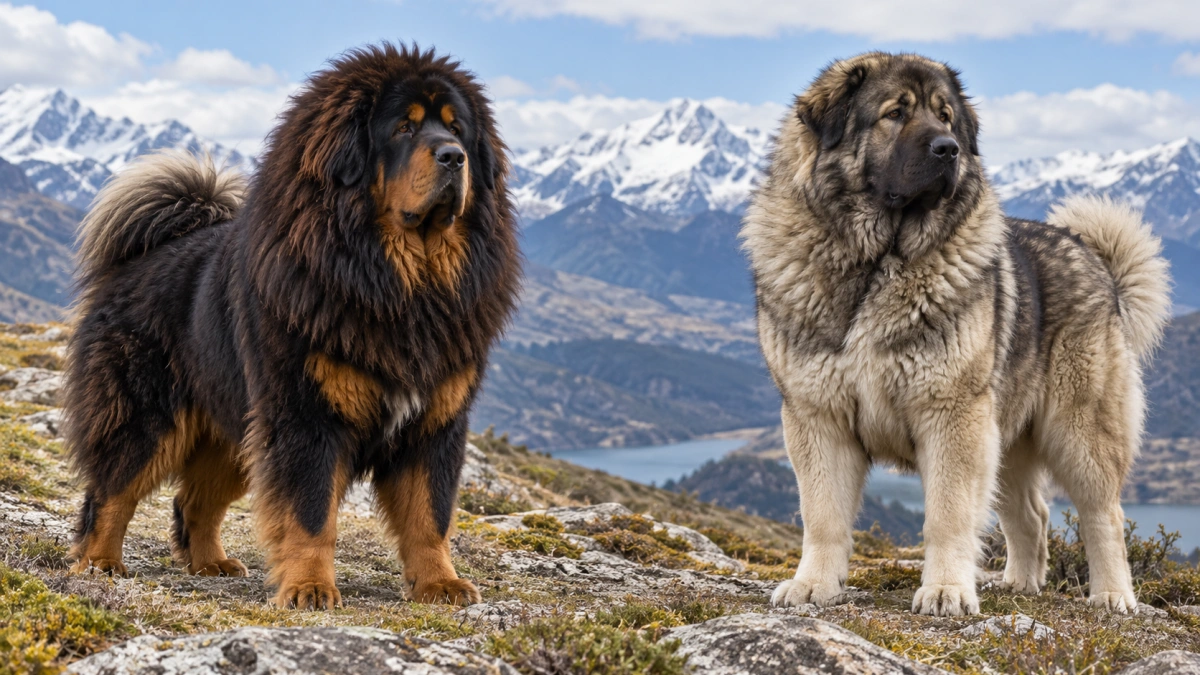
6. Tibetan Mastiff
The Tibetan Mastiff is a large guardian breed associated with the Tibetan Plateau and Himalayan region.
AKC lists males at a minimum of 26 inches and approximately 90 to 150 pounds.
The breed is known for being reserved, independent, and intelligent.
Its massive coat and imposing appearance are striking, but temperament should be the first consideration.
A dog developed to watch property and livestock independently is not automatically suited to an owner looking for highly social, eager-to-please obedience.
7. Caucasian Shepherd Dog
The Caucasian Shepherd Dog comes from the Caucasus mountain region and is among the most substantial guardian breeds.
AKC currently lists a broad range of about 23 to 30 inches and 99 to 170 pounds.
Its historic work involved guarding livestock and property against serious threats.
This is a breed that should not be selected simply because the thick coat and huge frame look impressive.
Caucasian Shepherds are powerful, protective, and independent. Secure containment, early socialization, thoughtful management, and experience with guardian behavior are particularly important.
8. Anatolian Shepherd Dog
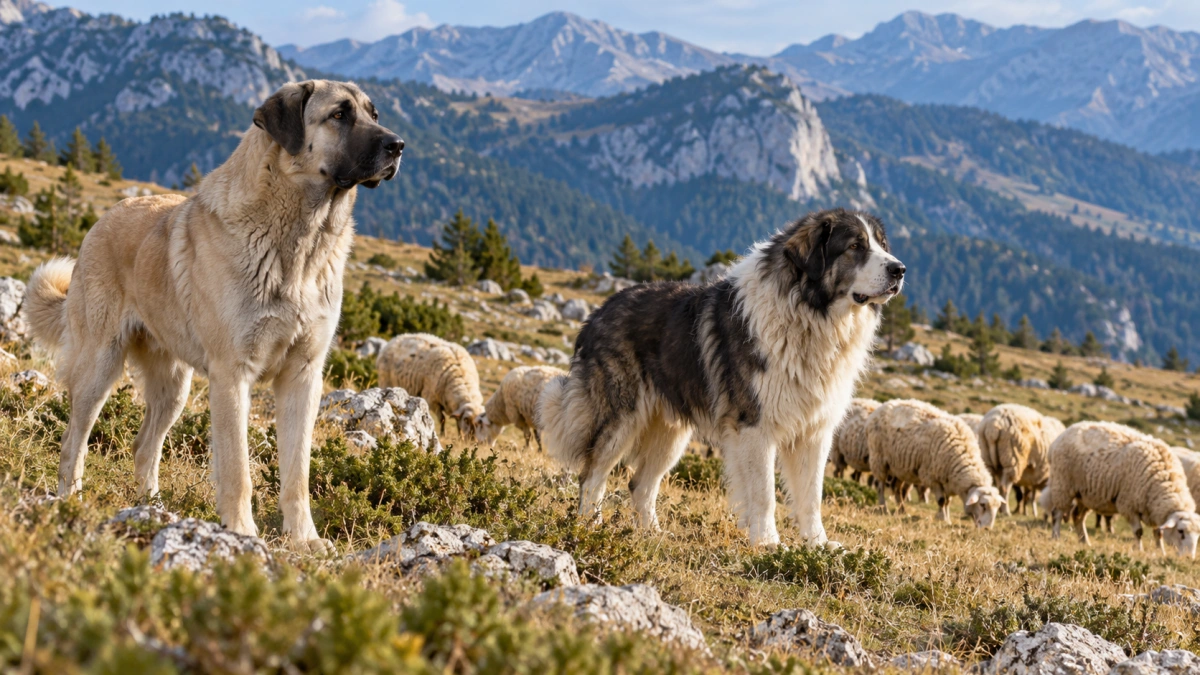
The Anatolian Shepherd Dog developed as a rugged livestock guardian in Anatolia.
Adults stand approximately 27 to 29 inches and can weigh as much as 150 pounds.
The breed combines muscular strength with agility and endurance.
More importantly, Anatolians were expected to protect animals independently.
AKC describes the breed as protective, territorial, intelligent, patient, and profoundly loyal.
This background creates a dog that can be calm at home but still requires an owner who understands protective instincts and independent decision-making.
9. Tornjak
The Tornjak is a livestock guardian from Bosnia and Herzegovina and Croatia.
AKC lists the breed at about 23 to 28 inches and 62 to 110 pounds.
Its long, thick coat and powerful but agile body reflect a history of working around livestock in demanding terrain.
Tornjaks are described as courageous, intelligent, devoted, and calm with their people while remaining suspicious of strangers when guarding.
Although less familiar in the United States than the Great Pyrenees or Anatolian Shepherd, the Tornjak demonstrates how widespread the livestock-guardian mountain-dog tradition is across Europe.
10. Kuvasz
The Kuvasz is a large white Hungarian livestock guardian with deep roots in the broader Eurasian guardian-dog tradition.
Adult males generally stand about 28 to 30 inches and weigh approximately 100 to 115 pounds.
Like other livestock guardians, Kuvaszok were expected to protect flocks while using independent judgment.
The breed is intelligent, loyal, courageous, and capable of moving surprisingly quickly for its size.
It fits best with owners who appreciate guardian behavior rather than expecting constant handler dependence.
Mountain Dog Breeds Are Not One Type of Dog
The term mountain dog can hide major differences in historical function.
Farm and Draft Dogs
Bernese and Greater Swiss Mountain Dogs historically worked closely with farmers, cattle, and carts.
Their work required strength but also regular cooperation with people.
Livestock Guardian Dogs
Great Pyrenees, Anatolian Shepherd Dogs, Tibetan Mastiffs, Caucasian Shepherd Dogs, Tornjaks, and similar breeds often worked at greater distance from human handlers.
Their job required independent decisions and defensive behavior.
Alpine Working Dogs
Saint Bernards represent another working tradition linked to mountain travel and Alpine conditions.
The key lesson is that living in mountains did not create one universal temperament.
Why Do So Many Mountain Dogs Have Thick Coats?
Mountain environments can expose working dogs to low temperatures, wind, moisture, and rapidly changing weather.
Many breeds therefore developed dense double coats or substantial protective outer coats.
Examples include:
- Bernese Mountain Dog
- Great Pyrenees
- Tibetan Mastiff
- Caucasian Shepherd Dog
- Tornjak
- Saint Bernard
However, thick coat does not mean a dog should permanently live outdoors.
Modern companion dogs still need appropriate shelter, social interaction, temperature management, and everyday family care.
Are Mountain Dogs Good in Hot Weather?
Many heavy-coated mountain breeds are better adapted to cool conditions than intense heat.
Owners living in hot climates should plan for:
- Indoor temperature control
- Shade
- Fresh water
- Walks during cooler hours
- Reduced strenuous activity during high heat
Do not shave a double-coated breed simply because the weather becomes warm unless there is a veterinary or medical reason to do so.
Livestock Guardians Think Differently
This is one of the most important differences for prospective owners.
A livestock guardian historically could not wait for a shepherd to give a command every time something approached the flock.
The dog had to decide:
- Whether something was a threat
- Whether to bark
- Whether to move toward the boundary
- Whether to stay near the flock
That independence remains visible in many modern guardian breeds.
They can learn obedience, but their decision-making style may feel very different from a breed developed to follow continuous human direction.
Are Mountain Dog Breeds Good Family Dogs?
Some can be excellent family companions, but the answer depends heavily on breed.
Bernese Mountain Dogs are commonly selected for affectionate family companionship.
Saint Bernards and some other giant working breeds can also be gentle household dogs.
Livestock guardian breeds may be deeply devoted to family but bring stronger protective instincts and greater suspicion of unfamiliar people.
Supervision around children remains important with every large breed because body size alone can cause accidental injuries.
Which Mountain Dog Is Most Family-Oriented?
For owners primarily seeking a large companion rather than a serious guardian, the Bernese Mountain Dog is often one of the easiest places to start researching.
Greater Swiss Mountain Dogs can also be strongly family-oriented.
Saint Bernards may suit households prepared for giant-breed size.
By contrast, Caucasian Shepherd Dogs and Tibetan Mastiffs generally require much more careful consideration of protective and territorial behavior.
Which Mountain Dogs Are the Most Protective?
Livestock guardians generally sit at the more protective end of the spectrum.
Examples include:
- Caucasian Shepherd Dog
- Anatolian Shepherd Dog
- Tibetan Mastiff
- Great Pyrenees
- Pyrenean Mastiff
- Kuvasz
- Tornjak
Protective instinct should never be treated as a decorative personality feature.
Strong guardian breeds need secure management, careful socialization, and owners who understand the responsibilities associated with a large territorial dog.
Which Mountain Dogs Are Easier to Train?
Trainability depends on what you mean by easy.
A Bernese Mountain Dog may be more naturally cooperative in conventional companion training because its historical work often involved closer interaction with people.
Livestock guardians are highly intelligent, but intelligence and obedience are not the same thing.
A guardian may understand a cue and still evaluate whether following it makes sense in the situation.
Exercise Needs Vary
Do not assume every mountain dog needs extreme endurance exercise.
Some were developed to patrol large areas slowly and steadily. Others worked cattle, moved carts, or performed demanding farm tasks.
Compare the individual breed’s activity level rather than choosing an exercise plan from body size alone.
Grooming Can Be a Major Commitment
Many mountain breeds carry substantial coats.
Regular brushing can help manage:
- Loose undercoat
- Seasonal shedding
- Tangles
- Debris
Long-coated guardian breeds may require considerably more maintenance than a short-coated Greater Swiss Mountain Dog or Anatolian Shepherd Dog.
Mountain Dogs and Apartment Living
Some individual large dogs can adapt to apartment life, but several mountain guardian breeds are difficult fits for dense urban housing.
Consider:
- Adult body size
- Barking
- Territorial behavior
- Need for secure outdoor exercise
- Elevators and stairs
- Neighbor proximity
- Visitor management
A calm energy level does not automatically make a livestock guardian an easy apartment dog.
Mountain Dog Breeds and First-Time Owners
Not every mountain breed is suitable for a first-time owner.
A committed beginner may successfully live with a Bernese Mountain Dog if prepared for training, grooming, and large-dog costs.
Highly independent guardian breeds such as Caucasian Shepherd Dogs, Tibetan Mastiffs, or Anatolian Shepherd Dogs generally present a more demanding management profile.
Choose based on temperament and working history rather than appearance alone.
Health and Lifespan Vary by Breed
There is no single mountain-dog health profile.
These breeds differ in:
- Average lifespan
- Joint concerns
- Eye conditions
- Cardiac conditions
- Breed-specific inherited disorders
Large size itself can also affect orthopedic development and aging.
When purchasing a puppy, review the health tests recommended by the national breed club for that specific breed rather than relying on a generic large-dog checklist.
Mountain Dogs vs Giant Dog Breeds
The two categories overlap but are not identical.
Saint Bernards, Pyrenean Mastiffs, Tibetan Mastiffs, and Caucasian Shepherd Dogs can all fall comfortably into giant-dog discussions.
Other mountain breeds, including the Bernese Mountain Dog and Greater Swiss Mountain Dog, are very large without necessarily being among the absolute heaviest dogs in the world.
And the Entlebucher and Appenzeller demonstrate that Swiss mountain-dog heritage can exist in much smaller bodies.
For size-first comparisons, see our guide to giant dog breeds.
Which Mountain Dog Breed Is Right for You?
| If Your Priority Is… | Start Researching… |
|---|---|
| Affectionate Swiss family dog | Bernese Mountain Dog |
| Short-coated Swiss farm worker | Greater Swiss Mountain Dog |
| Massive Alpine giant | Saint Bernard |
| Classic white livestock guardian | Great Pyrenees |
| Huge Pyrenean guardian | Pyrenean Mastiff |
| Ancient highland guardian | Tibetan Mastiff |
| Rugged livestock guardian | Anatolian Shepherd Dog |
| Serious territorial guardian | Caucasian Shepherd Dog |
| Less-common European livestock guardian | Tornjak |
| White independent guardian | Kuvasz |
Questions to Ask Before Choosing a Mountain Dog
- Do I want a family companion, farm dog, or serious livestock guardian?
- How much adult weight can I safely handle?
- Am I comfortable with an independent dog?
- How much barking can my household tolerate?
- How much shedding and grooming can I manage?
- Do I live in a hot climate?
- Can I provide secure fencing?
- Can I safely manage visitors?
- How much daily exercise can I provide?
- Do I understand the breed’s historical working role?
- Can I afford giant or large-breed veterinary care?
- Have I researched breed-specific health testing?
Final Thoughts
Mountain dog breeds are united more by working history and environment than by one shared appearance or temperament.
Swiss farm dogs such as the Bernese and Greater Swiss Mountain Dog were developed for close cooperation with farmers, cattle, and carts. Great Pyrenees, Anatolian Shepherd Dogs, Tibetan Mastiffs, Caucasian Shepherd Dogs, and similar livestock guardians were selected for far more independent protection work. Saint Bernards represent another Alpine tradition built around size, strength, and work in difficult terrain.
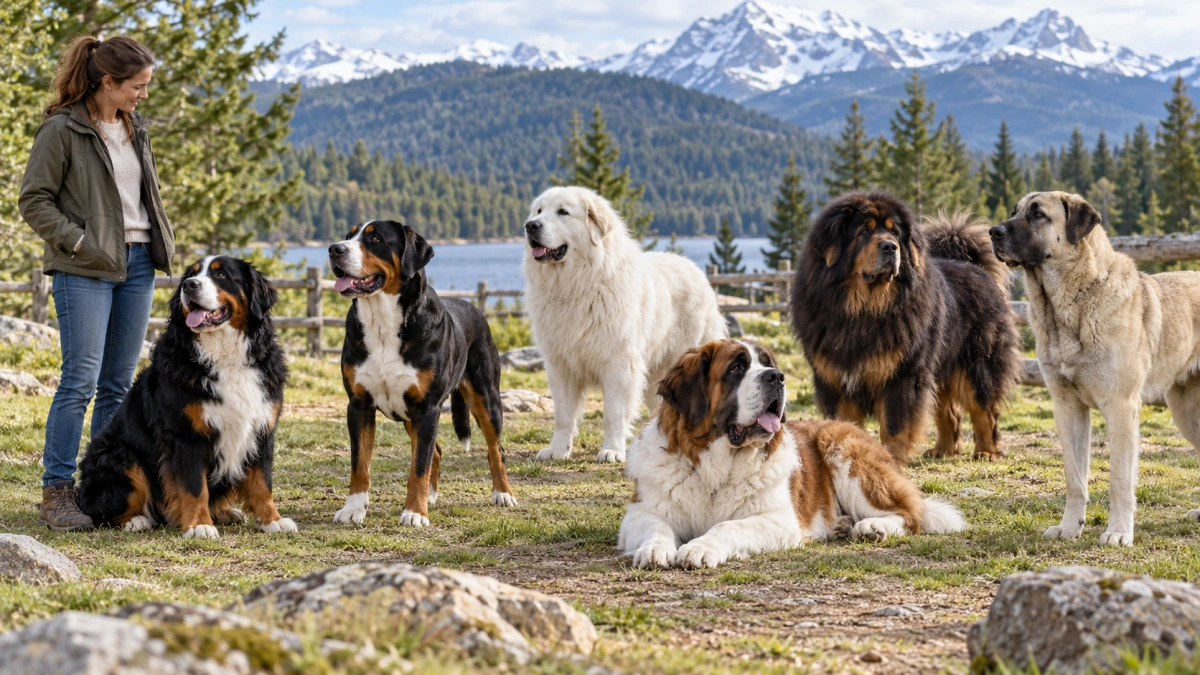
The result is a group of dogs that may all look impressive in a mountain landscape while behaving very differently in a modern home.
Choose by working style first. Ask whether you want a cooperative family companion, a giant Alpine dog, or an independent guardian capable of making its own decisions.
Once that answer is clear, size, coat, exercise, grooming, climate, training, and health become much easier to compare.