By
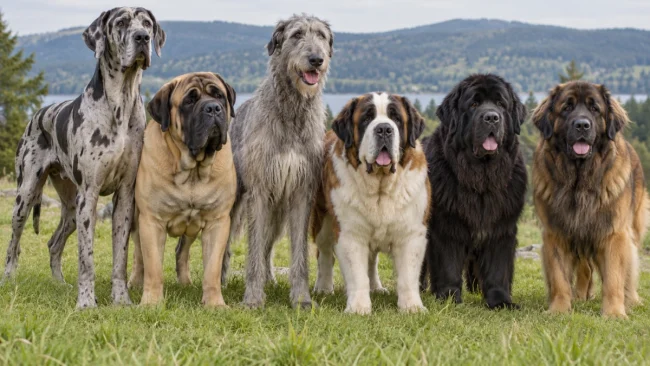
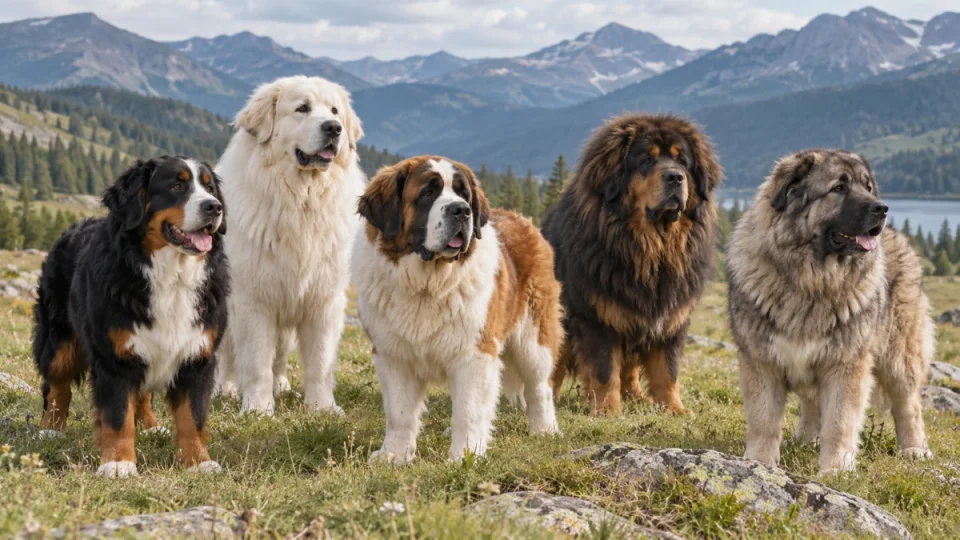
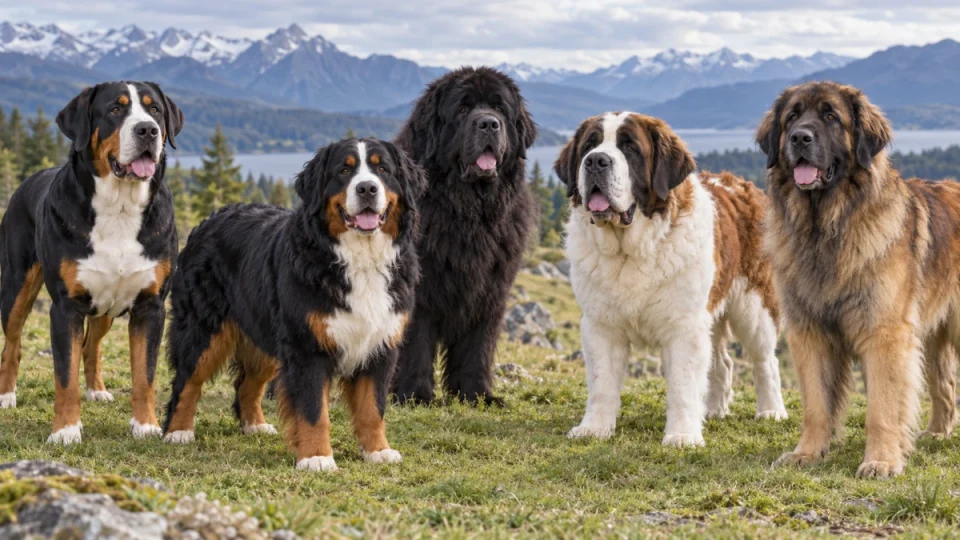
Giant dog breeds combine extraordinary height, body mass, strength, and presence, but there is no single official weight or height that turns a large dog into a “giant breed.” The term is commonly used for exceptionally tall or heavy breeds such as Great Danes, Mastiffs, Irish Wolfhounds, Saint Bernards, Newfoundlands, and Leonbergers.
These dogs can be impressive family companions and working partners, but their size changes everyday ownership in ways that go far beyond needing a bigger food bowl. Beds, crates, vehicles, training, veterinary care, medication costs, housing, and even finding a pet sitter can all become more complicated once a dog approaches or exceeds the weight of an adult person.
If you are comparing the biggest dog breeds, first decide whether you mean tallest, heaviest, or simply very large overall. Those are not always the same thing.
For a broader look at big dogs, visit our Large Dog Breeds guide.
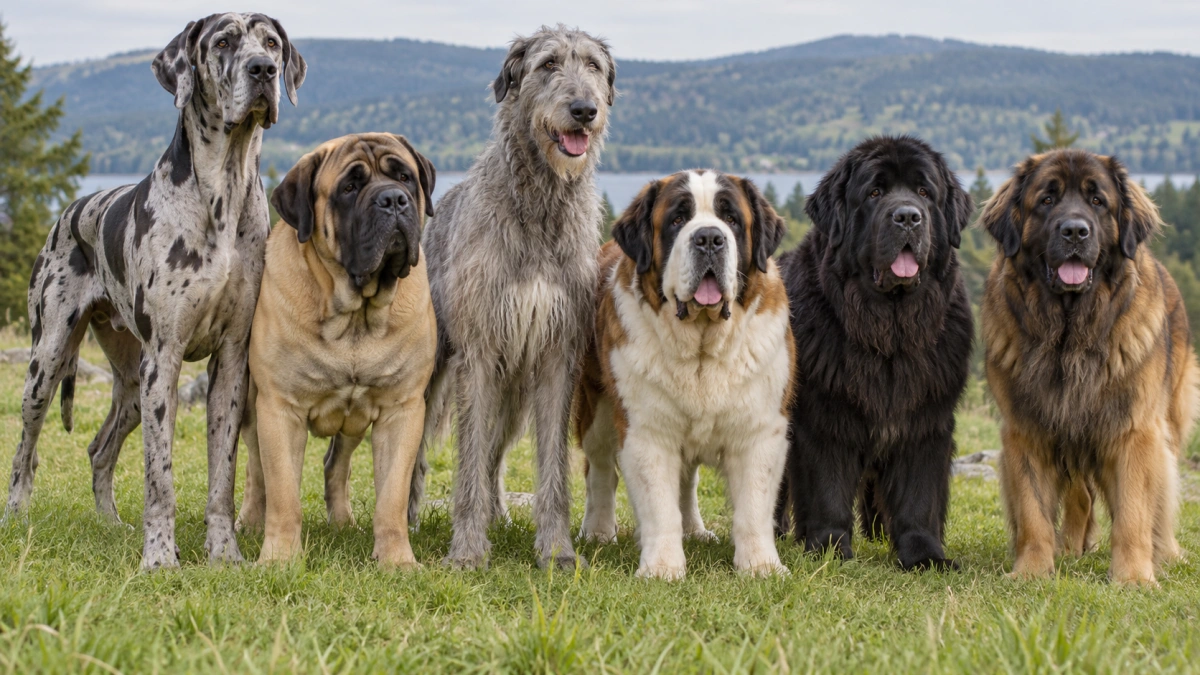
What Counts as a Giant Dog Breed?
There is no official American Kennel Club height or weight threshold for the term “giant breed.”
Instead, the term is commonly used informally for dogs at the extreme upper end of canine size. Some are exceptionally tall, some are exceptionally heavy, and some combine both qualities.
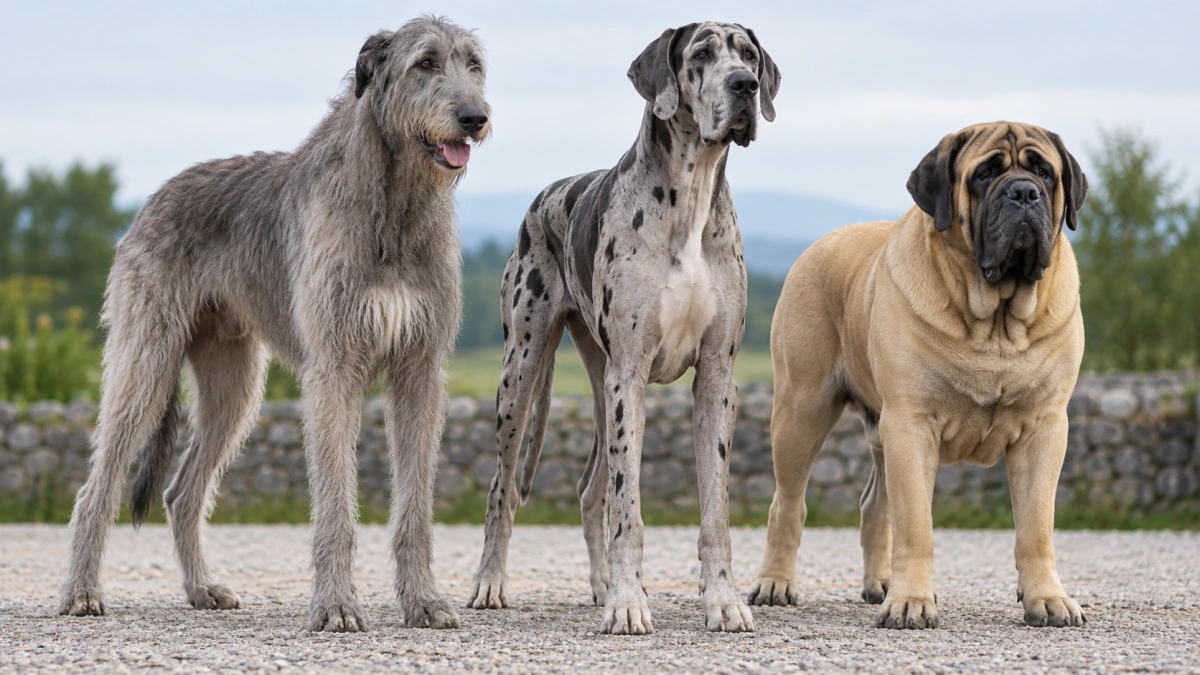
For example, the Irish Wolfhound is recognized by AKC as the tallest dog breed. A male has a minimum standard height of 32 inches at the shoulder.
The Mastiff approaches “giant” from the other direction. Adult males can weigh roughly 160 to 230 pounds while standing at least 30 inches tall.
A Great Dane combines exceptional height with an athletic frame, while a Saint Bernard may be shorter than the tallest Wolfhound but substantially heavier.
Tallest vs Heaviest Dog Breeds
“Biggest” becomes confusing because canine size can be measured in different ways.
| Size Type | Example | What Makes the Breed Giant |
|---|---|---|
| Tallest | Irish Wolfhound | Extremely high shoulder height and long limbs |
| Very tall | Great Dane | Tall, elegant body with substantial weight |
| Heaviest | Mastiff | Massive bone, muscle and body width |
| Heavy mountain type | Saint Bernard | Large frame, substantial body mass and heavy coat |
| Heavy working type | Newfoundland | Large body, heavy bone and dense coat |
That is why a ranking of the “20 biggest dog breeds” can change depending on whether the source ranks by height, average weight, maximum weight, or overall build.
Quick Comparison of Giant Dog Breeds
| Breed | Typical Adult Size | Known For |
|---|---|---|
| Great Dane | Males about 30–32 in, 140–175 lb | Exceptional height and friendly temperament |
| Mastiff | Males 30+ in, 160–230 lb | Extreme body mass and powerful build |
| Irish Wolfhound | Males minimum 32 in, about 120 lb minimum standard weight | Tallest AKC-recognized breed |
| Saint Bernard | Males about 28–30 in, 140–180 lb | Massive Alpine working dog |
| Newfoundland | Males about 28 in, 130–150 lb | Gentle water-working giant |
| Greater Swiss Mountain Dog | Males about 25.5–28.5 in, 115–140 lb | Powerful Swiss farm and draft dog |
| Great Pyrenees | Males about 27–32 in, 100+ lb | Independent livestock guardian |
| Leonberger | Often about 90–170 lb | Long-coated giant family and working dog |
| Anatolian Shepherd Dog | About 27–29 in, up to roughly 150 lb | Independent livestock guardian |
| Bernese Mountain Dog | Males about 25–27.5 in, 80–115 lb | Swiss farm dog with affectionate temperament |
| Neapolitan Mastiff | Males about 26–31 in, around 150 lb | Massive ancient guardian |
| Bullmastiff | Males about 25–27 in, 110–130 lb | Powerful but comparatively compact guardian |
These measurements describe breed standards and typical ranges rather than guarantees for every individual dog.
1. Great Dane
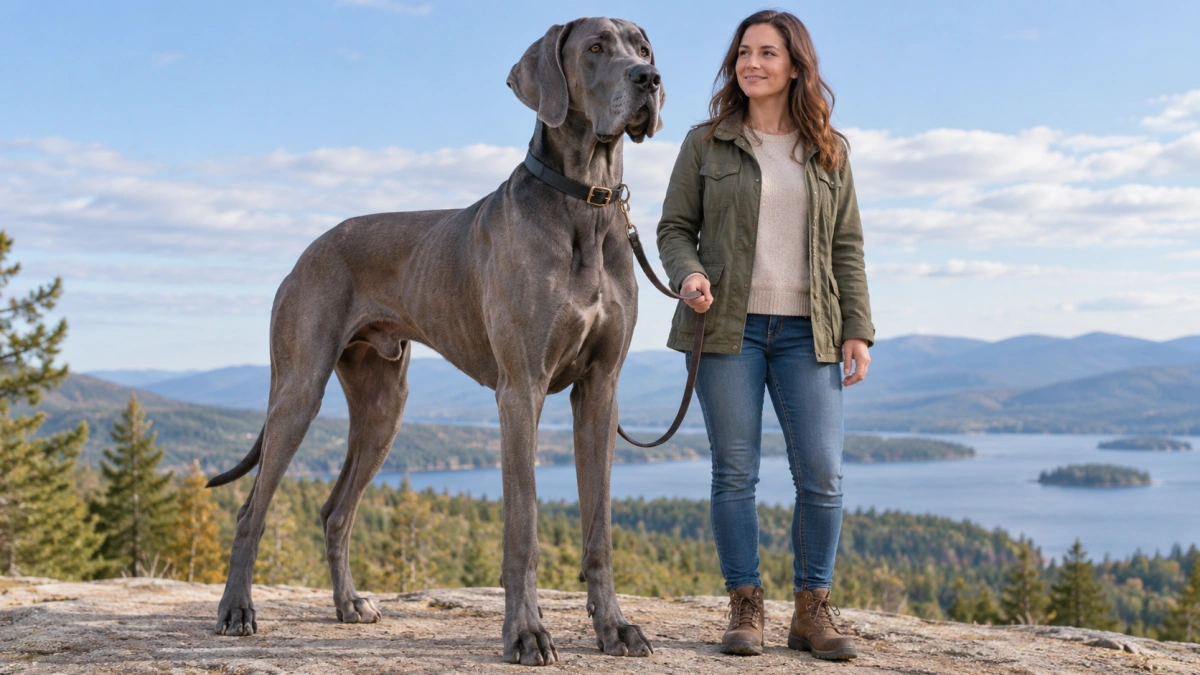
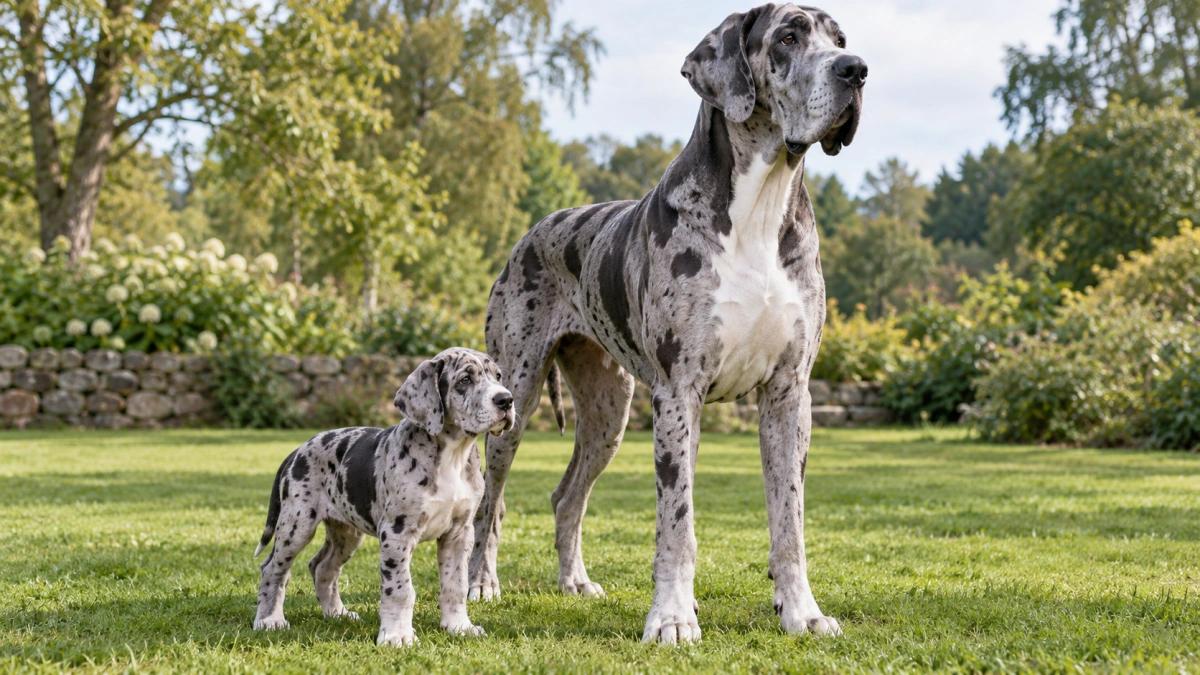
The Great Dane is often the breed people picture first when they hear “giant dog.”
Adult males generally stand about 30 to 32 inches at the shoulder and weigh roughly 140 to 175 pounds. Females are somewhat smaller but remain enormous compared with most household dogs.
Despite the intimidating size, Great Danes are commonly described as friendly, patient, and dependable.
Their height creates practical challenges that body weight alone does not show. A standing Great Dane can easily place its head at kitchen-counter height, reach tables that smaller dogs cannot, and take up substantial vertical as well as floor space.
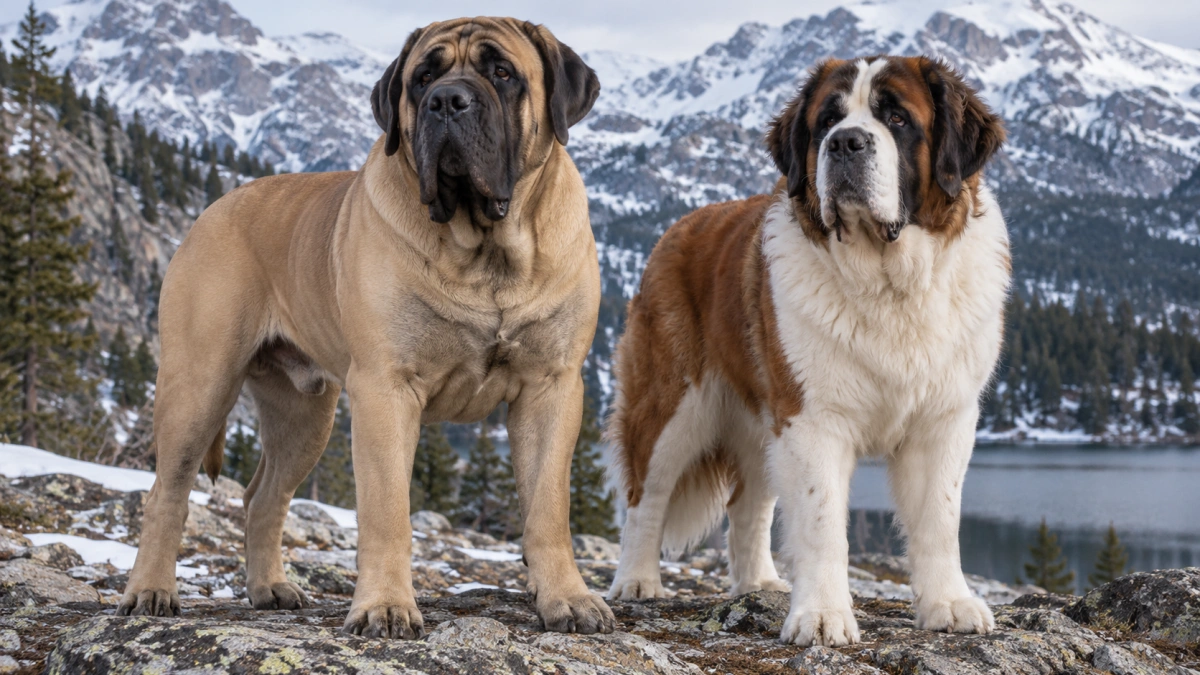
2. Mastiff
If Great Danes represent extreme height, the Mastiff represents extreme body mass.
AKC lists adult males at a minimum of 30 inches tall and approximately 160 to 230 pounds. Females commonly weigh about 120 to 170 pounds.
This makes the Mastiff one of the heaviest widely recognized dog breeds.
The breed is described as dignified, good-natured, and courageous, but the practical reality of living with a 180- or 200-pound dog should not be underestimated.
Transportation, lifting after an injury, veterinary handling, beds, and basic leash control all require planning.
3. Irish Wolfhound
The Irish Wolfhound is the tallest of the AKC-recognized breeds.
The breed standard sets a minimum height of 32 inches for males and 30 inches for females. Their long legs and sighthound-style body make them look dramatically different from heavy Mastiff-type giants.
Irish Wolfhounds are commonly described as calm, dignified, and kindly.
Their tall athletic build also means they need sufficient room to move naturally and opportunities for safe exercise.
4. Saint Bernard
The Saint Bernard combines height, heavy bone, and exceptional body mass.
Adult males generally stand around 28 to 30 inches and weigh about 140 to 180 pounds. Females commonly range from approximately 120 to 140 pounds.
The breed developed in the Swiss Alps and became famous for search-and-rescue work.
Modern Saints can be affectionate companions, but owners should be prepared for large-dog logistics, shedding, drool, and the costs associated with giant-breed care.
5. Newfoundland
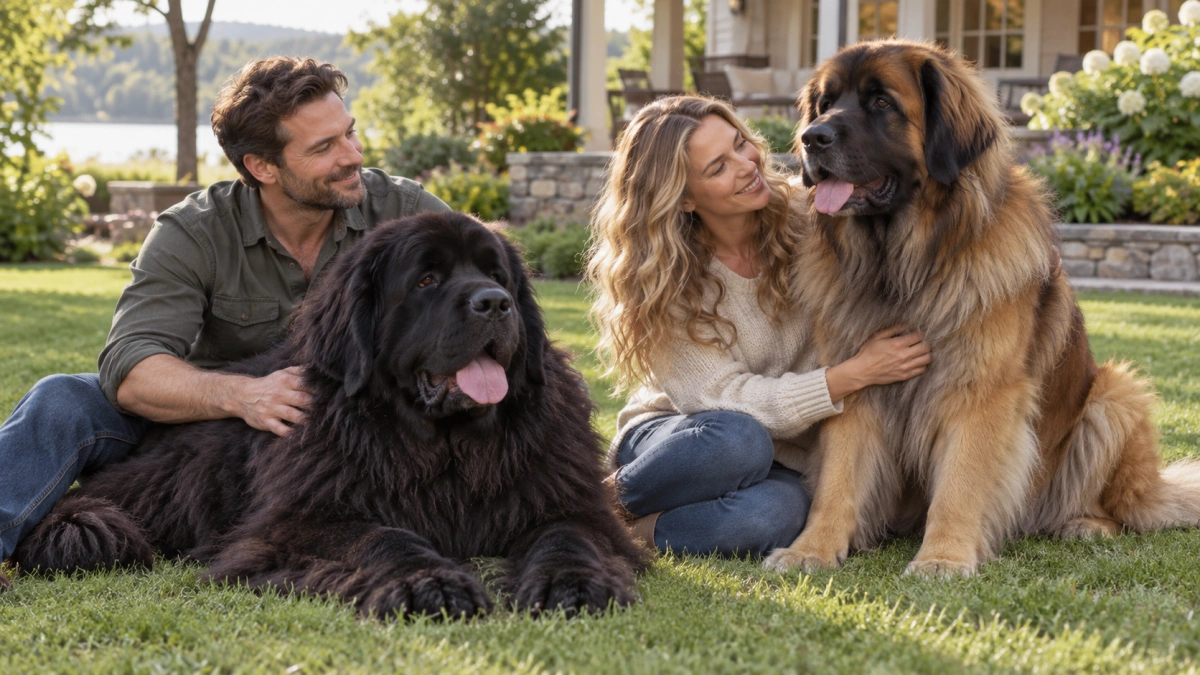
Newfoundlands combine giant size with a reputation for sweet temperament and trainability.
Adult males average about 28 inches tall and 130 to 150 pounds, while females are generally around 100 to 120 pounds.
The breed was developed as a powerful water-working dog and has a heavy, water-resistant coat.
For households attracted to “gentle giant” breeds, the Newfoundland is one of the most recognizable examples.
The trade-off is substantial coat care, shedding, large equipment, and the physical management required by a dog that may outweigh its owner.
6. Leonberger
Leonbergers are long-coated giant dogs of German origin.
Adult weight can range broadly, with AKC data placing the breed around 90 to 170 pounds.
They combine imposing size with a comparatively serene family-companion reputation and have also worked in drafting and other dog sports.
A Leonberger may appeal to someone who likes the presence of a Newfoundland or Bernese Mountain Dog but wants a different appearance.
7. Great Pyrenees
The Great Pyrenees is a mountain livestock guardian rather than simply a large companion dog.
Males generally stand about 27 to 32 inches and weigh 100 pounds or more.
The breed’s calm appearance can hide a strongly independent working temperament. Historically, Pyrs had to guard livestock and make decisions without waiting for constant human instructions.
That independence matters just as much as size when deciding whether the breed fits your lifestyle.
8. Greater Swiss Mountain Dog
The Greater Swiss Mountain Dog is a large, muscular Swiss working breed.
Males generally stand about 25.5 to 28.5 inches and weigh approximately 115 to 140 pounds.
Swissies historically worked as herders and draft dogs. They remain powerful but are generally more compact than the tallest giant breeds.
For people interested in mountain and drafting breeds, the Greater Swiss offers a different combination of size and coat than long-haired Bernese or Leonberger-type dogs.
9. Anatolian Shepherd Dog
The Anatolian Shepherd Dog is a large livestock guardian developed for independent protection work.
The breed stands roughly 27 to 29 inches and can reach about 150 pounds.
This is an important example of why giant-breed selection cannot be based only on appearance.
Anatolians are protective, territorial, and independent. That temperament is very different from the more socially easygoing image many people associate with breeds such as Great Danes or Newfoundlands.
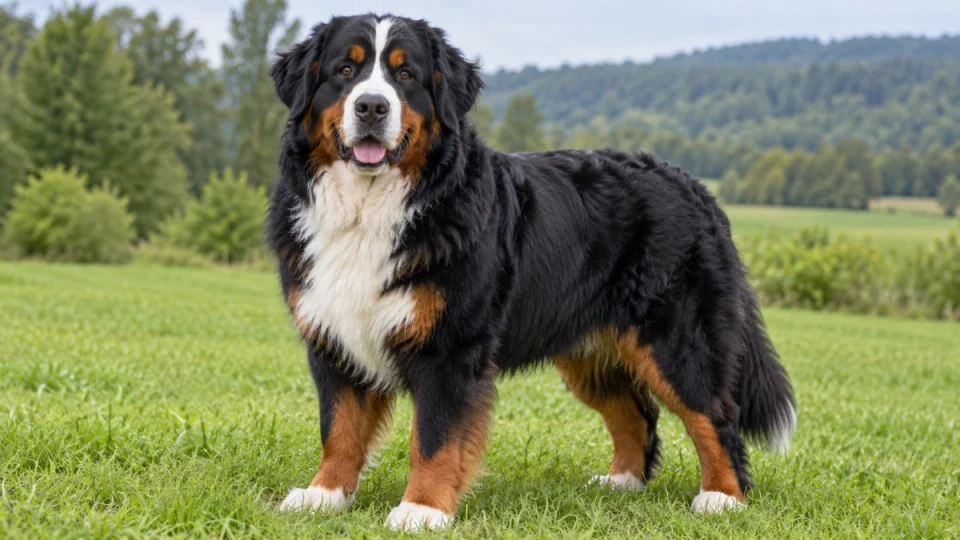
10. Bernese Mountain Dog
Bernese Mountain Dogs sit toward the lighter end of the giant and extra-large conversation, but adult males can still reach approximately 115 pounds.
Their thick tricolor coat, strong body, Swiss farm heritage, and affectionate family temperament make them one of the most recognizable large working dogs.
If you are specifically researching the breed, see our Bernese Mountain Dog breed guide.
11. Neapolitan Mastiff
The Neapolitan Mastiff is a massive guardian breed known for loose skin, deep wrinkles, enormous bone, and an imposing appearance.
Adult males generally stand about 26 to 31 inches and are listed around 150 pounds, with some individuals exceeding that weight.
The breed is loyal and watchful but naturally wary of strangers.
This is the kind of giant dog where experience with large guardian breeds can matter more than simply having enough square footage.
12. Bullmastiff
The Bullmastiff is somewhat shorter and lighter than the largest Mastiffs but still represents a substantial amount of dog.
Adult males generally stand 25 to 27 inches and weigh around 110 to 130 pounds.
They were developed as estate guardians and combine strength with a relatively compact frame.
Early socialization and training are particularly important because a mature Bullmastiff is physically capable of overpowering an unprepared owner.
Other Very Large Breeds Worth Knowing
Depending on how you define giant, other breeds often included in extra-large dog discussions include the Black Russian Terrier, Tibetan Mastiff, Dogue de Bordeaux, Cane Corso, Kuvasz, Boerboel, Scottish Deerhound, and other substantial livestock guardians or Mastiff-type dogs.
The goal is not to force every breed into a rigid “giant” category. Instead, consider how the individual breed’s adult size affects everyday ownership.
Giant Breed Puppies Grow Differently
Giant-breed puppies can remain physically and mentally immature for longer than smaller dogs.
AKC guidance notes that giant breeds generally mature more slowly and require careful management while their bones and joints are developing.
That means puppy exercise should focus on appropriate activity rather than repeatedly pushing a growing dog into intense endurance exercise.
Your veterinarian can help you plan nutrition, weight management, exercise, and growth monitoring for the specific breed.
Why Early Training Matters More With Giant Dogs
A behavior that seems harmless in a 25-pound puppy becomes a serious management problem when the same dog weighs 120 or 180 pounds.
Important early skills include calm greetings, loose-leash walking, recall foundations, waiting at doors, cooperative handling, and settling around people.
Positive-reinforcement training should begin while the puppy is still physically easy to manage.
Early socialization is equally important, especially in guardian breeds that may naturally become more reserved or protective as they mature.
Do Giant Dogs Need Huge Houses?
Not always.
Some giant dogs are relatively calm indoors and can adapt to smaller homes when they receive appropriate exercise.
However, you still need practical floor space for the dog and its belongings.
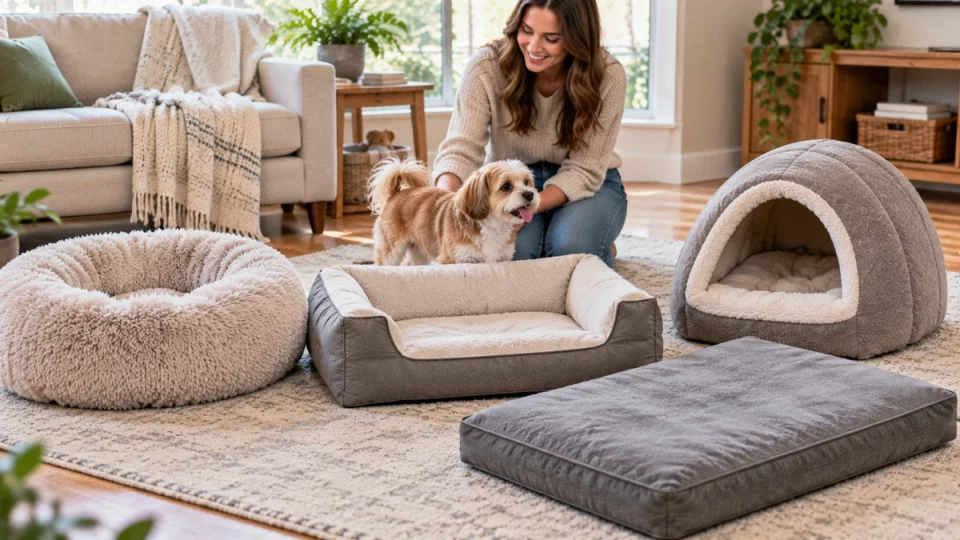
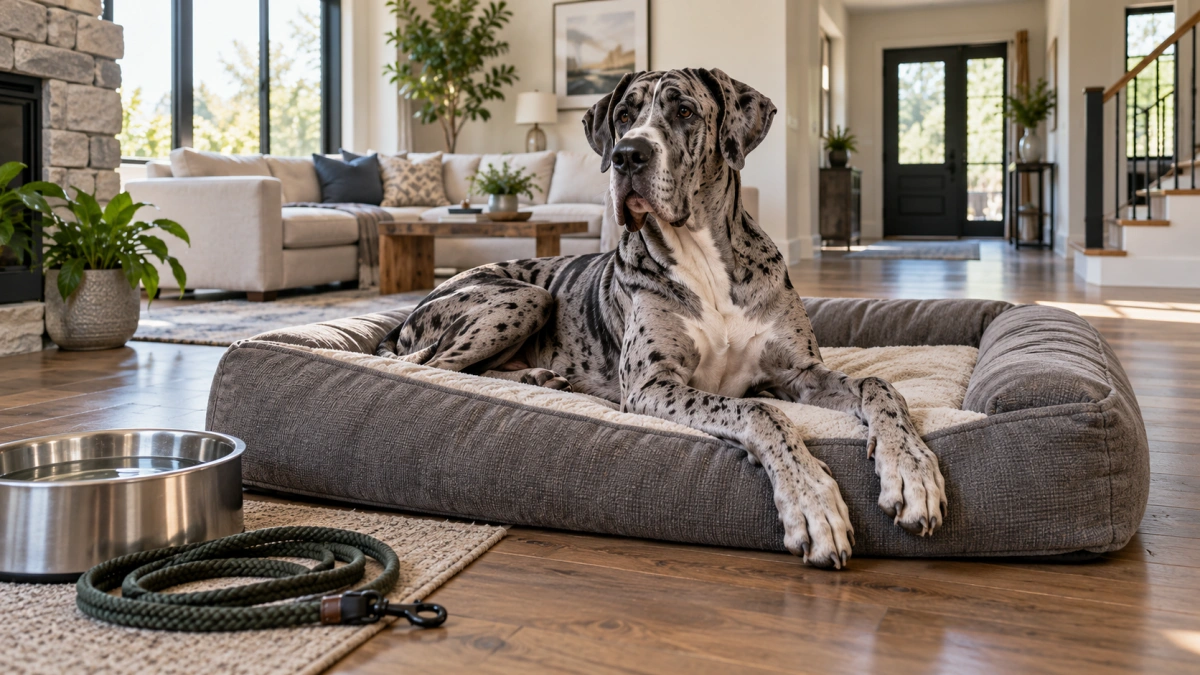
A giant dog may require an oversized bed, wide crate, large water bowls, storage for large food bags, and enough walking space to turn and stretch without constantly blocking household traffic.
Everything Costs More at Giant Size
Food is only one part of the budget.
Expect larger expenses for beds, crates, collars, harnesses, medication, boarding, grooming, and transportation.
Veterinary treatment can also become more expensive because many medications are dosed by body weight.
AKC additionally notes that some clinics may not have equipment designed to safely accommodate the largest dogs for procedures such as imaging or surgery.
Transportation Can Become a Major Issue
Before getting a giant breed, imagine moving the adult dog rather than the puppy.
Ask whether:
- The dog can enter your vehicle comfortably
- You have enough cargo or seating space
- You can help an injured dog into the vehicle
- Your preferred hotel accepts dogs over its weight limit
- Boarding facilities can handle the breed
These problems are much easier to solve before an emergency.
Giant Dogs and Children
Many giant breeds can be affectionate family companions.
However, even a gentle dog can accidentally knock over a young child.
Supervise interactions, teach children respectful dog handling, and teach the dog calm movement around people.
Temperament also varies by breed. A Newfoundland and an Anatolian Shepherd are both enormous, but their historical jobs created very different behavioral tendencies.
Giant Dogs and Exercise
Giant does not automatically mean high-energy.
Great Danes, Mastiffs, Saint Bernards, livestock guardians, and giant sighthounds all have different exercise patterns.
Choose exercise based on breed, age, health, and physical development rather than assuming every large dog needs marathon-length activity.
Growing puppies deserve particular care because repetitive high-impact exercise may be inappropriate while their bodies are still developing.
Grooming Varies Dramatically
Size does not tell you how much grooming a giant dog needs.
A Great Dane has a short coat, while Newfoundlands, Leonbergers, Bernese Mountain Dogs, and Great Pyrenees have much more substantial coats.
Long or dense coats mean more brushing, drying time, seasonal shedding, and household hair.
If grooming time matters to you, compare coat type separately from adult size.
Do Giant Dog Breeds Live Shorter Lives?
In general, very large dogs tend to have shorter average lifespans than smaller dogs.
AKC notes that giant breeds commonly average roughly 8 to 10 years overall, although individual breed estimates differ.
For example, Great Danes are typically listed around 7–10 years, Mastiffs around 6–10 years, Irish Wolfhounds around 6–8 years, and Newfoundlands around 9–10 years.
These ranges are population-level estimates and cannot predict how long an individual dog will live.
Health Planning Matters
Different giant breeds have different inherited health concerns, so avoid treating “giant breed health” as one single diagnosis list.
Responsible breeder selection should include the health tests recommended for that specific breed.
Large and deep-chested breeds may also be discussed in relation to gastric dilatation-volvulus, commonly called bloat, but individual risk and preventive decisions should be discussed with your veterinarian.
Which Giant Breeds Are More Family-Oriented?
Newfoundlands, Great Danes, Bernese Mountain Dogs, Saint Bernards, and Leonbergers are commonly selected by people seeking large companion dogs.
That does not mean every individual automatically has a perfect family temperament.
Genetics, socialization, training, household management, and responsible supervision still matter.
Which Giant Breeds Are More Protective?
Livestock guardians and Mastiff-type breeds often bring stronger protective instincts.
Examples include the Great Pyrenees, Anatolian Shepherd Dog, Neapolitan Mastiff, Tibetan Mastiff, Bullmastiff, and similar guardian breeds.
These dogs may require owners who understand independent decision-making, territorial behavior, and early socialization.
Which Giant Breed Is the Tallest?
The Irish Wolfhound is recognized by AKC as the tallest dog breed.
Male breed-standard height begins at 32 inches, and many adult males stand even taller.
Great Danes are also exceptionally tall and are among the breeds most often associated with individual height records.
Which Giant Breed Is the Heaviest?
The Mastiff is one of the strongest answers when discussing the heaviest recognized dog breeds.
Adult male Mastiffs commonly fall between 160 and 230 pounds according to AKC breed information.
That upper range significantly exceeds the typical adult weight of many other giant breeds.
Is a Giant Dog Breed Right for You?
Before choosing a giant breed, consider the entire adult dog rather than the irresistible puppy.
You should be comfortable with adult size, training responsibility, food costs, large equipment, transportation, veterinary handling, shorter average lifespan, and whatever grooming or protective instincts belong to the specific breed.
If what attracts you most is the working history of big dogs from mountainous regions, our Mountain Dog Breeds guide is the natural next comparison.
Final Thoughts
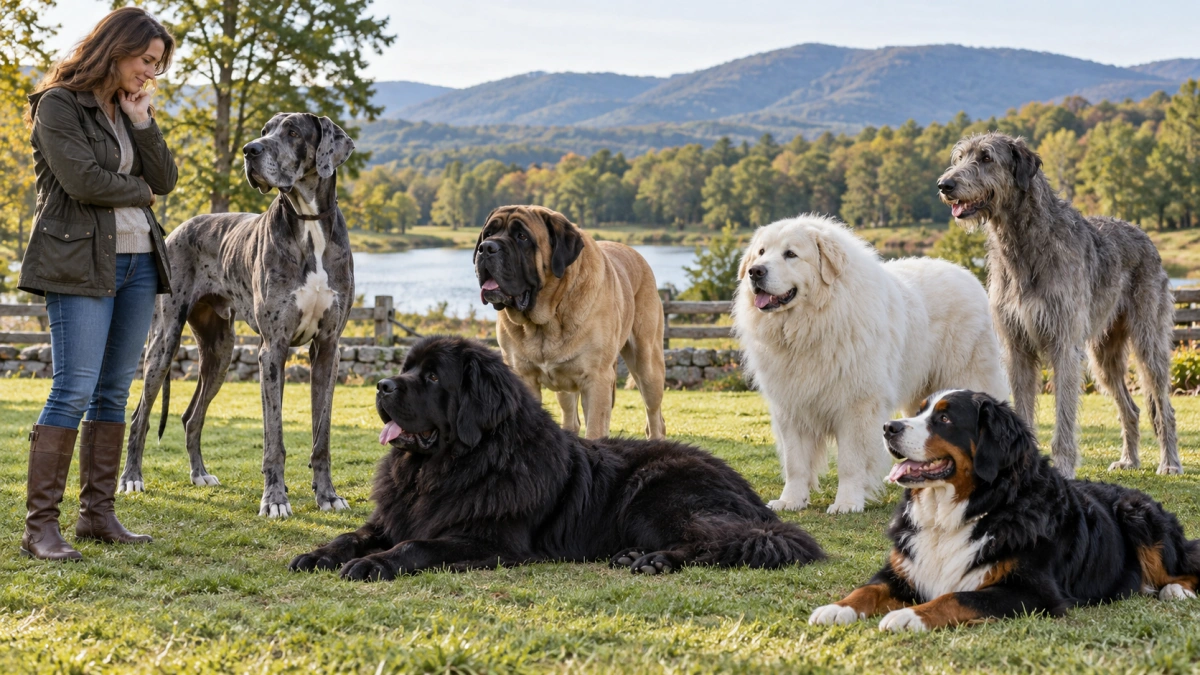
There is no single official line separating a large dog from a giant dog, but breeds such as the Great Dane, Mastiff, Irish Wolfhound, Saint Bernard, Newfoundland, Leonberger, and other extra-large working breeds clearly occupy the extreme end of canine size.
Remember that “biggest” can mean different things. Irish Wolfhounds stand among the tallest dogs, Great Danes combine exceptional height with an athletic frame, while Mastiffs and Saint Bernards carry far more body mass.
The more important question is not which breed is biggest, but which giant breed fits your lifestyle. Temperament, training, exercise, grooming, protective instinct, lifespan, transportation, and cost will affect daily life far more than a few additional inches or pounds.
A giant dog can be an extraordinary companion, but successful ownership starts with planning for the adult dog before bringing home the puppy.