By
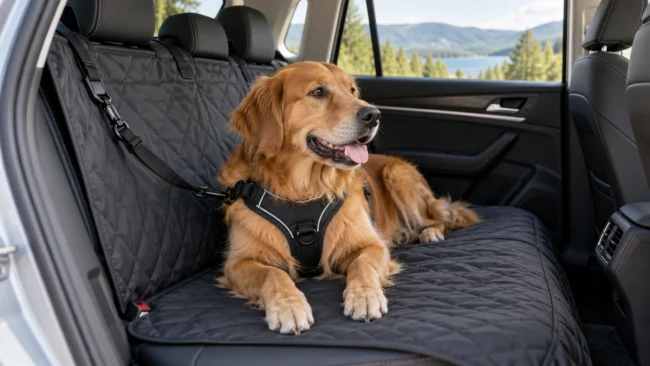
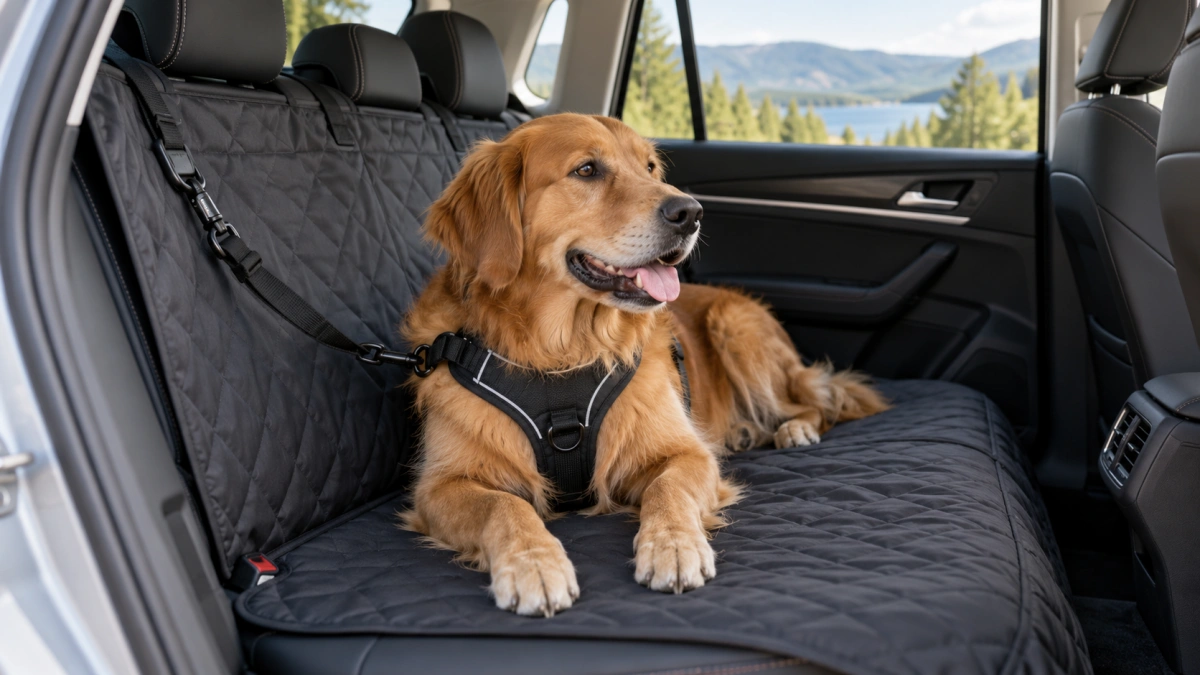
Dog blankets for cars create a removable protective layer between your dog and the vehicle interior. They can help contain loose hair, muddy paws, damp coats, sand, dirt, drool, and everyday wear before those messes reach the upholstery.
However, a dog car blanket is primarily an interior-protection product. It should never be confused with a crash-tested restraint, travel harness, carrier, or secured crate. A blanket can make the seat cleaner and more comfortable, but it cannot safely restrain a dog during sudden braking or a collision.
The best setup depends on where your dog rides. A simple rear-seat blanket may be enough for a calm dog, while a hammock-style cover can protect more of the seat and footwell area. SUV owners may prefer a cargo liner that protects the floor, seat backs, side panels, and bumper edge.
For more everyday blanket guides, visit our Dog Blankets topic hub.
Quick Comparison: Which Dog Car Blanket Setup Do You Need?
| Setup | Best For | Main Advantage | Main Limitation |
|---|---|---|---|
| Flat rear-seat blanket | Simple everyday trips | Easy to install, remove and wash | Provides limited side and footwell protection |
| Bench seat cover | Full rear-seat protection | Fits the seat more securely than a loose throw | Must preserve restraint access |
| Hammock-style cover | Hair, mud and footwell protection | Extends between rear and front headrests | Does not replace a travel restraint |
| SUV cargo liner | Large dogs and cargo areas | Protects a larger floor and side area | Cargo placement requires separate safety planning |
| Waterproof travel blanket | Wet dogs, beach trips and muddy paws | Helps prevent liquid reaching upholstery | Can be heavier and slower to dry |
Choose by the area you need to protect first, then compare materials and features.
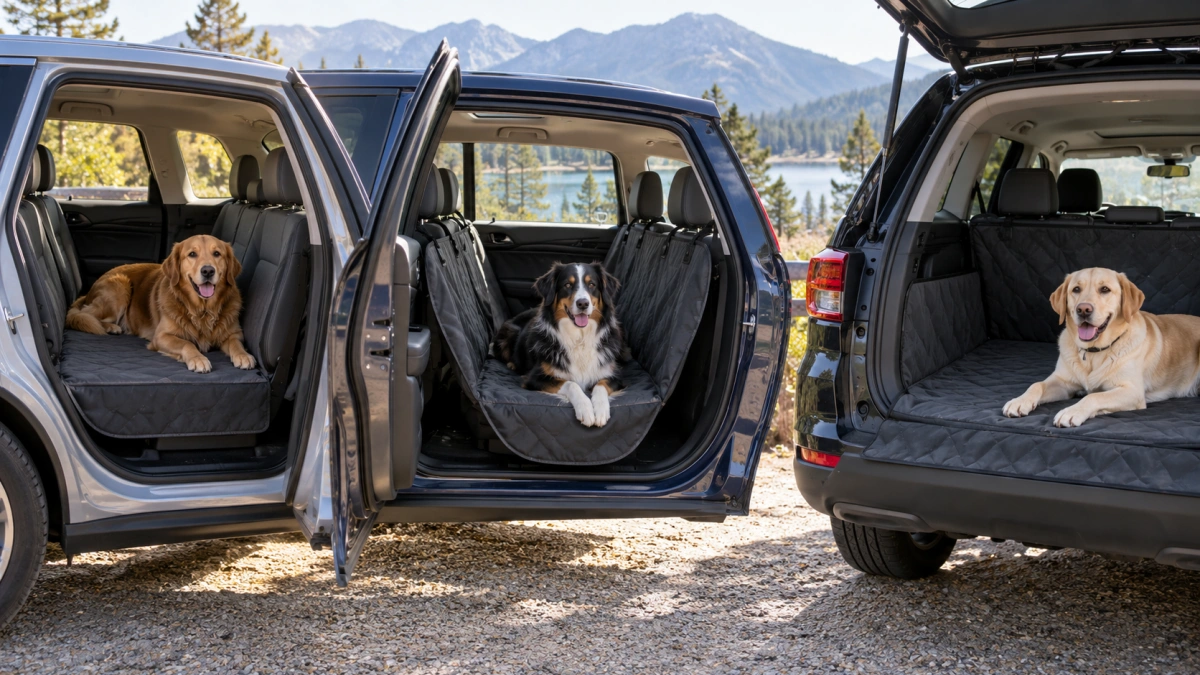
A Dog Car Blanket Is Not a Safety Restraint
This is the most important distinction in the entire buying decision.
A blanket, hammock, bench cover, or cargo liner can:
- Protect upholstery
- Reduce hair and dirt on seats
- Provide a more comfortable contact surface
- Cover gaps or surfaces your dog touches
It cannot replace:
- A properly secured crate or carrier
- An appropriate vehicle travel harness
- A vehicle restraint system
Some hammock-style covers create a barrier between the front and rear seats, but that barrier should not be treated as crash protection.
Your dog’s travel restraint should remain a separate part of the setup.
Where Should Your Dog Ride?
For vehicle travel, the back seat or an appropriately secured carrier or crate is preferable to allowing a dog to ride loose in the front passenger area.
A blanket should be arranged around the safety setup rather than forcing the safety setup to work around the blanket.
For example:
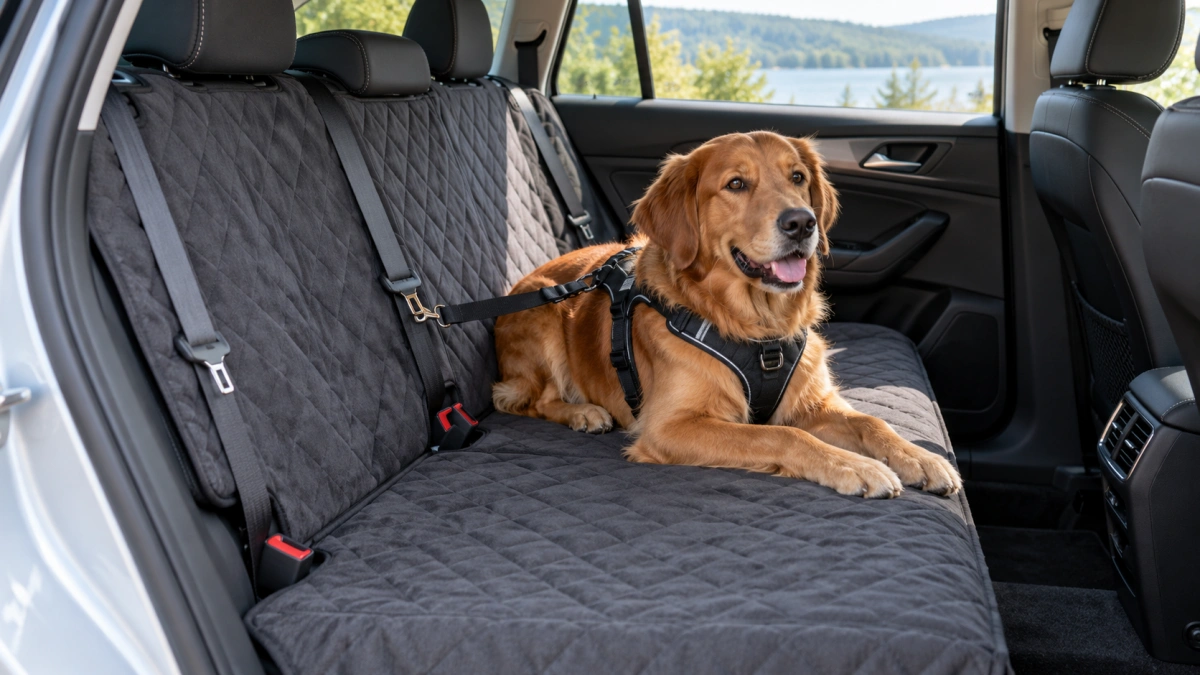
- Keep harness attachment points accessible
- Do not cover seat-belt buckles that need to be used
- Do not let fabric interfere with a secured crate
- Do not use the blanket as the tether
Flat Blanket vs Fitted Seat Cover
Flat Dog Blanket
A normal washable blanket is useful when you want something that:
- Installs quickly
- Can move between vehicles
- Is easy to wash
- Can also be used at your destination
Its disadvantage is movement. A normal throw can slide, bunch, or fall into the footwell.
Fitted Seat Cover
A fitted car-specific cover can use:
- Headrest straps
- Seat anchors
- Non-slip backing
- Shaped edges
These features can keep the protective layer more stable during normal driving.
What Is a Dog Car Hammock?
A hammock-style dog cover attaches around the rear and front headrests so fabric spans both the rear seat and the space behind the front seats.
Potential advantages include:
- More seat coverage
- Protection from hair and muddy paws
- Less opportunity for the blanket to fall into the footwell
- Additional front-seat-back protection
Some designs also include side flaps for the doors.
The hammock shape itself is not a substitute for securing the dog with an appropriate travel restraint.
Bench Mode vs Hammock Mode
Some car covers convert between several configurations.
Bench mode generally keeps the front edge lower and allows easier passenger access.
Hammock mode raises the forward section between the rear and front headrests.
Choose based on:
- Whether people also use the rear seat
- The dog’s size
- How much upholstery you want to protect
- Where restraint attachment points are located
Do not block functional seat belts simply to achieve more fabric coverage.
How to Measure Your Car for a Dog Blanket
“Universal fit” does not mean every cover will fit every vehicle equally well.
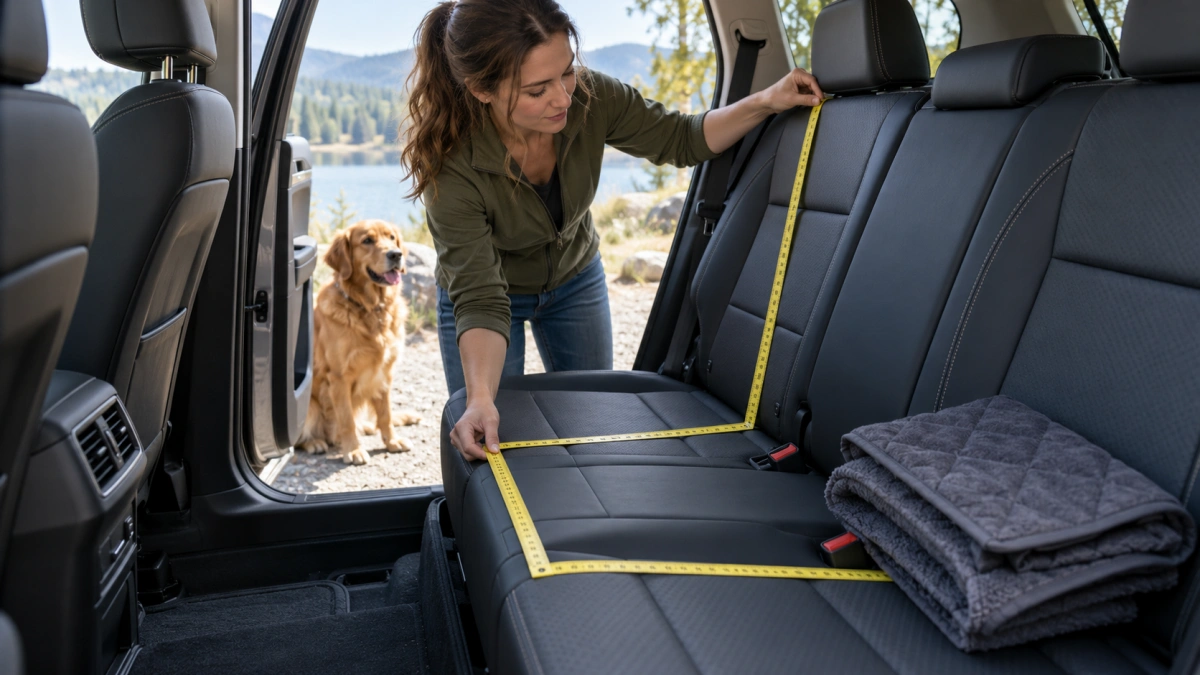
Before buying, measure the actual area you want protected.
For a rear bench seat, measure:
- Seat width
- Seat depth
- Seat-back height
- Distance between headrests if straps are used
Also note:
- Seat-belt buckle locations
- Child-seat anchor locations
- Center armrests
- Split-fold seats
- Bucket seats or captain’s chairs
A cover designed around a flat bench may not fit captain’s chairs correctly.
Back-Seat Coverage: What Should the Blanket Protect?
Think about where your dog actually touches the car.
A useful cover may need to protect:
- Seat cushion
- Seat back
- Front-seat backs
- Door panels
- Seat edges
For a small calm dog, the main bench surface may be enough.
A large dog that turns, leans against the doors, or enters with muddy paws may benefit from much broader coverage.
Keep restraint and buckle access clear throughout the setup.
Do You Need Door Protection?
Dogs frequently place paws against doors while entering, turning, or looking outside.
Side flaps can help protect:
- Door upholstery
- Seat edges
- Plastic trim
Look for side sections that remain securely positioned without interfering with the door latch or closing mechanism.
Dog Blankets for Leather Seats
Leather and synthetic leather can be relatively easy to wipe clean, but loose blankets may slide across smooth surfaces.
For leather seats, prioritize:
- Non-slip backing
- Seat anchors
- Headrest straps
- Enough coverage
- A backing that is suitable for the upholstery
Check the blanket or cover manufacturer’s recommendations for delicate upholstery finishes.
Why Non-Slip Backing Matters
A blanket that slides constantly is harder to use even if the material itself is excellent.
Movement can expose:
- Seat corners
- Leather surfaces
- Seat-belt buckles
- Areas where wet paws land
A stable travel cover may combine:
- Textured backing
- Seat anchors
- Headrest straps
- Elastic or fitted edges
These features improve interior protection during normal travel, but they still do not turn the blanket into a crash restraint.
Waterproof vs Water-Resistant Dog Car Blankets
For ordinary dog hair and dry dirt, waterproofing may not be necessary.
It becomes more useful when travel involves:
- Rain
- Swimming
- Beach trips
- Muddy trails
- Drool
- Accidents
Water-Resistant
A water-resistant surface may slow or repel small amounts of moisture.
Waterproof
A waterproof construction should include a barrier intended to stop liquid from reaching the upholstery underneath during normal intended use.
For deeper information about barrier layers and edge leakage, see our guide to waterproof dog blankets.
Absorbent vs Waterproof for a Wet Dog
The two features solve different problems.
An absorbent upper layer can take moisture from:
- Wet fur
- Paws
- Light mud
A waterproof lower layer prevents that moisture from reaching the seat.
For swimming or wet-weather travel, a layered blanket combining both functions can be more useful than either feature alone.
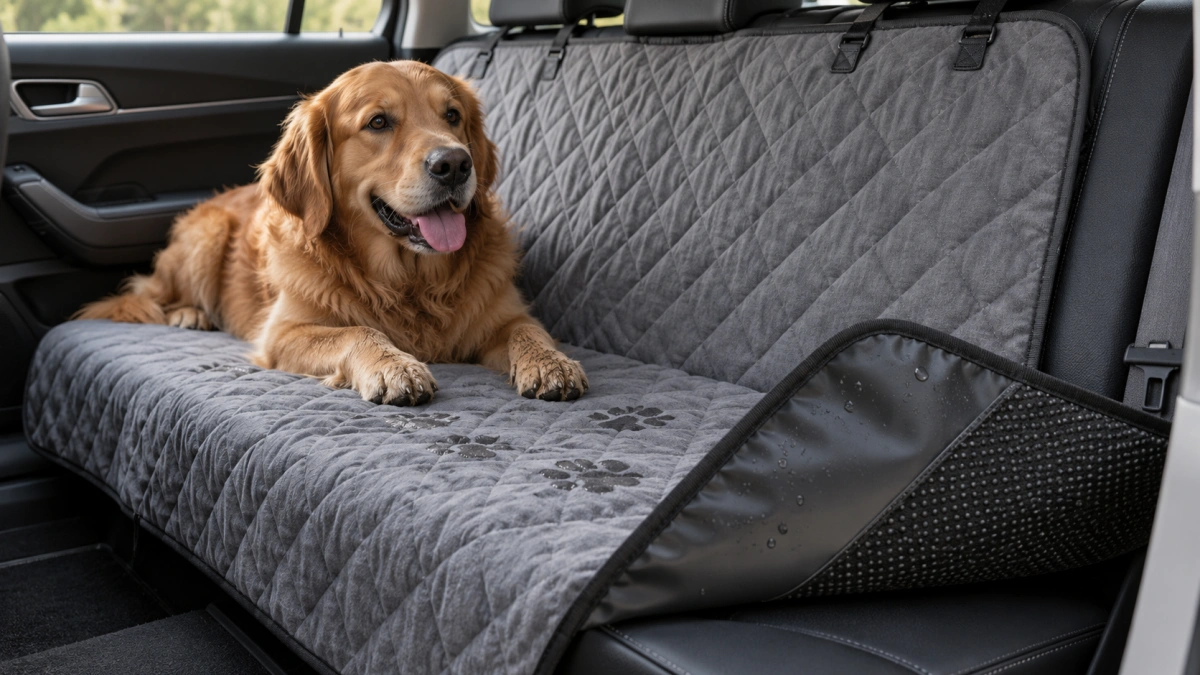
Waterproof and Non-Slip Features
A practical multi-layer car blanket may include:
- A washable upper textile
- A waterproof internal layer
- A durable base fabric
- A textured non-slip backing
More layers add protection, but they may also increase:
- Weight
- Laundry bulk
- Drying time
Choose the construction you actually need rather than assuming more layers always mean a better product.
Dog Blankets and Cargo Liners for SUVs
SUV cargo areas require a different shape from a rear bench.
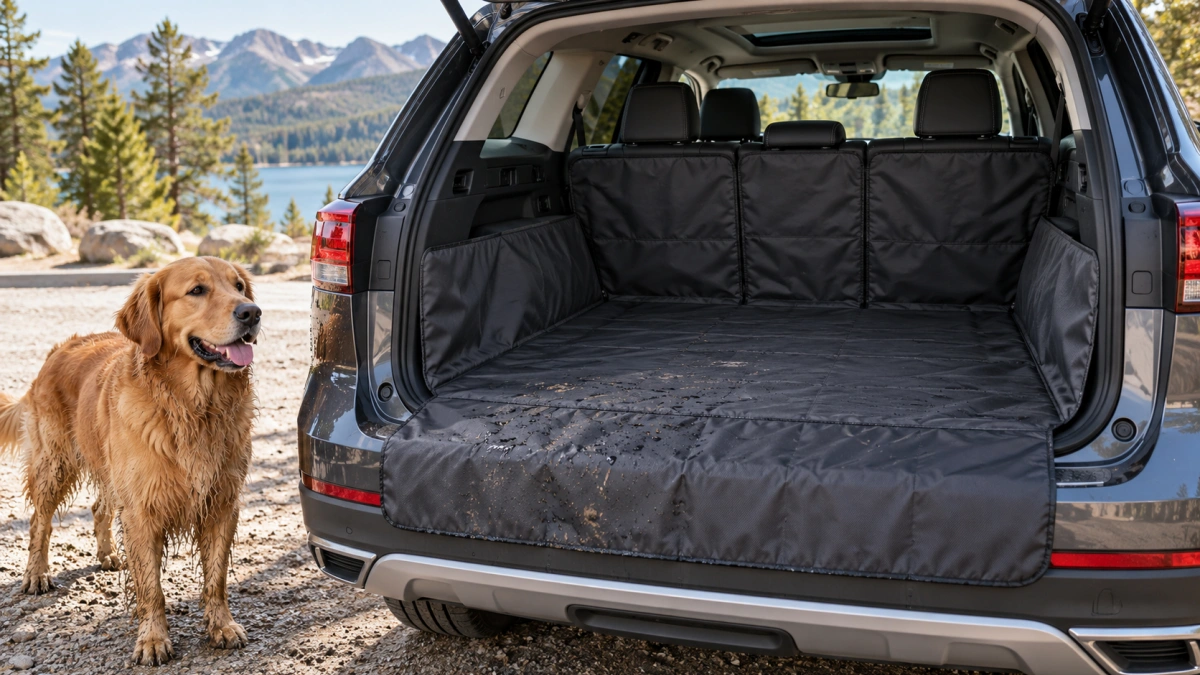
A cargo liner may protect:
- Cargo floor
- Rear seat backs
- Wheel-arch areas
- Side panels
- Bumper edge during loading
A bumper flap can be particularly useful for large or muddy dogs entering and leaving the vehicle.
Measure the cargo floor with the seats in the configuration you normally use.
A Cargo Liner Does Not Make Loose Cargo-Area Travel Safe
This distinction is critical.
A padded or waterproof liner protects the vehicle. It does not secure the dog.
Cargo-area restraint also requires careful attention to:
- Vehicle structure
- Anchor strength
- Crate or harness design
- Connection method
Do not simply connect a dog to an arbitrary cargo hook because it appears strong.
If you plan to secure a crate or restraint in the cargo area, use equipment designed for vehicle travel and confirm appropriate anchoring for your vehicle.
Why Cargo Anchors Need Special Attention
Cargo hooks are often designed to manage luggage rather than the forces created by a dog or crate during a crash.
That means appearance alone does not tell you whether an anchor point is appropriate for pet restraint.
When using the cargo area for secured travel, follow the vehicle manufacturer’s guidance and the restraint or crate manufacturer’s instructions.
Keep Seat-Belt and Harness Access Available
Some fitted covers provide reinforced openings around seat-belt buckles.
Those openings should:
- Remain accessible
- Not tear under ordinary use
- Not be hidden under thick folds
- Allow the separate travel restraint to function correctly
Do not modify the blanket in a way that compromises either the upholstery protection or restraint setup.
Dog Car Blanket vs Travel Crate
These products solve completely different problems.
| Feature | Car Blanket / Cover | Travel Crate |
|---|---|---|
| Protects upholstery | Yes | Partly |
| Contains hair and dirt | Yes | Mostly inside crate |
| Provides crash containment | No | Depends on crate and installation |
| Restrains dog movement | No | Yes when properly contained |
| Easy to wash | Usually | Varies |
A blanket can be used beneath or around an appropriately secured travel system, but should not replace it.
Using a Crate and Blanket Together in a Car
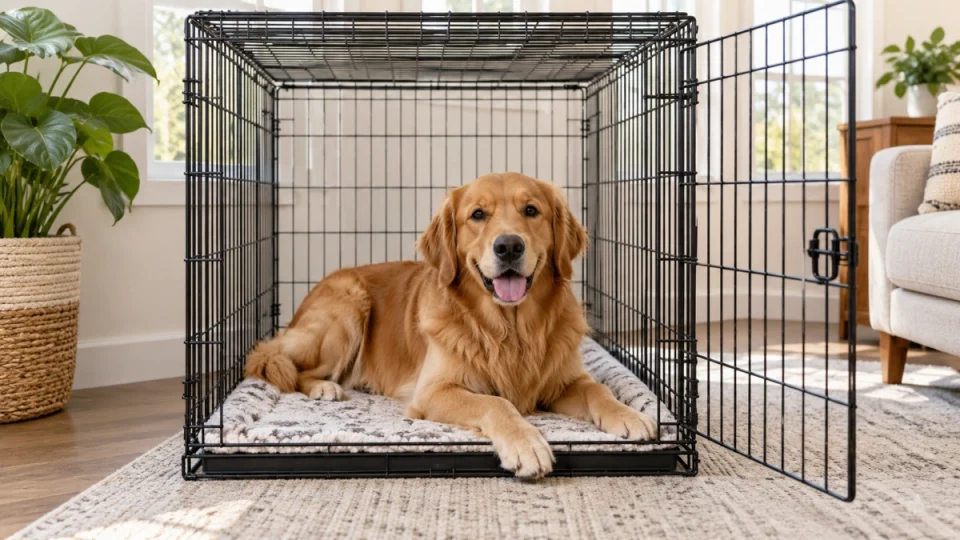
If your dog travels in a crate, a thin removable blanket may be useful inside it for:
- Comfort
- Hair collection
- Light absorbency
Keep crate bedding simple and correctly sized.
For interior crate fit and bedding safety, see our guide to dog blankets for crates.
Dog Hair in the Car
A removable travel blanket can concentrate loose fur onto one washable surface rather than allowing it to work into the vehicle seats.
If shedding is your main concern, prioritize:
- Low- or moderate-pile fabric
- Easy vacuuming
- Machine washing
- Full seat coverage
Deep sherpa and plush fabrics may feel comfortable but can hold more dog hair.
For material-specific hair guidance, see our guide to dog blankets that resist pet hair.
Road Trips Require More Than a Blanket
For longer drives, prepare the dog and the vehicle separately from the seat-cover decision.
Travel planning should include:
- An appropriate restraint or secured carrier
- Water
- Regular rest and bathroom stops
- Identification
- Leash
- Waste bags
- Any required medication
- Basic travel records when needed
Gradually introducing the dog to shorter vehicle rides before a long road trip can also make travel easier.
Never Let a Dog Ride With Its Head Out the Window
The blanket should not be positioned to encourage a dog to climb onto the door or lean through an open window.
Keep your dog securely positioned inside the vehicle.
Open-window debris can injure the eyes and ears, and unrestrained movement increases risk during sudden stops.
Never Leave a Dog Alone in a Parked Vehicle
A comfortable blanket does not make a parked vehicle safe.
Interior temperatures can become dangerous quickly during warm weather, and vehicles can also become dangerously cold during winter conditions.
The blanket should only be viewed as a travel surface, not a way to make unattended vehicle confinement safe.
Travel Blankets at Your Destination
One advantage of a simple removable dog blanket is that it can also provide a familiar resting surface after you arrive.
You might move it from the car to:
- A hotel floor
- A vacation rental
- A friend’s home
- A campsite resting area
If you want this flexibility, prioritize a blanket that:
- Folds compactly
- Is easy to carry
- Dries reasonably quickly
- Can be washed frequently
How to Clean and Wash a Dog Car Blanket
Road-trip blankets collect a different mixture of mess than ordinary indoor bedding.
You may need to remove:
- Dog hair
- Sand
- Dried mud
- Grass
- Road dust
- Moisture
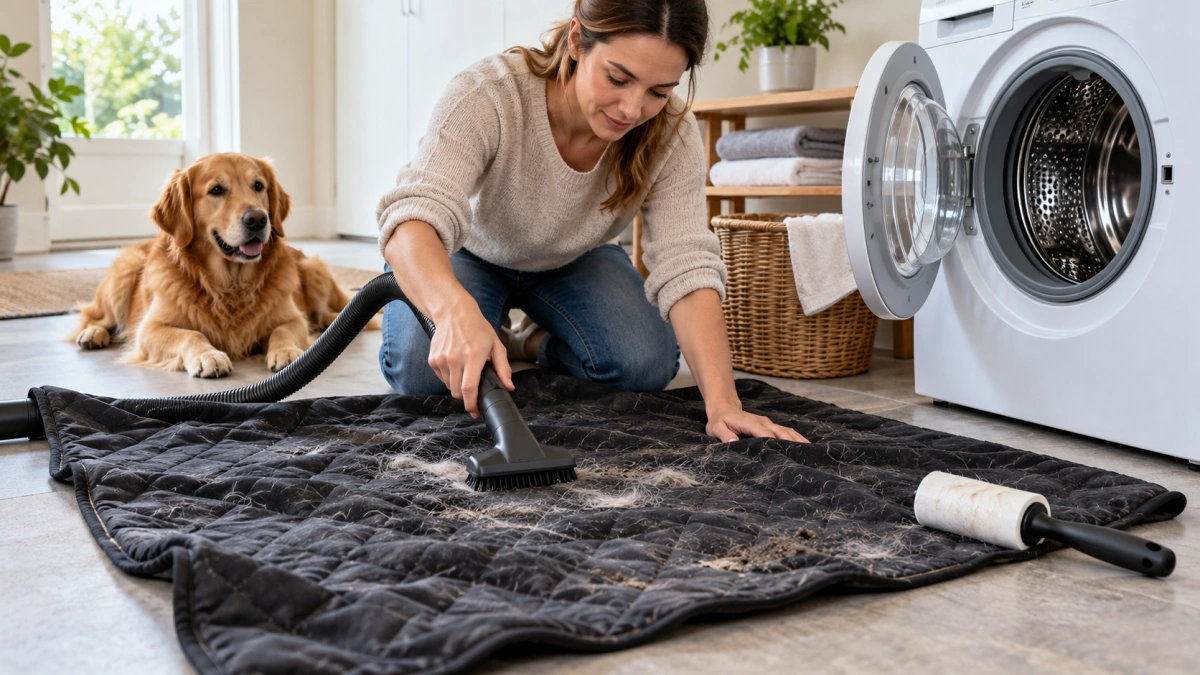
A practical cleaning routine is:
- Remove the blanket from the vehicle.
- Shake away loose sand and dry debris outdoors.
- Vacuum or lint-roll excess dog hair.
- Inspect straps, anchors, seams, and waterproof backing.
- Pre-treat appropriate stains if allowed.
- Wash according to the care label.
- Dry completely before reinstalling it.
Do not reinstall a damp multi-layer cover and leave it trapped against upholstery.
Should You Keep a Dedicated Car Blanket?
For dogs that travel frequently, yes.
A dedicated travel blanket prevents you from repeatedly moving bedding between:
- Dog bed
- Couch
- Vehicle
It can also keep road dirt and outdoor debris separate from indoor bedding.
Frequent travelers may find two car blankets useful:
- One installed
- One clean replacement
Our 9-Point Dog Car Blanket Check
Use these nine factors when comparing vehicle blankets and seat covers.
1. Coverage
Does the blanket protect the full seat, cargo floor, seat back, or other surfaces your dog actually touches?
2. Vehicle Fit
Have you compared the actual product dimensions with your seat or cargo dimensions?
3. Stability
Does