By
By 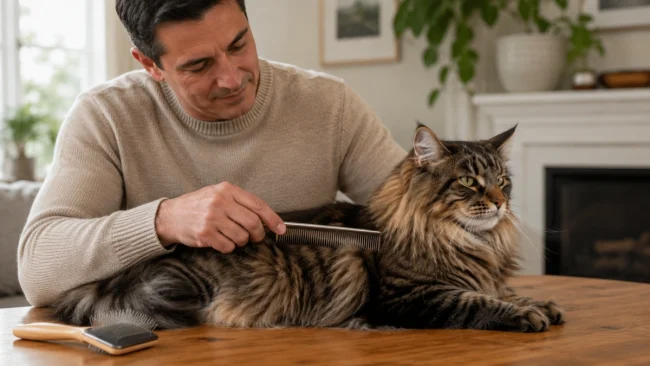
Long-haired cat grooming works best when you prevent coat problems instead of waiting until you can see them. The outer fur may look soft and smooth while loose hair and early tangles are already collecting underneath, especially behind the ears, under the legs, around the chest, belly and hindquarters.
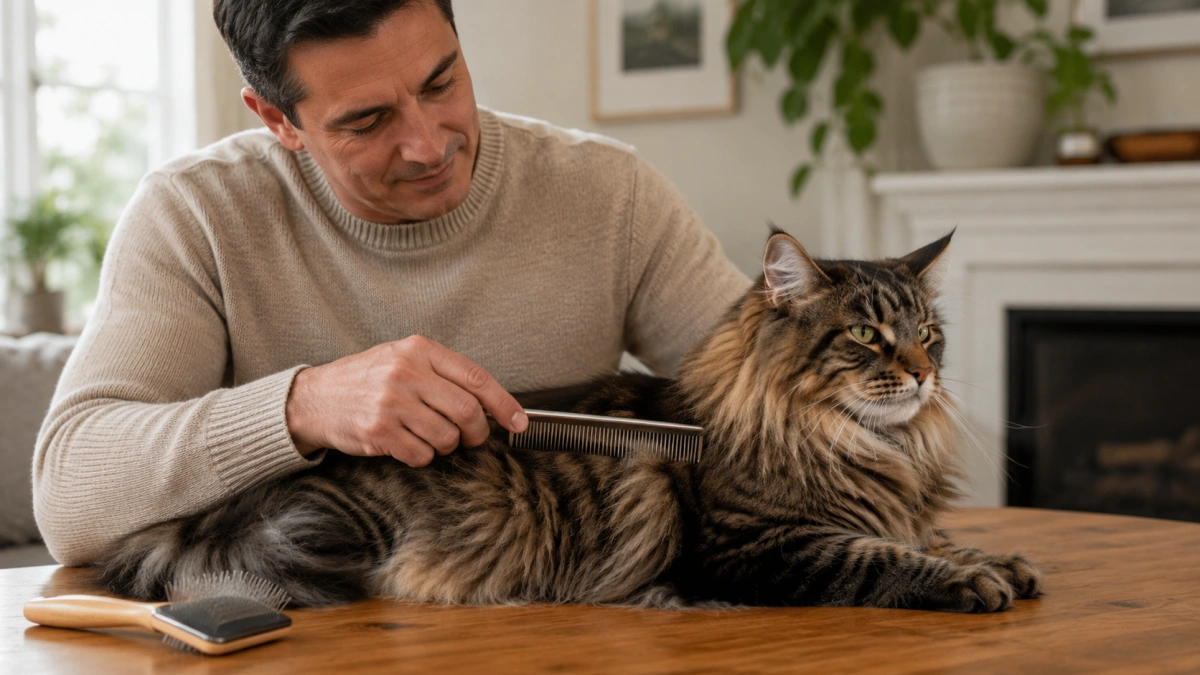
The most useful routine combines quick frequent coat checks with more thorough combing sessions. A brush is helpful for loose surface fur, but a comb that reaches through the coat gives you better feedback about what is happening underneath.
This is one of the main differences between ordinary grooming a cat routines and caring for a longer coat: you need to pay attention not only to how the fur looks, but also to whether the full coat remains separated.
Why Long-Haired Cat Grooming Is Different
Long fur creates more opportunities for shed hair to stay trapped instead of falling away from the body.
Movement adds another problem. Fur repeatedly rubs against itself around the legs, chest, belly and rear, which makes those areas more likely to develop knots.
Not every long-haired cat has exactly the same coat. Some have a light silky coat that stays relatively easy to comb, while others have dense undercoat that packs quickly.
Your routine therefore needs to respond to the individual coat rather than relying on breed name or hair length alone.
How Often Should You Groom a Long-Haired Cat?
Frequent coat attention is useful for long-haired cats, but “daily grooming” does not have to mean a twenty-minute full-body session every day.
A better approach is to separate a quick coat check from a full comb-through.
| Routine | What You Are Looking For |
|---|---|
| Quick daily or near-daily check | New resistance in mat-prone areas |
| Regular deeper combing | Whether the full coat remains separated |
| Extra checks during heavier shedding | Loose fur becoming trapped |
| Short sessions for brush-sensitive cats | Maintaining frequency without forcing long handling |
If the coat remains completely smooth between sessions, your routine may already be enough. If new knots appear before the next grooming day, increase frequency rather than waiting for them to grow.
Where Do Long-Haired Cats Mat First?
The back is usually the easiest area to groom and one of the least useful places to focus all your attention.
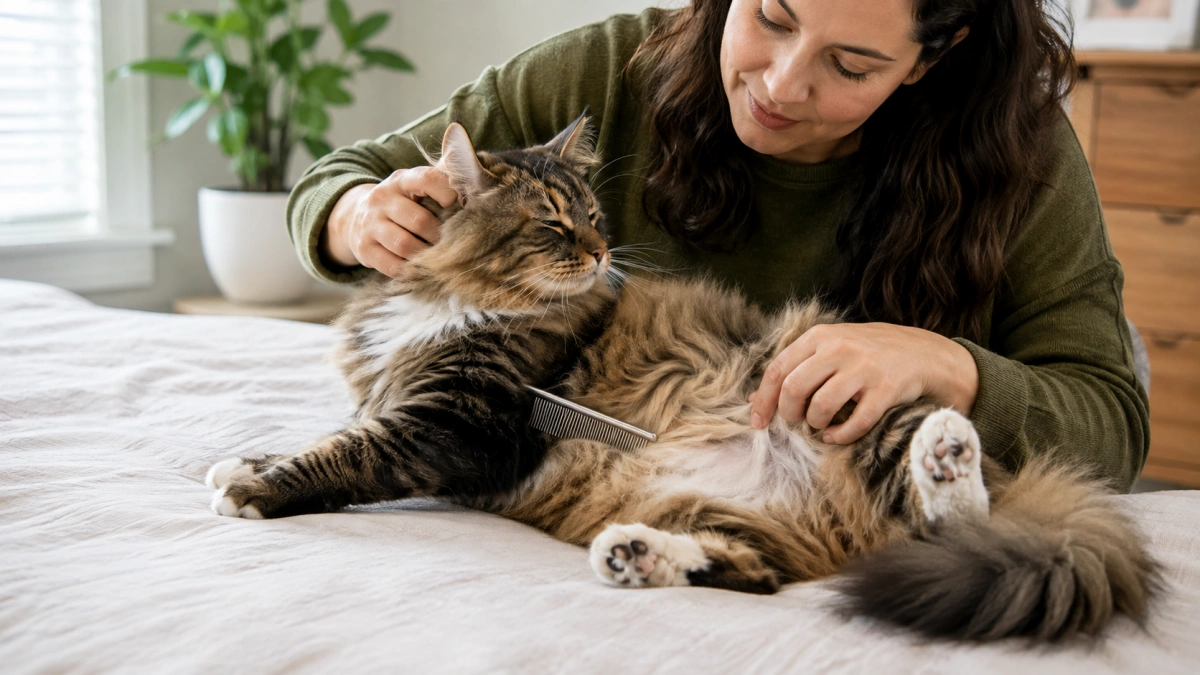
Check these high-friction zones deliberately:
- Behind the ears
- Under both front legs
- Chest and collar area
- Belly
- Inside the hind legs
- Rear furnishings
- Base of the tail
Feel with your fingers as well as looking. Early compacted fur is often easier to detect by touch.
Which Grooming Tools Do You Actually Need?
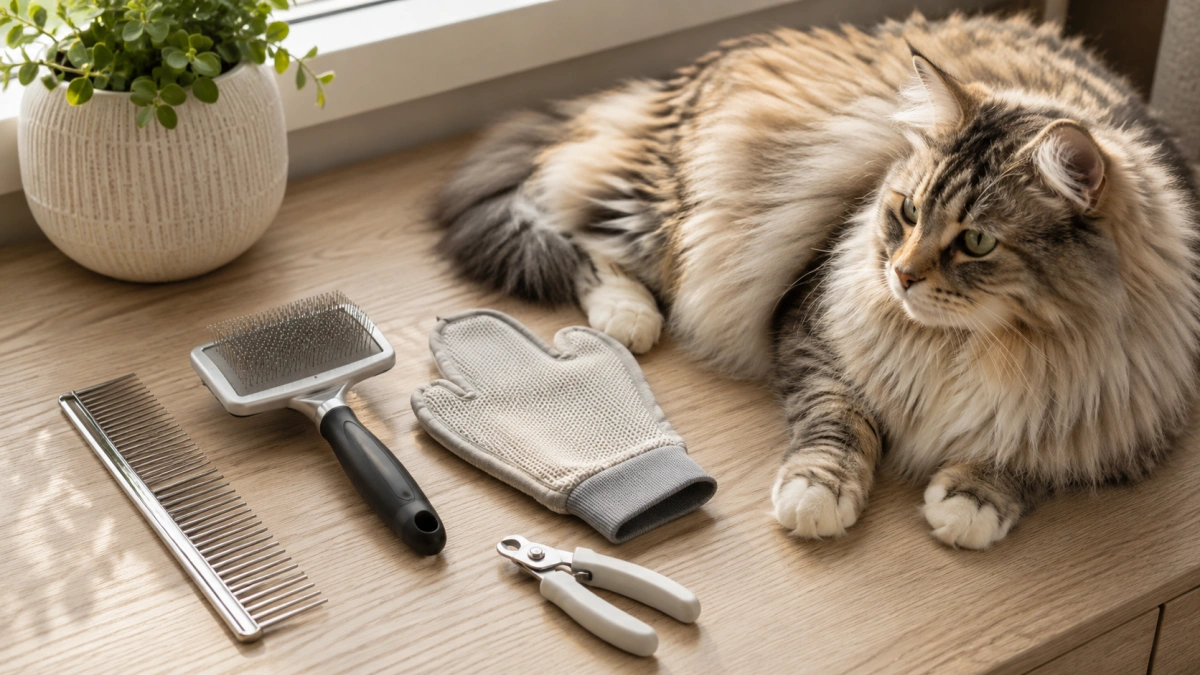
Long-Tooth Metal Comb
For a long coat, the comb is as much a diagnostic tool as a grooming tool.
A combination metal comb with wider and finer teeth lets you start with lower resistance and finish with a more precise coat check.
Slicker or Coat-Appropriate Brush
A brush helps collect loose fur and maintain the broad outer surface of the coat.
Its limitation is that some brushes can move smoothly over the top while missing a developing knot underneath.
Soft Brush or Grooming Mitt
These are optional but can be useful when frequent grooming depends on finding a tool your cat will actually tolerate.
Cat Nail Clippers
They do not help with mats, but routine paw and nail maintenance belongs in the same grooming habit.
Why Surface Brushing Is Not Enough
This is one of the most important ideas in long-haired cat grooming.
A slicker or soft brush can leave the visible coat looking fluffy and well groomed even when resistance exists closer to the skin.
After brushing, perform a comb check in the areas most likely to mat.
If a suitable long-tooth comb passes through smoothly, that section is in good condition. If it repeatedly stops at one point, do not simply brush over the top again.
You have found the area that needs attention.
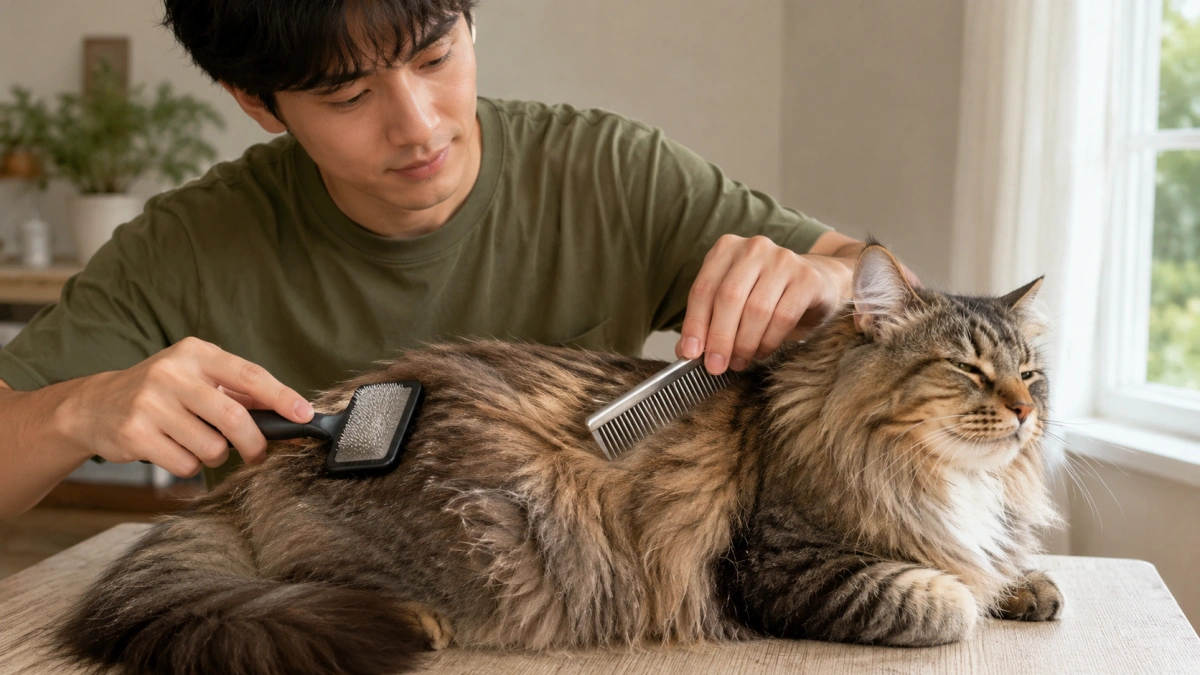
How to Groom a Long-Haired Cat Step by Step
1. Start With a Hand Check
Feel the coat before using a tool. This reduces the chance of dragging a brush directly into an unexpected knot.
2. Begin With an Easy Area
Start around the back, shoulders or sides, where many cats are more comfortable.
3. Work in Small Sections
Separate a small amount of fur and check it before moving to the next section.
4. Use Wider Teeth First
When the coat is especially thick, start with the wider section of a combination comb to reduce resistance.
5. Follow With a Finer Check
Once the wider teeth pass comfortably, the finer section can reveal smaller remaining tangles.
6. Brush the Outer Coat
Use your selected brush to collect loosened fur and smooth the coat.
7. Move Into Friction Zones Carefully
Do not rush from the easy back directly into a long belly session. Check one sensitive area at a time.
8. Stop Before Grooming Becomes a Fight
A five-minute session that your cat accepts is more valuable than a twenty-minute struggle that makes tomorrow harder.
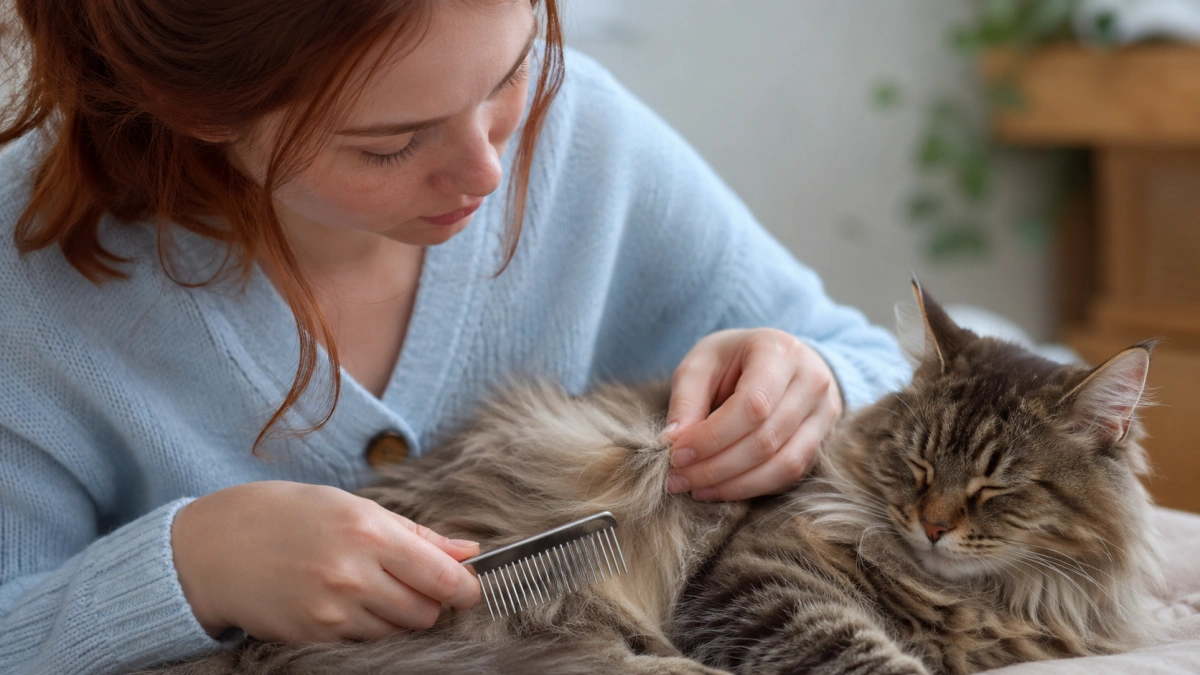
How to Handle a Small Tangle
An early loose tangle can often be managed gently.
Start with your fingers and loosen hairs around the edges. When using the comb, begin near the outer ends of the fur and work gradually toward the denser part.
Avoid placing the comb at the skin and pulling the entire knot outward in one movement.
- Support surrounding fur when possible.
- Use wider tooth spacing first.
- Make short controlled passes.
- Stop if the knot becomes tighter.
- Stop if your cat begins reacting as though the area is painful.
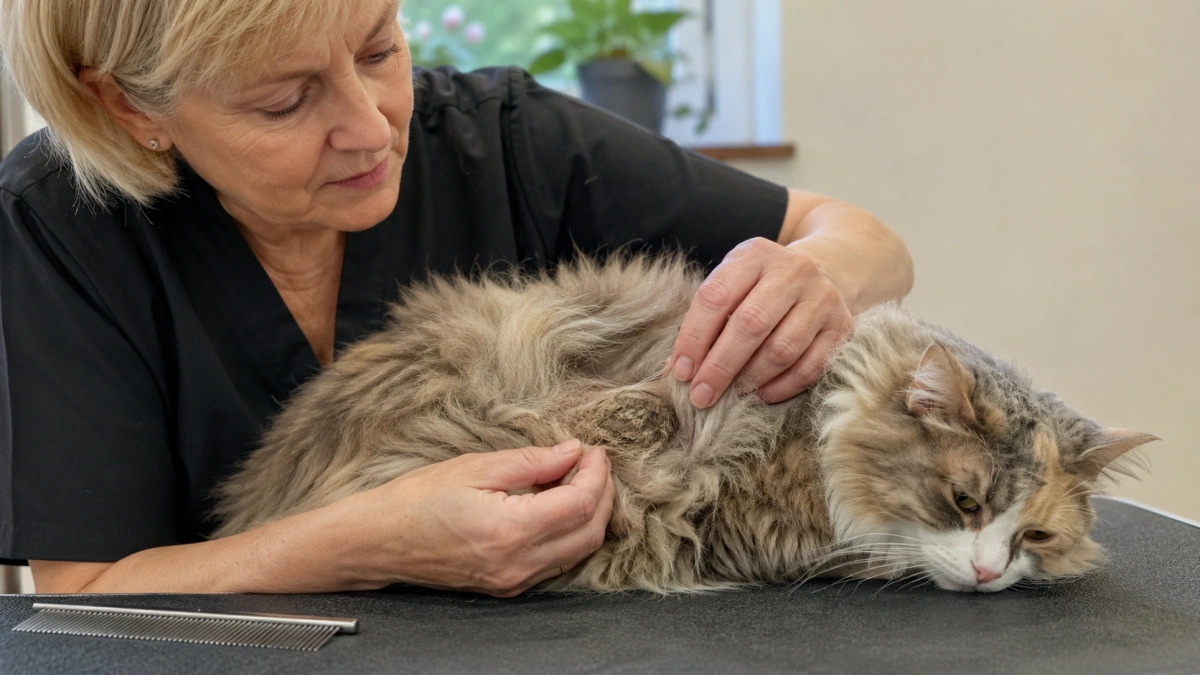
When Is It No Longer Just a Tangle?
| Coat Condition | What It Feels Like | Best Response |
|---|---|---|
| Beginning tangle | Loose hairs with mild resistance | Separate and comb gently |
| Small movable knot | Denser but still flexible | Work from the edges |
| Compact mat | Dense felt-like patch | Stop aggressive combing |
| Skin-level mat | Skin position difficult to identify | Professional assessment |
| Widespread matting | Multiple areas have compacted together | Professional groomer or veterinarian |
Why Household Scissors Are a Bad Mat Solution
Tight mats can pull loose cat skin upward into the tangled coat.
That means the space that appears to exist underneath a mat may contain skin you cannot see clearly.
Do not slide household scissors under a tight mat and cut blindly. If you cannot separate the mat gently or clearly identify the skin beneath it, the safest home decision is to stop.
What If Your Long-Haired Cat Hates Being Groomed?
The best grooming tool is not useful if you can never use it.
Recent long-haired cat owners frequently describe trying multiple brushes while their cat tolerates only a few passes. That makes session design as important as tool selection.
Try:
- Starting with a softer tool.
- Reducing each session to a few minutes.
- Keeping a comb nearby for spontaneous short sessions.
- Beginning with favorite petting areas.
- Stopping before the tail starts thrashing or the cat repeatedly turns toward your hand.
- Ending with a predictable reward.
Consistency is more useful than maximum efficiency if the aggressive tool makes your cat avoid grooming entirely.
Should Long-Haired Cats Be Bathed?
A long coat does not automatically require frequent baths.
Many cats can remain clean through self-grooming plus regular owner brushing and combing.
Bathing becomes more relevant when the coat is unusually dirty, oily or part of a professional grooming procedure. Wetting a tangled coat without first understanding its condition can also make coat management more difficult.
What About Rear Fur and Paw Tufts?
Long rear furnishings can occasionally collect litter or waste.
If this becomes a repeated problem, a small sanitary trim can address the specific hygiene area without automatically shortening the rest of the coat.
Long paw fur also does not need trimming solely because it looks fluffy. Consider maintenance when it causes a practical cleanliness or traction problem.
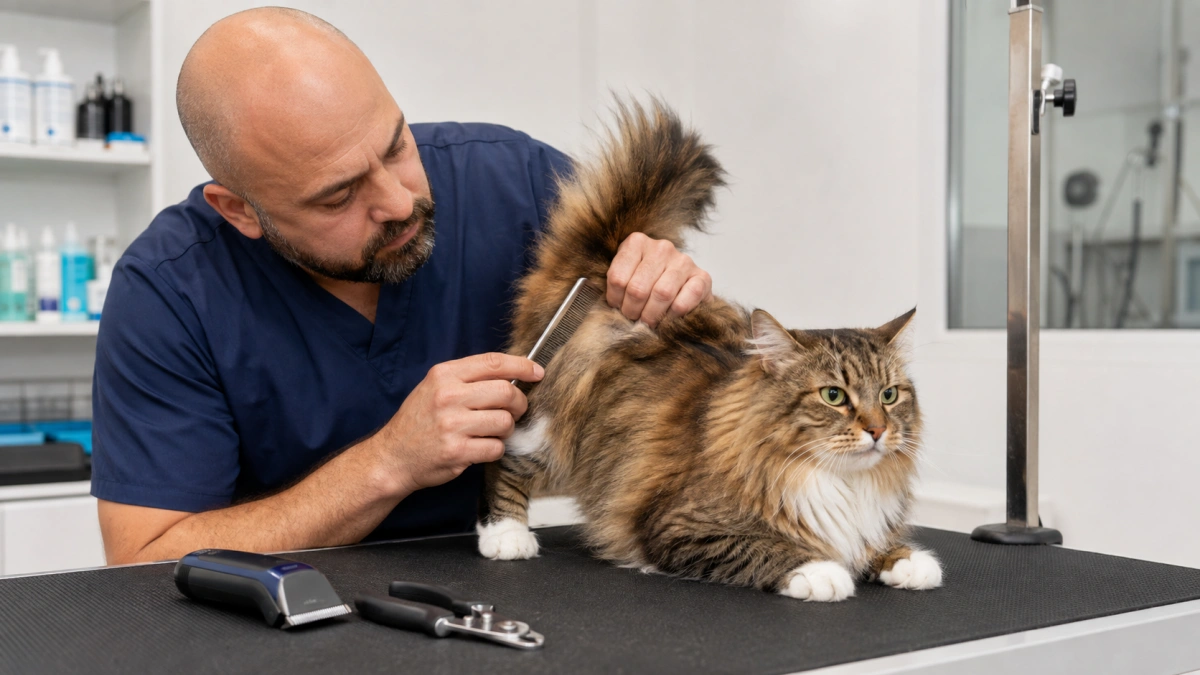
Should You Shave a Long-Haired Cat in Summer?
Most healthy long-haired cats do not need a routine summer shave simply because the temperature increases.
The better priority is keeping the coat free from compacted mats and ensuring the cat has access to appropriate indoor cooling, shade and water.
Clipping may still be appropriate for a separate coat-management problem, but “long hair plus summer” is not by itself a reason every cat needs a haircut.
When Changes in Grooming May Mean More Than a Coat Problem
A cat that previously maintained its coat may begin developing mats because it is no longer grooming certain areas effectively.
This becomes more important in senior cats, cats with limited mobility or cats that suddenly resist touch in one specific area.
If self-grooming declines suddenly, the coat becomes unusually greasy or unkempt, or handling begins to appear painful, consider veterinary evaluation rather than simply increasing grooming force.
When Is Professional Grooming Worth It?
Professional grooming is most valuable when the problem exceeds normal home maintenance.
Consider experienced feline grooming help when:
- A mat sits tightly against the skin.
- There are multiple large mats.
- You cannot safely identify skin beneath the coat.
- Your cat will not tolerate essential grooming.
- A sanitary trim is difficult to perform safely.
- A large-area clip or haircut is being considered.
- You have tried increasing maintenance but the coat continues to deteriorate.
If your long-haired cat is specifically a Maine Coon, our guide to grooming a Maine Coon cat explains how the breed’s large body, shaggy furnishings and belly grooming challenges change the routine.
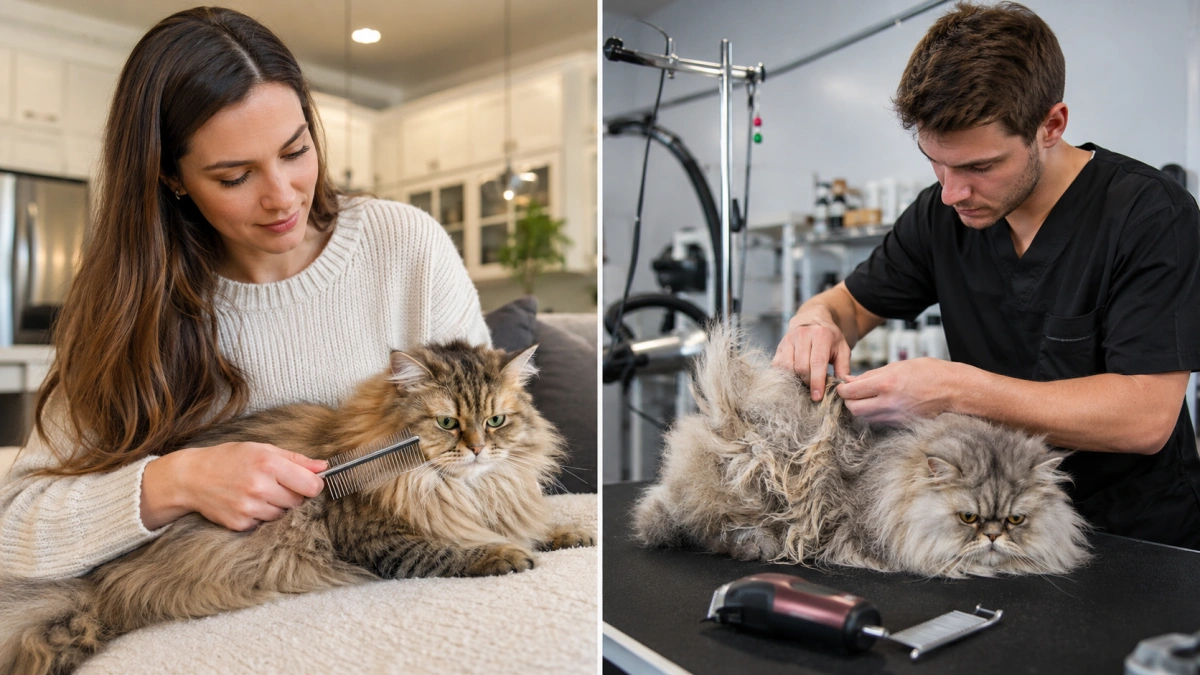
A Practical Long-Haired Cat Grooming Schedule
| Task | Starting Routine |
|---|---|
| Feel high-risk mat zones | Daily or near-daily |
| Surface brushing | Frequently, based on shedding |
| Full comb check | Regularly based on coat density |
| Rear and paw check | During routine grooming |
| Bath | When genuinely needed |
| Professional grooming | When home care stops being safe or effective |
Long-Haired Cat Grooming Checklist
- Does the coat only look smooth, or does the comb also pass through?
- Have you checked behind both ears?
- Have you checked both armpits?
- Does the belly feel soft rather than compacted?
- Are the hind-leg furnishings separated?
- Is the rear coat clean?
- Does your cat tolerate the current session length?
- Are any mats too tight to manage without pulling?
Final Thoughts
Long-haired cat grooming becomes much easier when you stop using appearance as the only test of coat condition.
Brush the outer coat, but also use an appropriate comb to check what is happening underneath. Pay particular attention to friction zones, handle small tangles while they are still movable and shorten grooming sessions when your cat’s tolerance is running out.
The goal is not to remove the most fur or complete the longest session. It is to keep the coat comfortably separated and recognize when a grooming problem has crossed the line from routine home maintenance to professional care.