By
By 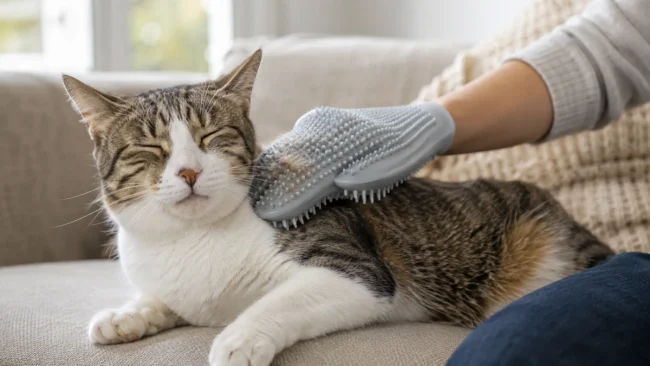
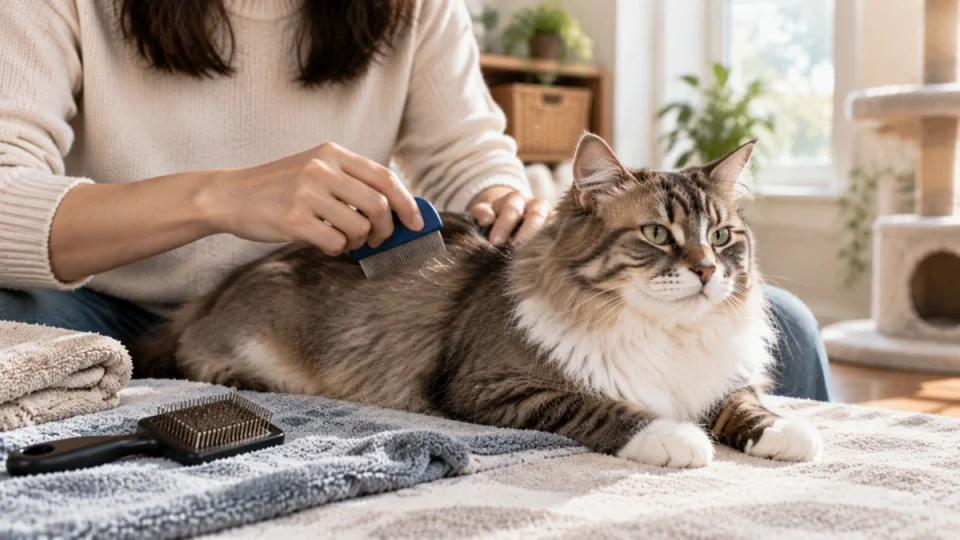
Cat grooming gloves can work well for removing loose surface fur, especially on short-haired cats and cats that dislike traditional brushes. Their flexible rubber or silicone tips collect loose hair as your hand moves across the coat, making the experience feel closer to normal petting than rigid brushing.
They are not an all-purpose grooming solution, however. A glove cannot reliably reach deep tangles in a long coat, replace a metal comb for checking hidden knots, or safely solve tight mats. The best way to use one is as a comfortable maintenance tool within a broader routine for grooming a cat.
If you are comparing gloves with brushes, combs, clippers, and other equipment, our cat grooming tools guide explains what each tool is designed to do.
Do Cat Grooming Gloves Really Work?
Yes, but only when the job matches what the glove is designed to do.
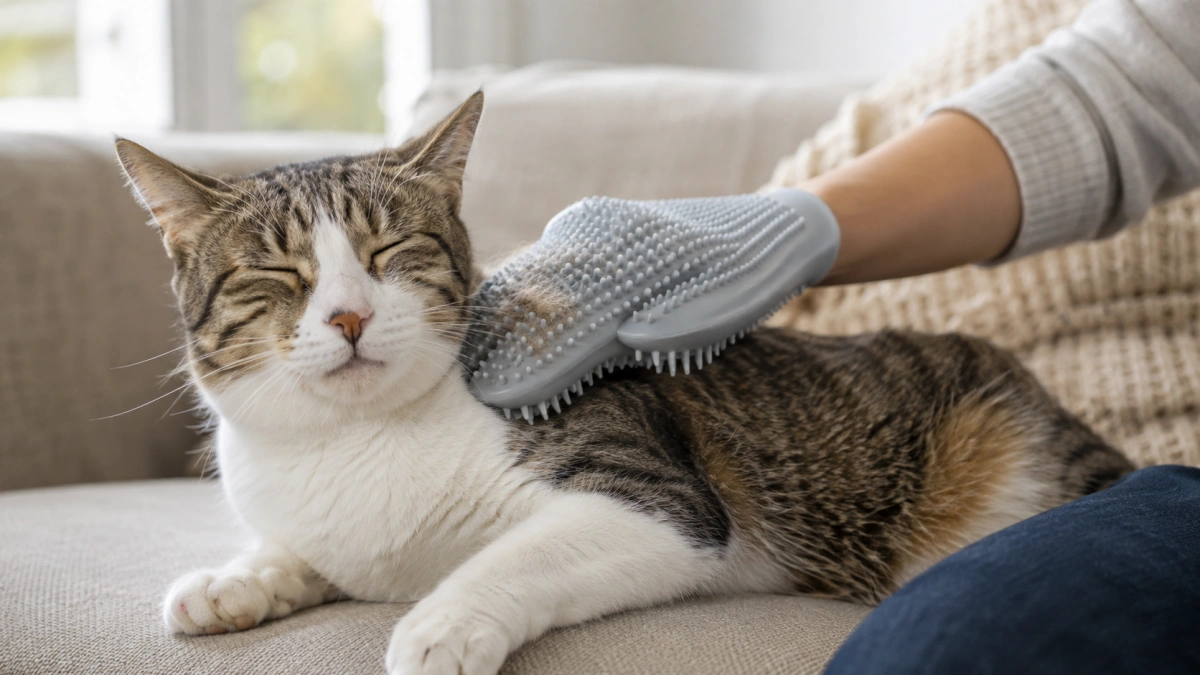
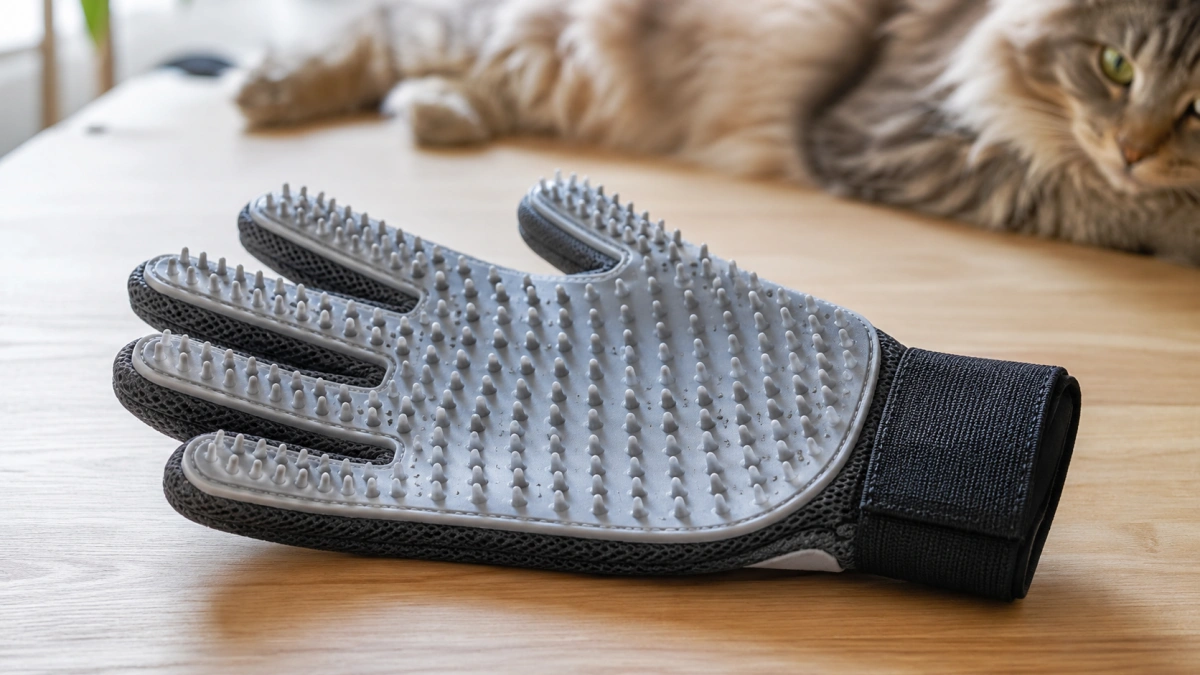
Most grooming gloves have flexible rubber or silicone tips across the palm and fingers. As you stroke the cat, loose hairs catch around those tips. This makes them useful for collecting fur that is already loose near the surface of the coat.
They are generally less effective when the problem is deeper inside the coat. Dense undercoat, tight tangles, and mats require different tools and sometimes professional help.
| Grooming Job | How Useful Is a Glove? |
|---|---|
| Loose surface fur | Very useful |
| Short-haired shedding | Useful |
| Gentle everyday grooming | Useful |
| Long-coat surface grooming | Moderately useful |
| Dense undercoat | Limited |
| Hidden tangles | Poor choice |
| Tight mats | Not suitable |
Why Some Cats Prefer Grooming Gloves
One of the biggest advantages of a grooming mitt is not how aggressively it removes hair. It is how the tool feels to the cat.
A rigid brush places pressure through a smaller group of pins or bristles. A flexible glove follows the shape of your hand and the cat’s body, so pressure is distributed across a larger surface.
For a cat that walks away as soon as a brush appears, this difference can matter more than maximum fur-removal efficiency.
What Types of Cats Are Grooming Gloves Best For?
Short-Haired Cats
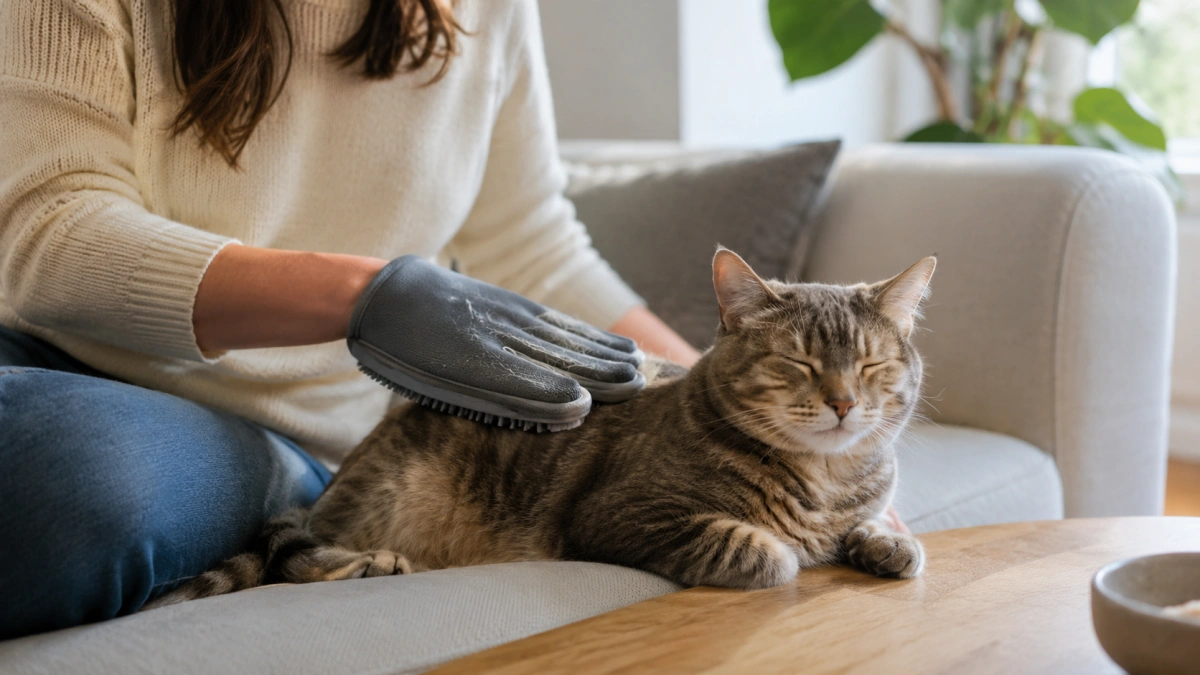
Short-haired cats are often the best match for grooming gloves because much of their loose hair is relatively close to the surface.
A flexible grooming mitt can collect that loose coat without requiring long teeth or pins to reach deeply through the fur.
Cats That Dislike Brushes
If your cat dislikes slicker brushes, metal combs, or other rigid tools, a grooming glove can be a useful introduction to regular handling.
Start by wearing the glove while petting your cat normally. Use only a few strokes at first rather than turning the first session into a long grooming appointment.
Cats With Light to Moderate Shedding
A glove can work well when your goal is routine loose-hair removal rather than intensive undercoat grooming.
For cats that leave a small layer of fur on your hand or furniture after petting, a grooming glove can often collect much of that hair before it falls around the home.
Senior or Handling-Sensitive Cats
Some cats become less tolerant of prolonged grooming as they age. A softer tool may be easier to introduce, provided the cat is comfortable being touched and there are no painful areas.
If a cat suddenly becomes sensitive to handling or grooming, that change deserves attention rather than simply switching tools.
When Cat Grooming Gloves Are Not Enough
The main weakness of a glove is depth.
Flexible rubber tips are good at contacting the outer coat, but they do not work like a long-tooth metal comb. On dense or long fur, the surface can look tidy while tangles remain closer to the skin.
Long-Haired Cats
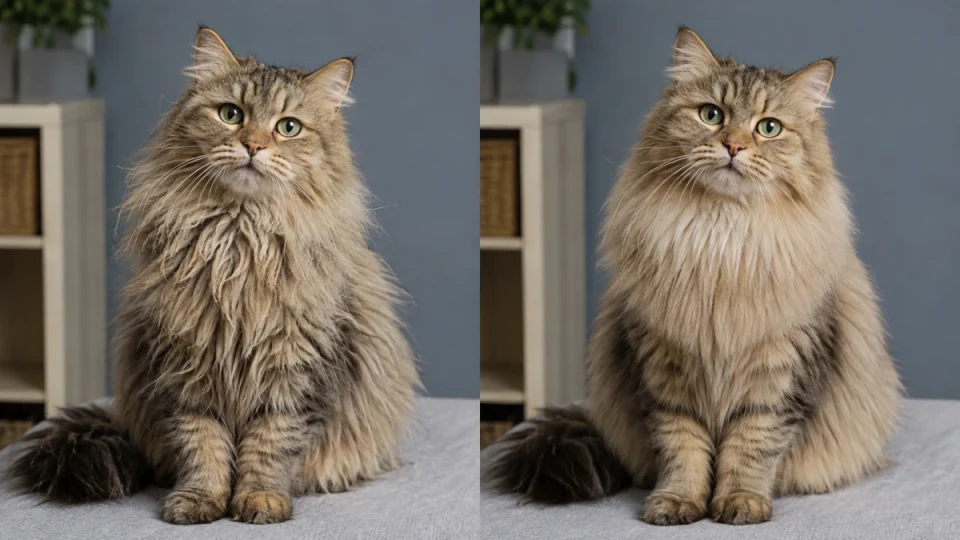
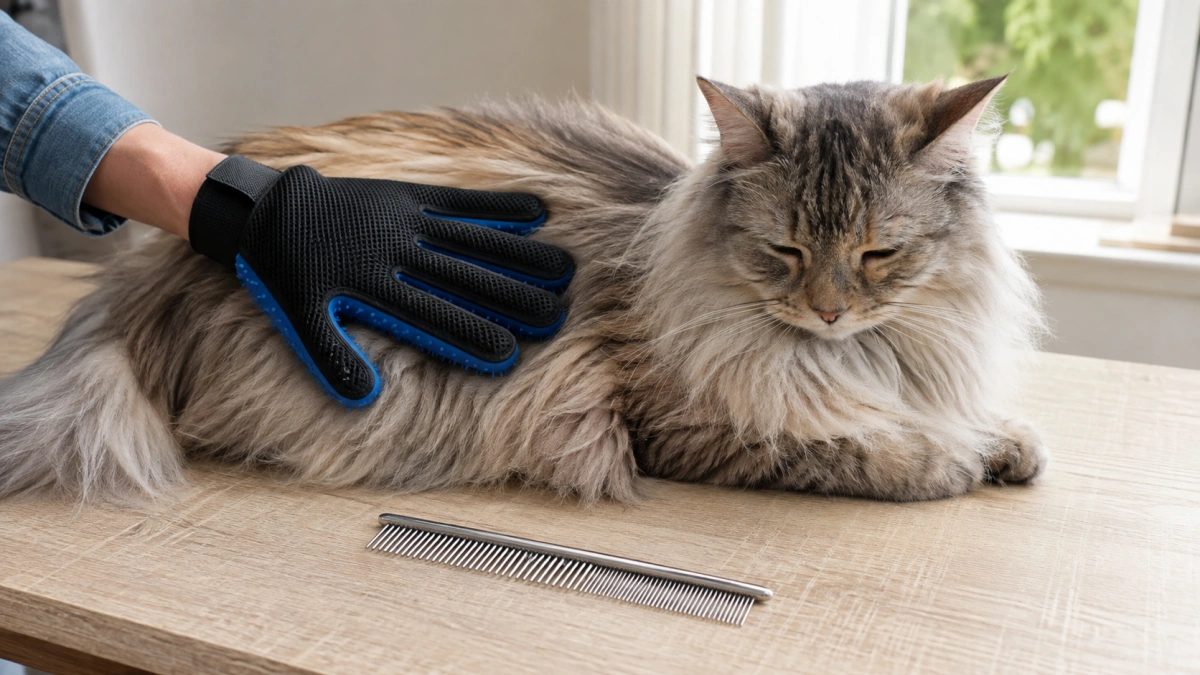
A glove can still be useful on a long-haired cat for collecting loose surface fur, but it should not be the only tool you rely on.
Long coats usually benefit from a comb that can reach through the full coat and reveal hidden resistance.
Mats and Tight Tangles
Do not use a grooming glove to pull repeatedly across a tight mat. The glove does not provide enough precision to separate deeply tangled hairs safely.
If a mat is tight, close to the skin, or cannot be loosened gently, avoid cutting blindly with household scissors because cat skin can be difficult to see beneath the fur.
Heavy Undercoat Shedding
A glove may remove a satisfying layer of loose hair while still leaving much of the deeper coat untouched.
For cats with dense coats, another coat-appropriate grooming tool may be necessary.
Cat Grooming Glove vs Brush
| Feature | Grooming Glove | Traditional Brush |
|---|---|---|
| Loose surface fur | Good | Good to excellent |
| Cat tolerance | Often easier | Varies by brush |
| Deep coat reach | Limited | Depends on brush type |
| Light daily grooming | Very convenient | Convenient |
| Tangle detection | Limited | Better with suitable tools |
| Precise grooming | Limited | Better |
A glove is therefore not automatically better or worse than a brush. It is better for certain cats and certain jobs.
If your cat comfortably accepts a well-matched brush, you may not need to replace it. If the cat repeatedly avoids brushing, a glove can be worth trying.
Cat Grooming Glove vs Grooming Mitt
The terms are often used interchangeably, but products generally fall into two designs.
- Full grooming glove: Covers individual fingers and gives you more control around body contours.
- Grooming mitt: Keeps the fingers together and offers a broader grooming surface.
Neither design is automatically better. The important factors are flexibility, fit, tip shape, ease of cleaning, and whether you can use the tool comfortably without applying unnecessary pressure.
What to Look For in a Cat Grooming Glove
Soft Flexible Tips
The grooming surface should flex rather than feel sharp or rigid against the coat.
A Secure Fit
A glove that slides around your hand makes pressure harder to control. Adjustable wrist closures can help keep the glove stable.
Easy Hair Removal
Loose fur should be reasonably easy to lift away from the grooming surface after use.
Washable Material
A reusable glove should be easy to clean and dry between sessions.
Correct Hand Size
An oversized glove reduces control, particularly when grooming around the shoulders, legs, or sides of the body.
How to Use a Cat Grooming Glove
- Let your cat see and smell the glove before grooming.
- Start during a calm period rather than when the cat is active or irritated.
- Begin on the back or shoulders.
- Stroke in the natural direction of the coat.
- Use light pressure.
- Keep the first sessions short.
- Remove accumulated fur from the glove as needed.
- Stop if your cat becomes increasingly uncomfortable.
The goal is to make grooming repeatable. A short session your cat accepts is more useful than one long session that makes future grooming difficult.
Can You Use a Grooming Glove on a Long-Haired Cat?
Yes, but think of it as a surface-maintenance tool rather than a complete long-hair solution.
A glove can pick up loose outer fur and may be pleasant for the cat, but longer coats should still be checked for tangles with an appropriate comb.
This becomes particularly important behind the ears, under the front legs, around the chest, belly, and hindquarters.
Should You Use a Glove on Wet Fur?
Follow the instructions for the specific glove you own. Some washable silicone grooming gloves are marketed for both wet and dry use, but the best approach depends on the product and why you are grooming.
For ordinary loose-hair removal, dry grooming is generally simpler because you can see how much hair is being collected and how the coat responds.
Common Grooming Glove Mistakes
- Expecting a glove to remove tight mats.
- Using too much pressure because the tips feel soft.
- Continuing after the cat repeatedly tries to leave.
- Assuming large amounts of removed fur always mean better grooming.
- Using the glove as the only tool on a long, dense coat.
- Buying an oversized glove that is difficult to control.
Do You Need a Grooming Glove in a Home Grooming Kit?
It depends on your cat.
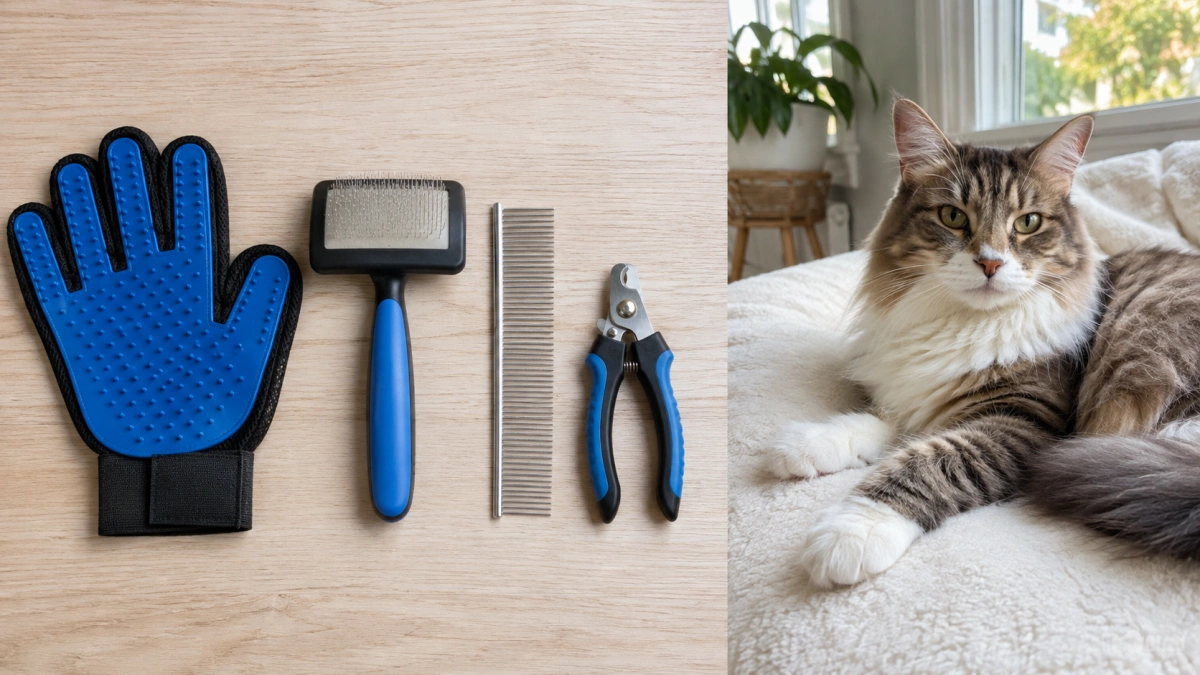
For a short-haired cat that enjoys brushing, a glove may be optional. For a cat that strongly prefers being petted to being brushed, it can become one of the most frequently used tools in the kit.
If you are building your grooming setup from scratch, see our cat grooming kit guide before buying a large multi-piece set. The best kit is based on the jobs your own cat needs, not the number of tools inside the package.
When Should You Choose a Brush Instead?
Choose a brush or comb instead when you need deeper coat access, more precise tangle detection, or a tool matched to a specific long or dense coat.
A glove is strongest when comfort and light loose-fur removal are the priority. Once the grooming problem moves deeper into the coat, more specialized tools become more useful.
Final Thoughts
Cat grooming gloves do work, but their usefulness depends on what you expect them to do. They are particularly good for loose surface fur, short-haired cats, light maintenance, and cats that are uncomfortable with traditional brushes.
They are much less useful for mats, hidden tangles, or deep undercoat grooming. Treat the glove as one option in your grooming routine rather than a replacement for every brush or comb.
If your cat accepts the glove comfortably and it removes the loose fur you are trying to manage, then it is doing exactly the job it was designed to do.