By
By 
A good cat grooming kit does not need 10, 15, or 20 tools. For most homes, a few well-chosen items can cover brushing, coat checks, nail care, and basic cleanup more effectively than a large kit filled with duplicate tools.
The right setup depends on your cat’s coat, shedding level, tolerance for handling, and the grooming jobs you actually perform. Thinking in terms of jobs rather than product count makes grooming a cat at home simpler and helps you avoid buying tools you rarely use.
If you want to compare individual brushes, combs, mitts, and other equipment before building your kit, start with our complete cat grooming tools guide.
What Should Be in a Cat Grooming Kit?
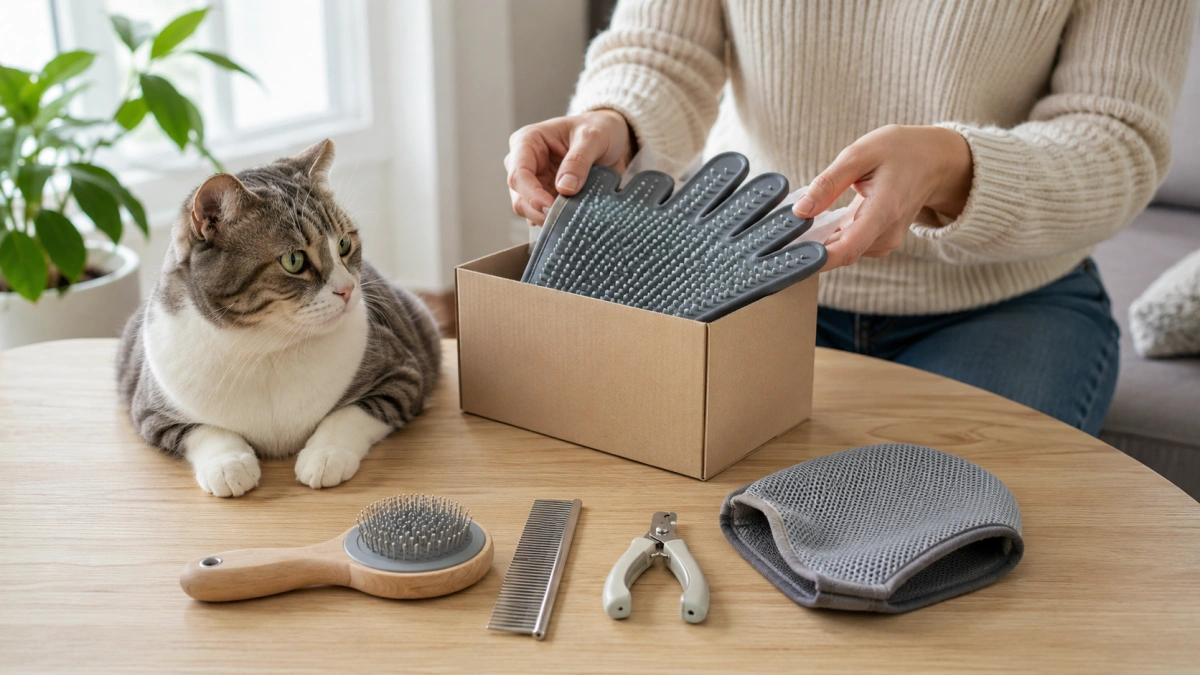
Instead of asking how many pieces a kit contains, ask which grooming jobs those pieces cover.
A practical home kit usually needs to handle four core areas:
- Brushing and loose-hair removal
- Checking the coat for tangles
- Nail maintenance
- Basic spot cleaning
Not every cat needs a separate tool for every possible grooming problem.
| Grooming Job | Core Tool | Is It Essential? |
|---|---|---|
| Loose fur | Coat-appropriate brush | Usually |
| Tangle checking | Metal comb | Especially useful for longer coats |
| Nail care | Cat nail clippers | Usually |
| Spot cleaning | Soft cloth or suitable pet wipe | Useful |
| Bathing | Cat-appropriate shampoo | Only when needed |
| Heavy shedding | Specialized coat tool | Optional |
1. Start With the Right Grooming Brush
The brush should match your cat’s coat rather than simply being included because a kit manufacturer put it in the box.
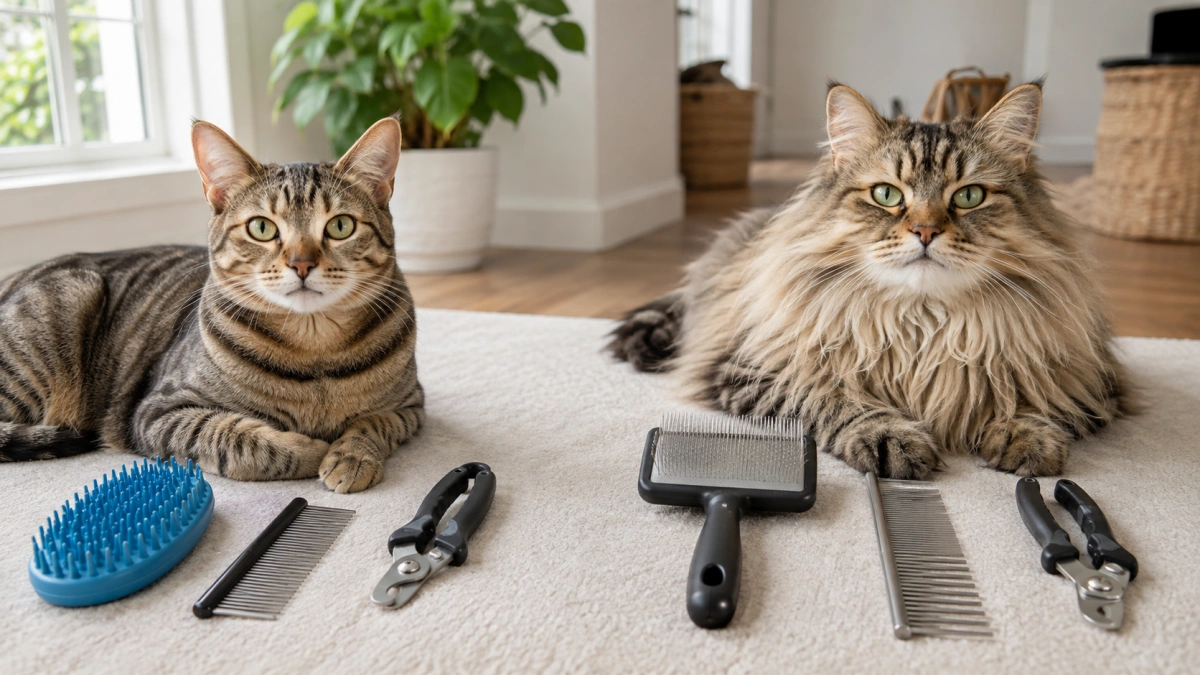
Short-Haired Cats
A rubber brush, grooming mitt, or soft brush may be enough for regular loose-fur removal.
Medium-Haired Cats
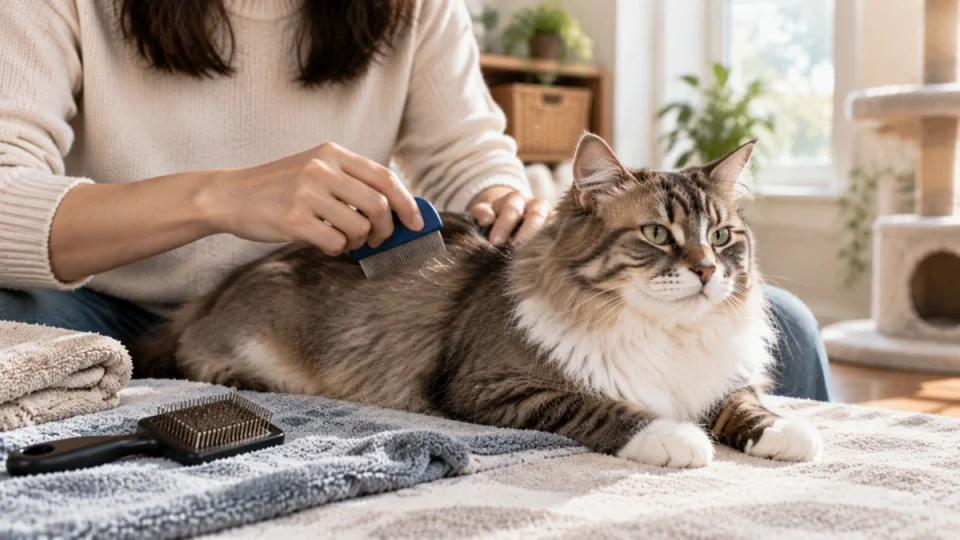
A soft slicker brush can help with loose fur and light coat maintenance.
Long-Haired Cats
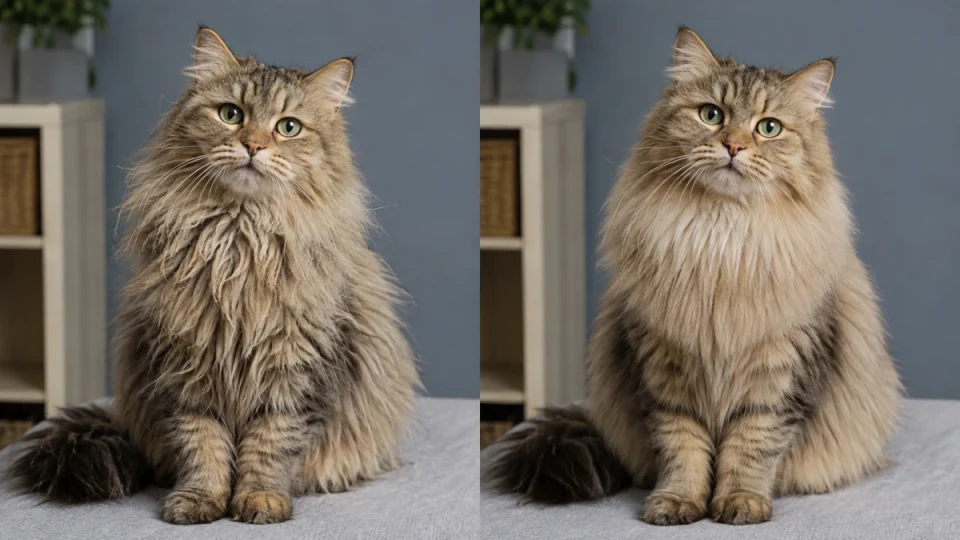
A slicker or pin-style brush can be useful, but long coats often need a comb as well because brushing alone may not reveal tangles beneath the surface.
2. Add a Metal Grooming Comb
A metal comb is one of the most useful additions to a home grooming kit, particularly for medium- and long-haired cats.
Unlike a soft brush that may glide across the outer coat, a comb provides clearer feedback when it encounters resistance.
A combination comb with wider teeth on one side and finer teeth on the other can cover several jobs with one tool:
- First pass through longer fur
- Checking for hidden tangles
- Finishing after brushing
- Working through small areas carefully
3. Include Cat Nail Clippers
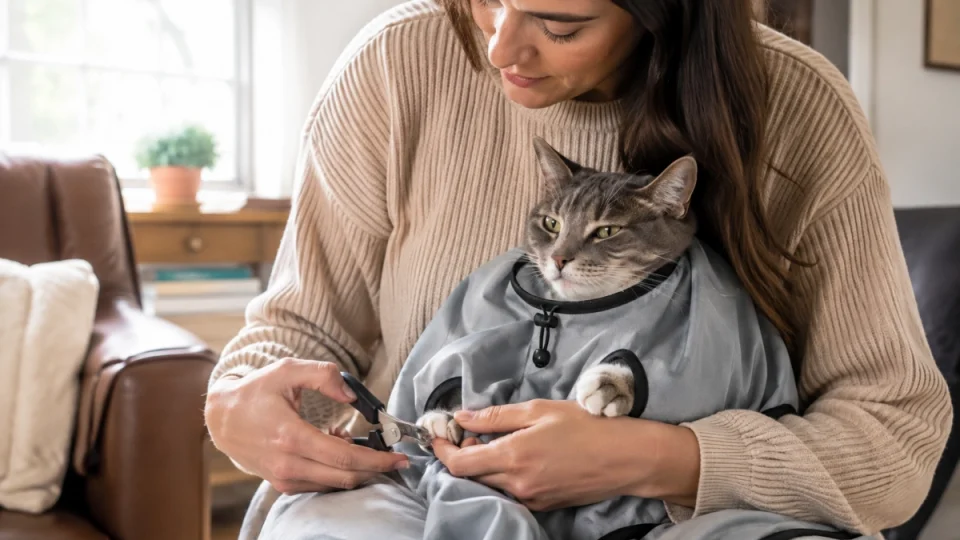
Coat care is only one part of home grooming. A basic grooming kit should also include nail clippers designed for cats or small pets.
Choose a size that gives you clear control rather than a large tool that blocks your view of the nail.
If you are not comfortable identifying where it is safe to trim, get practical guidance from a veterinarian or professional groomer before attempting a deep trim.
4. Keep a Simple Spot-Cleaning Option
Not every dirty patch requires a full bath.
A soft damp cloth or an appropriate pet grooming wipe can be useful for small areas of surface dirt, especially around paws or coat areas that need light cleaning.
Avoid turning a basic grooming kit into a collection of heavily fragranced cleaning products. Cats groom themselves by licking their coat, so products used directly on the fur should be appropriate for cats.
5. Add Bathing Supplies Only If You Actually Need Them
Many healthy cats do not need routine bathing simply because a shampoo bottle is included in a grooming kit.
There are situations where bathing may be appropriate, but the need depends on the cat, coat condition, contamination, and professional advice where relevant.
If bathing is part of your routine, store the necessary supplies together:
- Cat-appropriate shampoo
- Absorbent towel
- Non-slip surface
- Small rinsing container if useful
6. Consider a Grooming Glove for Brush-Sensitive Cats
A grooming glove is optional, but it can be one of the most useful optional tools when a cat dislikes traditional brushes.
Flexible silicone or rubber tips collect loose surface fur while your hand follows the cat’s body in a petting motion.
It does not replace a comb for long coats or mats, but it can make regular loose-fur maintenance easier for some cats.
Our guide to cat grooming gloves explains where these mitts work well and where another grooming tool is the better choice.
7. Specialty Tools Should Solve a Specific Problem
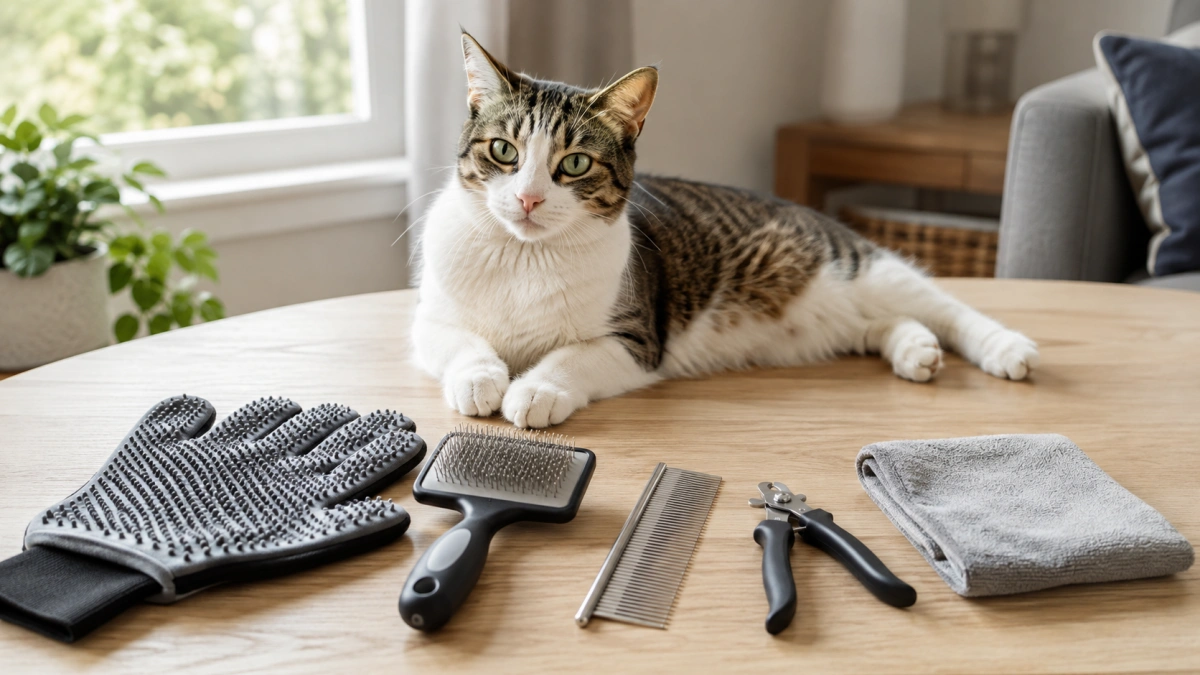
This is where many grooming kits become unnecessarily large.
A specialty tool should earn its place by solving a grooming problem your cat actually has.
Flea Comb
Useful when you specifically need a very fine-tooth tool for checking the coat for fleas, flea dirt, or tiny debris.
Undercoat Tool
Potentially useful for certain dense coats and heavier shedding, but unnecessary for many cats.
Clippers
Electric clippers are not automatically a home-grooming essential. They require more skill than routine brushing and combing and should not be included simply because a large kit advertises them.
Rounded Grooming Scissors
These may have limited uses for experienced owners, but scissors around cat skin require particular caution. Tight mats should not be blindly cut away at home.
Essential vs Optional Cat Grooming Tools
| Tool | Short Hair | Long Hair | Priority |
|---|---|---|---|
| Coat-appropriate brush | Yes | Yes | Core |
| Metal comb | Optional/useful | Highly useful | Core for long coats |
| Cat nail clippers | Yes | Yes | Core |
| Grooming glove | Useful | Optional | Optional |
| Flea comb | As needed | As needed | Specialized |
| Undercoat tool | Depends on coat | Depends on coat | Specialized |
| Electric clippers | Rarely essential | Rarely essential | Specialized |
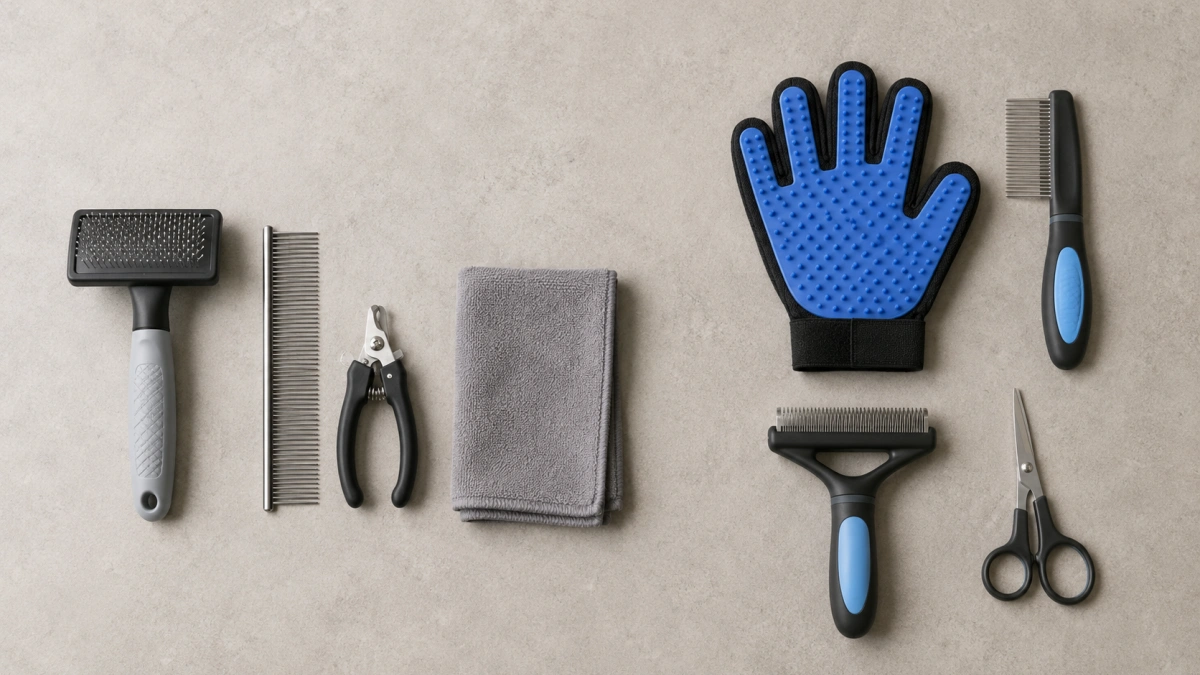
Cat Grooming Kit for a Short-Haired Cat
A short-haired cat usually needs the simplest setup.
A practical kit might contain:
- Rubber grooming brush or soft brush
- Optional fine or medium-tooth comb
- Cat nail clippers
- Soft cloth or appropriate grooming wipes
If the cat dislikes brushes, replace or supplement the brush with a grooming mitt rather than adding several similar brushes.
Cat Grooming Kit for a Long-Haired Cat
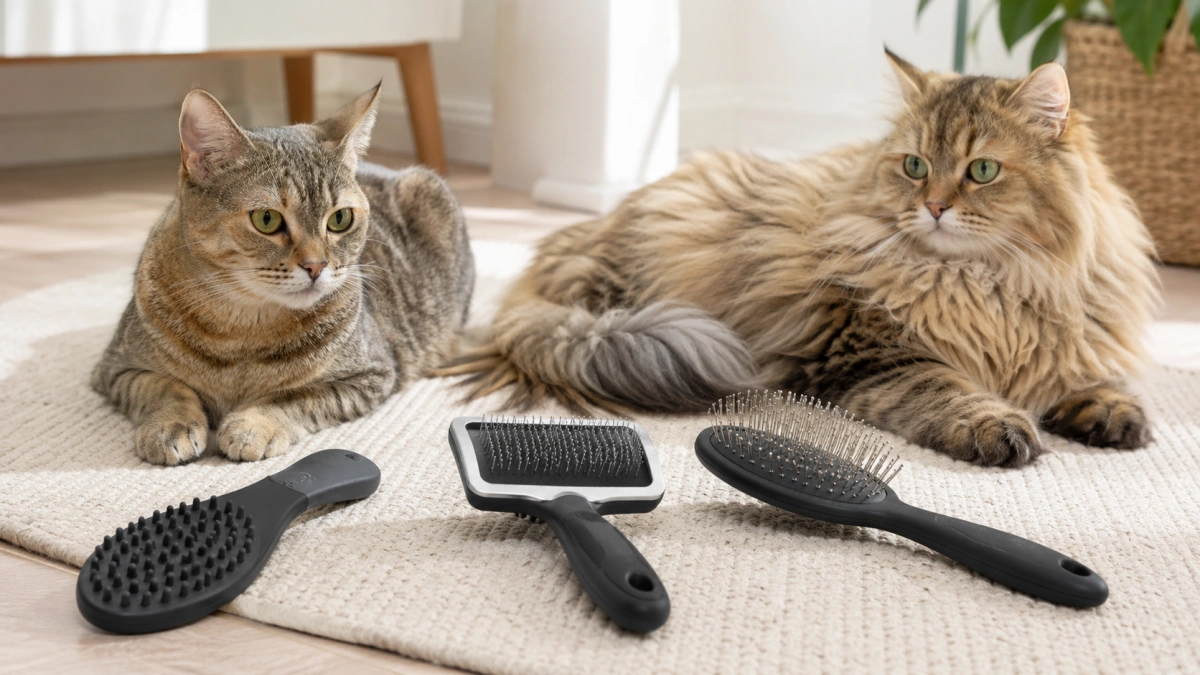
Long-haired cats generally need more coat-management capability because tangles can develop beneath the visible outer fur.
A practical kit can include:
- Slicker or pin-style grooming brush
- Long-tooth combination metal comb
- Cat nail clippers
- Simple spot-cleaning supplies
- Optional coat-specific tool if genuinely needed
The metal comb is especially important because it can help confirm whether the coat is free of hidden tangles after brushing.
Should You Buy a Pre-Made Cat Grooming Kit?
A pre-made set can be convenient, but piece count is a poor way to judge value.
A 12-piece kit may sound better than a four-piece kit while containing several tools that perform almost the same function.
Before buying a set, check every item and ask:
- Which grooming job does this tool perform?
- Does that job apply to my cat?
- Is another tool in the kit already doing the same thing?
- Is the tool sized appropriately for a cat?
- Will I realistically use it?
Build a Kit by Job, Not by Piece Count
This is the simplest way to avoid wasting money.
| Job | Choose One Main Tool |
|---|---|
| Surface loose fur | Rubber brush, mitt, or suitable brush |
| Deep coat check | Metal comb |
| Nail maintenance | Cat nail clippers |
| Light cleaning | Soft cloth or cat-appropriate wipe |
| Special coat problem | Add one specialized tool only if necessary |
Common Cat Grooming Kit Buying Mistakes
Buying the Kit With the Most Pieces
More pieces do not mean better grooming coverage.
Ignoring Coat Type
A short-haired cat and a long-haired cat should not automatically use identical grooming kits.
Buying Duplicate Brushes
Several slightly different brushes may all perform nearly the same loose-hair job.
Assuming Clippers Are Essential
Clippers are a specialized tool, not a routine requirement for every cat owner.
Buying Tools Your Cat Will Not Tolerate
A theoretically excellent brush has little value if you cannot use it comfortably and consistently.
How to Store a Cat Grooming Kit
Keep grooming tools clean, dry, easy to reach, and separated from household tools that could be confused with them.
A small basket, drawer organizer, or washable pouch is often enough.
- Remove fur from brushes and combs after use.
- Allow washed tools to dry fully.
- Keep sharp tools protected.
- Discard damaged tools with bent or sharp edges.
- Keep grooming products clearly separated from human cosmetics.
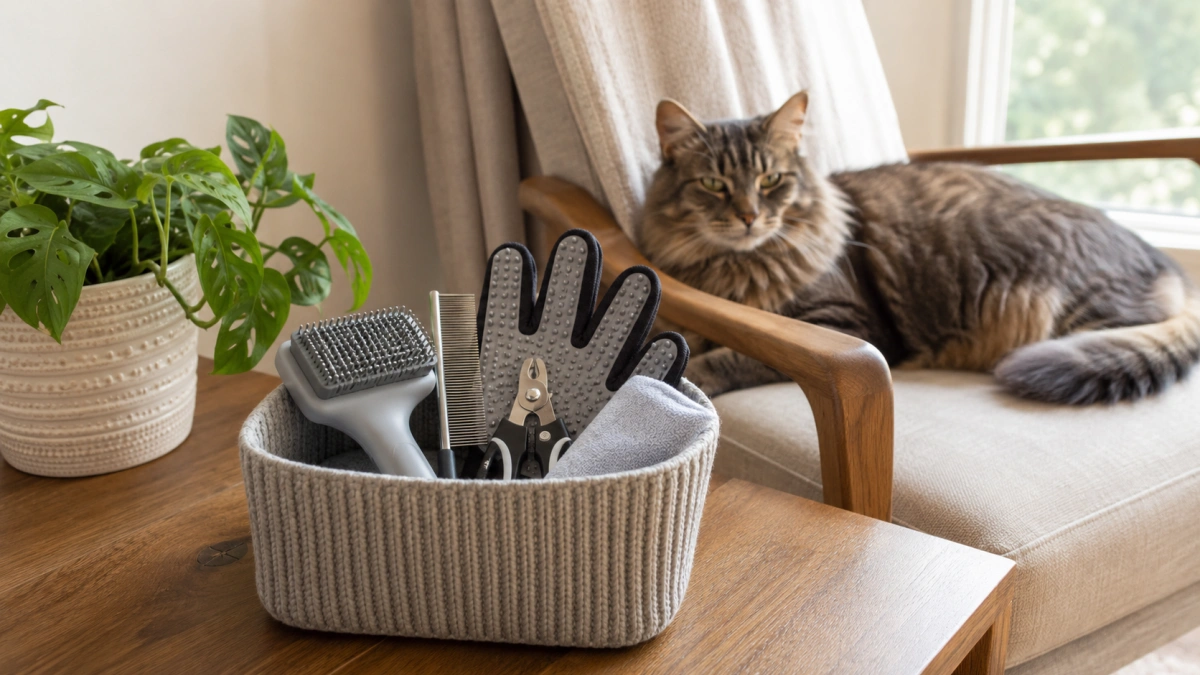
A Simple Home Grooming Kit Checklist
- One brush that matches the coat
- One appropriate metal comb
- Cat nail clippers
- Soft cleaning cloth or suitable wipes
- Optional grooming glove
- Optional flea comb
- Cat-appropriate shampoo only when needed
- One specialized coat tool only if your cat needs it
If your kit covers the jobs your cat regularly needs, you do not need to add more tools just to make the collection look complete.
Final Thoughts
The best cat grooming kit is not the biggest kit. It is the smallest practical collection that covers your cat’s actual grooming needs.
Start with a coat-appropriate brush, a useful comb, cat nail clippers, and basic cleaning supplies. Then add a grooming glove, flea comb, undercoat tool, or other specialized equipment only when there is a clear reason.
Choosing tools this way keeps home grooming simpler, reduces duplicate purchases, and makes it easier to build a routine that both you and your cat can repeat comfortably.