By
By 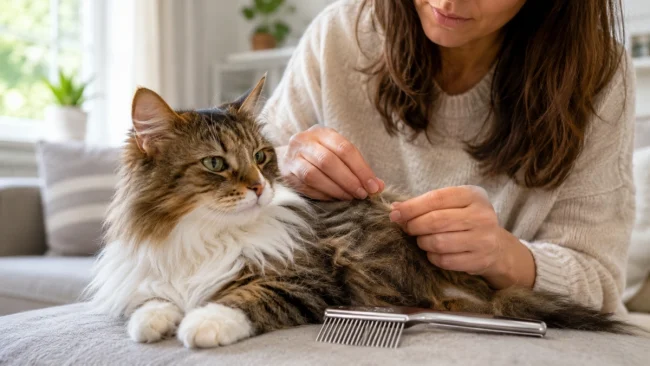
Matted cat fur needs a different approach from ordinary brushing. A small, loose tangle may sometimes be separated gently at home, but a dense mat that sits close to the skin, covers a large area, or causes discomfort should not be attacked with stronger brushing, scissors, or repeated pulling.
The safest first step is to decide what you are actually dealing with. A movable tangle, a compact mat, and widespread skin-level matting are three different grooming problems and should not be treated the same way.
Learning this distinction is an important part of grooming a cat safely. For a broader routine covering brushing, combing, handling and coat checks before mats form, see our cat grooming at home guide.
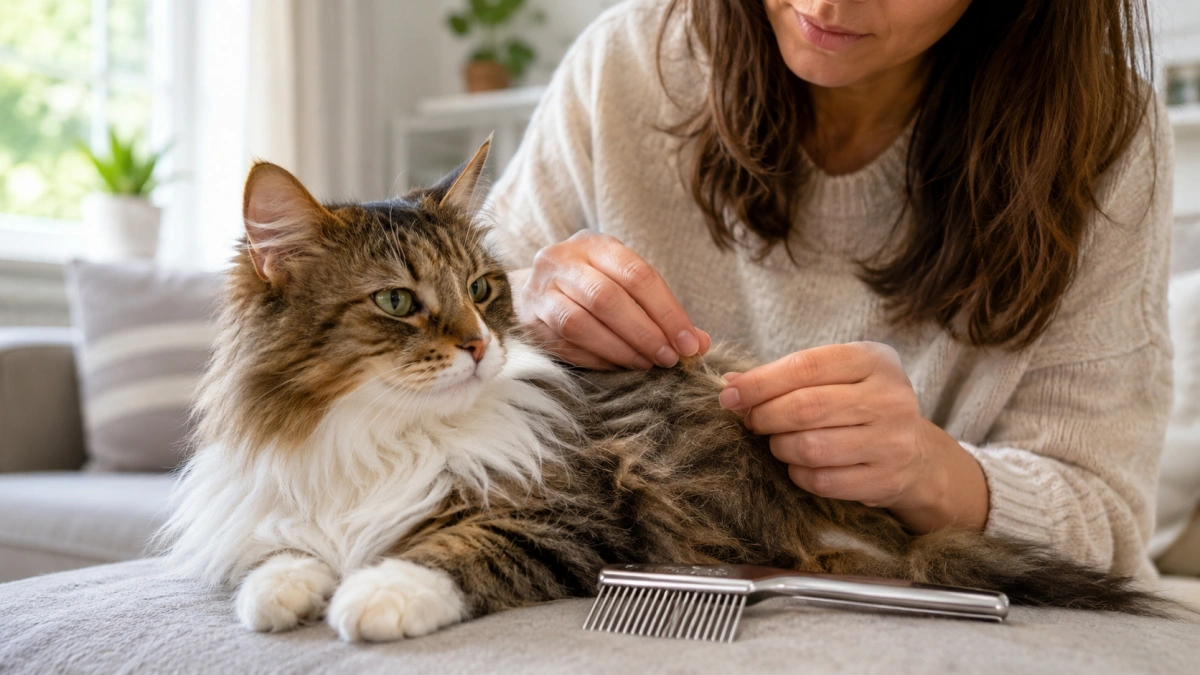
First, Decide Whether It Is a Tangle or a Mat
Not every knot in cat fur is a true mat.
A loose tangle usually still moves when you gently manipulate the surrounding fur. Individual hairs may be intertwined, but the area does not feel like one dense piece.
A mat is more compact. It can feel like felt, carpet, or a firm pad within otherwise soft fur. As a mat tightens, normal movement of the coat decreases and the fur may begin pulling on the skin beneath it.
| Coat Problem | How It Usually Feels | Best Response |
|---|---|---|
| Loose tangle | Soft, small and movable | May be manageable gently at home |
| Early compact knot | Denser but still moves | Proceed very cautiously |
| Firm mat | Dense felt-like patch | Do not force a comb through it |
| Skin-level mat | Little movement and skin position unclear | Professional help is safer |
| Widespread matting | Multiple connected compact areas | Professional assessment |
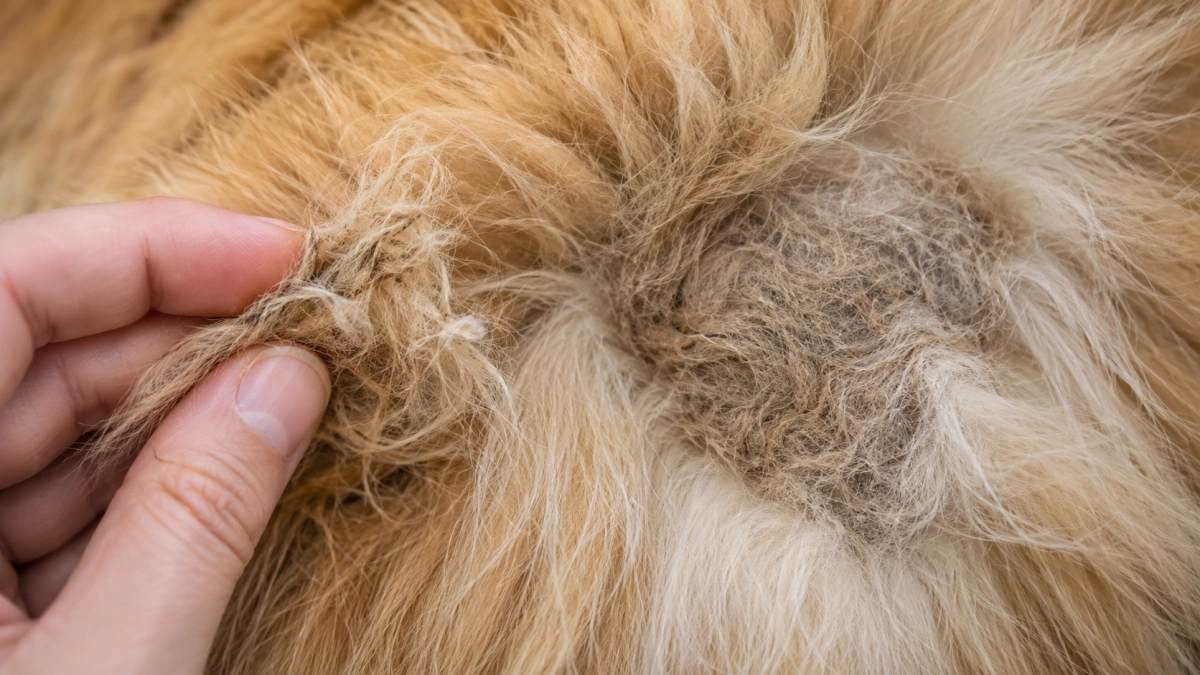
Check the Mat Before You Try to Remove Anything
Do not begin by reaching for the strongest grooming tool you own.
First look at four things: size, location, how freely the mat moves, and how your cat reacts when you touch the surrounding coat.
How Large Is It?
One small loose area is very different from several mats that have begun connecting across the belly, sides, or hindquarters.
How Close Is It to the Skin?
If you cannot confidently feel where the coat ends and the skin begins, do not try to cut underneath the mat.
Where Is It Located?
Extra caution is needed around the armpits, belly, groin, ears, legs, tail and other places where feline skin can fold or move easily.
Does Your Cat Seem Uncomfortable?
A cat that suddenly turns toward your hand, tries to leave, vocalizes, becomes tense, or reacts strongly when the mat is touched is giving you useful information.
Do not interpret pain or fear as a need for stronger restraint.
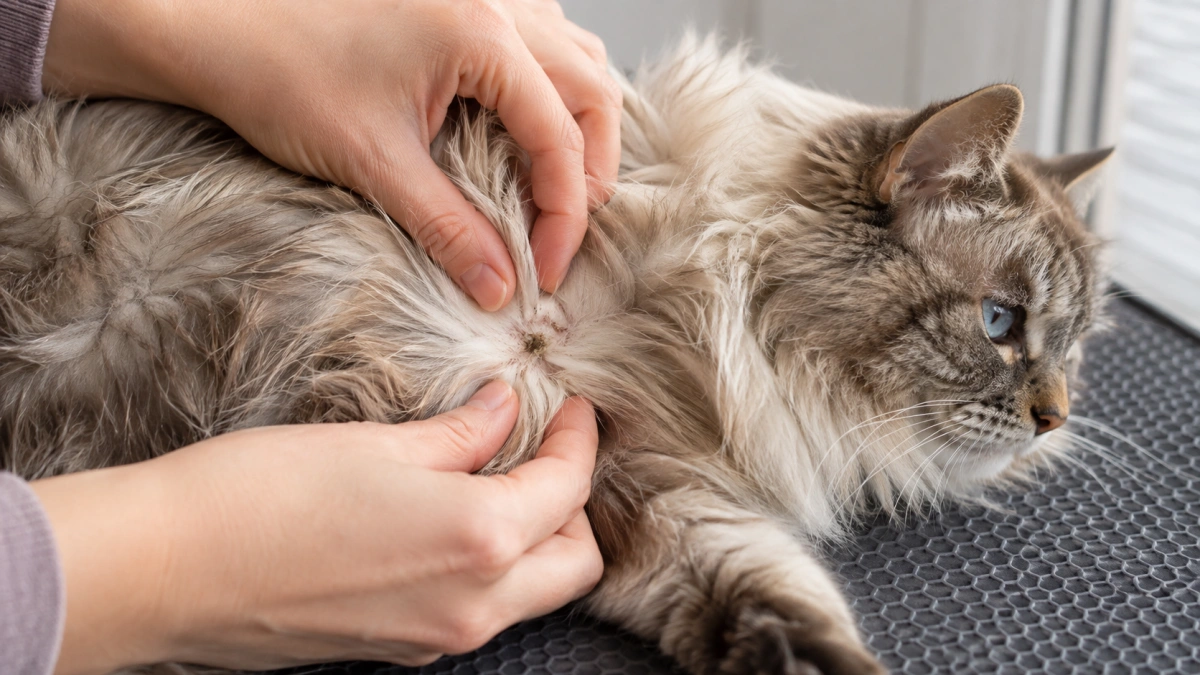
When Can You Try Handling a Tangle at Home?
Home grooming is most reasonable when the problem is still a small, loose, movable tangle and your cat remains comfortable while you handle the area.
If those conditions are met, keep the goal modest. You are not trying to finish a difficult dematting job in one session.
Start With Your Fingers
Use your fingertips to gently separate loose hairs around the edges. Sometimes this is enough to reduce a beginning tangle before a comb is necessary.
Support the Surrounding Coat
When practical, hold the fur above the tangle gently so that light combing pressure is not transferred directly to the skin.
Begin Near the Hair Ends
Do not plant a comb at the base of the knot and pull outward. Begin toward the outer ends and gradually work inward only while the fur remains movable.
Use Wider Teeth First
A wide-tooth metal comb creates less resistance than immediately using very fine teeth.
Use Short Passes
Several small movements are easier to control than one long pull through the entire knot.
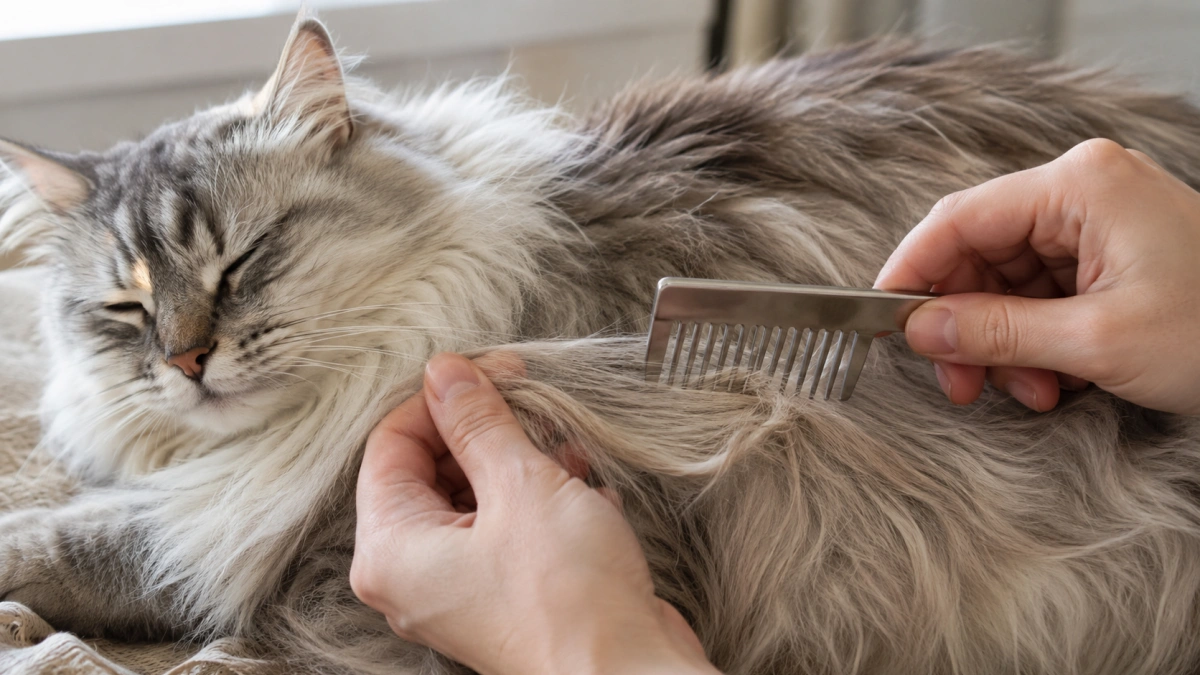
The Most Important Rule: Stop When the Mat Stops Moving
Resistance is information.
If you have moved from gentle separation to increasing pressure, repeated pulling, or a cat that is becoming progressively less comfortable, the grooming strategy is no longer working.
A dense mat cannot be converted into an easy tangle simply by brushing harder.
This is where many home grooming attempts go wrong: the owner feels committed to finishing because the session has already started.
You do not have to finish. Stopping is a grooming decision too.
Do Not Brush Aggressively Through a Tight Mat
Brushing a compact mat can pull the entire mass of tangled coat against the skin.
If the brush catches repeatedly, stop instead of making faster or harder passes.
For a tight mat, the question is no longer “Which brush should I use?” It is “Can this be handled comfortably and safely at home at all?”
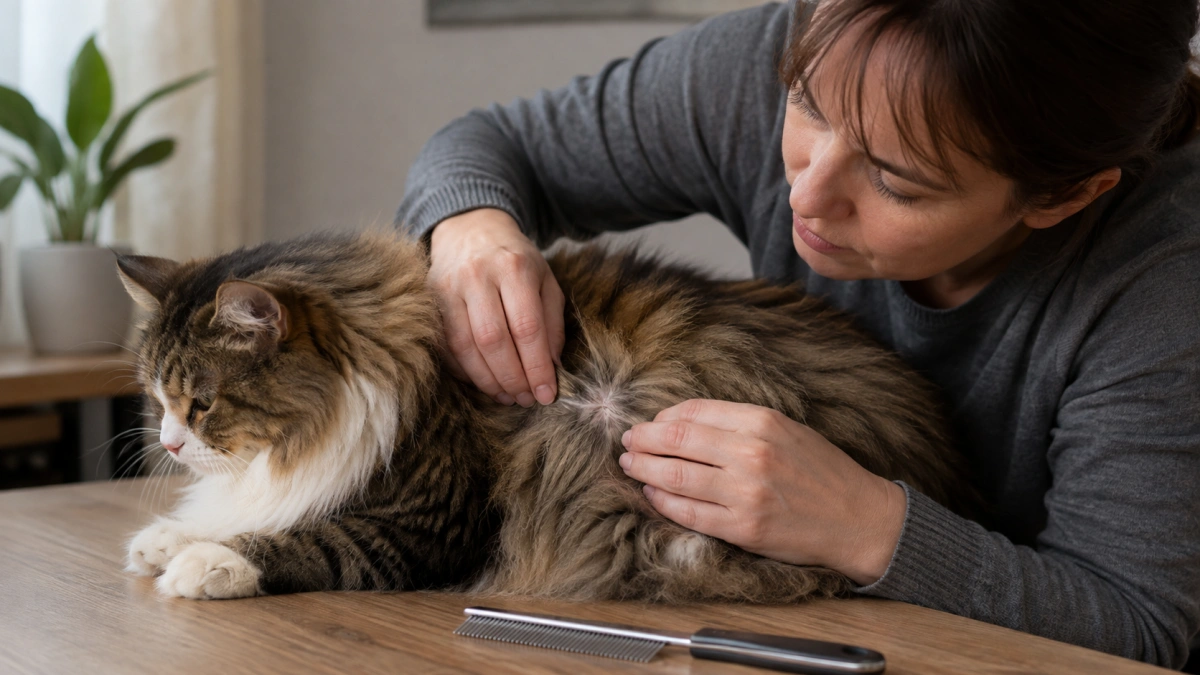
Why You Should Not Cut Cat Mats With Household Scissors
Scissors are one of the highest-risk shortcuts in matted cat grooming.
Cats have thin, mobile skin. As a mat tightens, it can pull that skin upward into the tangled coat. This makes the apparent gap under the mat misleading.
A person may believe they are sliding scissors underneath fur when skin is actually sitting within the same space.
Do not pull the mat upward and cut beneath it, and do not attempt to create a gap with a comb before inserting scissors.
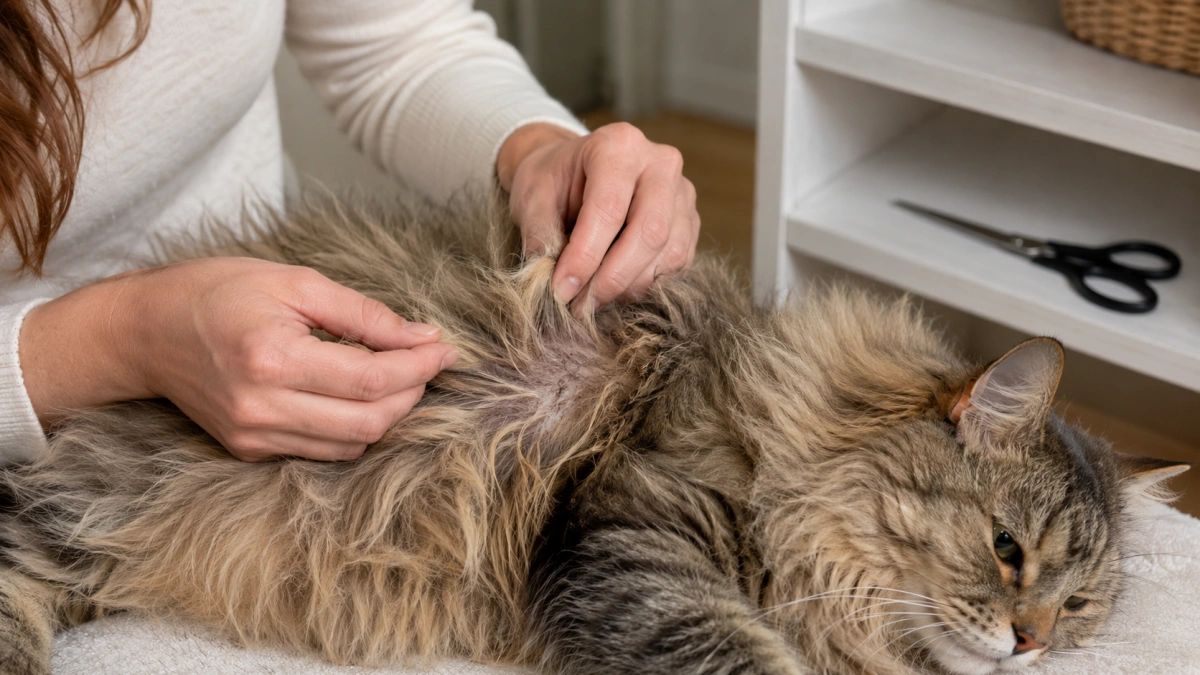
Should You Use Clippers on Matted Cat Fur?
Professional groomers and veterinary teams may use electric clippers for mats that cannot be safely combed out, but that does not make skin-level mat removal a beginner home-clipping task.
Clipping close matting requires good visibility, stable handling, appropriate equipment, and experience recognizing how feline skin moves beneath the coat.
If the mat is dense, broad, located in a sensitive area, or tight enough that you cannot clearly determine where the skin lies, use professional help instead of experimenting with clippers.
When Does a Matted Cat Need a Professional Groomer?
An experienced feline groomer is a better choice when the problem exceeds a small loose tangle but your cat otherwise appears well and the issue is primarily coat-related.
Consider professional grooming when:
- The mat is firm and close to the skin.
- Several mats are present.
- Matting covers a large body area.
- The mat is located around a difficult body contour.
- Your cat will not remain comfortable enough for gentle home grooming.
- You cannot confidently identify the skin beneath the coat.
- Clipping is likely to be required.
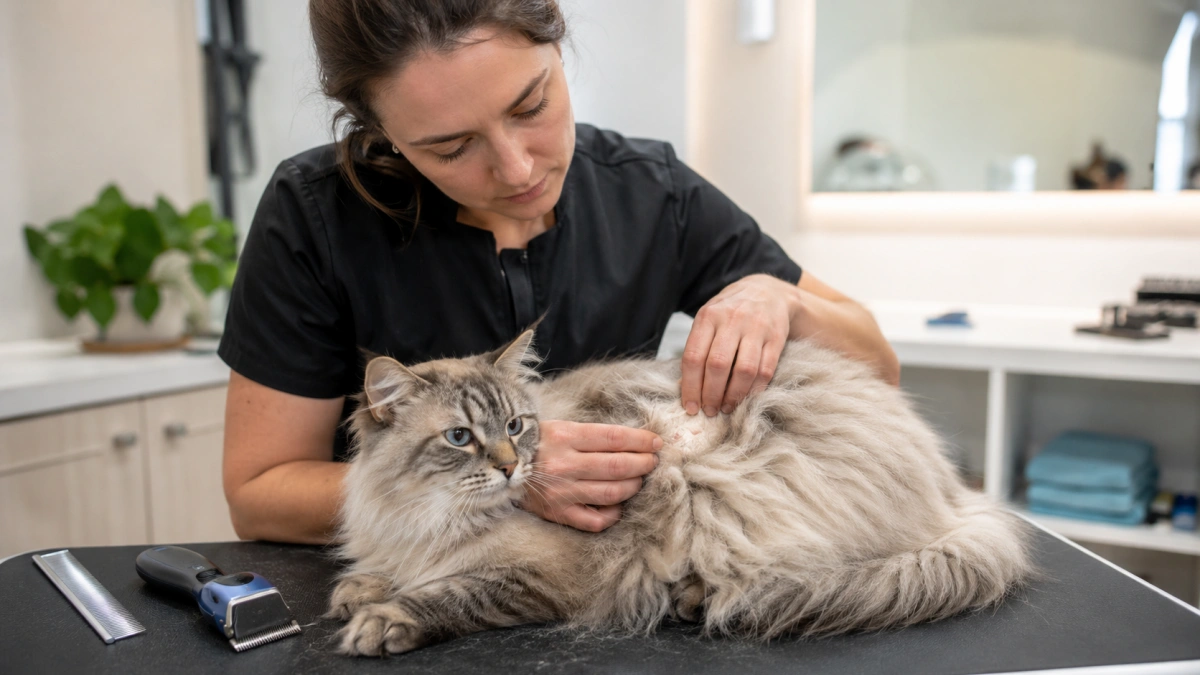
When Should You Contact a Veterinarian Instead?
Choose veterinary help when the problem appears to be more than ordinary coat maintenance.
Examples include:
- Broken, irritated, bleeding, or abnormal skin under the mat
- Strong pain when the area is touched
- Sudden widespread matting in a previously well-groomed cat
- A sudden decline in normal self-grooming
- Reduced mobility or difficulty reaching parts of the body
- A cat that may require medical support to complete grooming safely
The mat may be the visible problem, but sometimes the more important question is why the cat stopped maintaining that part of the coat.
Should You Bathe a Cat Before Removing Mats?
Do not assume water will make a mat easier to remove.
Wet tangled fur can become tighter and more difficult to evaluate. Deal with the coat condition first rather than soaking a densely matted area and hoping it loosens.
If professional bathing is appropriate, the groomer can decide when it fits into the grooming sequence.
What Grooming Tools Are Useful for Matted Fur?
The best tools depend on whether you are preventing mats or dealing with an existing problem.
| Tool | Best Use |
|---|---|
| Fingers | Checking and gently separating early loose tangles |
| Wide-tooth metal comb | Loose movable tangles and regular coat checks |
| Long-tooth combination comb | Preventive grooming for longer coats |
| Slicker brush | Loose coat maintenance after deeper tangles are ruled out |
| Professional pet clippers | Advanced mat removal by an experienced handler |
| Household scissors | Not recommended for tight mats |
What If Your Cat Will Not Stay Still?
Do not turn a mat-removal session into a contest over who can hold the cat more firmly.
If your cat is becoming increasingly difficult to handle, stop the grooming task and reconsider whether it should be completed at home.
Our guide to cat grooming restraint explains lower-stress ways to improve cooperation without automatically escalating to stronger physical restraint.
How to Prevent Matted Cat Fur From Coming Back
Once a difficult mat has been removed, prevention should begin before the coat returns to the same condition.
Focus first on the exact places where your cat developed mats previously.
- Check behind the ears.
- Feel under the front legs.
- Check the chest and collar area.
- Inspect the belly.
- Check inside and behind the hind legs.
- Inspect the rear coat and base of the tail.
For a mat-prone cat, several short grooming sessions are often more practical than one large session after the coat has already begun compacting.
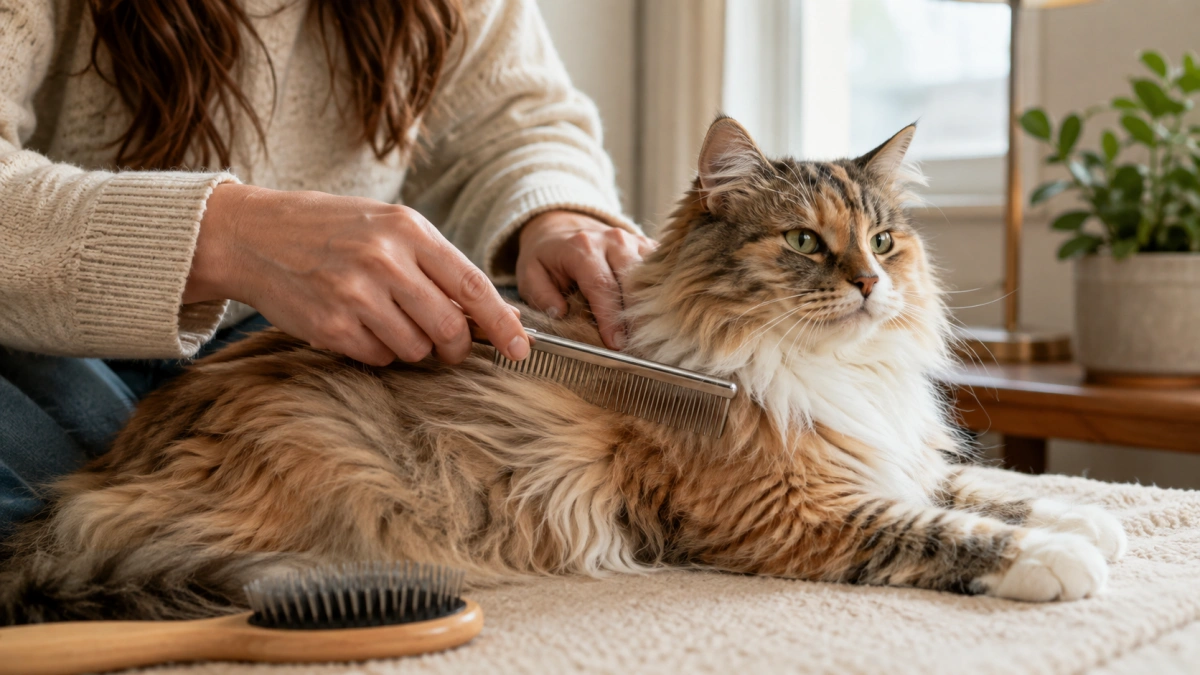
Why Did My Cat Become Matted in the First Place?
Sometimes the explanation is simple: the coat is long or dense and grooming has not been frequent enough.
But a cat that suddenly begins matting despite previously maintaining a healthy coat deserves closer attention.
Age, reduced mobility, weight gain, pain, illness, and difficulty reaching certain areas can all reduce normal self-grooming.
The correct response may therefore involve both improving the grooming routine and understanding why the cat’s grooming ability changed.
A Simple Matted Fur Decision Guide
| What You Find | What to Do |
|---|---|
| Small loose tangle | Try gentle finger separation |
| Movable minor knot | Use short wide-tooth comb passes if comfortable |
| Dense mat | Stop forceful combing |
| Mat close to skin | Use a professional groomer |
| Large or widespread matting | Professional assessment |
| Abnormal skin or significant pain | Contact a veterinarian |
| Sudden unexplained matting | Consider veterinary evaluation |
Final Thoughts
The safest way to groom matted cat fur begins with deciding whether home removal is appropriate at all.
A small loose tangle may respond to patient finger separation and careful combing. A tight, painful, skin-level, or widespread mat is a different problem and should not be turned into an aggressive brushing or scissor project.
Treat resistance as useful information, stop before grooming becomes painful or frightening, and shift to professional help when the mat has moved beyond ordinary coat maintenance.