By
By 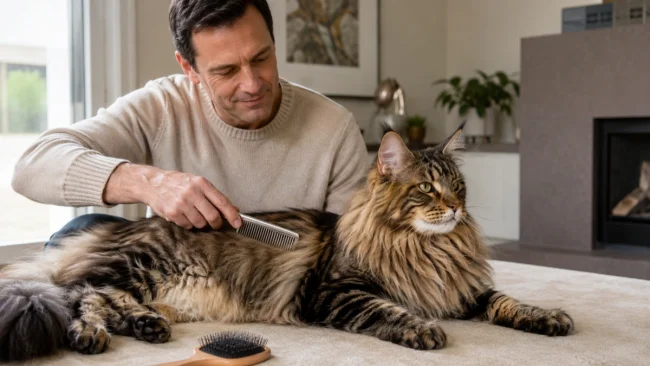
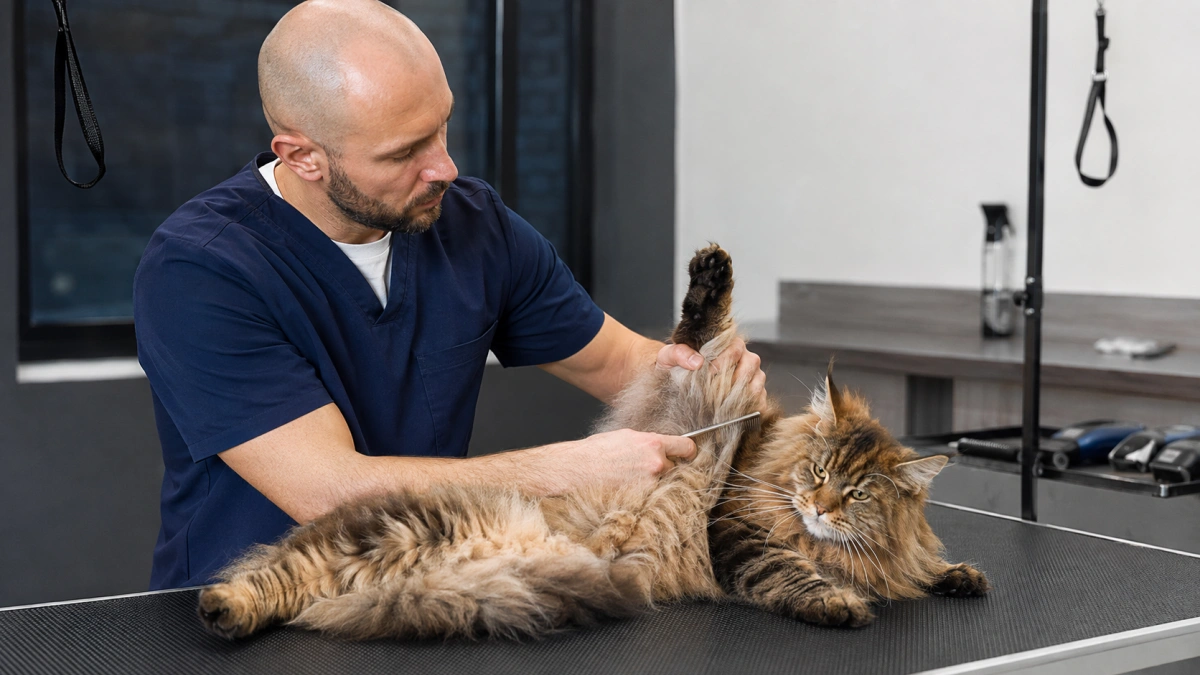
Grooming a Maine Coon cat is mainly a matter of preventing hidden tangles before they tighten into mats. The breed’s long, shaggy coat can look smooth across the back while loose fur and friction are already creating problems underneath the chest, armpits, belly and hind legs.
A practical home routine does not require a drawer full of tools. For most Maine Coons, a long-tooth metal comb plus a coat-appropriate brush can handle the majority of regular coat maintenance when they are used consistently and gently.
Maine Coon coat care is a more coat-intensive form of grooming a cat. The basic goal is the same: keep the coat comfortable, find problems early and avoid turning routine grooming into a stressful battle.
What Makes a Maine Coon Coat Different?
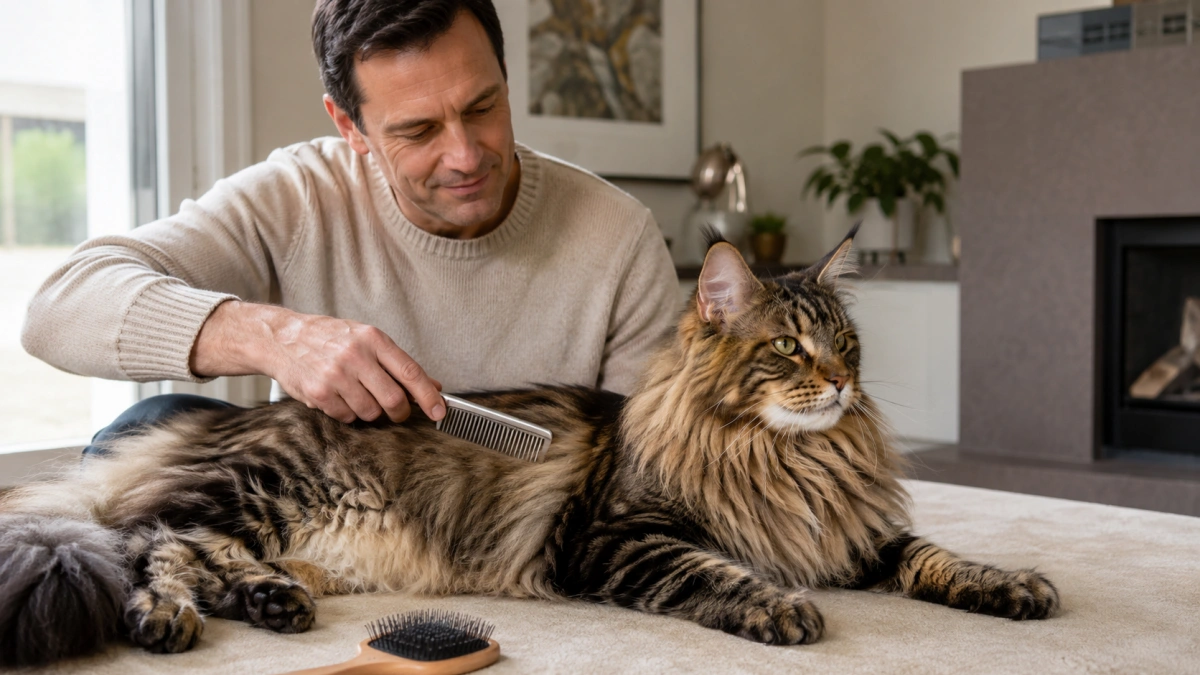
Maine Coons have a substantial semi-long coat with shorter fur around the shoulders and more length along the sides, stomach, hind legs and tail. The heavy furnishings and large body mean there is simply more coat to inspect than on a typical short-haired cat.
Another important difference is depth. A brush can make the visible top layer look tidy without proving that the coat underneath is free of knots.
That is why a metal comb is useful as more than a detangling tool. It acts as a coat check: when the comb passes through an area smoothly, you have better evidence that the deeper coat is still separated.
How Often Should You Groom a Maine Coon?
A useful starting point is two or three grooming sessions each week, but the individual coat should determine whether that is enough.
Some Maine Coons stay easy to maintain on that schedule. Others develop small tangles quickly around the belly or under the legs and benefit from brief checks between full grooming sessions.
| What You Notice | How to Adjust the Routine |
|---|---|
| Comb passes smoothly between sessions | Current schedule is probably working |
| Small knots appear before the next session | Check problem areas more often |
| Heavy seasonal loose coat | Add short grooming sessions temporarily |
| Repeated belly or armpit mats | Check those areas daily or near-daily |
| Cat dislikes long sessions | Split grooming into shorter sessions |
Frequency should therefore be treated as feedback-based rather than as a rigid calendar rule.
Know the Areas Most Likely to Mat
Owners naturally spend the most time grooming the back because it is easy to reach and many cats enjoy being touched there. Unfortunately, the easiest areas are often not where the coat causes the most trouble.
Check these friction zones deliberately:
- Behind the ears
- Under the front legs
- Chest and lower ruff
- Belly
- Inside and behind the hind legs
- Rear furnishings
- Base of the tail
Fur repeatedly moves against itself in these locations. Loose hair can become trapped and gradually compact even while the visible back coat looks excellent.
What Grooming Tools Does a Maine Coon Actually Need?
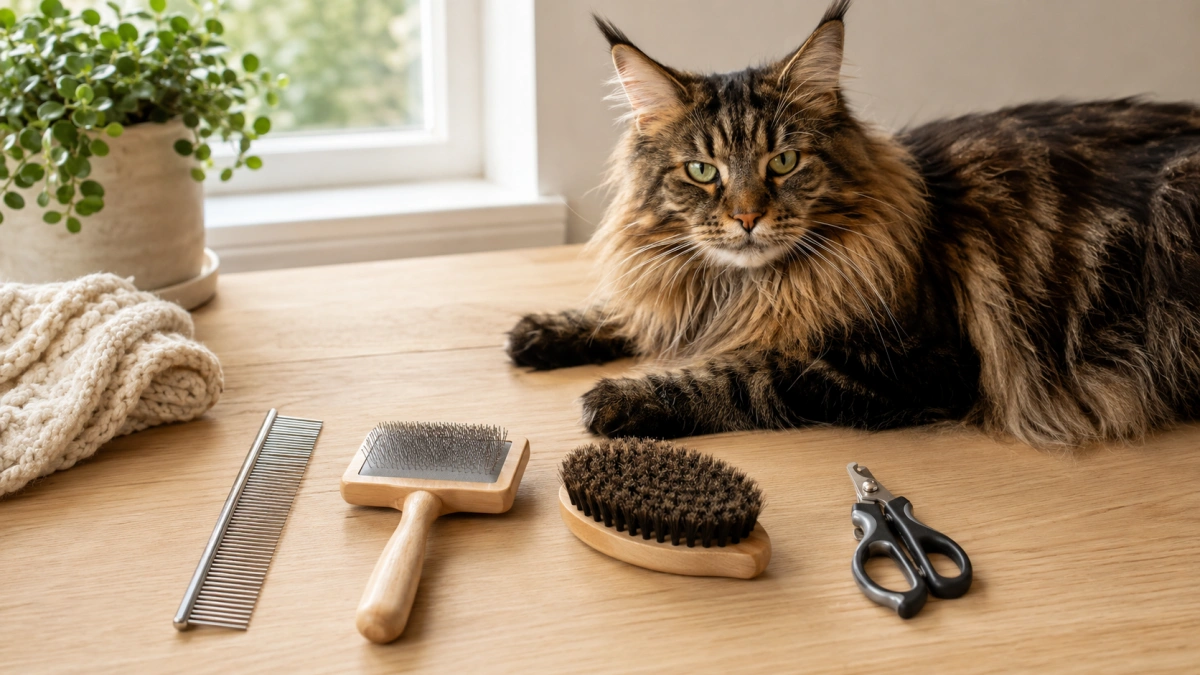
More tools do not automatically create a better routine. Each item should have a different job.
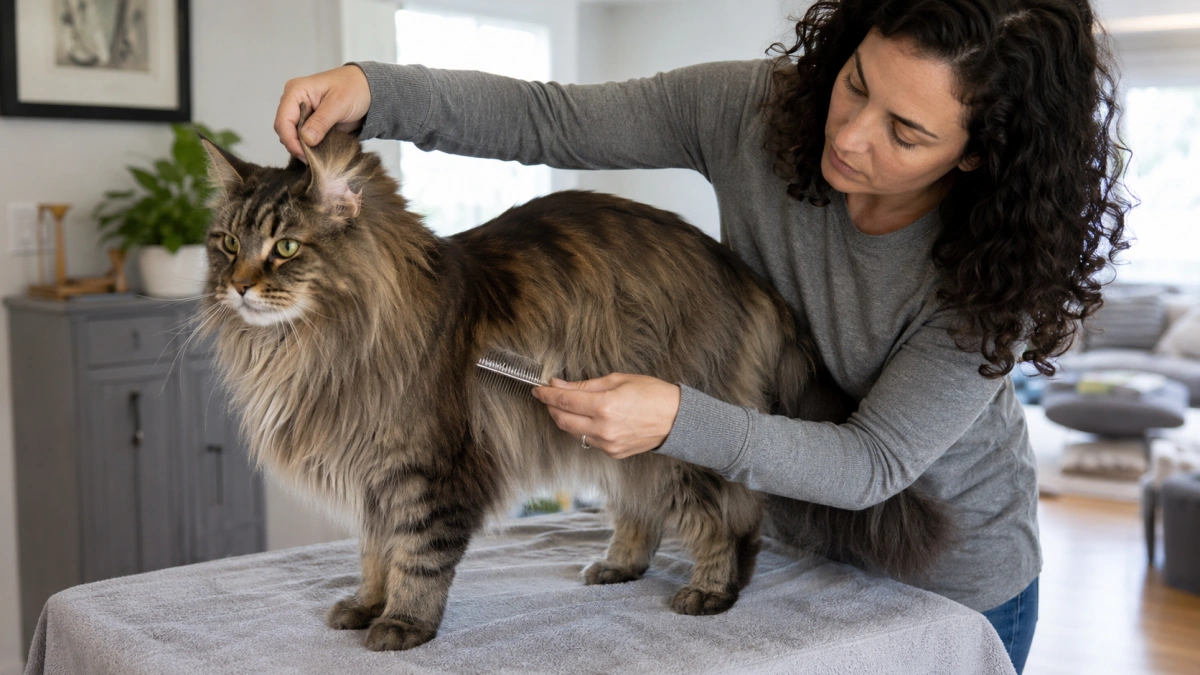
Long-Tooth Metal Comb
This is the most useful tool for checking whether the full coat is separated.
A combination comb with wider spacing at one end and finer spacing at the other is especially practical. Start with wider teeth when the coat is thick or there is mild resistance, then use the finer section only after the coat moves comfortably.
Slicker or Coat-Appropriate Brush
A brush is useful for broader loose-fur removal and smoothing the coat. It complements the comb instead of replacing it.
Soft Brush
A softer brush can be useful for finishing or for short sessions with a cat that finds firmer grooming tools too intense.
Cat Nail Clippers
Coat maintenance is the largest part of Maine Coon grooming, but checking the paws and nails regularly keeps those tasks from being forgotten.
How to Groom a Maine Coon Step by Step
1. Start With Your Hands
Before picking up a comb, feel through the coat. Your fingers can often detect a dense spot or beginning knot before it becomes obvious visually.
2. Begin Where Your Cat Is Comfortable
Start around the shoulders, neck or back rather than immediately reaching for the belly. A calm beginning makes it easier to reach less popular areas later.
3. Work in Small Sections
Separate a manageable amount of fur instead of dragging a tool through a large section of coat.
4. Use the Comb as a Test
Move the comb through the section with light pressure. If it glides, continue. If it stops, treat that resistance as information rather than a reason to pull harder.
5. Finish With the Brush
Once deeper tangles have been ruled out, use the brush to collect loosened hair and smooth the outer coat.
6. Stop Before Your Cat Has Had Enough
The best grooming session is not necessarily the one where you finish the entire cat. A short successful session today makes the next session easier.
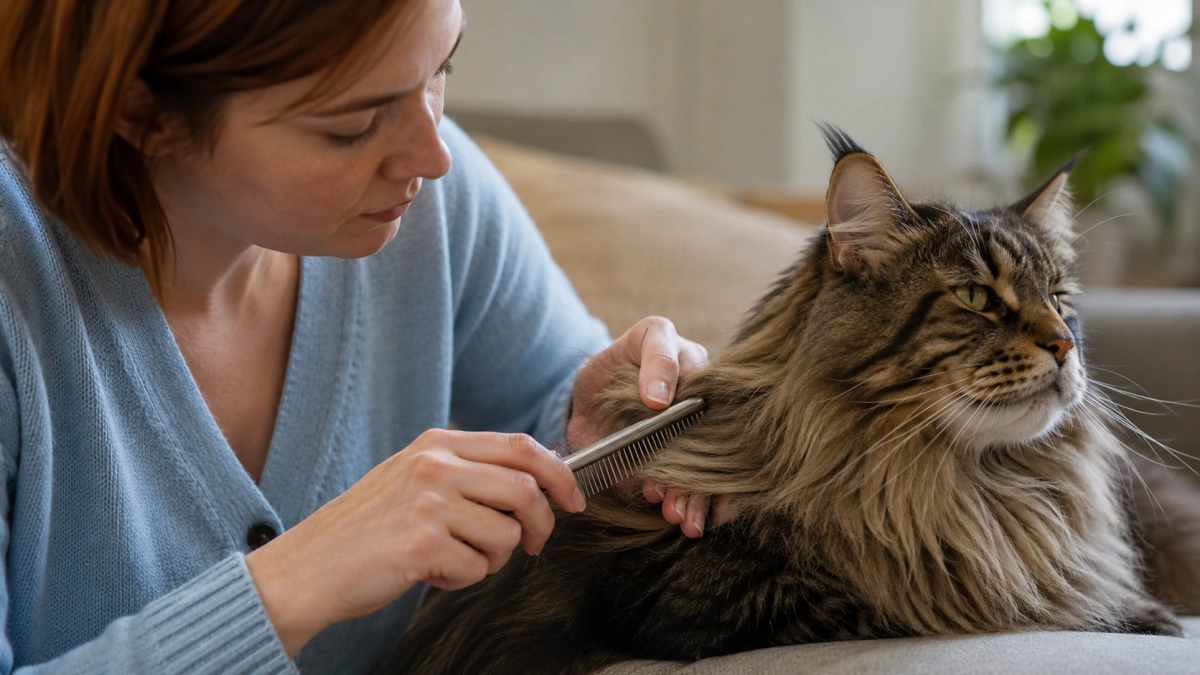
What If Your Maine Coon Hates Belly Grooming?
This is one of the most common practical problems with the breed.
A cat may happily allow brushing around the head, shoulders, back and tail but object as soon as you reach the belly or under the front legs. Unfortunately, those are also common matting zones.
The solution is usually not stronger restraint. Try changing the size and timing of the grooming task instead.
- Groom only one small belly section per session.
- Work when your cat is already relaxed.
- Let the cat remain on its side or in another comfortable position.
- Start near the edge of the belly rather than reaching underneath immediately.
- Use a few successful comb passes instead of aiming to finish the whole area.
- End with a reward or activity your cat enjoys.
If the cat begins tail-thrashing, repeatedly turns toward the tool, tries to leave or escalates toward biting, stop before grooming becomes a fight.
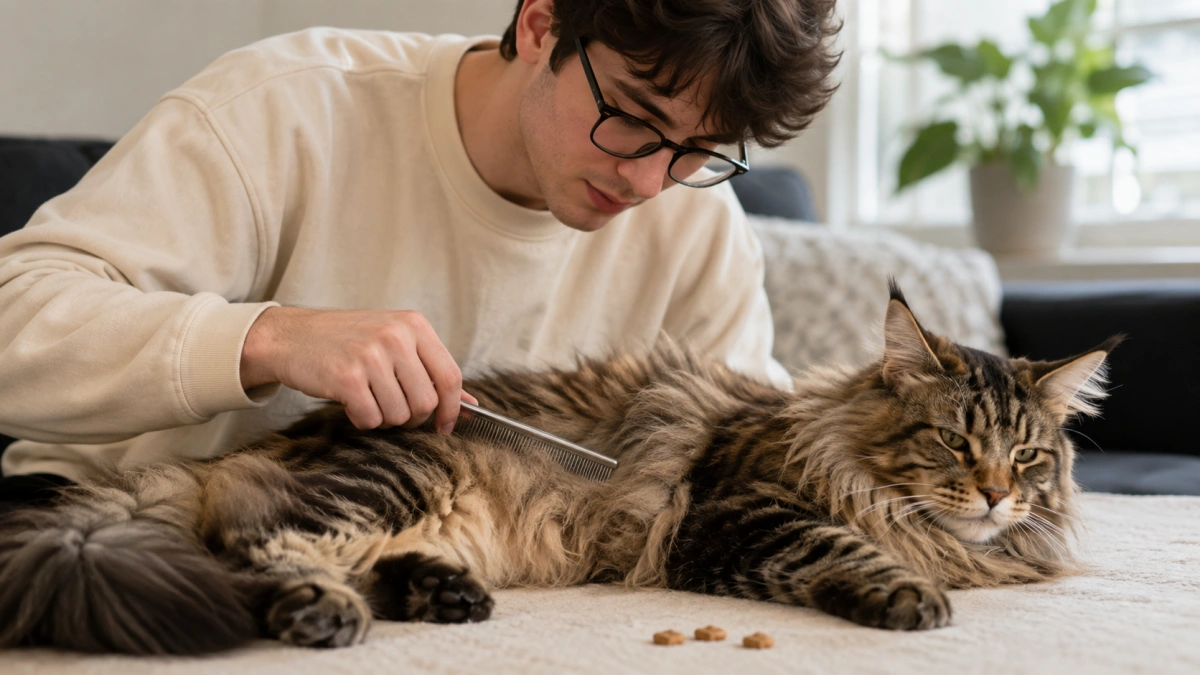
How to Deal With a Small Maine Coon Tangle
A small loose tangle is easiest to manage before it compacts.
Begin with your fingers and gently separate hairs around the outside of the knot. If you use a comb, start toward the ends of the fur rather than pulling from the skin outward in one pass.
When practical, support the coat above the tangle so the pulling force is not transferred directly to the skin.
The important rule is simple: if the knot becomes increasingly tight as you work, stop escalating the amount of force.
Small Tangle or Tight Mat?
| What You Find | Typical Feel | Best Next Step |
|---|---|---|
| Loose tangle | Small and movable | Finger-separate and comb gently |
| Early knot | Some resistance but coat still moves | Work slowly from the edges |
| Compact mat | Dense felt-like patch | Do not keep pulling |
| Mat close to skin | Skin position difficult to judge | Professional help is safer |
| Multiple connected mats | Large areas no longer separate normally | Professional assessment |
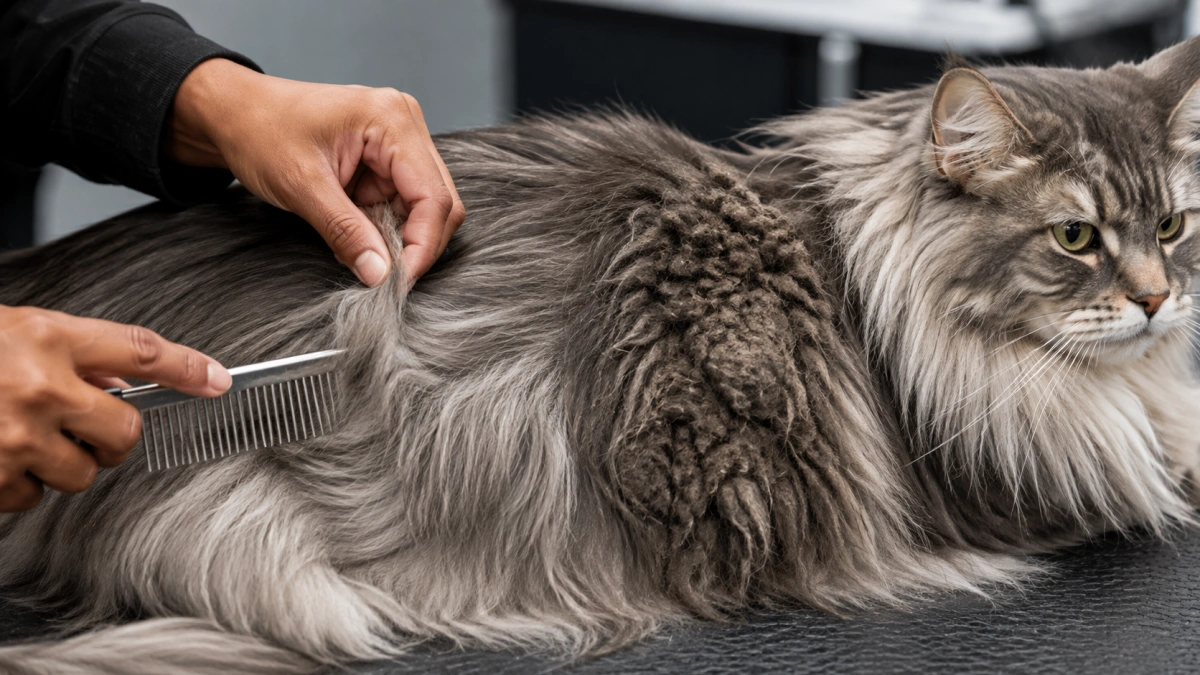
Do Not Cut Tight Mats With Household Scissors
A tight mat can pull loose feline skin upward into the tangled fur. That makes it difficult to see exactly where the skin ends and the mat begins.
For that reason, sliding ordinary scissors under a close mat is not a safe shortcut.
If the mat cannot be separated gently, sits against the skin, covers a large area or makes your cat painful or highly defensive, move from home maintenance to professional help.
Does a Maine Coon Need Regular Baths?
A Maine Coon does not automatically need frequent bathing simply because the coat is long.
Routine combing and brushing do most of the everyday work. A bath may become useful when the coat is unusually oily or dirty, or when professional grooming requires bathing as part of a larger coat-care procedure.
If your cat strongly dislikes water and the coat is otherwise clean and manageable, there is no reason to turn bathing into an unnecessary battle.
How to Handle Seasonal Shedding
The amount of loose coat can change through the year. During a heavier shedding period, increase grooming frequency before increasing grooming intensity.
Several short comb-throughs are often easier for both owner and cat than waiting until a large amount of loose hair is packed into the coat.
Do not judge a grooming session by the size of the pile of removed fur. The better measurement is whether the comb moves through the coat without unexpected resistance afterward.
What About the Rear Coat and Paw Fur?
Maine Coons have substantial furnishings around the hindquarters and feet. Long rear fur can occasionally trap litter or waste, especially when the coat is very dense.
When this is a repeated practical problem, a limited sanitary trim may be more appropriate than shortening the entire body coat.
Paw furnishings also do not need to be trimmed merely because they look long. Maintain them when they create an actual hygiene, nail-care or traction issue.
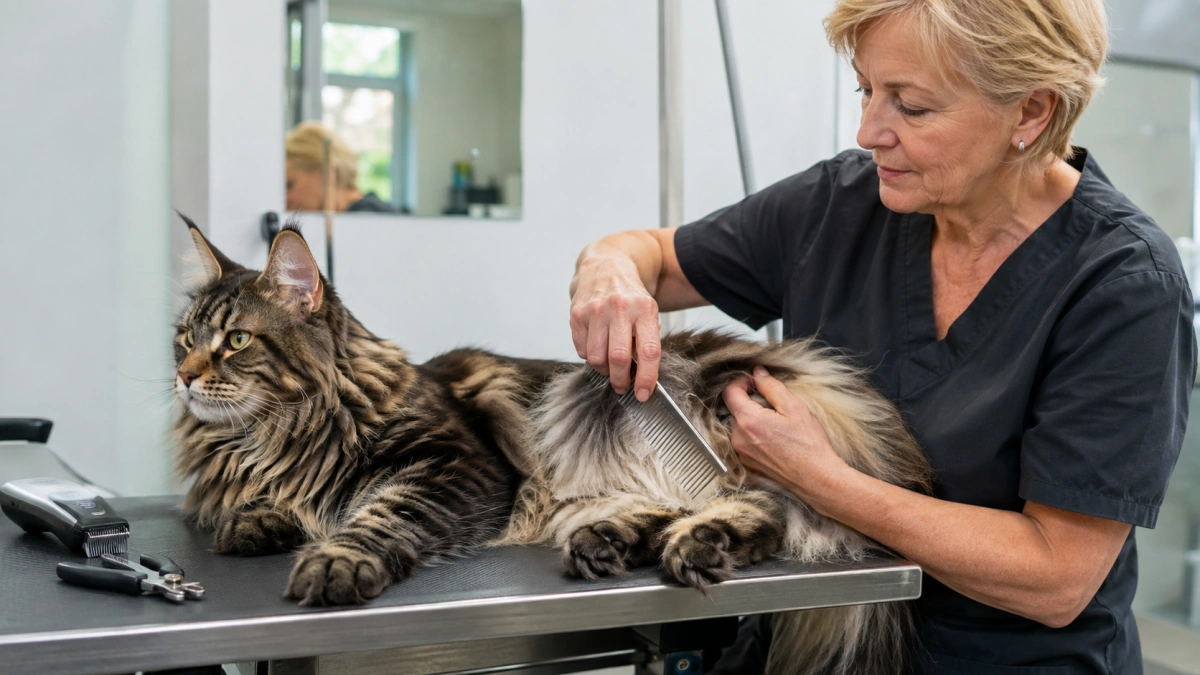
Does a Maine Coon Need a Summer Haircut?
A healthy Maine Coon does not normally need to be shaved simply because the weather becomes warm.
Regular coat maintenance is usually more useful than treating summer as an automatic reason for a haircut.
Clipping becomes a different discussion when there is another genuine grooming problem, such as widespread matting or a cat that can no longer maintain a difficult coat.
What Changes With an Older Maine Coon?
Senior cats may become less flexible and less able to reach parts of their body during self-grooming. You may notice that the rear coat, lower back or belly requires more owner assistance than it did previously.
A sudden decline in self-grooming, a new painful reaction to being touched or an abrupt change in coat condition should not automatically be treated as a grooming problem. Those changes can justify a veterinary check before you simply increase brushing.
When Should You Use a Professional Groomer?
Professional grooming is most useful when the coat has moved beyond routine maintenance.
Consider experienced feline grooming help when:
- A mat is tight against the skin.
- Multiple areas are heavily matted.
- Your cat will not safely tolerate essential grooming.
- You cannot see or feel where the skin is beneath a knot.
- A large-area trim or shave is being considered.
- Rear-coat maintenance repeatedly becomes difficult.
If the main problem is not specifically breed-related, our long-haired cat grooming guide explains the same comb-check, mat-prevention and professional-help decisions for long-coated cats more broadly.
A Practical Maine Coon Grooming Schedule
| Task | Practical Starting Point |
|---|---|
| Full coat comb-through | About 2–3 times per week |
| Belly and armpit check | More often if mat-prone |
| Rear coat check | During routine grooming |
| Loose-coat management | Increase during heavier shedding |
| Bath | When coat condition warrants it |
| Professional grooming | When home maintenance is no longer safe or effective |
Maine Coon Grooming Checklist
- Can the metal comb move through the coat?
- Did you check both armpits?
- Did you feel under the chest ruff?
- Did you check the belly rather than only the back?
- Are the hind-leg furnishings separated?
- Is the rear coat clean?
- Did you find any new dense areas?
- Did your cat show new sensitivity?
Final Thoughts
The most effective Maine Coon grooming routine is the one that finds small problems before they become big ones.
Use a metal comb to check through the depth of the coat, focus on friction areas rather than only the easy back, and shorten the session when your cat’s tolerance is running out instead of forcing completion.
A loose tangle means it is time to adjust your maintenance routine. A tight mat, painful area or grooming job you cannot safely control means it is time to stop and get experienced help.