By

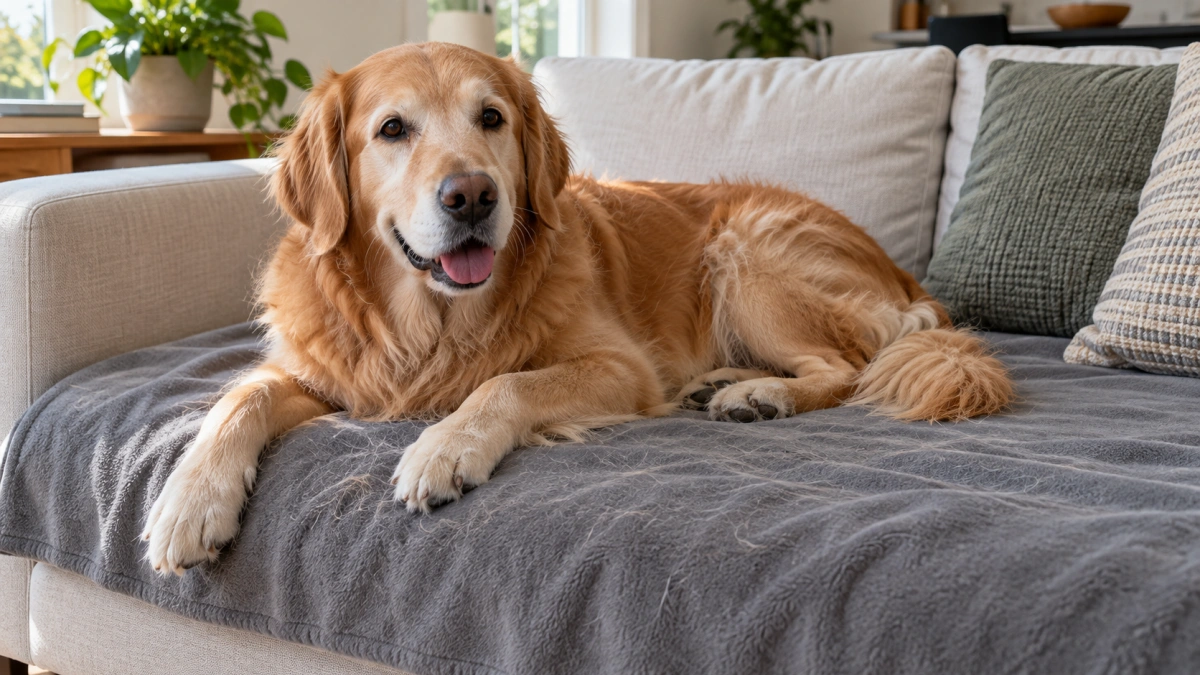
Blankets that repel dog hair are better understood as blankets that make loose fur easier to manage. No ordinary textile can prevent every strand from landing on it, but some surfaces allow dog hair to remain closer to the top instead of becoming deeply embedded between fibers.
That difference matters in a home with a heavy shedder. A blanket that releases hair easily can be shaken, vacuumed, lint-rolled, or washed with less effort, while deep plush, loose loops, and certain fuzzy surfaces may hold individual hairs more stubbornly.
The best choice depends less on one magic fiber name and more on surface structure: pile depth, weave or knit density, static, texture, washability, and how the blanket will be used.
For more guidance on sizes, materials, cleaning, seasonal blankets, and everyday uses, visit our Dog Blankets topic hub.
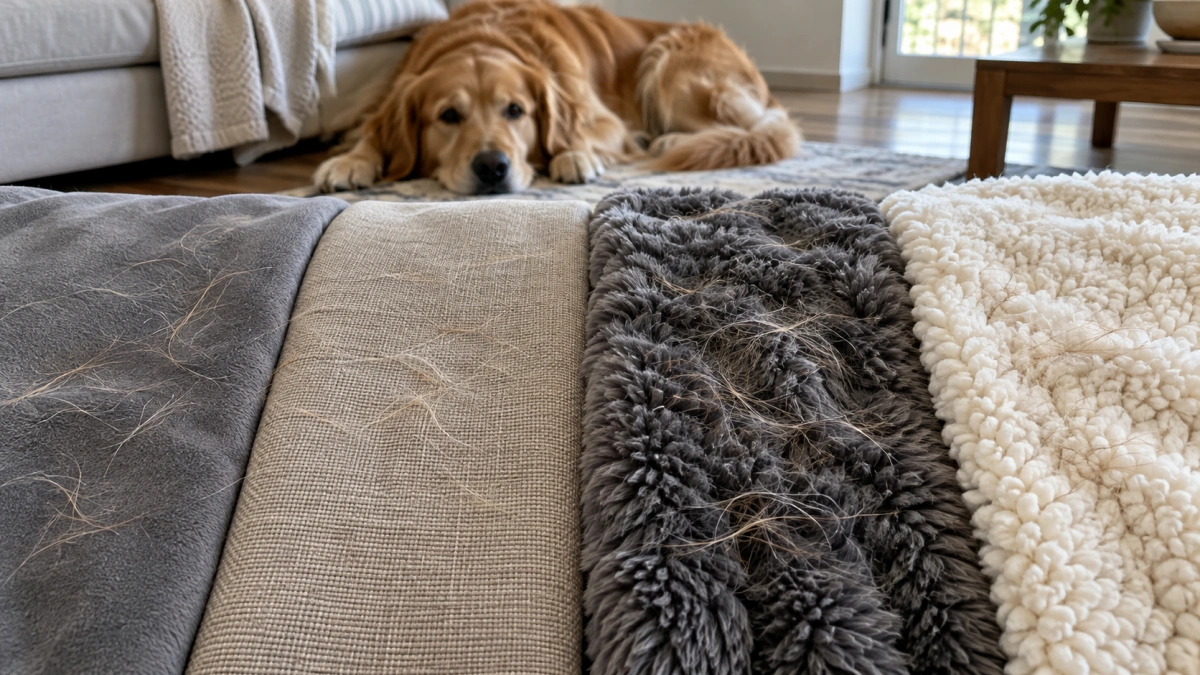
Quick Comparison: Which Blanket Surface Handles Dog Hair Best?
When shedding is the main concern, compare the surface before comparing thickness or softness.
| Blanket Surface | Hair Management | Why | Main Trade-Off |
|---|---|---|---|
| Smooth, low-pile synthetic surface | Often easier | Hair has fewer deep fibers to work into | May feel less fluffy |
| Tightly woven flat fabric | Often easier | Dense surface can keep more hair near the top | Usually less plush for nesting |
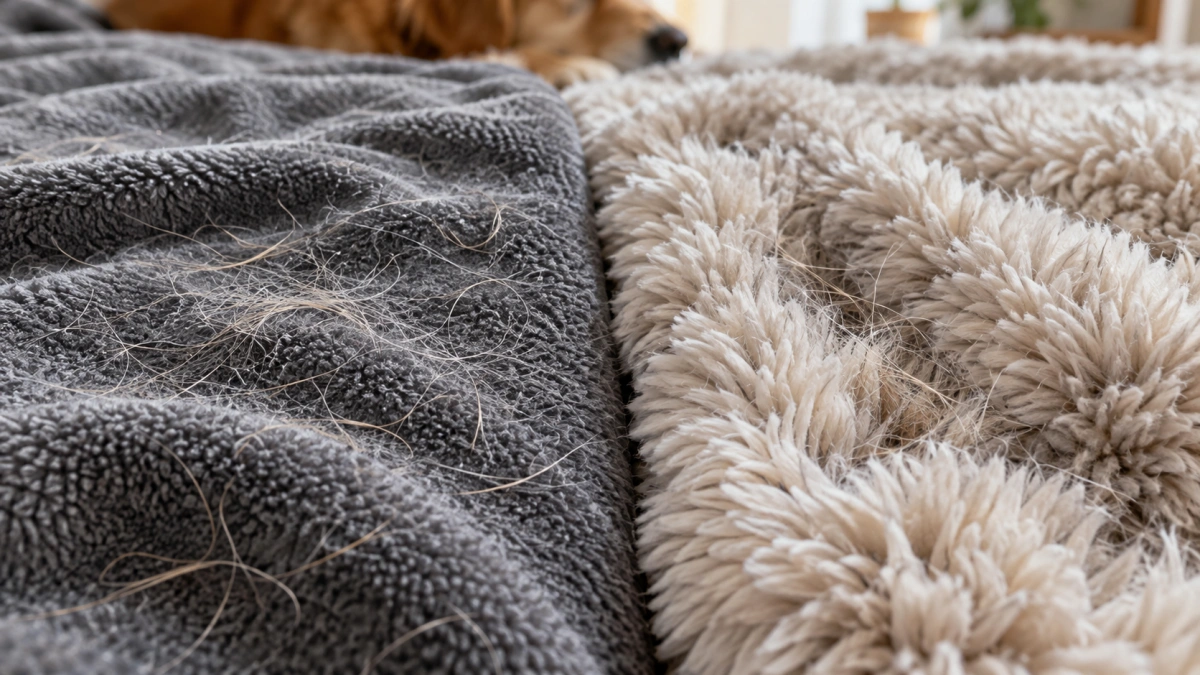
| Short dense fleece | Moderate | Can be practical and washable, but some hair still clings | Performance varies by finish and static |
| Deep plush or faux fur | Usually harder | Long fibers provide more places for hair to settle | Very soft and warm |
| Sherpa-style surface | Usually harder | Textured loops and depth can hold loose fur | Warm, cozy texture |
| Loose or open knit | Usually harder | Hair and claws can enter open spaces | Decorative appearance |
These are useful tendencies rather than guarantees. Two blankets made from the same general fiber can behave differently if one has a smooth short finish and the other has a deep fuzzy pile.
Do Any Blankets Truly Repel Dog Hair?
“Repel” is often stronger wording than the fabric can realistically support.
Dog hair can land on almost any textile through:
- Normal shedding
- Static attraction
- Body contact
- Rolling and nesting
- Hair transferred from clothing or furniture
A better goal is to find a blanket where hair:
- Stays near the surface
- Does not work deeply into the pile
- Can be removed before washing
- Releases reasonably well during cleaning
Treat “pet-hair-resistant” as a practical maintenance description rather than a promise that the blanket will remain fur-free.
Surface Structure Matters More Than the Fiber Name Alone
Labels such as polyester, microfiber, fleece, cotton, or velvet do not tell the entire story.
Consider two polyester blankets:
- One may have a smooth, short, dense surface
- Another may be thick sherpa or deep plush
They share a broad fiber category but can behave very differently around loose dog hair.
When comparing blankets, inspect:
- How long the surface fibers are
- Whether the surface is smooth or fuzzy
- Whether large loops are visible
- How dense the fabric feels
- Whether hair appears to sit on top or disappear into the texture
Why Pile Depth Matters
Pile refers to fibers that rise above the base structure of a textile.
A low-pile surface gives loose dog hair less depth to settle into.
A deep plush blanket contains more raised fiber around individual strands of hair, so hair may become visually hidden or physically harder to lift from the surface.
This does not mean every low-pile blanket is automatically excellent or every plush blanket is impossible to clean.
It means pile depth is one useful factor when shedding is your top priority.
Are Microfiber Blankets Good for Dog Hair?
Some microfiber blankets can be practical because very fine fibers can be constructed into a dense, relatively smooth surface.
That can make loose hair easier to see and remove than on a deep fluffy blanket.
However, “microfiber” does not guarantee one particular finish.
Check the actual product:
- Is it smooth or fuzzy?
- Is the pile short?
- Does the fabric create noticeable static?
- Can it be machine washed?
- Does the hair brush or lint-roll off easily?
A smooth microfiber-style surface can be a strong candidate, but evaluate the construction rather than the word microfiber alone.
Does Fleece Attract Dog Hair?
Fleece is soft, lightweight, warm, and easy to wash, which is why it is common in pet blankets.
The trade-off is that dog hair can cling to many fleece surfaces.
Shorter, denser fleece may be easier to maintain than very fluffy high-pile fleece, but the result depends on the fabric and your dog’s hair type.
If warmth is your priority, fleece may still be the right choice even if it requires more frequent hair removal.
If minimizing visible fur and cleaning effort is the priority, compare fleece directly with smoother low-pile alternatives before buying.
What About Sherpa and Fluffy Blankets?
Sherpa-style and fluffy blankets are popular because they create a warm, nesting-friendly surface.
They are usually less ideal when easy pet-hair removal is the number-one goal.
The deeper texture creates more space for:
- Long hairs
- Fine undercoat
- Lint
- Debris
to settle between fibers.
That does not make sherpa a bad dog blanket. It simply means you are prioritizing warmth and texture over the easiest possible hair cleanup.
Are Cotton Blankets Good for Dog Hair?
Cotton blanket performance varies substantially by weave.
A tightly woven cotton or canvas-style surface behaves differently from:
- Brushed cotton
- Flannel
- Loose cotton knit
- Textured waffle fabric
Smooth woven cotton can be practical for some dogs, especially when you do not need a very warm blanket.
Looser or brushed surfaces can hold more hair.
Again, the construction matters more than the fiber name alone.
What About Velvet and Velour?
Velvet-related surfaces are difficult to generalize.
Short, dense performance velvet may allow hair to remain relatively close to the surface, where a lint roller or vacuum can remove it.
Other velvet or velour fabrics can attract visible lint and fur.
If you like the appearance, test or examine:
- Pile depth
- Direction of the nap
- Static
- How easily hair lifts away
- Whether the blanket is machine washable
Do not assume that “velvet” automatically means either pet-hair resistant or pet-hair attracting.
Short Dog Hair vs Long Dog Hair
Different coat types can create different cleaning challenges.
Short, Stiff Hair
Short hairs from some breeds can push into textile structures almost like tiny bristles.
A dense, smooth surface gives them fewer open spaces to penetrate.
Long Hair
Long strands may remain more visible on top of a blanket but can wrap around textured fibers and collect into clumps.
Soft Undercoat
Fine undercoat can spread widely and cling through static, making even small amounts look extensive.
If possible, choose based on how your own dog’s hair behaves on fabrics already in your home rather than relying only on generic breed advice.
Does Static Make Dog Hair Stick to Blankets?
Static can contribute to hair clinging to textiles, especially in dry environments and with certain synthetic fabrics.
That is one reason two blankets with similar surface texture may not behave identically.
However, static is only one variable.
Pile, weave, fur type, humidity, friction, washing routine, and how your dog uses the blanket all influence the result.
Do not choose a fabric based solely on whether it is synthetic or natural.
Does Blanket Color Help With Dog Hair?
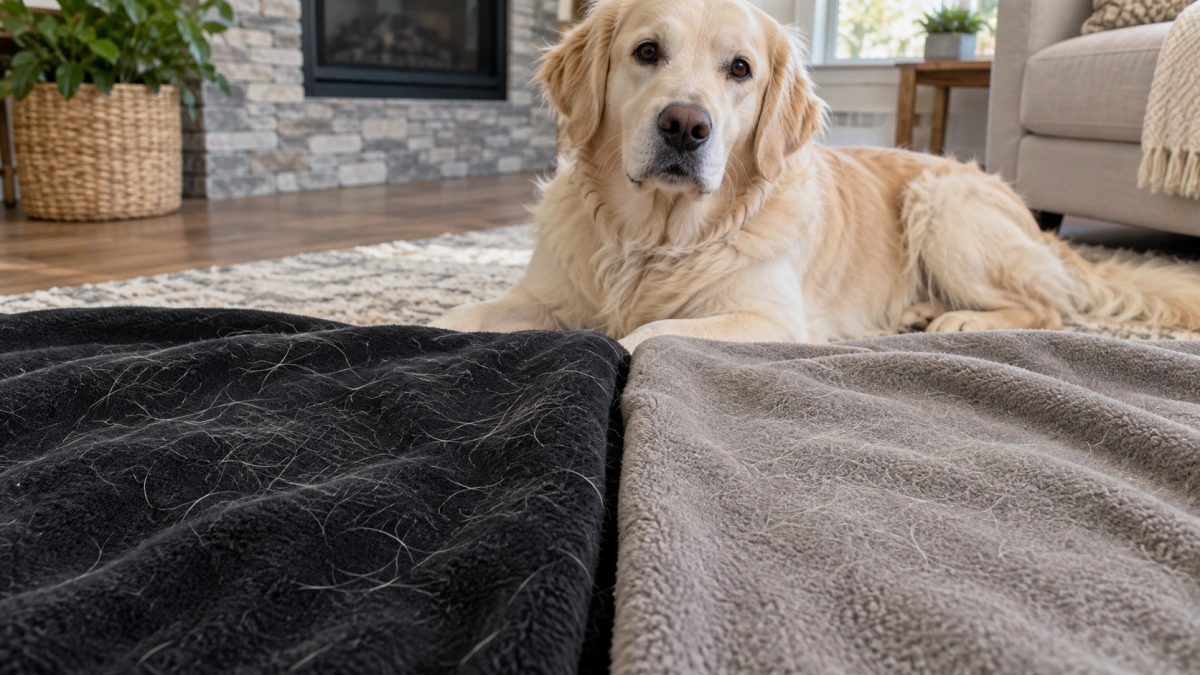
Color can make dog hair less noticeable, but it does not make the fabric repel more hair.
A black blanket beneath a white dog may look covered in fur quickly because every strand has high visual contrast.
A medium gray, beige, tan, or patterned blanket closer to your dog’s coat tone may appear cleaner between washes even when the actual amount of hair is identical.
So separate two questions:
- How much hair does the fabric physically retain?
- How visible is that hair?
Color only solves the second problem.
Solid Color vs Patterned Blanket
A subtle pattern can visually disguise scattered fur better than a perfectly solid surface.
This can be useful in:
- Living rooms
- Guest areas
- Vehicles
- Homes with more than one dog coat color
But camouflage should not replace cleaning.
A patterned blanket can look cleaner while still holding the same amount of shed hair.
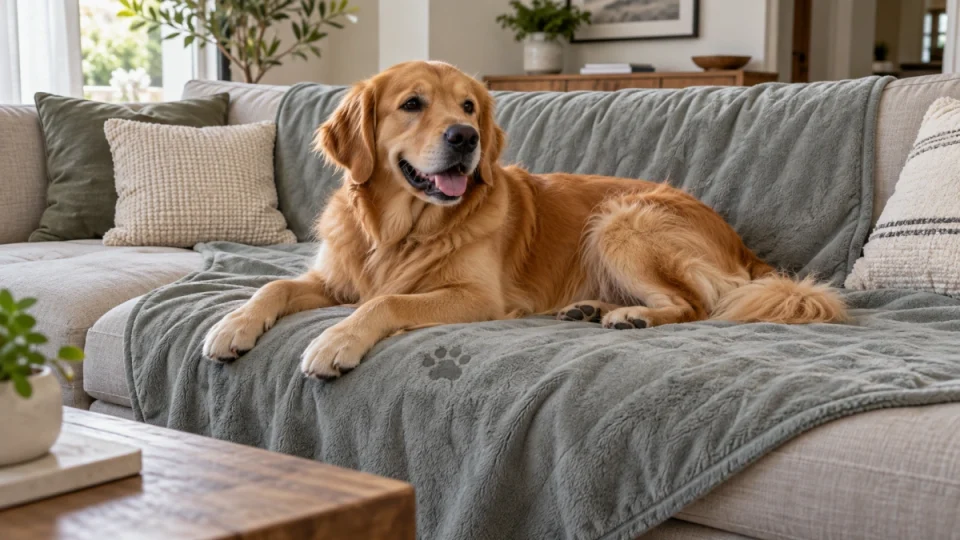
Using a Dog-Hair-Resistant Blanket on a Couch
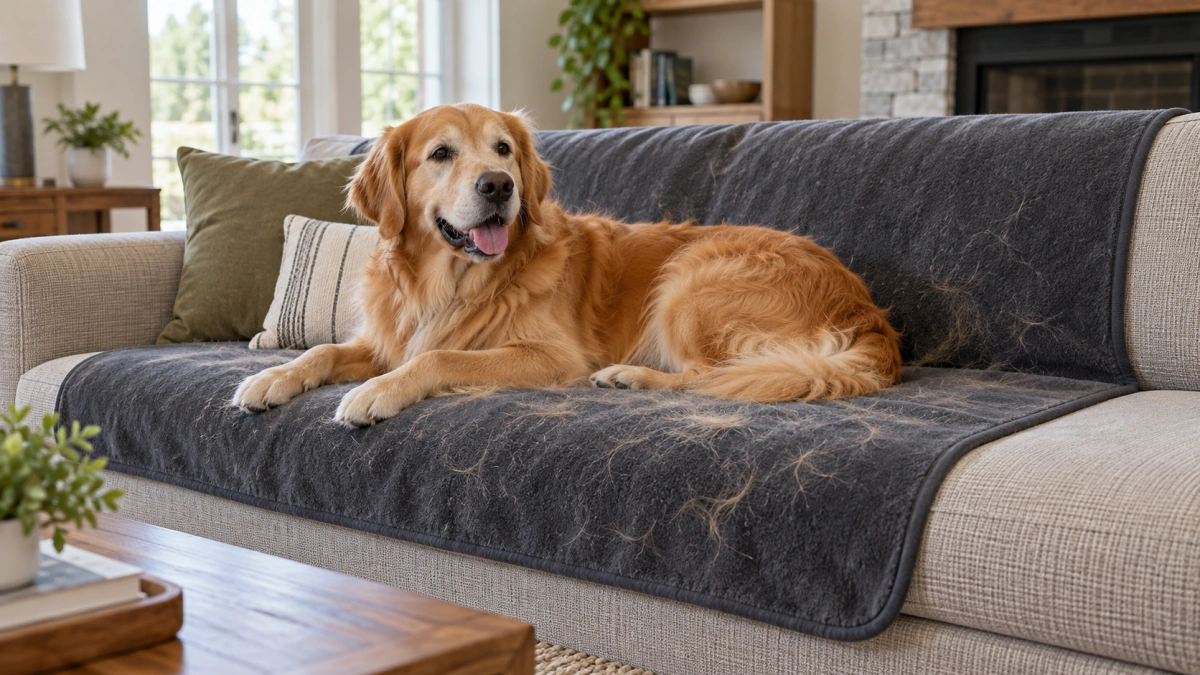
A removable blanket is useful because it moves the main fur-collection surface away from the upholstery and onto something easier to wash.
For couch use, prioritize:
- Enough coverage
- A low- or moderate-pile surface
- Easy vacuuming or lint rolling
- Machine washability
- Reasonable grip on the couch
Make sure the blanket covers the entire area your dog actually uses.
Otherwise, hair will continue collecting on exposed cushions and backrests.
If your main concern is couch fit, leather vs fabric upholstery, sectionals, and sliding, see our guide to dog blankets for couches.
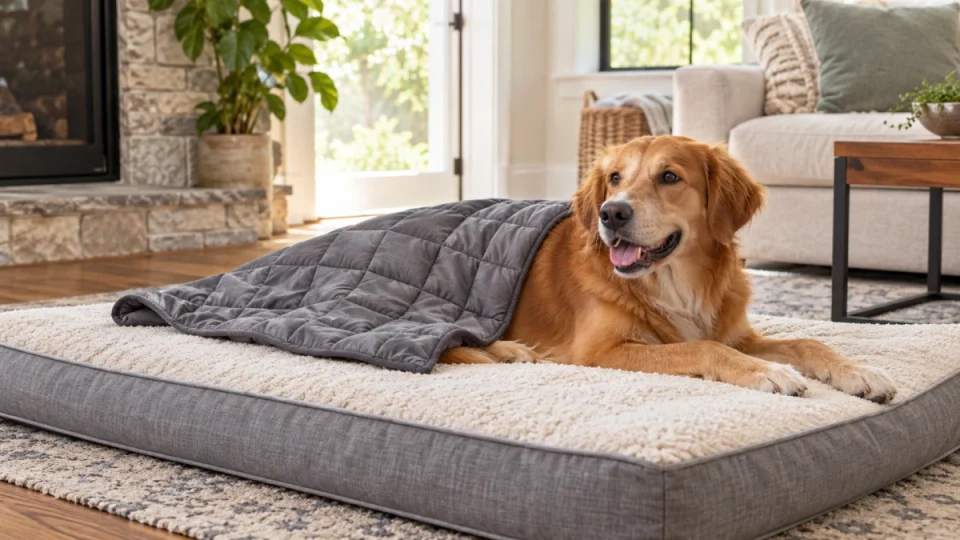
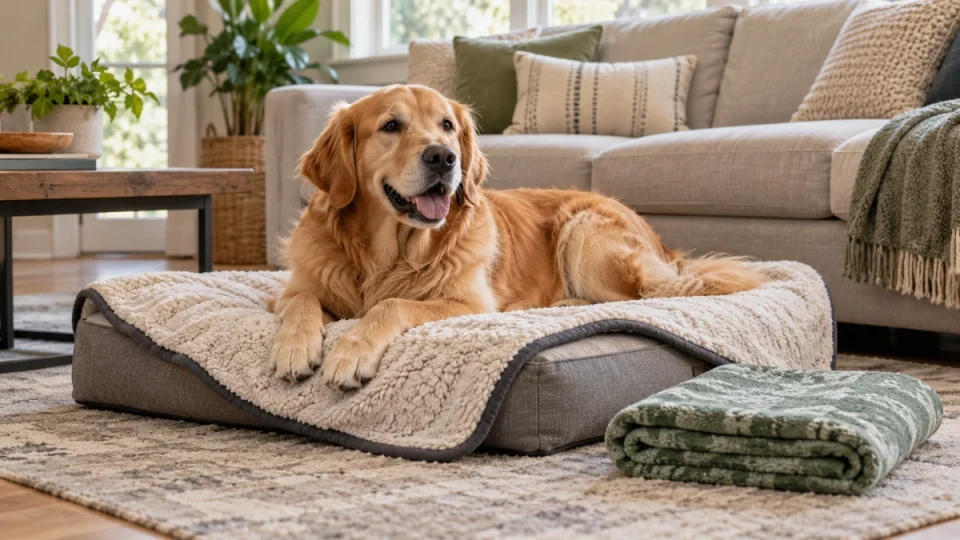
Using a Hair-Resistant Blanket on a Dog Bed
A removable top blanket can make dog-bed maintenance easier because you can clean the blanket without washing the entire mattress every time shedding increases.
Choose enough coverage for the sleeping surface without creating excessive folds.
For a shedding dog, a flatter removable top layer often makes hair easier to see and remove before it reaches the bed cover underneath.
For dog-bed sizing and bedding arrangement, see our guide to dog blankets for beds.
Do You Need Waterproofing Too?
Hair resistance and waterproofing solve different problems.
If your dog mainly sheds dry hair, you may not need a waterproof membrane.
A simpler low-pile washable blanket can be:
- Lighter
- More flexible
- Faster to dry
- Easier to wash
Waterproof construction becomes more useful if you are also managing:
- Drool
- Wet coats
- Puppy accidents
- Senior-dog accidents
- Liquid spills
If liquid protection is a major requirement, see our guide to waterproof dog blankets.
Hair-Resistant Does Not Mean Chew-Resistant
A smooth, tightly constructed surface may be easier to clean, but that does not make it resistant to determined chewing.
Similarly, a blanket that releases dog hair easily may still develop:
- Torn seams
- Chewed corners
- Punctures
- Loose fibers
If your dog destroys bedding, choose durability according to that behavior rather than assuming pet-hair resistance solves the problem.
Remove Loose Hair Before Washing
Do not use the washing machine as the first stage of hair removal when the blanket is heavily covered in loose fur.
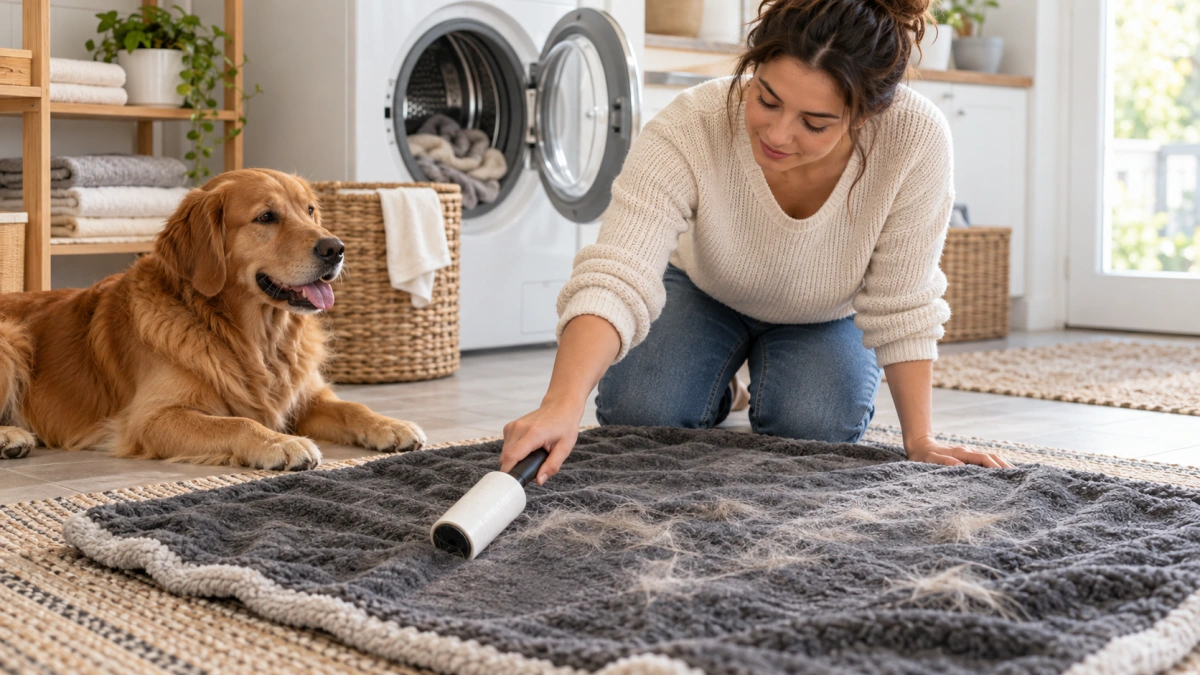
Before washing, remove as much loose hair as practical by:
- Shaking the blanket outdoors
- Vacuuming the surface
- Using a lint roller
- Using another suitable dry pet-hair tool
This keeps a large amount of loose fur from entering the washer at once.
AKC recommends shaking dog blankets outdoors before washing, while appliance-care guidance from Maytag also recommends removing excess hair before loading pet bedding into a regular washing machine.
Washing a Dog Blanket That Collects Hair
Always follow the care label for the specific blanket.
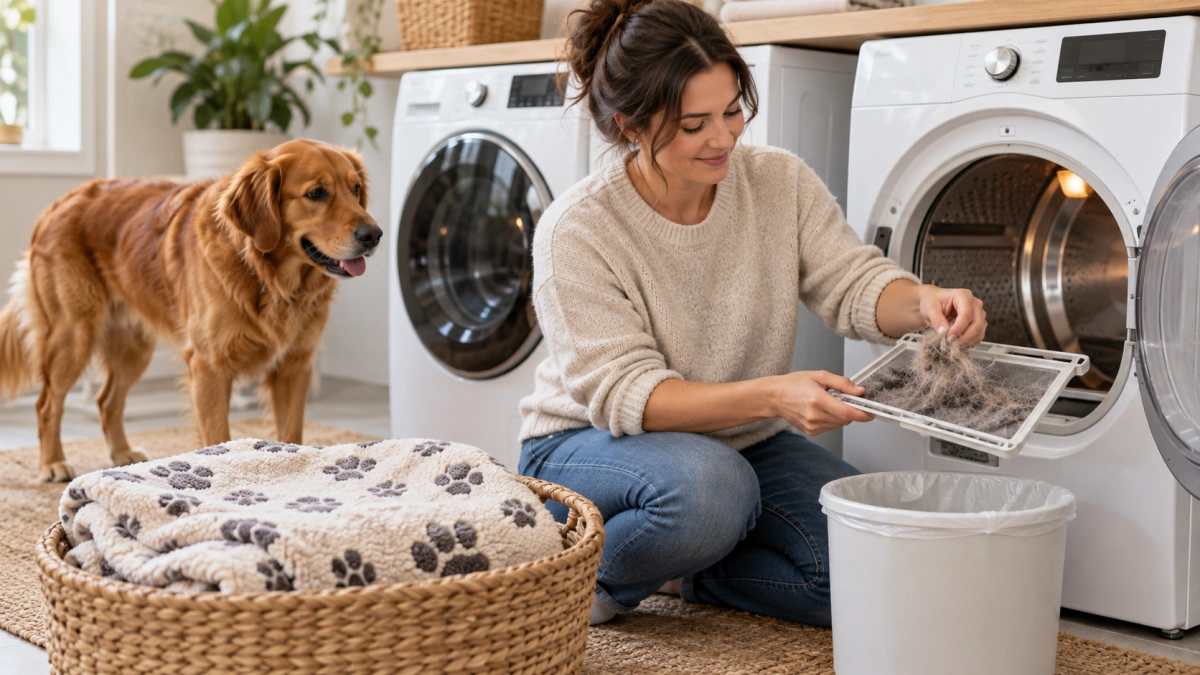
A simple routine is:
- Remove loose hair before washing.
- Inspect seams and fabric damage.
- Pre-treat appropriate stains if needed.
- Wash according to the care instructions.
- Dry using the permitted method.
- Clean accumulated pet hair from the lint screen and appliance areas as appropriate.
If you have several heavily used dog blankets, washing them separately from everyday clothing can also keep pet bedding hair contained within one laundry load.
Make sure the blanket dries completely before putting it back on a dog bed or couch.
How Often Should You Wash a Dog-Hair Blanket?
There is no universal schedule.
Frequency depends on:
- How heavily your dog sheds
- How many hours the blanket is used
- Whether the dog goes outdoors frequently
- Dirt and odor
- Whether the blanket is on furniture or a dog bed
- Whether several pets share it
A blanket used daily by a heavy shedder may need cleaning more often than one used occasionally by a low-shedding dog.
The practical rule is to clean it before hair, dirt, or odor buildup becomes difficult to manage.
Do Not Judge Hair Resistance After Only One Wash
Some fabric surfaces change slightly after laundering.
Repeated washing can affect:
- Pilling
- Surface texture
- Static
- Backing condition
- Fabric softness
A blanket that is easy to clean when new should remain reasonably easy to maintain after repeated normal washing.
Durability therefore matters alongside initial hair release.
Heavy Shedders Need More Than the Right Blanket
The blanket can make cleanup easier, but it cannot stop the dog from shedding.
For a heavy-shedding household, the most practical system combines:
- A washable blanket on the main resting surface
- Regular dog grooming appropriate to the coat
- Routine furniture vacuuming
- Frequent removal of loose hair before laundry
The role of the blanket is to create a removable, washable collection surface.
That can reduce the amount of fur that works directly into upholstery, mattresses, and larger pieces of bedding.
Should You Keep Two Blankets for a Heavy Shedder?
A two-blanket rotation can simplify cleaning.
Keep:
- One blanket in use
- One clean replacement
When hair buildup becomes noticeable, swap the dirty blanket out immediately.
This is often easier than waiting for one large blanket to finish washing and drying before your dog can use the protected area again.
Our 8-Point Pet Hair Blanket Check
Use this framework when comparing blankets for a shedding dog.
1. Surface Smoothness
Does loose hair stay visible near the surface, or disappear quickly into the texture?
2. Pile Depth
Is the blanket low pile, moderate pile, or deep plush?
3. Fabric Density
Does the surface appear dense and stable, or does it contain large openings and loose loops?
4. Hair Removal
Can loose fur be shaken, lint-rolled, brushed, or vacuumed from the surface without excessive effort?
5. Washability
Can the blanket be machine washed often enough for your shedding level?
6. Size
Does it fully cover the couch, bed, dog bed, crate, or vehicle area where your dog leaves hair?
7. Dog Comfort
Will your dog actually use the surface, or are you sacrificing too much softness or warmth just to reduce visible fur?
8. Secondary Needs
Do you also need waterproofing, outdoor durability, warmth, cooling, or chew resistance?
The best blanket is the one that reduces cleaning effort without creating a new problem in comfort, laundry, fit, or durability.
What Should You Avoid if Dog Hair Is Your Main Problem?
If minimizing embedded fur is your highest priority, be cautious with:
- Very deep faux fur
- Thick shaggy plush
- Heavy sherpa textures
- Loose decorative knits
- Open loops
- Fabrics that pill heavily
These materials can still be comfortable and attractive.
The issue is simply that their surface structure may make hair management more time-consuming.
Common Dog-Hair Blanket Buying Mistakes
- Believing “pet-hair proof” literally means no hair will land on the blanket
- Choosing by fiber name without checking surface texture
- Assuming every microfiber blanket behaves the same way
- Assuming every fleece blanket behaves the same way
- Choosing extremely deep plush when easy cleaning is the main priority
- Confusing hair camouflage with hair resistance
- Choosing a blanket color only because it hides fur
- Ignoring pile depth
- Ignoring loose or open weaves
- Buying a blanket too small for the dog’s actual resting area
- Adding waterproof layers when liquid protection is not needed
- Waiting until the blanket is heavily coated in hair before removing loose fur
- Putting a heavily hairy blanket directly into the washer without pre-cleaning
- Ignoring the care label
- Choosing a hair-resistant fabric that the dog refuses to use
Dog-Hair-Resistant Blanket Buying Checklist
- How heavily does my dog shed?
- Is the coat short and stiff, long, or fine undercoat?
- Is the blanket surface smooth or fuzzy?
- How deep is the pile?
- Is the weave or knit dense?
- Are there large loops where hair can settle?
- Can I remove hair with a lint roller or vacuum easily?
- Is the blanket machine washable?
- Can it tolerate the washing frequency I need?
- Will it fit my washer and dryer?
- Does the color merely hide hair, or is the surface genuinely easier to clean?
- Does the blanket cover the entire dog-resting area?
- Do I also need waterproofing?
- Do I need extra warmth or a lighter summer surface?
- Does my dog chew or damage blankets?
- Will my dog actually find the fabric comfortable?
Final Thoughts
The best blankets for dog hair do not need to make unrealistic promises that fur will never touch the fabric.
A better blanket simply makes shedding easier to manage.
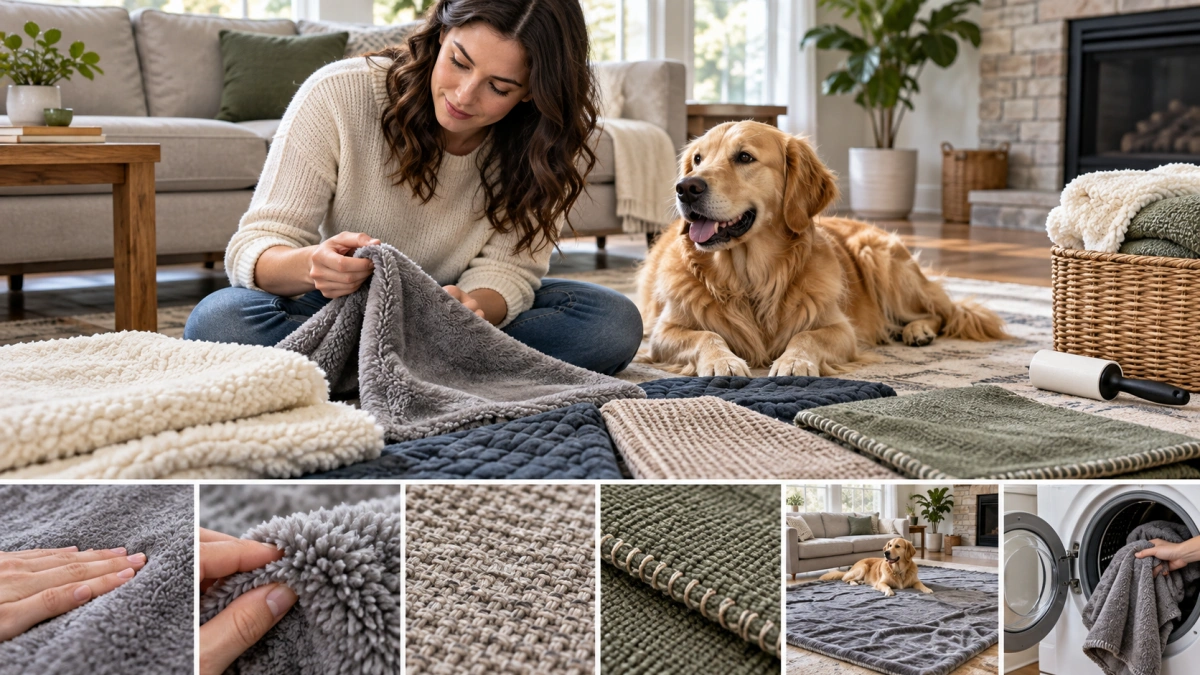
Start with the surface. Smooth, dense, low-pile fabrics generally deserve more attention when you want hair to remain near the top, while deep plush, sherpa, and loose textures can require more work because fur has more places to settle.
Then consider your own dog. Short stiff hairs, long coat, and fine undercoat do not behave exactly the same way on every fabric, so the easiest blanket to maintain in one home may not be the easiest in another.
Do not confuse hiding dog hair with resisting it. A blanket that matches your dog’s coat color may look cleaner, but the hair is still there.
Finally, make washability part of the buying decision. A blanket that releases hair reasonably well, covers the full resting area, fits your washing machine, and stays useful after repeated cleaning will usually do more for a shedding household than a very soft blanket marketed simply as “pet friendly.”