By
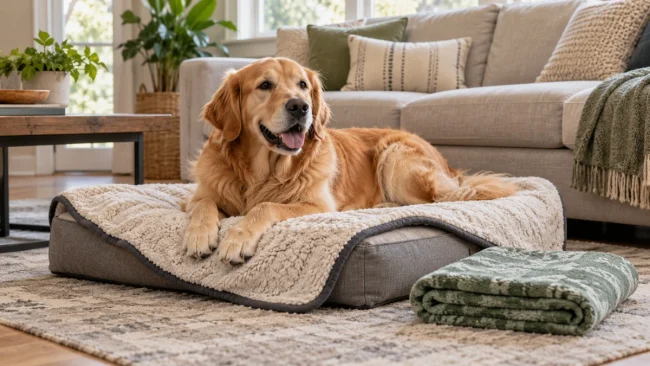
The best dog blankets are not all the same. A blanket that works well for a couch may be too bulky for a crate, while a thick winter fleece may be uncomfortable for a dog that prefers cooler surfaces. A waterproof blanket may be extremely useful for accidents but unnecessary for a dog whose main problem is shedding.
Instead of looking for one universally “best” dog blanket, start with four questions: Where will you use it? What problem should it solve? How warm should it be? How often will you wash it?
Once those answers are clear, material, size, thickness, durability, and price become much easier to compare.
For more specialized guides covering individual blanket types and use cases, visit our Dog Blankets topic hub.
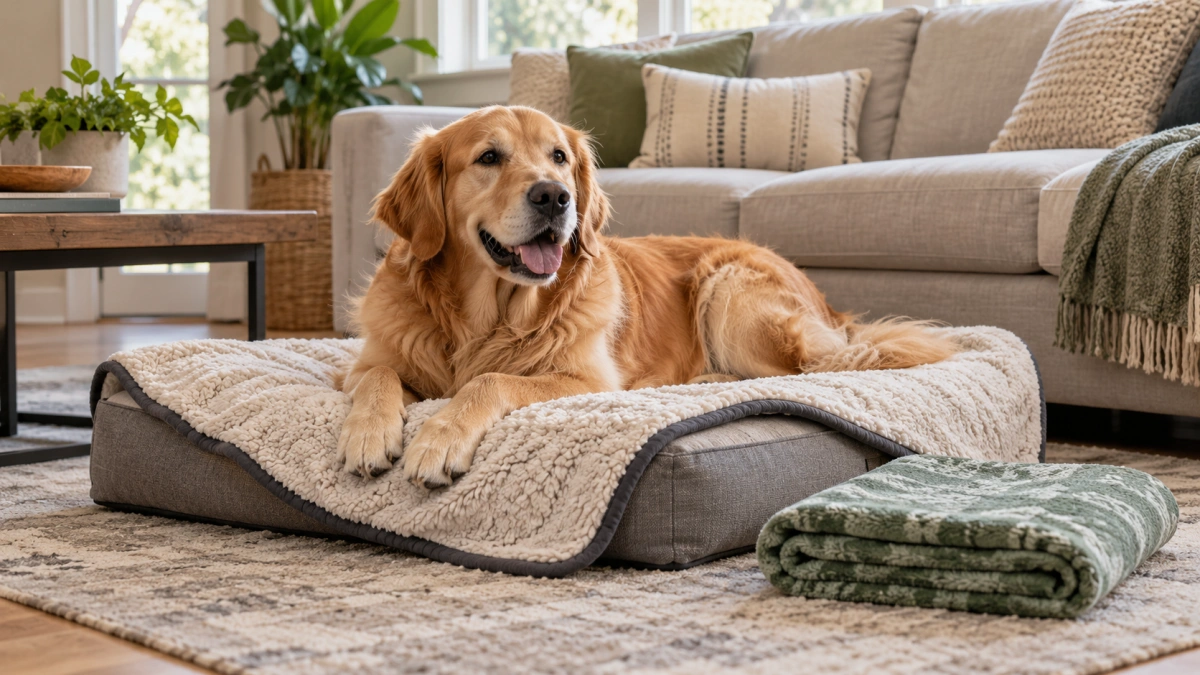
Quick Comparison: Which Dog Blanket Type Is Best for You?
| Blanket Type | Best For | Main Advantage | Main Trade-Off |
|---|---|---|---|
| Lightweight smooth blanket | Warm weather, travel, easy cleanup | Low bulk and fast drying | Less warmth |
| Fleece blanket | Everyday indoor use | Soft, warm and usually easy to wash | Can collect dog hair |
| Plush or sherpa blanket | Cold conditions and nesting dogs | Extra warmth and soft texture | More bulk and harder hair cleanup |
| Waterproof blanket | Wet paws, drool and accidents | Protects furniture and bedding from liquid | Barrier layer can add weight and drying time |
| Durable blanket | Dogs that dig, paw or use bedding heavily | More resistant to everyday wear | May feel less plush |
| Decorative or luxury blanket | Shared living spaces and human furniture | More polished appearance | Higher price does not guarantee better dog suitability |
There is no need to buy the most feature-heavy blanket if your dog only needs a simple washable resting layer.
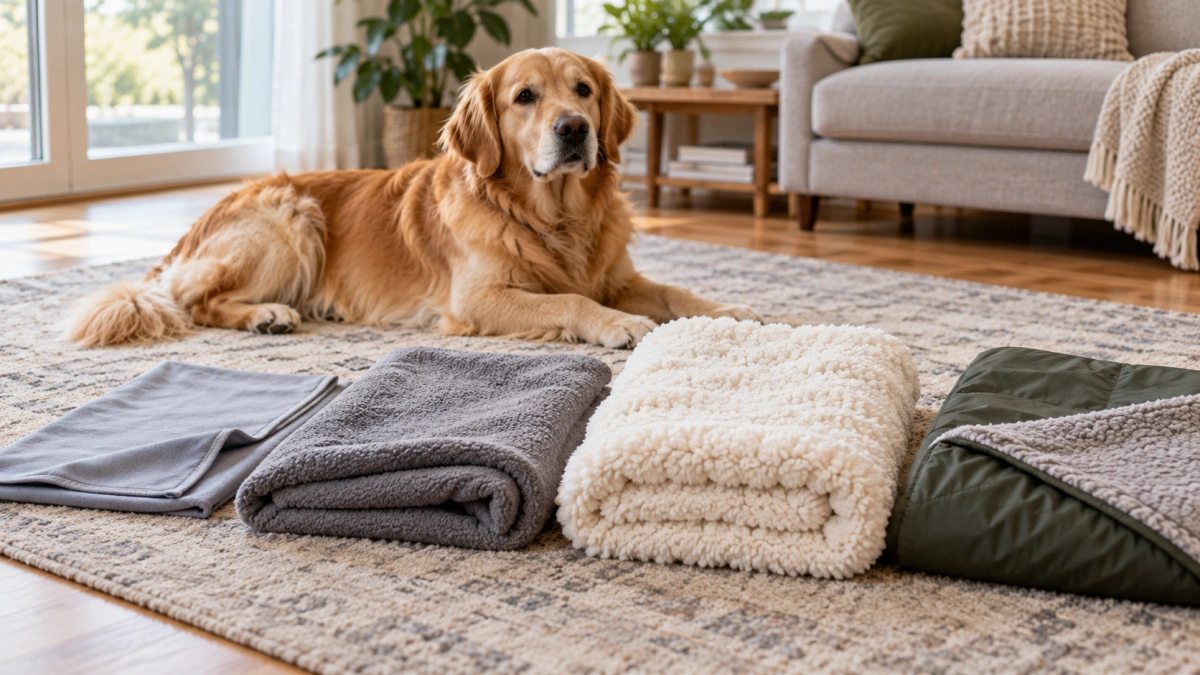
What Makes a Good Dog Blanket?
A good dog blanket balances comfort with practical maintenance.
Look for a combination of:
- Appropriate size
- Comfortable surface
- Suitable warmth
- Machine washability
- Strong seams
- Reasonable drying time
- Enough durability for your dog’s habits
- Construction that fits the intended use
The most expensive option does not automatically perform better across all of these factors.
A simple fleece blanket that fits your dog bed, survives frequent washing, and stays comfortable may be a better purchase than a luxury throw that is difficult to clean.
Start With the Problem You Need to Solve
Before choosing fabric or color, decide why you need the blanket.
If You Mainly Need Warmth
Look at fleece, plush, sherpa-style, or other insulating constructions.
If You Mainly Need Furniture Protection
Prioritize coverage, washability, grip, and possibly waterproofing.
If You Mainly Need Hair Control
Look for a smoother, lower-pile surface that is easy to vacuum, shake, lint-roll, and wash.
If You Mainly Need a Summer Layer
Choose a lighter, lower-loft fabric rather than adding deep fleece or several folded layers.
If You Mainly Need Accident Protection
Look for a real waterproof barrier rather than relying only on an absorbent or water-resistant top fabric.
A blanket is easier to choose once you define the primary job.
Which Dog Blanket Material Is Best?
There is no single best material for every dog.
The best fabric depends on warmth, texture, shedding, washing frequency, and where the blanket will be used.
Fleece
Fleece is a popular all-around dog blanket material because it provides warmth without being as heavy as many deep plush fabrics.
It is often:
- Soft
- Flexible
- Machine washable
- Quick enough to dry for regular household use
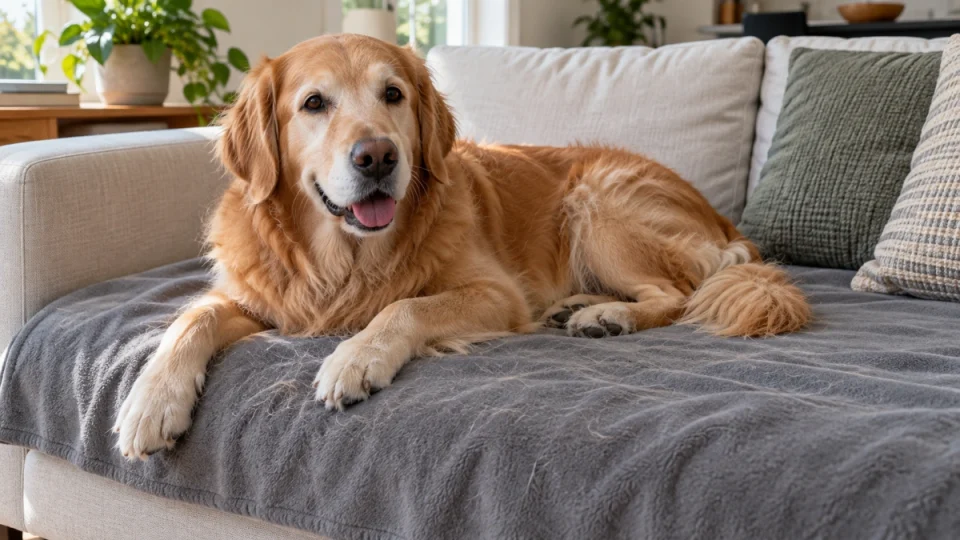
Its main disadvantage is that dog hair can cling to some fleece surfaces.
Plush and Sherpa
These materials provide more depth and warmth.
They suit dogs that enjoy nesting or soft sleeping surfaces, but the deeper fibers can hold more fur and take longer to dry.
Cotton and Cotton Blends
Cotton-based blankets can work well when you want a more familiar woven textile and do not need maximum insulation.
Performance varies widely by weave, thickness, and blend, so check the actual construction.
Smooth Synthetic Fabrics
A smoother polyester or microfiber-style surface can be useful when easy cleaning, lower pile, or warm-weather use matters more than deep softness.
Waterproof Multi-Layer Fabrics
These add a liquid barrier between outer textile layers and are useful when protecting furniture, beds, or mattresses from moisture.
If material itself is your main question, our specialist material guides go deeper than this broad buying page.
Do Not Choose by Fiber Name Alone
Two blankets labeled “polyester” can feel completely different.
One may be:
- Thin and smooth
- Low pile
- Fast drying
while another may be:
- Thick
- Deep plush
- Sherpa backed
Similarly, cotton can be tightly woven, brushed, quilted, or loosely knitted.
Evaluate:
- Surface texture
- Pile depth
- Layer count
- Weight
- Stretch
- Edge construction
- Washing instructions
The complete blanket matters more than the broad fiber category.
How to Choose the Right Dog Blanket Size
Do not choose size only from your dog’s weight.
A blanket needs to fit both the dog and the surface where it will be used.
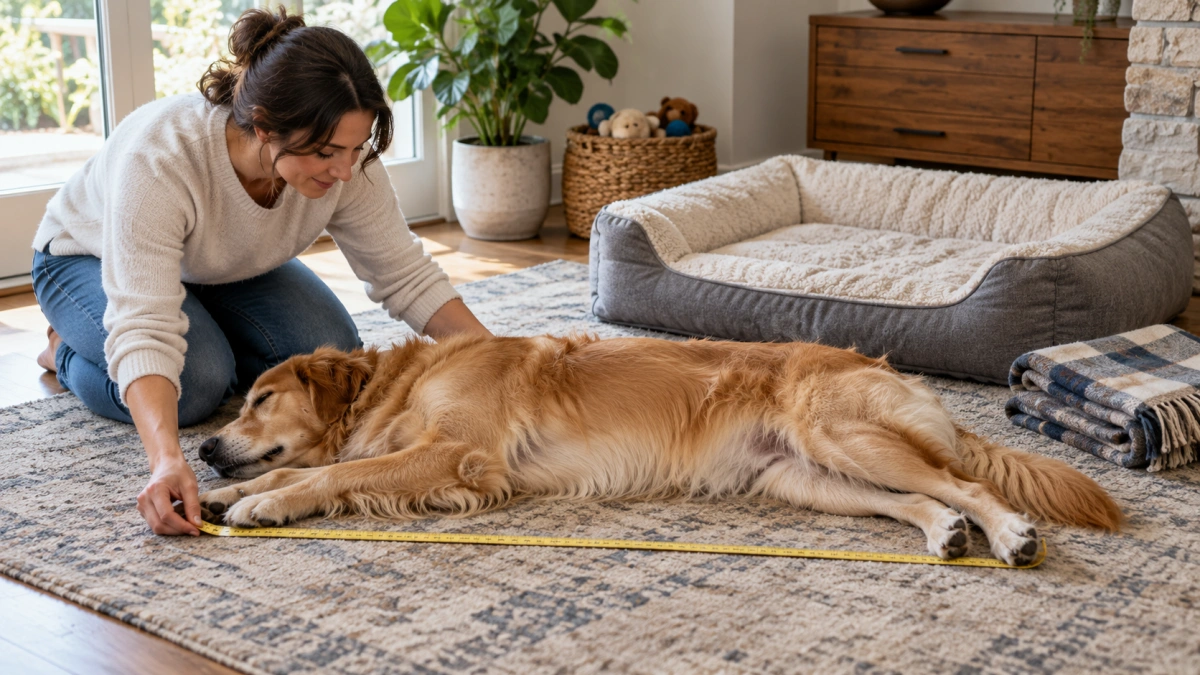
Measure Your Dog’s Resting Area
Watch your dog sleep naturally.
Does your dog:
- Stretch fully on the side?
- Curl into a compact ball?
- Change position frequently?
- Burrow into fabric?
For direct resting use, the blanket should normally provide enough area for the dog’s full body and ordinary repositioning.
Measure the Surface Too
If the blanket will cover:
- A dog bed
- A couch
- A human bed
- A crate
- A car seat
measure that surface as well.
The correct dimensions for a large dog lying on the floor may be completely different from the dimensions required to protect an entire sofa cushion.
Small, Medium and Large Labels Are Not Standard
One brand’s Large blanket can be smaller than another brand’s Medium or XL.
Ignore the label until you have checked the actual length and width.
This is especially important when:
- Buying for a large dog
- Covering a couch
- Using the blanket on a mattress
- Choosing a crate blanket
Always compare real dimensions.
Do You Need Extra Blanket Around the Dog?
Often, yes.
Some extra area allows the dog to:
- Turn around
- Stretch
- Pull part of the blanket into a nest
- Move onto a fresh section
However, more is not always better.
A very oversized blanket can:
- Create thick folds
- Drag on the floor
- Become harder to wash
- Add unwanted warmth
- Block the entrance of a low dog bed or crate
Choose useful extra coverage rather than maximum size for its own sake.
Choose by Where You Will Use the Blanket
Dog Bed
A dog-bed blanket should complement the mattress underneath.
It can add warmth, collect hair, or provide a washable contact layer, but it should not be expected to replace structural bed support.
For exact bed fit and blanket placement, see our guide to dog blankets for beds.
Couch
A couch blanket needs more emphasis on:
- Furniture coverage
- Grip
- Appearance
- Easy removal
Our guide to dog blankets for couches covers those factors separately.
Crate
A crate blanket should fit without creating excessive loose fabric.
Avoid damaged textiles around dogs that chew or swallow bedding.
Car
For travel, prioritize:
- Washability
- Foldability
- Seat or cargo coverage
- Moisture protection when needed
Outdoor or Travel Use
Choose durability and moisture handling according to how the blanket will actually be used. A soft indoor fleece throw is not automatically designed for repeated wet-ground exposure.
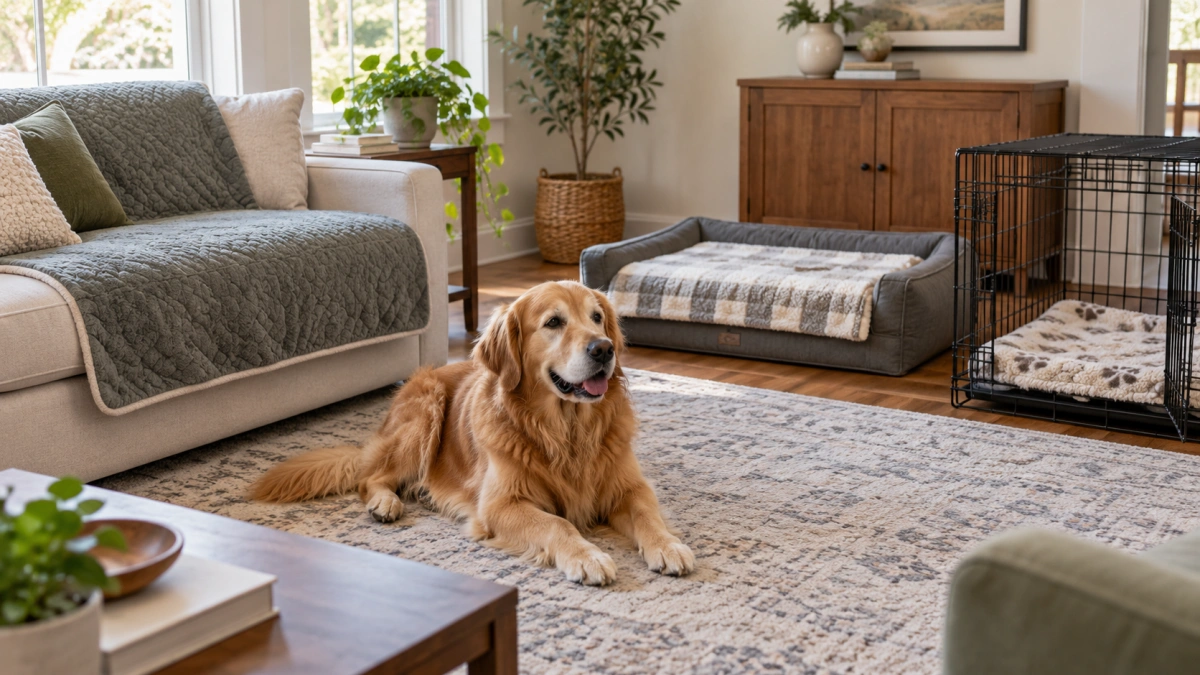
Choose Blanket Warmth by Season
Warm Weather
Prioritize:
- Lower fabric weight
- Lower pile
- Less insulation
- Easy drying
If your dog actively seeks cooler resting surfaces, see our guide to cooling dog blankets.
Cool Weather
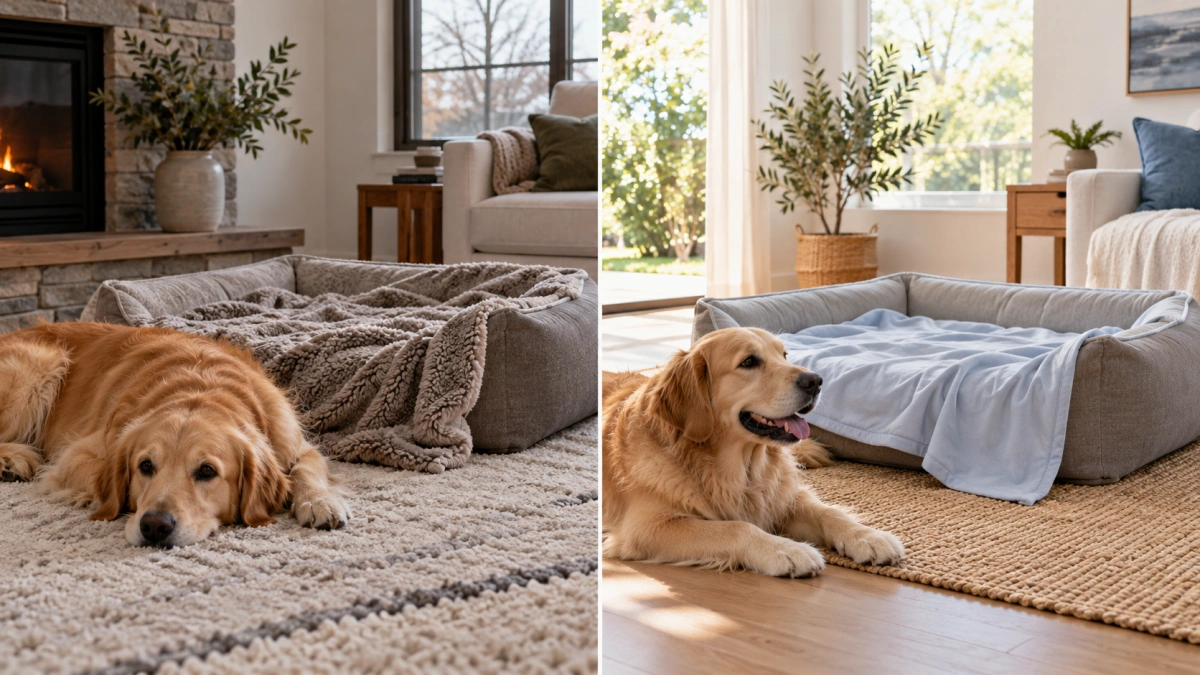
Fleece, plush, sherpa, and other insulating textiles become more useful.
However, do not automatically pile several blankets together.
Watch whether your dog:
- Seeks the blanket
- Pushes it aside
- Moves to the floor
- Changes resting locations
Your dog’s behavior is a better guide than the season name alone.
Do You Need a Waterproof Dog Blanket?
Not automatically.
Waterproof construction is useful when you are dealing with:
- Puppy accidents
- Senior-dog accidents
- Drool
- Wet coats
- Muddy paws
- Spills
If your only concern is hair or ordinary dirt, a simpler washable blanket may be:
- Lighter
- More flexible
- Faster to dry
- Less expensive
For liquid protection, see our dedicated guide to waterproof dog blankets.
What Is the Best Dog Blanket for Shedding?
For shedding, focus on the surface rather than the word “pet blanket.”
Smoother, denser, lower-pile fabrics can make loose fur easier to keep near the top and remove.
Deep plush and sherpa provide more texture where hair can become embedded.
For a complete comparison, see our guide to dog blankets that resist pet hair.
What About Dogs That Dig or Chew Blankets?
A standard soft blanket is not automatically designed for destructive behavior.
If your dog repeatedly:
- Digs aggressively
- Pulls seams apart
- Chews corners
- Swallows pieces of fabric
durability becomes a higher priority than softness.
Inspect bedding regularly and remove damaged textiles when loose material can be ingested.
A “pet blanket” label does not mean chew-proof.
Cheap vs Luxury Dog Blankets
Price can reflect fabric, construction, finishing, design, branding, size, or extra features, but a higher price does not automatically mean a better blanket for your dog.
A Cheap Dog Blanket Can Be Good When:
- The fabric is comfortable
- The size is correct
- The seams are secure
- It is easy to wash
- You mainly need a replaceable everyday layer
A Luxury Dog Blanket May Be Worth More When:
- You want it visible in a main living space
- The fabric quality is genuinely better
- The stitching and finish are more refined
- The product uses a useful multi-layer construction
- The larger size or better drape solves a real need
Do not pay extra only for decorative packaging or vague “premium” language.
Compare actual material, dimensions, care instructions, and construction.
What About Cute and Pink Dog Blankets?
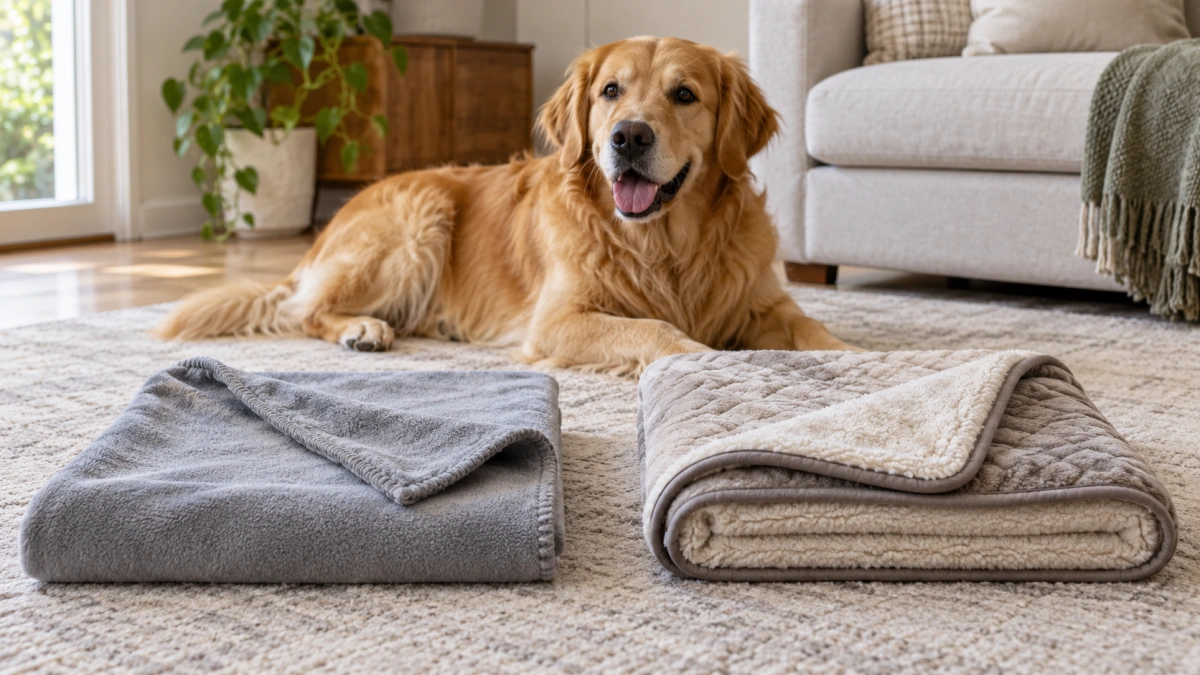
Color and design are valid buying preferences, especially when the blanket sits on furniture in a visible room.
A cute print, pink color, neutral tone, or home-decor style does not make the blanket less practical as long as the underlying product still meets your dog’s needs.
Prioritize in this order:
- Correct use
- Suitable size
- Practical material
- Washability
- Durability
- Color and appearance
Appearance matters, but it should be the final filter rather than the first.
Does Blanket Color Affect Performance?
Usually, color affects appearance more than function.
It may influence:
- How visible dog hair looks
- How stains appear
- How well the blanket fits your room
A color similar to your dog’s coat can make loose hair less obvious between cleanings, but the blanket does not physically hold less fur because of that color.
Washability Should Be a Buying Feature
Dog blankets collect:
- Hair
- Skin oils
- Dirt
- Drool
- Outdoor debris
- Occasional moisture
For most households, machine washability is therefore one of the most useful features.
But “machine washable” is only the beginning.
Check:
- Allowed water temperature
- Recommended cycle
- Whether bleach is restricted
- Whether fabric softener is restricted
- Whether tumble drying is allowed
- Maximum dryer temperature
- Whether waterproof or non-slip layers have special care rules
Also make sure the blanket physically fits your washer.
A huge heavy blanket that technically says machine washable can still be impractical in a small household machine.
How Many Dog Blankets Do You Need?
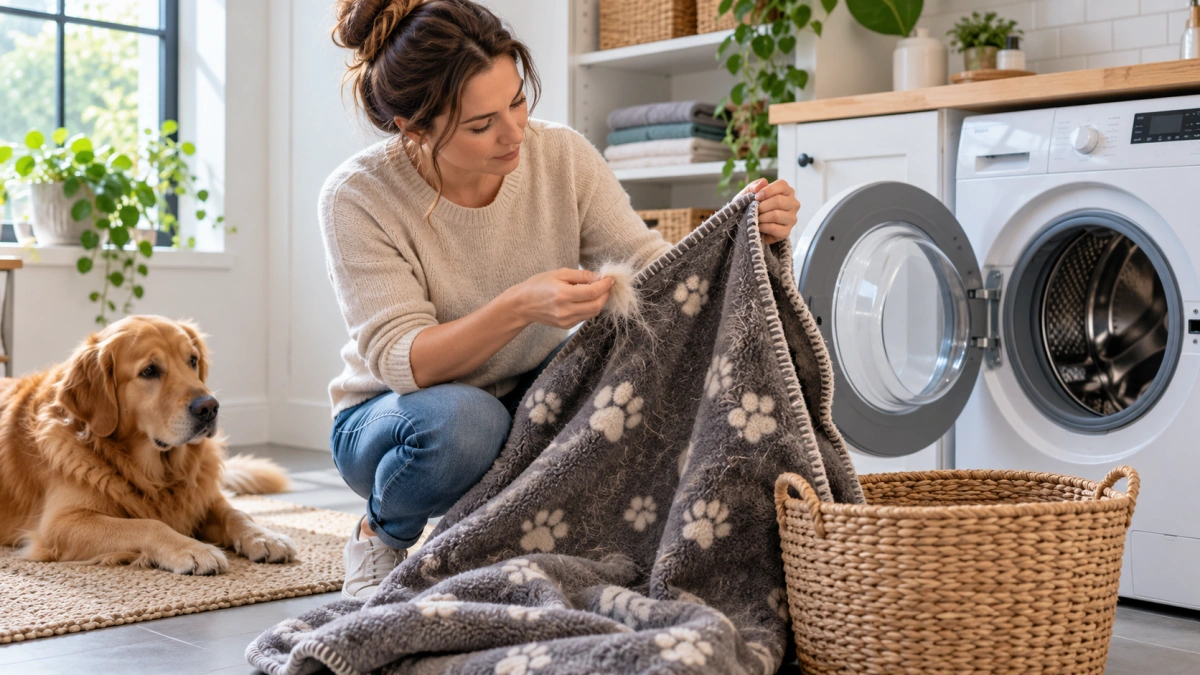
One blanket can be enough, but two can make routine cleaning much easier.
A simple rotation is:
- One blanket in use
- One clean replacement
This is especially useful for:
- Heavy shedders
- Puppies
- Senior dogs
- Wet-weather households
- Dogs that use several resting areas
A third blanket can make sense if you want dedicated bedding for:
- Home
- Car
- Travel
You do not need a large collection unless each blanket has a clear role.
Should You Buy One Blanket for Every Season?
Not necessarily, but seasonal rotation can be useful.
A practical pair might be:
- Lightweight blanket for warm months
- Fleece or warmer blanket for cooler months
If your indoor climate remains stable year-round, one medium-weight blanket may be enough.
Again, use the dog’s behavior as the guide.
What Should You Avoid in a Dog Blanket?
Be cautious with:
- Large loose loops that catch nails
- Damaged seams
- Loose stuffing
- Decorative pieces that can be pulled off
- Heavy fringe around dogs that chew
- Blankets that become dangerously slippery on the intended surface
- Oversized fabric that blocks a crate or low bed entrance
- Products that are difficult to wash at the frequency you need
A blanket should make daily life easier, not create a new maintenance or safety problem.
Our 9-Point Dog Blanket Selection Framework
Use these nine checks before choosing a dog blanket.
1. Purpose
What problem should the blanket solve: warmth, cooling, hair, furniture protection, liquid, travel, or simple comfort?
2. Location
Will it be used on a dog bed, couch, crate, car, human bed, floor, or outdoors?
3. Size
Does the blanket fit both your dog and the actual surface?
4. Material
Is the surface appropriate for the season, shedding level, and your dog’s texture preference?
5. Warmth
Does the blanket add the right amount of insulation without unnecessary bulk?
6. Durability
Can it handle normal turning, pawing, nesting, and the washing frequency you expect?
7. Washability
Can your household washer and dryer realistically handle it?
8. Secondary Features
Do you genuinely need waterproofing, non-slip backing, personalization, or another special feature?
9. Value
Are you paying for useful construction and materials, or mainly for styling and marketing?
A blanket that scores well across the factors that actually matter in your home is a better choice than a product that simply appears on a generic “best” list.
Common Dog Blanket Buying Mistakes
- Searching for one universal best dog blanket
- Choosing by softness alone
- Choosing by dog weight instead of actual dimensions
- Ignoring the surface where the blanket will be used
- Buying the thickest blanket for every season
- Assuming fleece, microfiber, or cotton always behaves the same way
- Adding waterproofing when no liquid protection is needed
- Buying deep plush when easy dog-hair cleanup is the priority
- Expecting a blanket to replace a supportive dog bed
- Assuming pet blankets are chew-proof
- Buying an oversized blanket that does not fit the washing machine
- Assuming luxury always means better
- Assuming cheap always means poor quality
- Choosing color and design before function
- Ignoring the care label
Best Dog Blanket Buying Checklist
- What is the main job of this blanket?
- Where will I use it?
- How does my dog normally sleep?
- What are my dog’s stretched resting dimensions?
- What are the dimensions of the bed, couch, crate, or seat?
- Do I need lightweight, medium, or warm insulation?
- Is the surface smooth, fleece, plush, sherpa, cotton, or another texture?
- How much does my dog shed?
- Do I need waterproof protection?
- Does my dog dig or chew bedding?
- Are the seams and edges secure?
- Are there loose loops or decorative elements?
- Is the blanket machine washable?
- What dryer setting is allowed?
- Will it fit my washer?
- Would two blankets make laundry rotation easier?
- Am I paying more for a useful feature or only appearance?
- Will my dog actually use the material I chose?
Final Thoughts
The best dog blanket is the one that fits your dog’s real routine.
Start with purpose. If you need warmth, focus on insulation. If you need easier hair cleanup, focus on surface structure. If accidents or moisture are the main concern, look for a genuine waterproof barrier. If the blanket will live on your couch, furniture coverage and appearance become more important.
Next, choose the correct size. Measure the dog and the surface rather than trusting Small, Medium, Large, or XL labels.
Then evaluate the material as a complete construction rather than relying only on a fiber name. Fleece, cotton, polyester, microfiber, plush, and sherpa can all perform differently depending on pile, weave, thickness, and layers.
Finally, prioritize a blanket you can realistically maintain. A machine-washable blanket with secure seams, manageable dimensions, and appropriate drying instructions will usually provide more long-term value than a beautiful blanket that is difficult to clean.
You do not need the cheapest or the most luxurious option. You need the blanket whose material, size, warmth, durability, washability, and intended use all match the way your dog actually lives.