By A CUTE PET STORY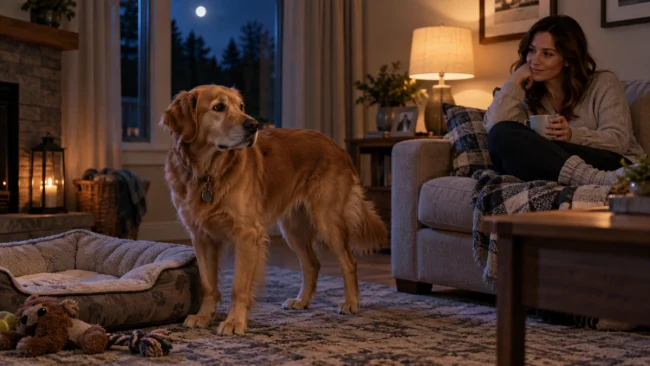
Dog behavior changes at night can be frustrating and worrying, especially when a dog that normally sleeps well suddenly starts pacing, barking, waking repeatedly, following you around, or struggling to settle. The pattern may be related to routine, the nighttime environment, stress, physical discomfort, aging, or another change that deserves attention.
Nighttime behavior alone cannot tell you the cause. What matters most is how the behavior differs from your dog’s normal routine, when it began, what happens before it, and whether you are noticing changes during the day as well.
This guide explains common nighttime patterns, practical routine adjustments, what to record, and when a new behavior is worth discussing with your veterinarian.
For a broader overview of behavioral concerns, visit our dog behavior problems guide.
What Do Dog Behavior Changes at Night Look Like?
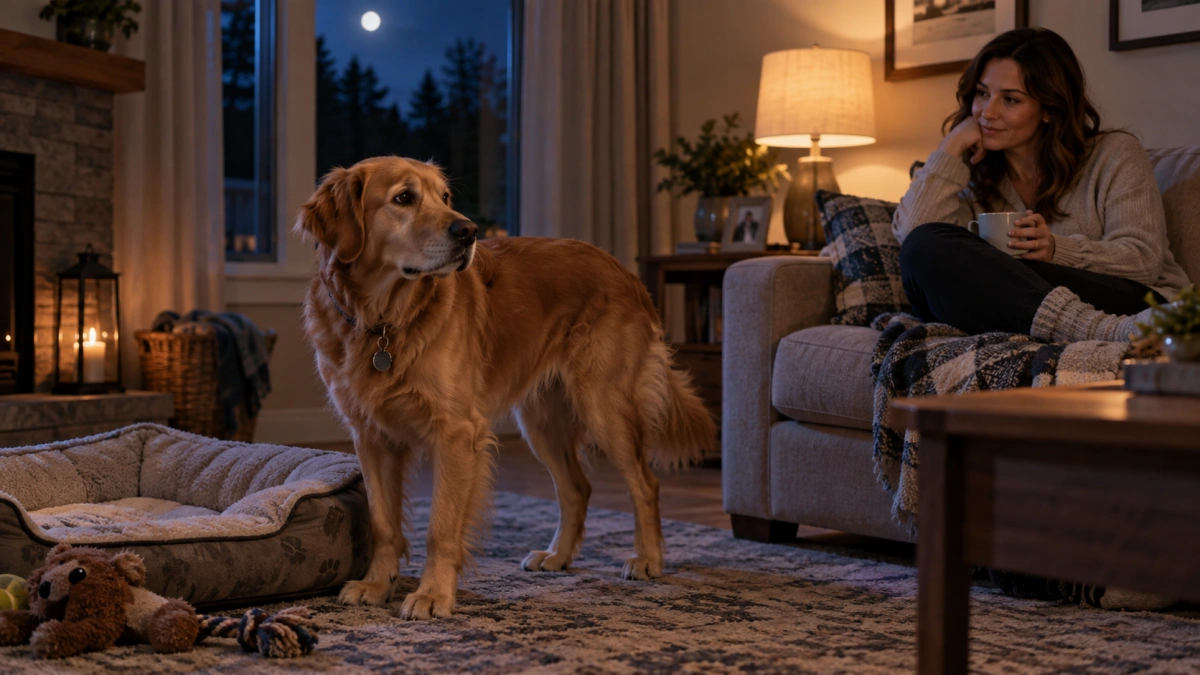
Not every dog follows the same sleep schedule, so nighttime behavior should be compared with your dog’s usual pattern rather than with another dog’s routine.
Changes owners may notice include:
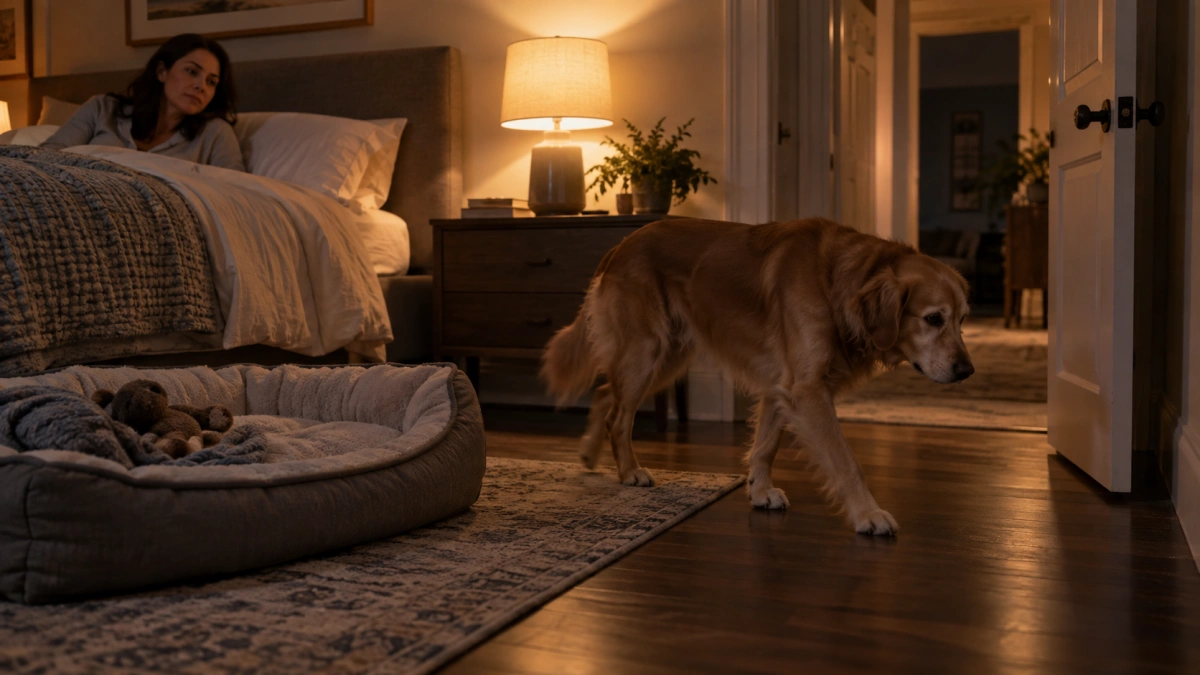
- Pacing from room to room
- Repeatedly getting up and lying down
- Barking, whining, or other new vocalization
- Following family members more closely than usual
- Wanting to go outside repeatedly
- Appearing unable to find a comfortable sleeping position
- Sleeping more during the day but staying awake at night
- Seeming confused about familiar rooms or doorways
- New nighttime house-training accidents
| Nighttime Change | Useful Detail to Observe |
|---|---|
| Pacing | Where the dog walks, how long it lasts, and whether the dog can eventually settle |
| Barking or whining | Whether a sound, person, doorway, outdoor activity, or need to go outside comes first |
| Repeated waking | Time of night and whether eating, drinking, urination, or discomfort has also changed |
| Clinginess | Whether the dog seeks reassurance only at night or throughout the day |
| Difficulty lying down | Whether the dog repeatedly changes position or seems reluctant to use a normal bed |
| Disorientation | Whether the dog also seems confused in familiar places during daylight hours |
Why Is My Dog Acting Differently at Night?
There is rarely one explanation that fits every dog. Nighttime behavior can be influenced by routine, surroundings, emotional state, physical comfort, age, and health.
Instead of trying to identify a diagnosis from one behavior, look at the complete pattern.
A Changed Daily Routine
Dogs often learn predictable schedules around feeding, walking, interaction, bathroom breaks, and sleep. Changes in those routines can affect when a dog feels active, tired, hungry, or ready to settle.
Examples include:
- A new work schedule
- Later meals
- Less daytime activity
- Different walk times
- A recent trip or boarding stay
- A family member beginning or ending nighttime work
If the nighttime behavior began around the same time as a routine change, returning to a more predictable schedule may help clarify whether the two are related.
Not Enough Appropriate Daytime Activity
Some dogs have difficulty settling when their physical and mental needs have not been met during the day. Appropriate exercise, sniffing opportunities, play, and simple enrichment can help create a more balanced routine.
More activity is not always better, however. Exercise should match your dog’s age, health, mobility, and normal energy level.
A Need to Go Outside
A dog waking during the night may simply need a bathroom break, particularly if feeding, walking, medication, or drinking patterns have changed.
A new need to urinate or defecate much more often than usual should not automatically be treated as a behavior problem. If bathroom habits have noticeably changed, mention that to your veterinarian.
Can the Nighttime Environment Change a Dog’s Behavior?
Yes. The environment can feel very different after dark.
A dog may notice:
- Outdoor animals
- Neighbors arriving home
- Traffic or delivery sounds
- Heating or cooling systems switching on
- Reflections from windows
- Changes in household lighting
- People sleeping in different rooms
For dogs with reduced hearing or vision, navigating the home at night may also become more difficult.
Keep sleeping areas easy to reach and free from obstacles. If an older dog has trouble navigating in low light, ask your veterinarian whether environmental changes such as additional lighting would be appropriate.
Can Stress or Anxiety Cause Nighttime Restlessness?
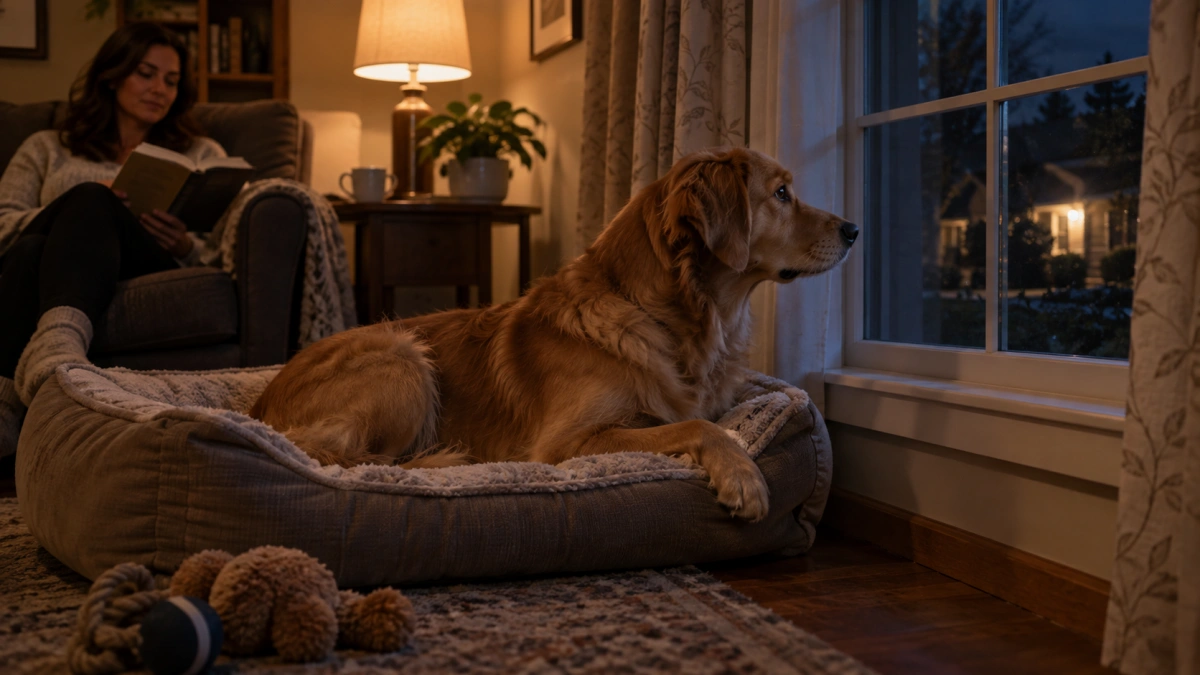
Stress and fear can affect a dog’s ability to settle. Some dogs become more alert, vocal, clingy, avoidant, or restless when something in their surroundings feels unpredictable.
Think about whether the pattern began after:
- Moving to a new home
- Adding a new person or pet
- A change in sleeping location
- Construction or unfamiliar noises
- Travel
- A major change in family routine
Avoid assuming that every restless dog has anxiety. Physical discomfort and medical conditions can produce behaviors that look similar, which is why a sudden new pattern deserves careful observation.
Can Pain or Physical Discomfort Make a Dog Restless at Night?
Yes. Dogs experiencing discomfort may have difficulty finding a comfortable position, repeatedly stand up after lying down, become reluctant to use stairs or jump, or react differently when handled.
Nighttime can make these changes easier for owners to notice because the house is quiet and the dog is expected to remain settled for several hours.
Do not assume that repeated pacing or difficulty settling is simply boredom, stubbornness, or old age. If the behavior is new or your dog appears uncomfortable, contact your veterinarian.
Why Do Senior Dogs Sometimes Act Differently at Night?
Older dogs can experience changes in sleep, mobility, hearing, vision, bathroom routines, and tolerance for changes in their environment.
Some senior dogs also develop canine cognitive dysfunction, an age-related condition that can affect sleep-wake cycles, orientation, social interaction, activity, learning, house training, and anxiety.
Nighttime pacing or waking by itself does not prove that a dog has cognitive dysfunction. Pain, sensory changes, urinary problems, other illnesses, environmental changes, and several other factors can produce overlapping signs.
Pay particular attention when nighttime behavior occurs together with other changes such as:
- Getting lost in familiar areas
- Staring or appearing confused
- Sleeping substantially more during the day
- New house-training accidents
- Changes in interaction with family members
- New anxiety or fear
- Changes in normal activity
If several of these changes appear, arrange a veterinary evaluation rather than assuming they are an unavoidable part of aging.

How Can a Consistent Night Routine Help?
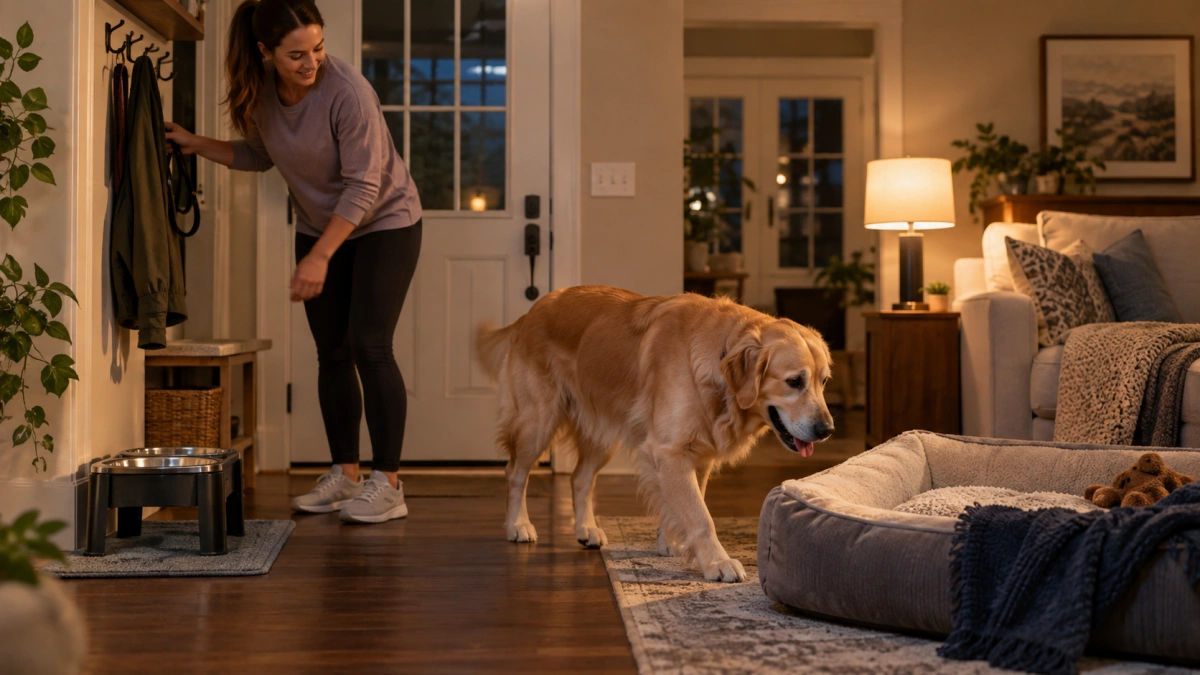
A predictable routine can make bedtime easier for some dogs and also helps owners notice when something truly changes.
A simple routine might include:
- Provide appropriate physical and mental activity during the day.
- Keep evening meals and walks reasonably consistent.
- Offer a final bathroom opportunity before bedtime.
- Reduce unnecessary excitement as bedtime approaches.
- Keep the dog’s normal sleeping area comfortable and accessible.
- Maintain similar sleep and wake times when practical.
The goal is predictability, not a rigid minute-by-minute schedule.
What If My Dog Keeps Waking Me Up at Night?
First, identify what the dog does after waking you. That detail is more useful than the waking itself.
For example:
- Does the dog immediately ask to go outside?
- Does the dog pace without a clear destination?
- Does the dog appear unable to get comfortable?
- Does the dog react to sounds outside?
- Does the dog seek physical contact?
- Does the dog drink or eat unusually often?
- Does the dog seem confused?
Repeated waking that is genuinely new is worth tracking, particularly when it occurs alongside changes in appetite, thirst, urination, mobility, awareness, or daytime behavior.
What Should You Track About Nighttime Behavior?
A simple behavior log can help distinguish a single bad night from a repeated pattern. It also gives your veterinarian more useful information if an evaluation becomes necessary.
| What to Record | Example |
|---|---|
| Time | Started pacing around 1:30 a.m. |
| Duration | Continued for about 20 minutes |
| Specific behavior | Walked between bedroom and hallway repeatedly |
| Possible trigger | Outdoor noise, bathroom need, touch, or no obvious trigger |
| What helped | Bathroom trip, quieter room, settling beside owner, or nothing obvious |
| Daytime changes | Different appetite, activity, sleep, mobility, or interaction |
If possible, record a short video of the behavior when it is safe to do so. Seeing the behavior may give your veterinarian information that is difficult to describe from memory.

What Should You Avoid Doing?
A new nighttime problem can be exhausting, but avoid trying to stop the behavior without first considering why it is happening.
- Do not punish pacing, whining, confusion, or new accidents.
- Do not force a dog to remain in a position that appears uncomfortable.
- Do not assume a senior dog is simply “getting old.”
- Do not give human sleep medicines or calming products without veterinary guidance.
- Do not sharply restrict access to water simply to prevent nighttime waking unless your veterinarian specifically recommends it.
- Do not ignore a sudden pattern that continues or becomes more intense.
What If the Behavior Change Is Sudden Beyond Nighttime?
If your dog is also behaving differently during the day, the issue may be broader than a bedtime routine problem.
Our guide to sudden dog behavior changes explains how to compare new behavior with your dog’s normal baseline, identify possible triggers, and record changes in eating, sleep, bathroom habits, mobility, and social interaction.
When Should You Contact a Veterinarian?
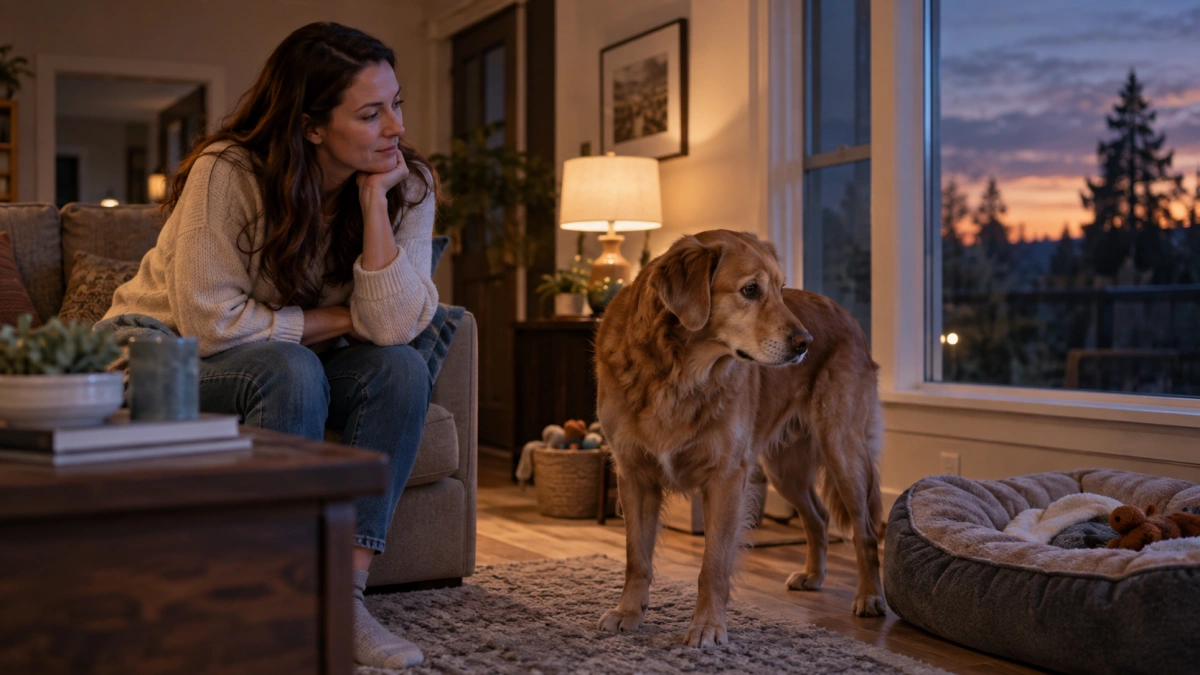
Contact your veterinarian when nighttime behavior is new, sudden, persistent, worsening, or significantly different from your dog’s normal pattern.
A veterinary discussion is especially important if nighttime changes occur with:
- Changes in appetite or drinking
- More frequent urination or house-soiling
- Vomiting or diarrhea
- Difficulty walking, climbing, lying down, or standing
- Apparent pain or sensitivity to touch
- Confusion or disorientation
- Major daytime behavior changes
- New aggression
- A marked change in sleep-wake patterns
Seek urgent veterinary care if unusual behavior occurs with collapse, seizure activity, serious breathing difficulty, severe injury, inability to stand normally, or another obvious emergency sign.

Nighttime Behavior Checklist
If your dog suddenly seems different after dark, use this checklist:
- Is this actually new for my dog?
- When did it begin?
- Does it happen at roughly the same time each night?
- Has the daily routine changed?
- Has the sleeping environment changed?
- Does the dog need more frequent bathroom breaks?
- Is the dog having difficulty getting comfortable?
- Are appetite or drinking habits different?
- Is daytime sleep substantially different?
- Are there signs of confusion during the day?
- Is the problem becoming more frequent or intense?
The checklist cannot diagnose the cause, but it can turn a vague impression that your dog is “acting weird at night” into useful observations.
Final Thoughts
Dog behavior changes at night can result from something as simple as a disrupted routine or nighttime noise, but they can also accompany stress, physical discomfort, sensory changes, aging, or health problems.
Start by comparing the behavior with your dog’s normal pattern. Keep the daily and bedtime routine predictable, provide an appropriate sleeping environment, and record what happens before and during each episode.
If the nighttime behavior is sudden, persistent, worsening, or accompanied by other physical or behavioral changes, contact your veterinarian. Routine adjustments are useful when routine is part of the problem, but they should not replace evaluation of a genuinely new behavior change.