By
By 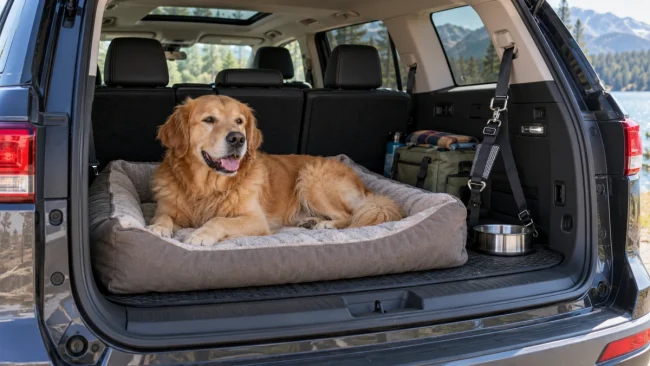
Dog beds for vehicles can make road trips more comfortable by giving your dog a defined place to rest inside the car and a familiar sleeping surface when you arrive. But a travel bed has to solve more than one problem at once: it needs to fit your vehicle, fit your dog, stay reasonably stable, pack efficiently, and be easy to clean.
A dog car bed is also not a safety restraint. The bed can improve comfort and help create a more consistent resting area, but your dog still needs an appropriate vehicle restraint, secured carrier, or other travel setup suited to the trip.
Before choosing a bed, measure both the space inside your vehicle and the amount of room your dog actually uses when lying down. Then compare portability, cushion thickness, non-slip construction, water resistance, and cleaning requirements.
You can also explore our complete Dog Beds hub for more guides about sizing, materials, cleaning, and different sleeping styles.
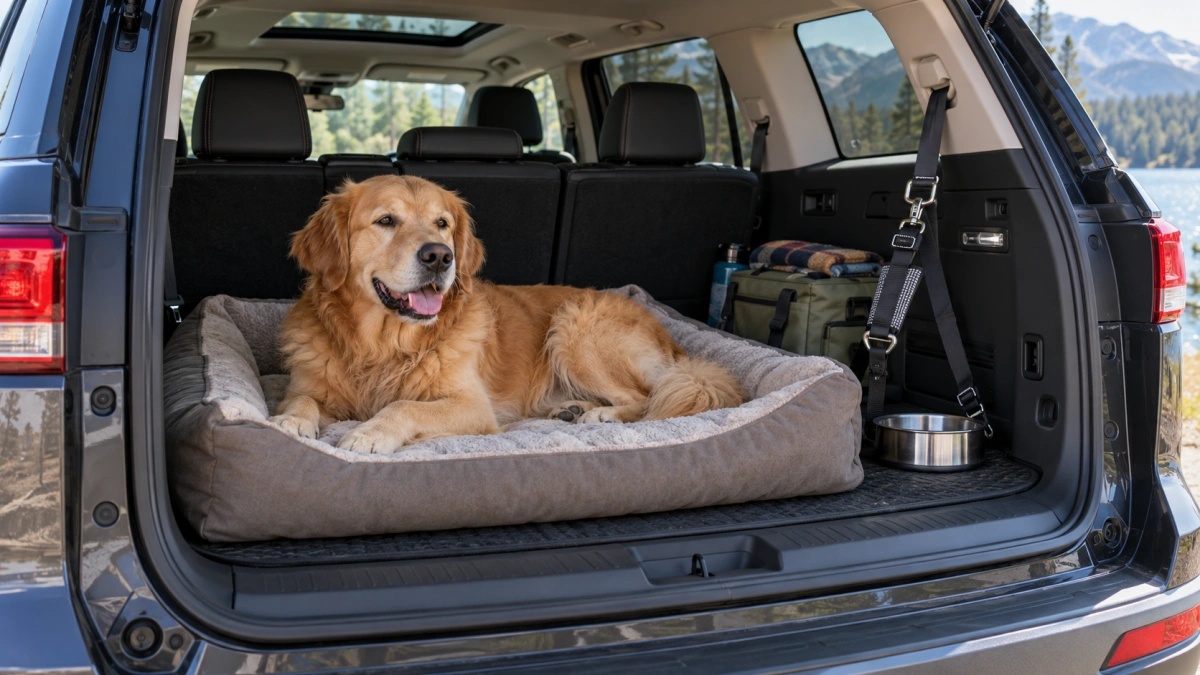
What Is a Car or Travel Dog Bed?
A car or travel dog bed is a portable sleeping surface designed to be easier to use away from home than a typical full-size household dog bed.
Depending on the design, it may be:
- A low-profile bed fitted into a vehicle cargo area
- A padded mat for the back seat
- A foldable dog bed with handles
- A roll-up travel mat
- A compact camping pad
- A portable bed that can move between the car, hotel, RV, and campsite
The right style depends on where your dog will actually sleep during the trip.
Car Dog Beds vs Portable Travel Beds
Car dog beds and portable travel beds overlap, but they are not always designed around the same priorities.
| Feature | Car Dog Bed | Portable Travel Bed |
|---|---|---|
| Main priority | Vehicle fit and stable placement | Packability and destination use |
| Typical shape | Low-profile rectangular bed or mat | Foldable, roll-up, or compact bed |
| Important feature | Non-slip base | Small packed size |
| Best use | Back seat or cargo area | Hotels, camping, RVs, trips |
If your dog only needs a comfortable surface inside the car, vehicle fit may matter most.
If the same bed will also be used overnight, then packed size, carrying weight, setup time, and cleaning become much more important.
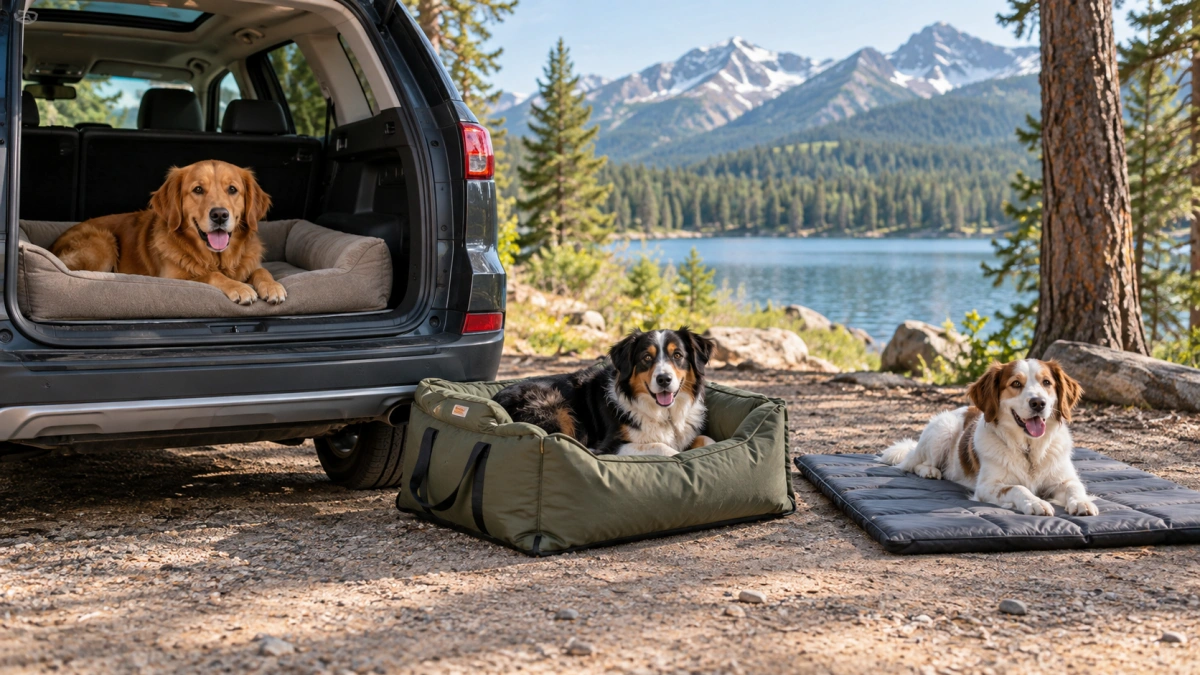
A Dog Bed Is Not a Car Safety Restraint
A padded dog bed can make the ride more comfortable, but it should not be treated as crash protection.
A bed does not automatically:
- Restrain your dog during sudden braking
- Prevent movement during a collision
- Replace a secured carrier
- Replace a vehicle safety harness
- Anchor your dog safely to the vehicle
Think of the bed and the restraint system as two separate parts of the travel setup.
The bed handles comfort and the sleeping surface. The restraint or carrier handles vehicle travel safety.
Make sure the bed does not block seat-belt buckles, tether attachment points, crate doors, or other hardware used for your dog’s travel setup.
Measure Your Vehicle Before Choosing a Bed
The bed has to fit the available space without bunching, folding awkwardly, or blocking important vehicle hardware.
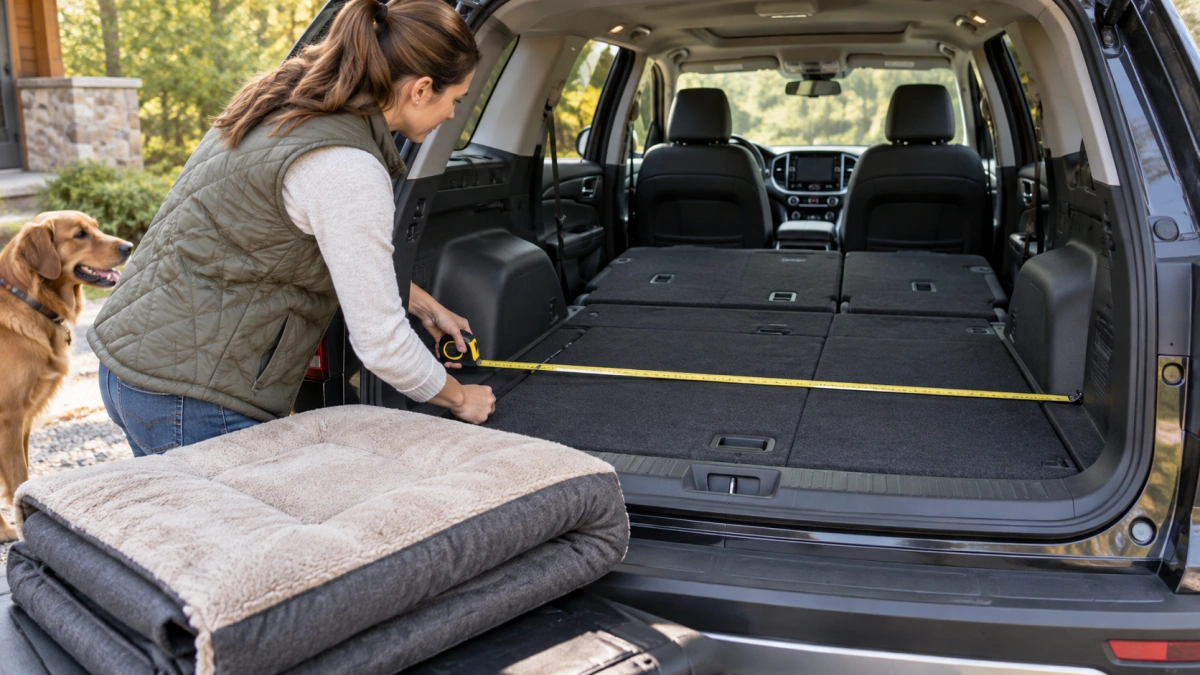
Measure the specific area where the bed will sit.
For a Back Seat
- Measure the usable seat width
- Measure seat depth
- Check access to seat-belt buckles
- Look at gaps around the footwell
- Check door clearance
For a Cargo Area
- Measure floor width
- Measure cargo depth
- Account for wheel wells
- Leave space for luggage or a crate
- Check hatch clearance
For a Crate
- Measure the internal floor dimensions
- Check door clearance
- Make sure the bed does not reduce usable space too much
- Keep ventilation openings clear
A bed that fits your dog but does not fit flat in the vehicle may become awkward or unstable during the trip.
Measure Your Dog’s Sleeping Space Too
Vehicle dimensions are only half of the sizing decision.
Your dog still needs enough room to rest naturally.
Watch how your dog sleeps at home and consider whether it usually:
- Curls tightly
- Lies on its side
- Stretches its legs out
- Changes positions frequently
Then compare that sleeping footprint with the usable area of the travel bed.
Do not choose such a small bed that it technically fits the car but leaves your dog with very little room to reposition.
Backseat, Cargo Area or Crate: Where Will the Bed Go?
The best travel bed design depends heavily on placement.
| Location | Useful Bed Features |
|---|---|
| Back seat | Low profile, stable base, restraint compatibility |
| Cargo area | Large flat sleeping surface, non-slip underside |
| Crate | Correct internal fit, low bulk, washable materials |
| Hotel or rental | Portable, cleanable, easy to set up |
| Camping | Moisture resistance, insulation, packability |
If you use one bed in several locations, choose the most demanding use case first.
For example, a bed that fits perfectly in a hotel room but cannot fit flat in your vehicle may not be a practical travel bed.
Car Dog Beds for Large Dogs
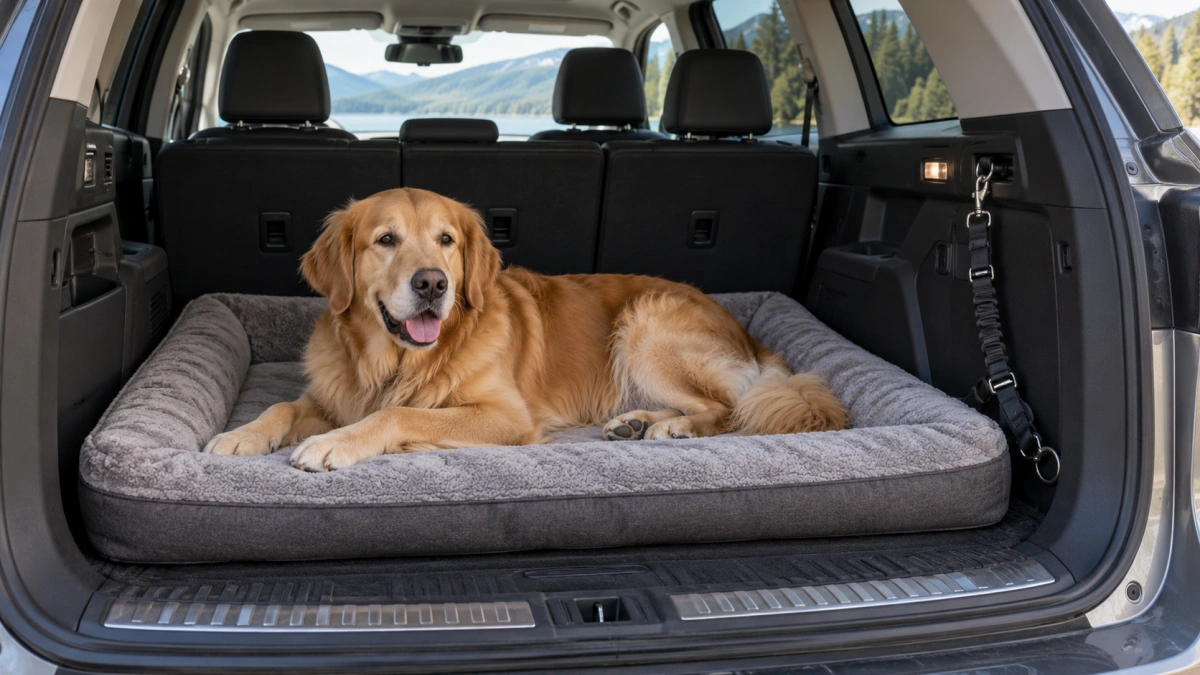
Large dogs need more usable floor or seat area, and this becomes especially noticeable on longer trips.
Check:
- Usable bed length
- Usable bed width
- Available vehicle floor area
- Headroom above the bed
- Mattress thickness
- Position of the restraint system
- How easily your dog can get in and out
A thick household-style mattress may feel comfortable at home but take up too much vertical space inside a vehicle.
For large dogs, a lower-profile supportive bed can sometimes be more practical because it preserves headroom and cargo space while still creating a defined resting surface.
Do not rely only on Large or XL labels. Compare actual dimensions with both your dog and your vehicle.
Packability vs Cushioning
Travel beds usually involve a trade-off between comfort and packed size.
| Travel Bed Type | Packability | Cushioning |
|---|---|---|
| Thin roll-up mat | High | Low |
| Foldable padded bed | Medium to high | Medium |
| Thick foam travel bed | Low | High |
| Camping pad | High | Low to medium |
The most portable bed is not always the most cushioned, and the most cushioned bed is rarely the easiest to pack.
Think about:
- How long your dog will use the bed
- How much luggage space you have
- Whether you need to carry the bed by hand
- Whether the bed is used only in the car or overnight too
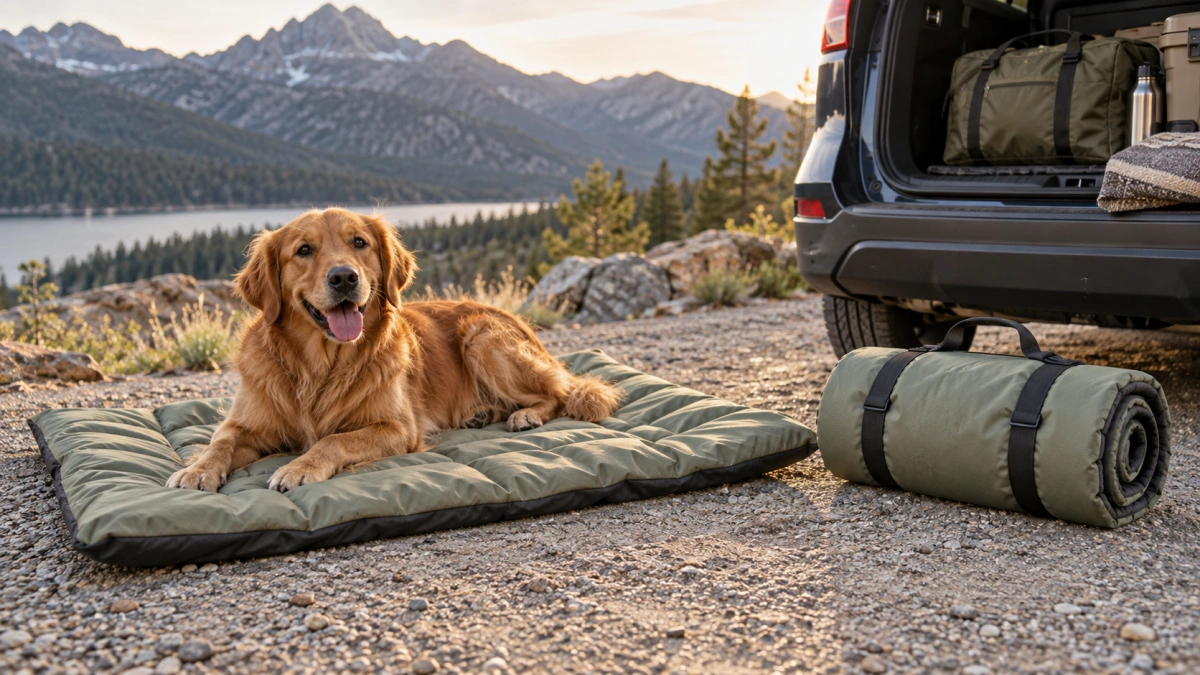
Foldable vs Roll-Up Travel Dog Beds
Foldable and roll-up beds both reduce storage size, but they behave differently when packed.
Foldable Dog Beds
These usually collapse along fixed sections and may keep more padding than a thin mat.
They can work well when you want:
- Moderate cushioning
- A structured packed shape
- Handles or a carrying case
Roll-Up Dog Beds
Roll-up designs are often thinner and easier to strap to luggage or place inside a vehicle.
They can work well when:
- Storage space is limited
- The bed needs to move frequently
- You prioritize portability over thick cushioning
Always compare both the open dimensions and the packed dimensions.
A bed can fit your dog perfectly when open but still be inconvenient if the packed bundle is too large for your luggage or vehicle storage area.
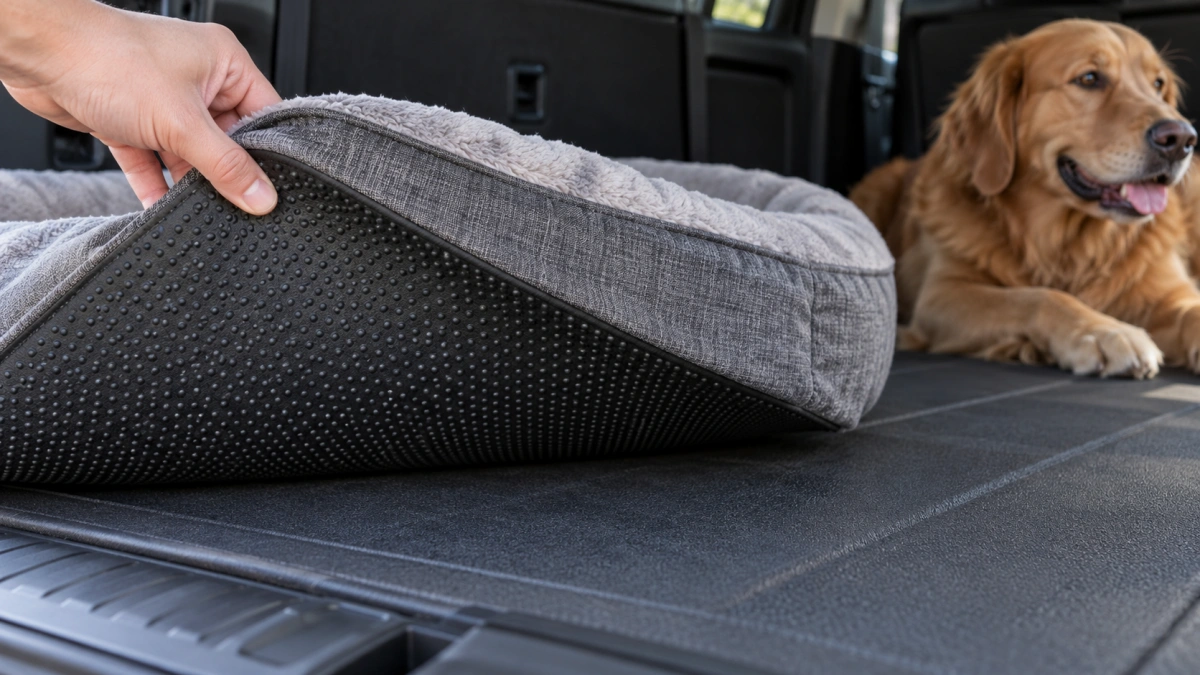
Why a Non-Slip Base Matters
Vehicles accelerate, brake, and turn, so a travel bed may shift more than a dog bed sitting on a stationary floor at home.
A non-slip base can help the bed maintain its position against the vehicle surface.
Look for:
- Textured underside material
- Rubberized grip areas
- Low-profile construction
- A flat base that matches the vehicle surface
However, a non-slip base only helps stabilize the bed itself.
It does not secure your dog during sudden braking or a collision, so it should never be treated as a replacement for an appropriate restraint system.
Make the Bed Work With Your Dog’s Car Restraint
The bed should fit around your dog’s vehicle safety setup rather than interfere with it.
If your dog uses a car harness, check that the bed does not:
- Cover seat-belt buckles
- Block tether connection points
- Force the tether into an awkward position
- Create thick folds under the harness system
If your dog travels in a crate, make sure the bed:
- Fits flat inside the crate
- Allows the door to close normally
- Does not block ventilation
- Leaves enough internal room for your dog
Set up the complete system before a long road trip rather than discovering fit problems after you leave home.
Dog Bed vs Backseat Hammock or Seat Extender
Backseat hammocks, seat extenders, and dog beds solve different problems.
| Product | Main Purpose |
|---|---|
| Dog bed | Provides a sleeping surface and cushioning |
| Seat hammock | Helps protect upholstery and cover seat gaps |
| Seat extender | Creates a larger or flatter rear-seat platform |
| Vehicle restraint | Helps manage travel safety |
These products can sometimes be used together, but one should not automatically be treated as a substitute for another.
For example, a hard-bottom seat extender may create a larger flat surface while a separate travel bed provides the cushioning on top.
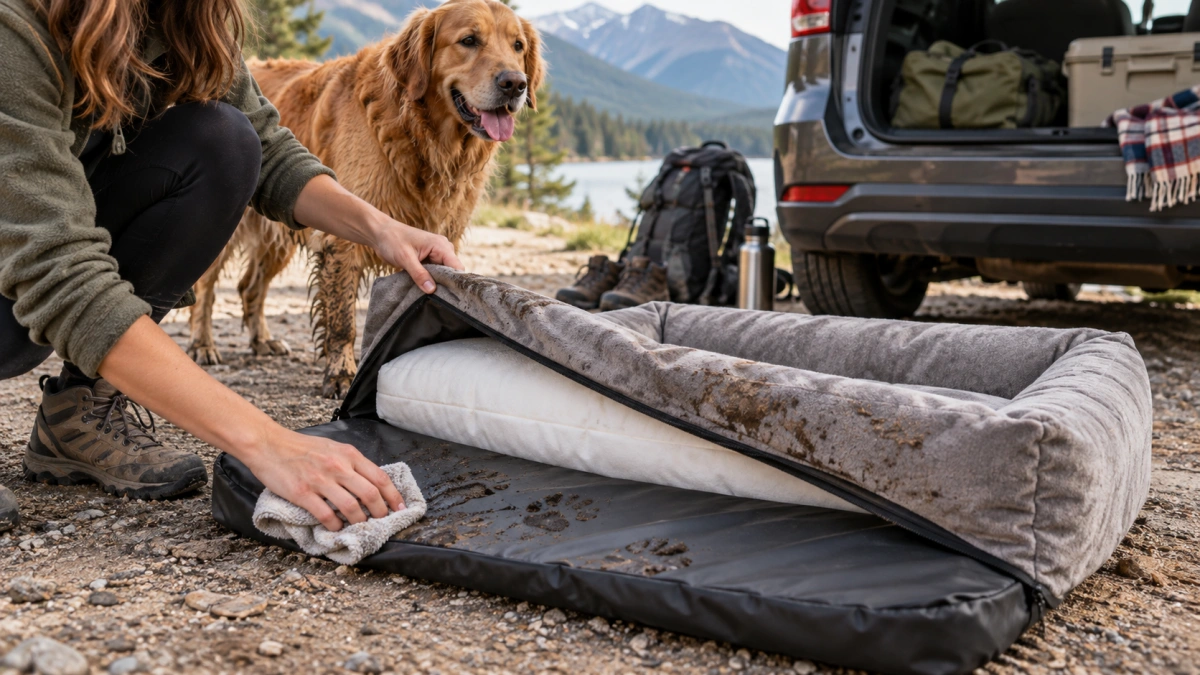
Water Resistance and Easy Cleaning
Travel beds are exposed to more dirt and moisture than many indoor beds.
Common travel messes include:
- Muddy paws
- Wet fur
- Spilled drinking water
- Sand
- Grass and campsite debris
- Drool
- Occasional accidents
Useful features include:
- Removable washable covers
- Wipeable surfaces
- Water-resistant bases
- Quick-drying fabrics
- Easy-to-shake-off outer materials
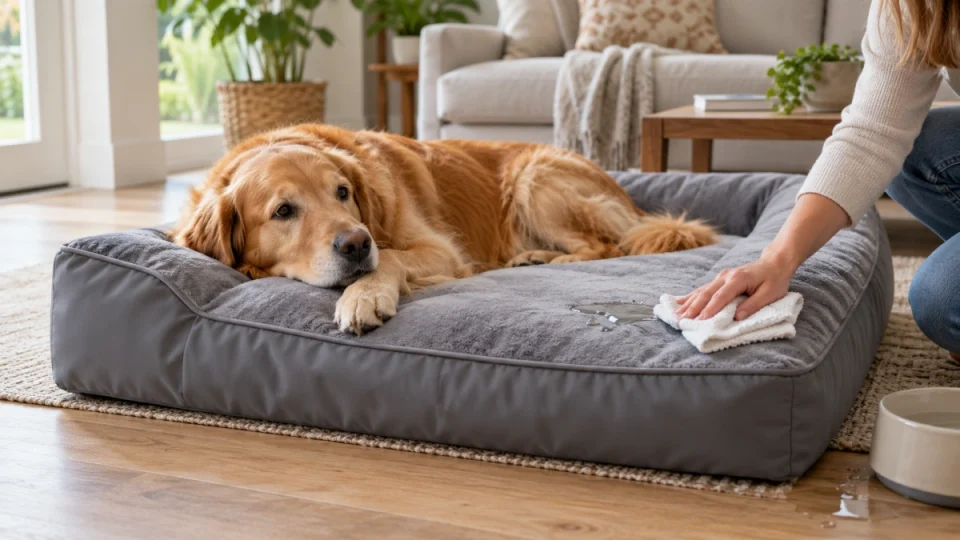
Travel beds often deal with muddy paws, spilled water, and damp gear. If moisture protection is a major priority, our guide to waterproof dog beds explains liners, covers, foam protection, and water-resistant materials in more detail.
For travel, cleaning speed matters because you may need to use the same bed again later that day.
Travel Beds for Hotels, Camping and RV Trips
A good travel bed should work at the destination as well as inside the vehicle.
Hotels and Rentals
Prioritize:
- Compact storage
- Clean sleeping surface
- Easy setup
- Washability
Camping
Prioritize:
- Ground insulation
- Moisture-resistant bottom material
- Packability
- Durable outer fabric
- Easy dirt removal
RV Travel
Prioritize:
- Foldability
- Storage efficiency
- Easy cleaning
- A shape that fits the available floor area
If your dog already has a portable bed it likes, using the same bed at multiple stops can create a more consistent resting area throughout the trip.
Should You Bring Your Dog’s Regular Bed?
Sometimes the easiest travel bed is the one your dog already uses.
A familiar bed can be practical if it:
- Fits safely inside the vehicle
- Is not excessively bulky
- Can be cleaned easily
- Leaves room for your restraint setup
- Can be carried into your destination
The drawback is that large household beds are often difficult to pack and may take up too much vehicle space.
If your regular bed is too bulky, a smaller portable bed or travel mat may be easier to manage while still giving your dog a familiar type of sleeping surface.
What if Your Dog Gets Carsick?
A more comfortable bed may improve the resting surface, but it does not solve motion sickness by itself.
If your dog repeatedly:
- Vomits during car rides
- Drools heavily
- Appears persistently distressed
- Has difficulty settling even on short trips
Treat that as a separate travel issue rather than assuming the dog simply needs a softer bed.
If carsickness is frequent or severe, ask your veterinarian for guidance before a long trip.
Car and Travel Dog Bed Buying Checklist
Before buying a dog bed for vehicles or travel, check the complete trip setup.
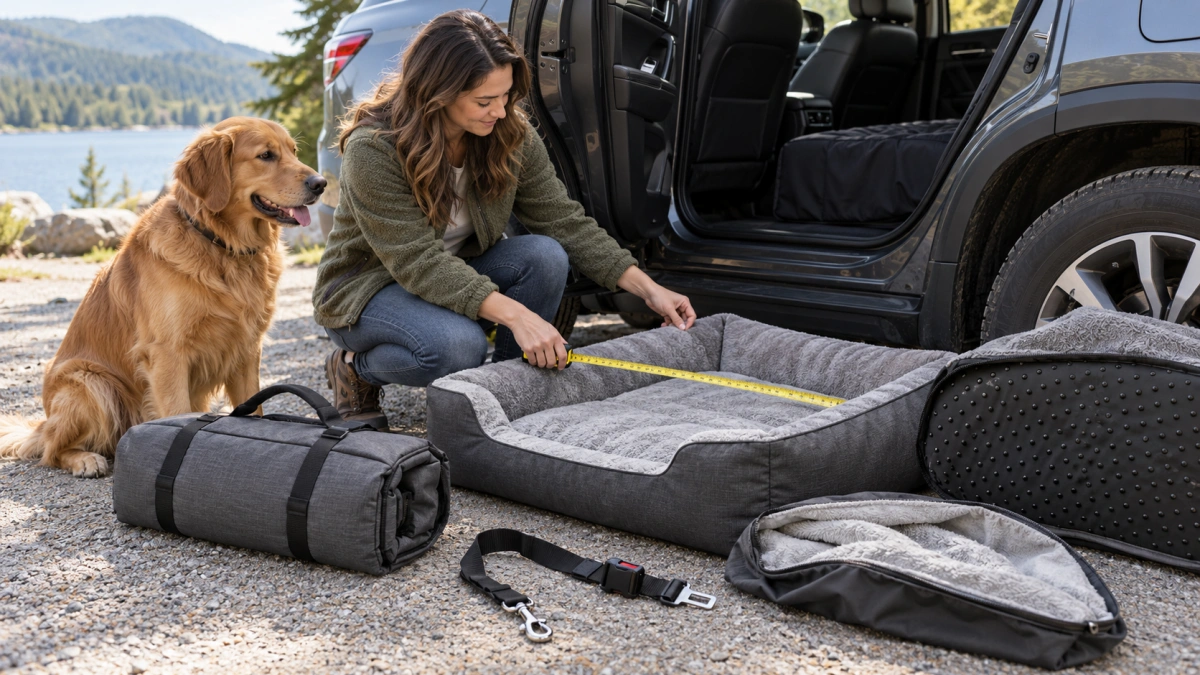
- Measure the vehicle area where the bed will sit
- Measure your dog’s normal sleeping footprint
- Make sure the bed fits flat in the vehicle
- Check usable sleeping length and width
- Preserve enough headroom for large dogs
- Compare open and packed dimensions
- Choose foldable or roll-up construction based on storage needs
- Look for a non-slip base
- Keep seat-belt and tether points accessible
- Make sure crate doors and ventilation remain clear
- Choose enough cushioning without using excessive vehicle space
- Check water resistance and washability
- Consider how quickly the bed can dry
- Think about hotel, camping, or RV use after the drive
- Remember that the bed does not replace a proper vehicle restraint
Final Thoughts
The best dog beds for vehicles balance your dog’s sleeping space with the limits of your car, luggage, and travel routine.
Start by measuring the vehicle and your dog. Then compare bed thickness, packed size, non-slip construction, restraint compatibility, washability, and the places where the bed will be used after the drive.
For large dogs, prioritize usable sleeping area and headroom rather than trying to fit the thickest possible mattress into the vehicle. For frequent travelers, a slightly thinner foldable bed may be more practical if it is easier to carry, clean, and reuse at hotels or campsites.
Most importantly, keep comfort and vehicle safety separate. A travel dog bed can provide a familiar, practical resting surface, but it should work alongside an appropriate restraint or secured carrier rather than replace one.