By
By 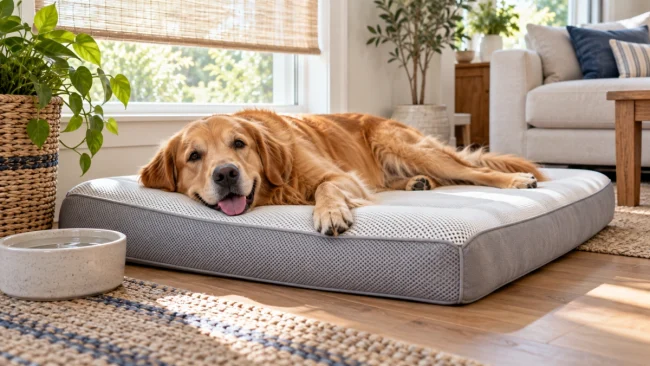
Cooling dog beds are designed to help your dog rest more comfortably during warm weather by improving airflow, reducing heat buildup, or using materials that feel cooler against the body.
But “cooling dog bed” can describe several very different products. Some are elevated mesh cots that allow air to move underneath your dog, while others use cooling gel, foam layers, water-filled designs, or smooth fabrics that feel cooler than thick plush materials.
Before choosing one, think about how your dog sleeps, where the bed will be used, how much support your dog needs, and whether the cooling design will still be practical to clean and maintain in your home.
You can also explore our complete Dog Beds hub for more guides about dog bed materials, sizing, comfort features, and seasonal sleeping options.
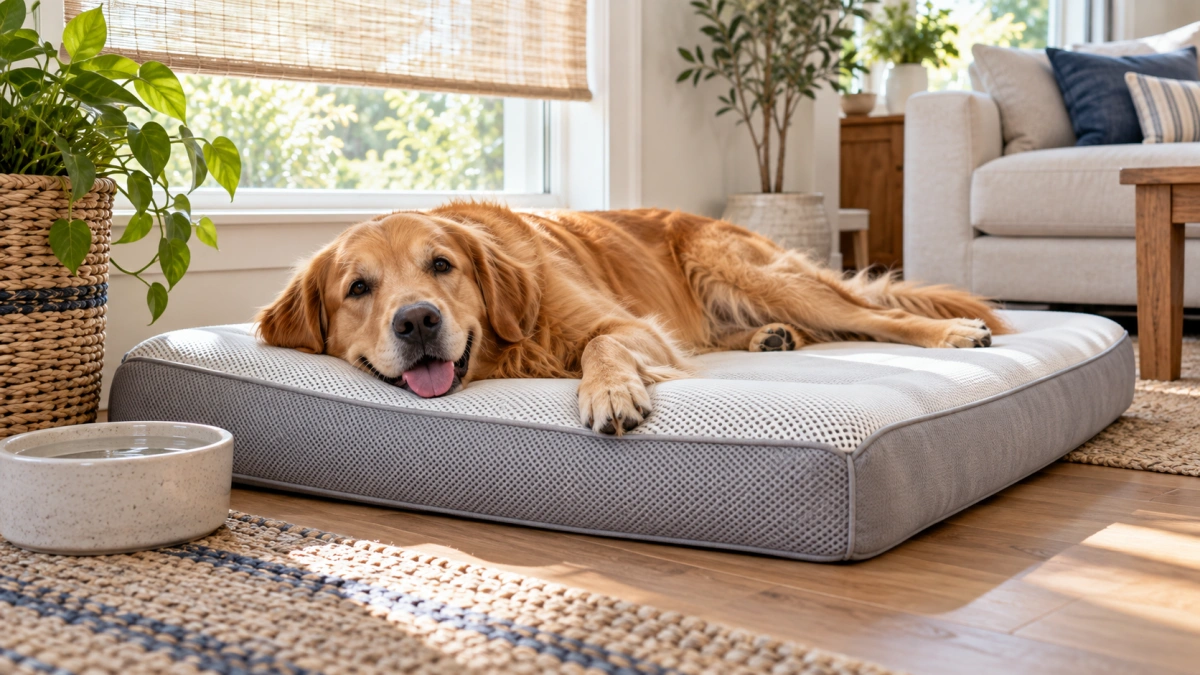
What Is a Cooling Dog Bed?
A cooling dog bed is a sleeping surface designed to reduce heat buildup or create a cooler resting environment compared with thick, heat-trapping bedding.
Different designs accomplish this in different ways.
Common types include:
- Elevated mesh beds that increase airflow underneath your dog
- Cooling mats or pads with gel or other heat-absorbing materials
- Cushioned beds with cooling foam or surface layers
- Cool-touch fabric beds made with smoother, less insulating materials
- Water-filled cooling beds or pads
These products do not all work the same way, so it is important to understand the cooling method before deciding which style fits your dog.
Cooling Dog Bed vs Cooling Mat
Cooling beds and cooling mats often appear together in search results, but they usually serve slightly different purposes.
| Feature | Cooling Dog Bed | Cooling Mat or Pad |
|---|---|---|
| Thickness | Usually thicker | Usually thin |
| Support | May include foam or cushioning | Often limited |
| Portability | Depends on design | Usually easy to move |
| Primary use | Regular sleeping space | Temporary cooling surface |
| Placement | Floor, bedroom, living room, patio | Floor, crate, car, existing bed |
A cooling mat may be enough if your dog simply wants a cooler surface during part of the day.
If you are replacing your dog’s main sleeping area, a full cooling bed may make more sense because you can also compare mattress size, support, durability, and cleaning convenience.
Types of Cooling Dog Beds
The best cooling design depends on how and where your dog will use the bed.
| Cooling Type | How It Helps | Best Considerations |
|---|---|---|
| Elevated mesh cot | Allows airflow beneath the sleeping surface | Airflow, mesh tension, frame stability |
| Cooling gel bed | Uses gel or similar material to absorb and redistribute some body heat | Surface feel, durability, care instructions |
| Cooling foam bed | Combines cushioning with a cooling-oriented foam or top layer | Foam thickness, support, heat retention |
| Cool-touch fabric bed | Uses smoother or less insulating surface material | Fabric feel, airflow, base construction |
| Water-filled bed | Uses water to absorb heat | Weight, filling, storage, leak resistance |
Do not assume that every product labeled “cooling” provides the same type or amount of cooling.

How Elevated Cooling Beds Work
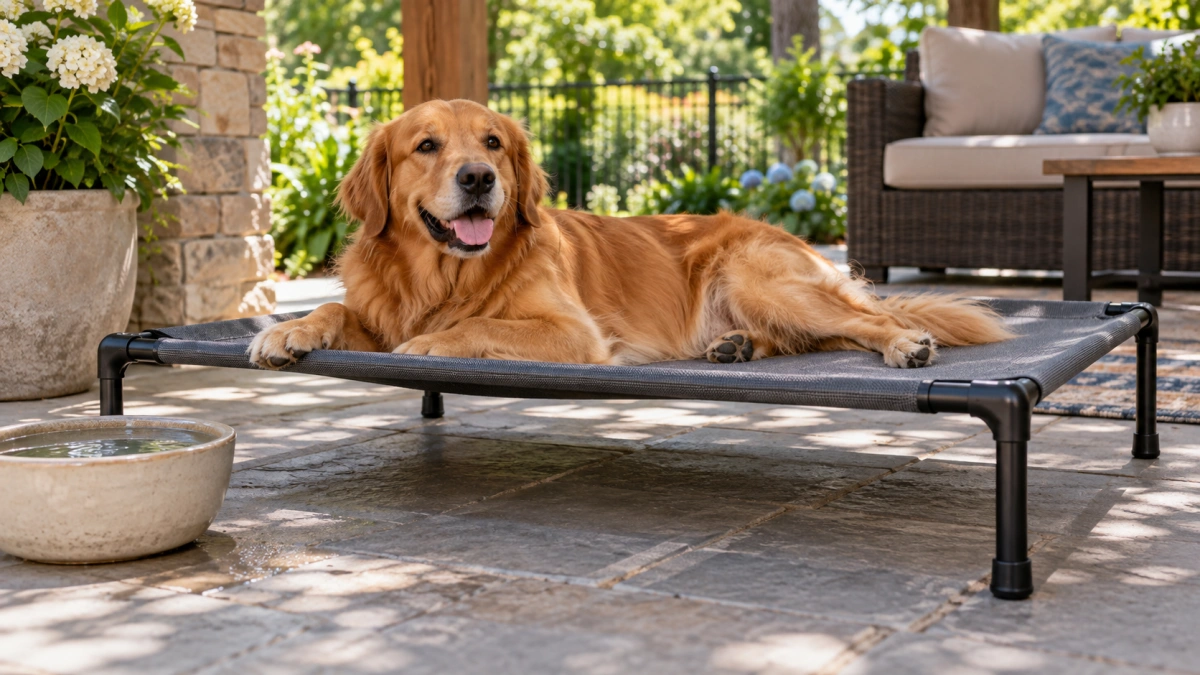
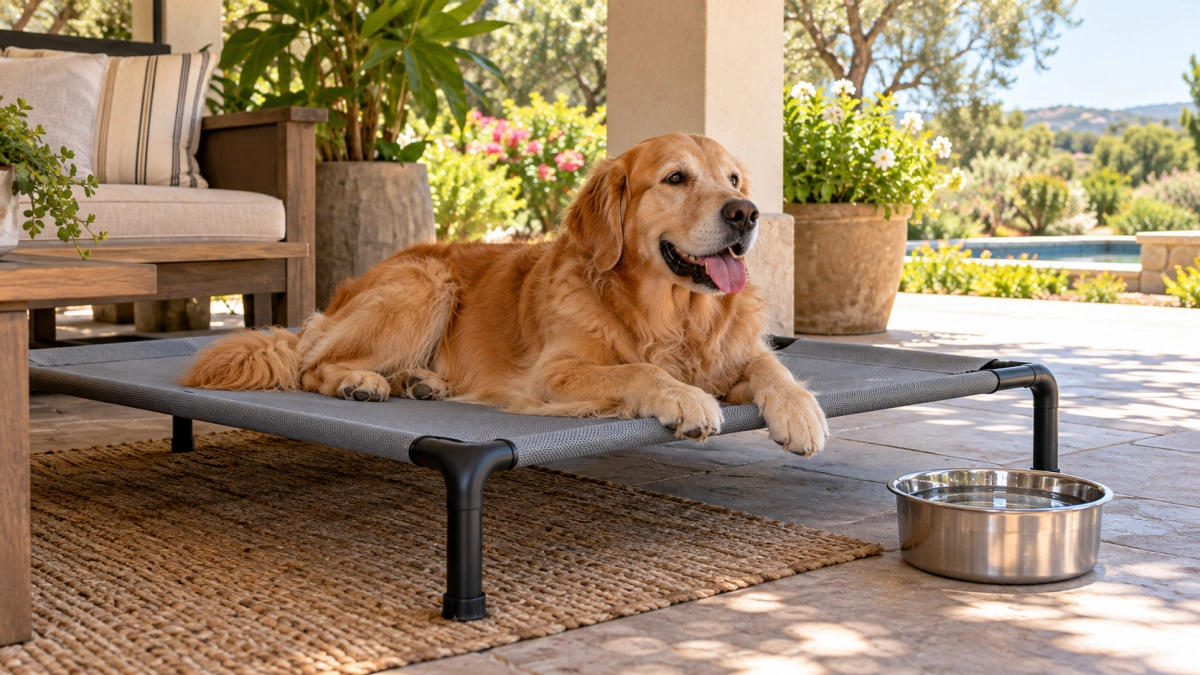
Elevated cooling beds raise your dog above the floor and use a breathable sleeping surface, usually mesh or another tensioned material.
The open space underneath the bed allows air to move around more of your dog’s body.
This type of bed can be useful when:
- Your dog tends to seek cool, open surfaces
- You want better airflow underneath the sleeping area
- You need a bed that can dry quickly
- You want an option for shaded outdoor use
However, an elevated bed does not actively refrigerate your dog. Its main advantage is airflow and separation from the floor.
When comparing elevated cooling beds, check:
- The usable sleeping area
- Published weight capacity
- Mesh tension
- Frame stability
- Entry height
- Whether the surface can be cleaned easily
A large dog should be able to lie fully on the mesh without hanging off the frame.
Cooling Gel and Cooling Foam Beds
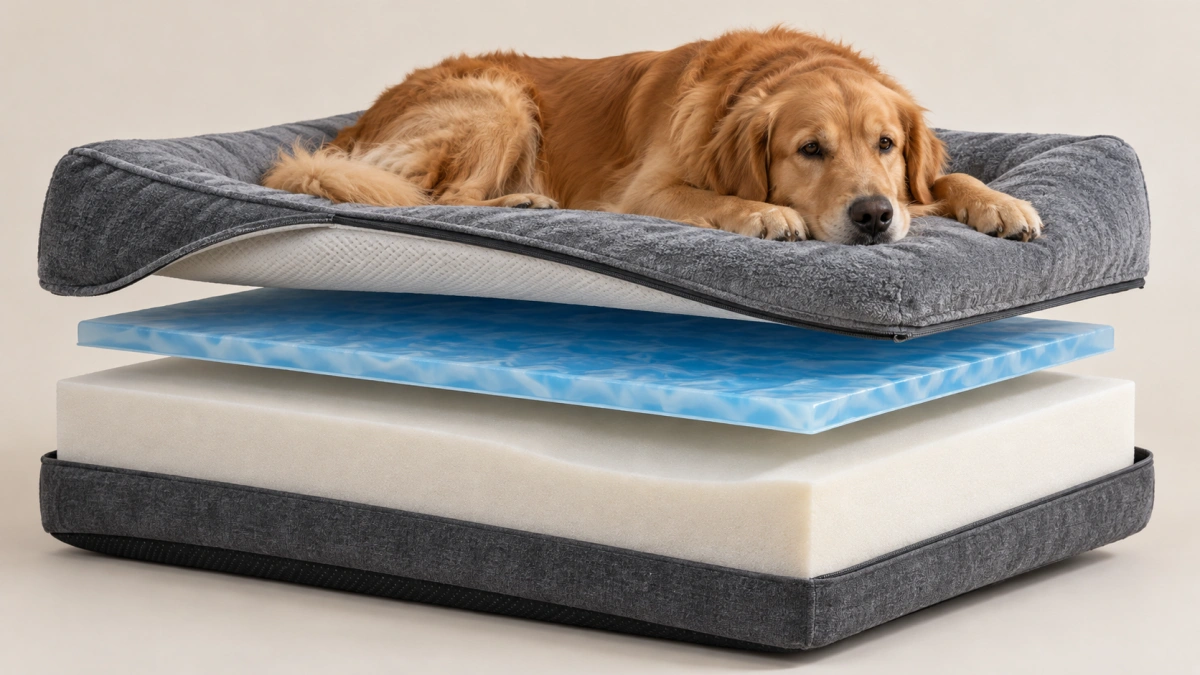
Gel and cooling foam beds provide a softer, more cushioned surface than most elevated mesh cots.
These beds may combine:
- A cooling-oriented top layer
- Gel-infused foam
- Memory foam
- Supportive base foam
- A removable cooling-style cover
The cooling effect is usually passive rather than powered. The material may initially feel cooler and absorb some body heat, but that sensation can change as the bed warms and as the room temperature changes.
This means a cooling foam bed should still be evaluated as a complete dog bed.
Check:
- Foam thickness
- How much the bed compresses
- Whether your dog’s entire body fits
- Cover breathability
- Whether the cover is removable
A thin cooling layer does not compensate for a mattress that is too small or poorly suited to your dog’s sleeping habits.
What About Cool-Touch Fabrics?
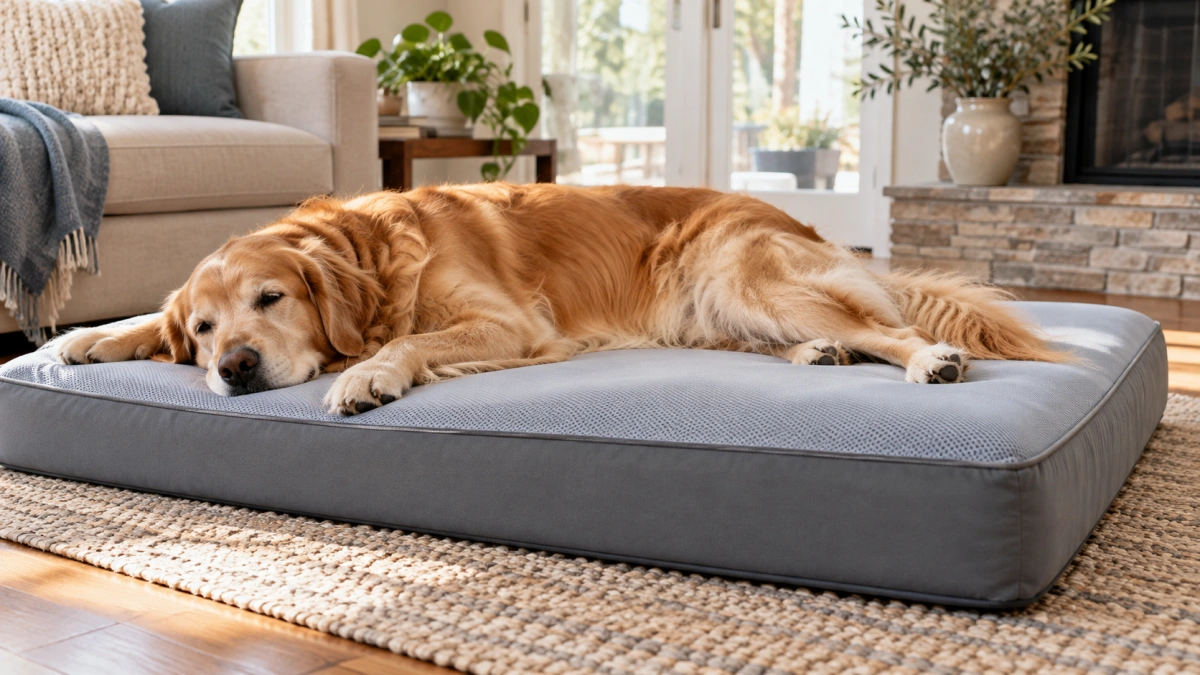
Some cooling dog beds rely mainly on the cover fabric rather than an internal gel or elevated frame.
A smooth, breathable fabric may feel cooler than thick fleece, faux fur, or heavily padded plush material.
But a cool-touch surface does not mean the entire bed remains cold throughout the day.
The overall temperature can still be affected by:
- Room temperature
- Foam thickness
- Airflow around the bed
- Your dog’s body heat
- Whether the bed is in direct sunlight
When comparing these beds, look at both the cover and the layers underneath it.
Match the Bed to How Your Dog Sleeps
Your dog’s summer sleeping behavior can help you choose the right type of cooling bed.
If your dog often stretches out across a cool floor, prioritize:
- A wide open sleeping surface
- Enough length for fully extended legs
- Breathable materials
- Minimal thick bolsters around the body
If your dog still likes some cushioning while sleeping warm, a cooling foam bed may provide a better balance between support and surface temperature.
If your dog repeatedly leaves soft beds for tile or another hard surface, an elevated mesh cot or thin cooling mat may feel more natural than a deep cushioned bed.
Watch what your dog already chooses rather than assuming the thickest or most expensive cooling design will automatically be preferred.
Cooling Dog Beds for Large Dogs
Cooling dog beds for large dogs need enough usable area to support the dog’s entire body.
A large dog may stretch more when warm, so sizing becomes especially important in summer.
Check:
- Usable sleeping length
- Usable sleeping width
- Published weight capacity
- Mesh tension on elevated beds
- Foam thickness on cushioned beds
- How much the bed compresses
Do not rely only on labels such as Large, XL, or XXL because dimensions vary between manufacturers.
If your dog’s head, hips, or legs regularly hang off the edge, the bed may be too small even if the weight rating is technically high enough.
Check Support as Well as Cooling
Cooling is only one part of a dog’s sleeping setup.
A bed may feel cool but still be too thin, too soft, too firm, or too small for your dog.
When comparing cooling beds, consider both:
- Temperature comfort
- Sleeping support
For elevated beds, support depends largely on the tension and stability of the sleeping surface.
For foam beds, support depends more on foam thickness, density, and how much the mattress compresses under your dog’s weight.
Choose the cooling method only after confirming that the bed itself works as a comfortable sleeping surface.
Indoor vs Outdoor Cooling Dog Beds
A cooling bed used in your bedroom has different requirements from one used on a patio or in the yard.
| Feature | Indoor Use | Outdoor Use |
|---|---|---|
| Main priority | Comfort and home use | Airflow and durability |
| Common design | Foam, fabric, cooling pad | Elevated mesh cot |
| Cleaning | Removable washable covers | Quick-clean or hoseable surfaces |
| Moisture | Usually lower exposure | Quick drying is useful |
| Placement | Bedroom or living area | Preferably shaded |
For outdoor use, check whether the manufacturer actually describes the materials as suitable for the intended environment.
An indoor foam bed should not automatically be treated as weather-resistant simply because it has a cooling cover.
Where to Place a Cooling Bed in Summer
Placement can affect how useful a cooling bed feels.
Indoors, consider putting the bed:
- In a well-ventilated room
- Away from strong direct sunlight
- Near the area where your dog already chooses to rest
- Where fresh water is easy to access
For outdoor use, shade is especially important.
An elevated mesh bed placed directly in intense sunlight can still become uncomfortable. Put the bed in a shaded area whenever possible and make sure your dog has access to fresh water.
Can a Cooling Dog Bed Prevent Overheating?
A cooling dog bed can provide a more comfortable resting surface, but it should not be treated as protection against overheating or heatstroke.
During hot weather, your dog still needs:
- A cool or shaded environment
- Fresh drinking water
- Appropriate activity levels
- Avoidance of excessive heat exposure
Do not rely on a cooling bed to make an otherwise dangerously hot environment safe.
If your dog shows concerning signs of overheating or appears severely unwell in hot conditions, seek veterinary guidance promptly rather than relying on the bed or another cooling product.
Cleaning and Maintaining a Cooling Dog Bed
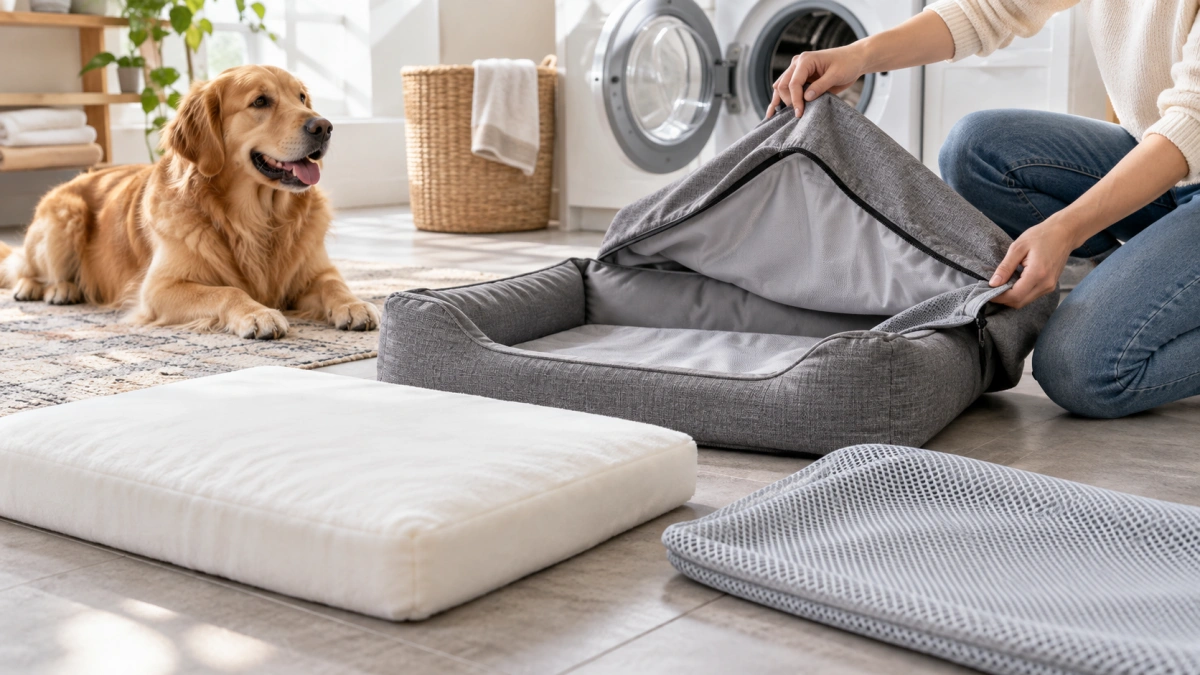
Summer beds can collect hair, dirt, moisture, drool, and debris, so cleaning should be part of your buying decision.
The best cleaning method depends on the type of cooling bed.
Cooling Foam Beds
Look for a removable washable cover and check whether the foam insert needs spot cleaning rather than machine washing.
Elevated Mesh Beds
Check whether the mesh can be wiped, rinsed, or removed from the frame according to the manufacturer’s instructions.
Cooling Mats
Many mats are designed to be wiped clean rather than placed in a washing machine.
Water or Gel Designs
Follow the product’s care instructions carefully because the internal cooling material may not be washable in the same way as a fabric cover.
Also make sure every washable component dries fully before your dog uses the bed again.
What if Your Dog Still Prefers the Floor?
Some dogs will continue choosing tile, hardwood, or another cool floor even when you provide a cooling bed.
That does not necessarily mean the product is defective.
Your dog may prefer:
- A firmer surface
- Less cushioning
- More open space
- A different location
- A surface that feels cooler at that moment
Try placing the cooling bed near your dog’s favorite resting area rather than moving it to a completely different part of the house.
If your dog repeatedly avoids a deep cushioned bed, a thinner mat or elevated mesh option may be worth considering instead.
Cooling Beds vs Heated Dog Beds
Cooling and heated dog beds solve opposite comfort needs.
| Bed Type | Main Purpose | Common Features |
|---|---|---|
| Cooling dog bed | Warm-weather comfort | Airflow, cooling surfaces, gel, mesh |
| Heated dog bed | Cold-weather warmth | Electric heating or self-warming materials |
Cooling beds focus on airflow, heat transfer, and warm-weather comfort. If your dog needs a warmer sleeping surface during colder conditions, our guide to heated dog beds explains electric and self-warming options separately.
Cooling Dog Bed Buying Checklist
Before choosing a cooling dog bed, evaluate the complete sleeping setup rather than focusing only on the word “cooling.”
- Identify how the bed provides cooling
- Decide whether you need a bed or only a cooling mat
- Measure your dog’s normal summer sleeping position
- Check usable sleeping length and width
- Check the published weight capacity
- Compare airflow, gel, foam, or cool-touch designs
- Make sure the bed provides enough support
- Choose indoor or outdoor materials appropriately
- Plan a shaded location for outdoor use
- Look for removable washable components
- Check how the product should be dried
- Make sure your dog always has access to fresh water in warm weather
Final Thoughts
Cooling dog beds can make warm-weather rest more comfortable, but the best design depends on your dog rather than a single cooling technology.
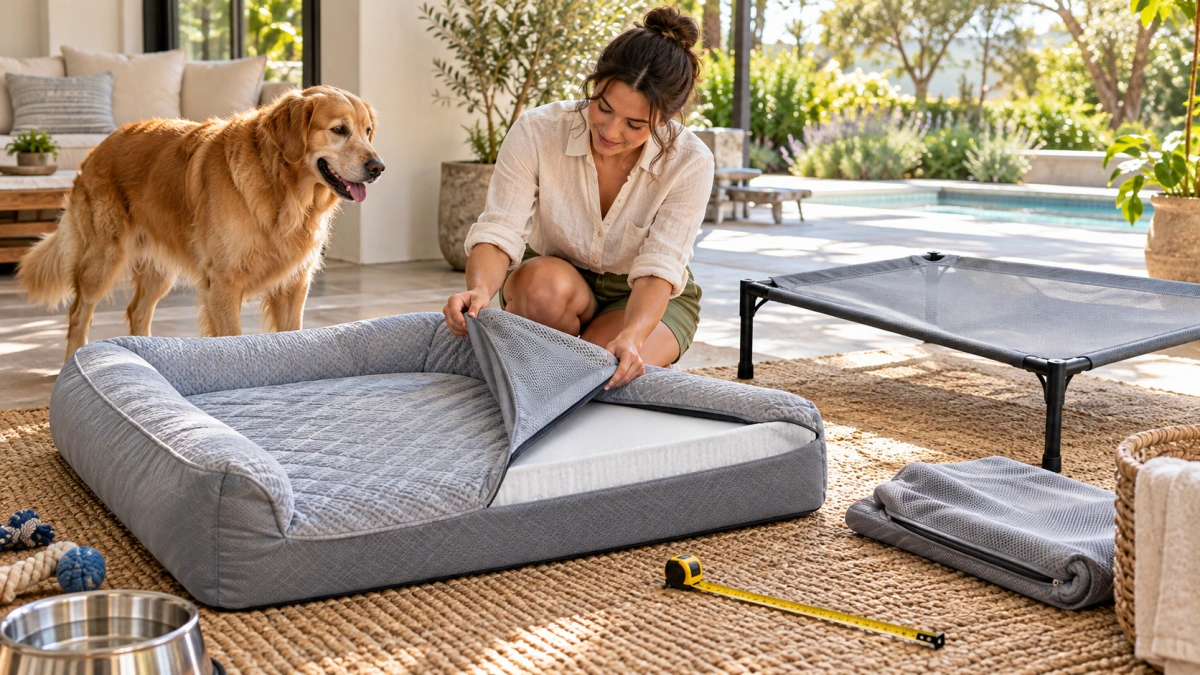
An elevated mesh bed may suit a dog that prefers airflow and a firmer surface, while a cooling foam bed may work better when your dog still wants cushioning. A thin cooling mat can also be useful when portability matters more than full-bed support.
Focus on usable sleeping size, cooling method, support, cleaning, and where you plan to place the bed. For large dogs, make sure the entire body fits comfortably rather than relying only on an XL label.
Most importantly, treat a cooling bed as one part of summer comfort—not as a substitute for shade, fresh water, an appropriately cool environment, and sensible heat management.