By
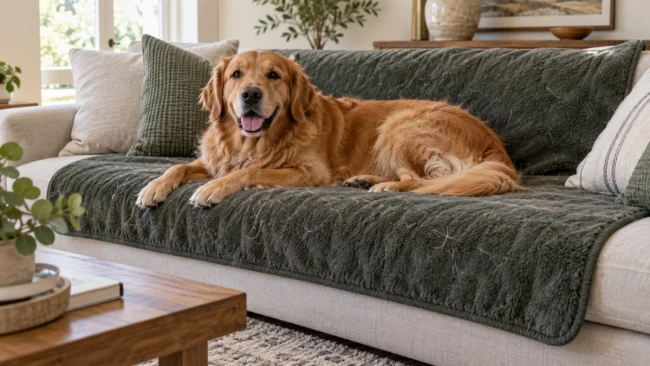
Dog blankets for couches can make sharing your sofa easier by creating a removable layer between your dog and the upholstery. The right blanket can collect loose hair, catch dirt from paws, handle drool, simplify cleanup, and give your dog a familiar place to settle.
But the best couch blanket depends on the mess you are actually trying to manage. A lightweight washable throw may be enough for fur. Damp paws may call for a more absorbent fabric. Repeated drool or occasional accidents may make a waterproof barrier more important.
Coverage matters just as much as material. A highly protective blanket does little good if your dog lies partly beyond it or if the blanket slides off the cushion every time your dog jumps onto the sofa.
For more help comparing pet blanket materials, sizes, seasonal options, and everyday uses, visit our Dog Blankets topic hub.
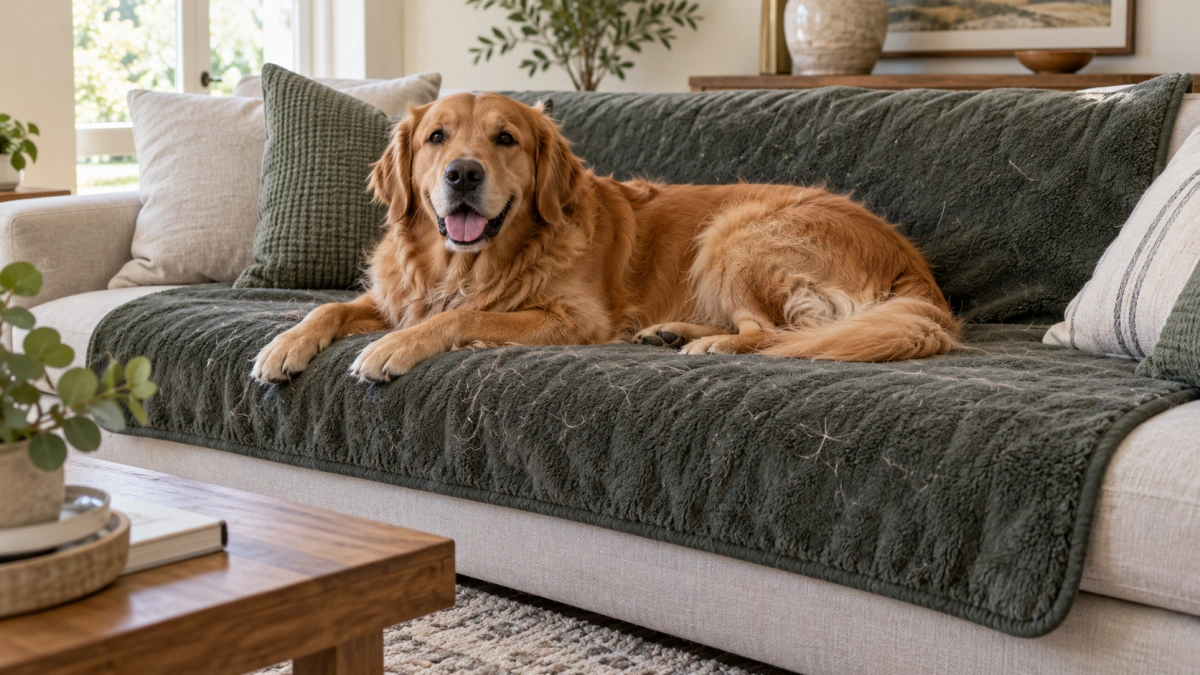
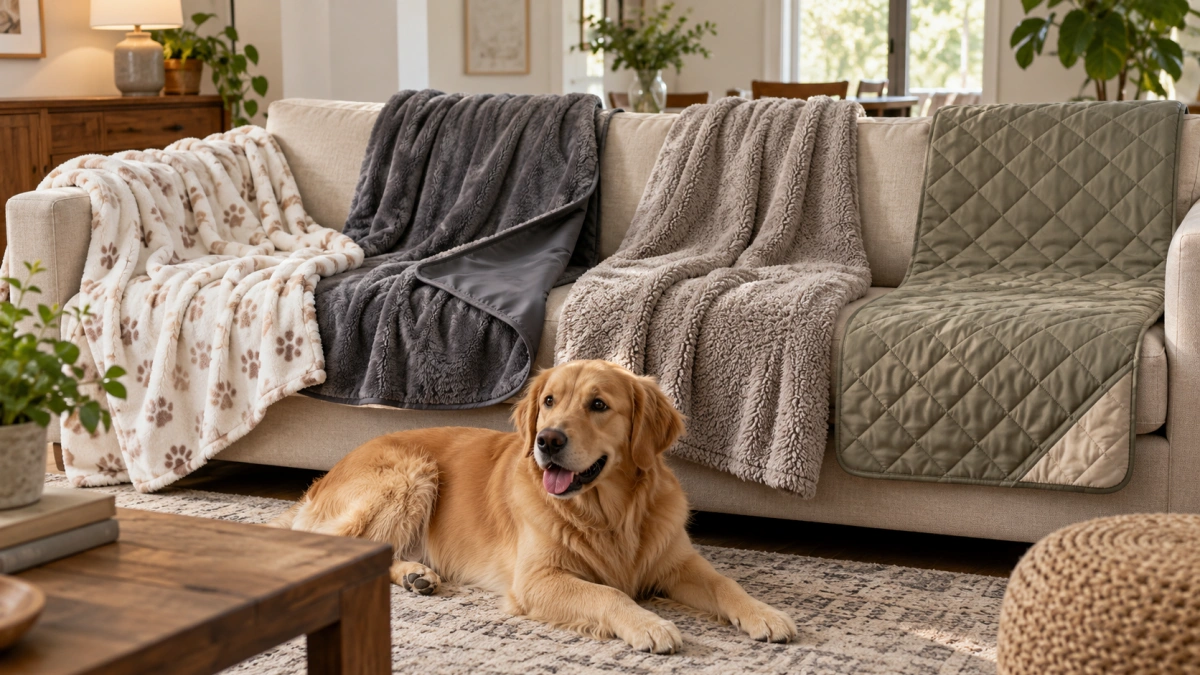
Quick Comparison: Which Couch Blanket Type Should You Choose?
Start with the problem, not the material name.
| Blanket Type | Best For | Main Advantage | Main Limitation |
|---|---|---|---|
| Lightweight washable throw | Hair, light dirt and everyday lounging | Easy to wash and dry | Little protection from liquid |
| Waterproof-backed blanket | Drool, damp paws and occasional accidents | Helps stop liquid reaching upholstery | Barrier layer may add weight or reduce flexibility |
| Absorbent microfiber blanket | Wet paws and damp coats | Pulls moisture into the textile | Can become heavy when wet |
| Quilted or heavier blanket | Active dogs and blankets that constantly shift | Tends to stay flatter | Bulkier in the washing machine |
| Non-slip backed blanket | Smooth furniture surfaces | Can reduce sliding | Backing care may be more restrictive |
There is no universal best choice. Match the blanket to your dog’s habits, your couch material, and the type of mess you deal with most often.
What Should a Dog Couch Blanket Protect Against?
Before shopping, identify the main problem.
Most households are trying to manage one or more of these:
- Loose dog hair
- Dander and everyday debris
- Dust
- Muddy paws
- Damp fur
- Drool
- Small spills
- Occasional urine accidents
- Surface wear from repeated use
Different problems require different construction.
A thin washable throw can be excellent for a heavy shedder if your only goal is keeping fur off the sofa.
That same blanket may be a poor choice for a puppy or senior dog if liquid protection is your main concern.
How Much of the Couch Should the Blanket Cover?
You do not necessarily need to cover the entire sofa.
The most practical approach is often to protect the area your dog actually uses.
Watch where your dog normally settles:
- One seat cushion
- Two adjacent cushions
- A corner
- The chaise
- The back cushions
- The armrest
- The entire couch
A dog that always sleeps in one corner may only need targeted coverage.
A large dog that stretches across several cushions needs a much larger protected zone.
If your dog frequently changes positions, choose enough coverage for the entire movement area rather than the dog’s body size alone.
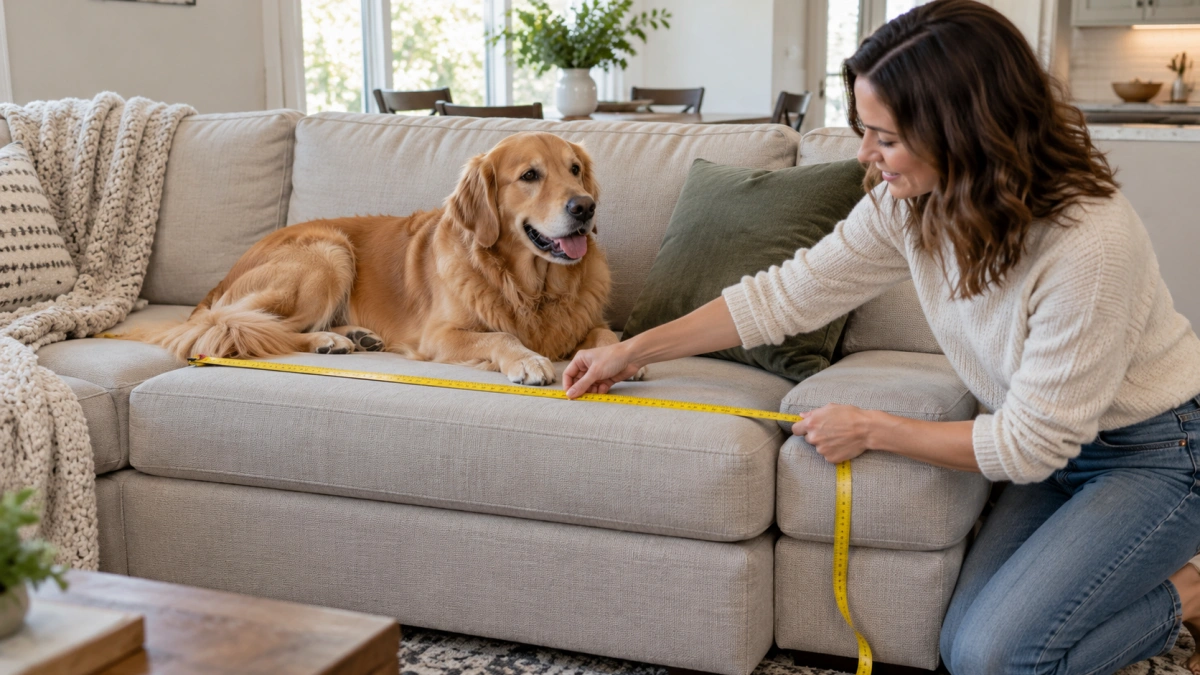
How to Measure Your Couch for a Dog Blanket
Ignore generic labels such as Small, Large, XL, or Sofa Size until you have measured your furniture.
Measure the actual area that needs protection.
1. Measure the Seat Width
Measure horizontally across every cushion your dog normally uses.
2. Measure the Seat Depth
Measure from the front edge of the seat toward the back cushion.
3. Add the Backrest if Needed
If your dog leans against or lies partly on the back cushions, include that area in your coverage calculation.
4. Add Armrest Coverage if Needed
Some dogs use the sofa arm as a pillow. If yours does, include enough fabric to protect it.
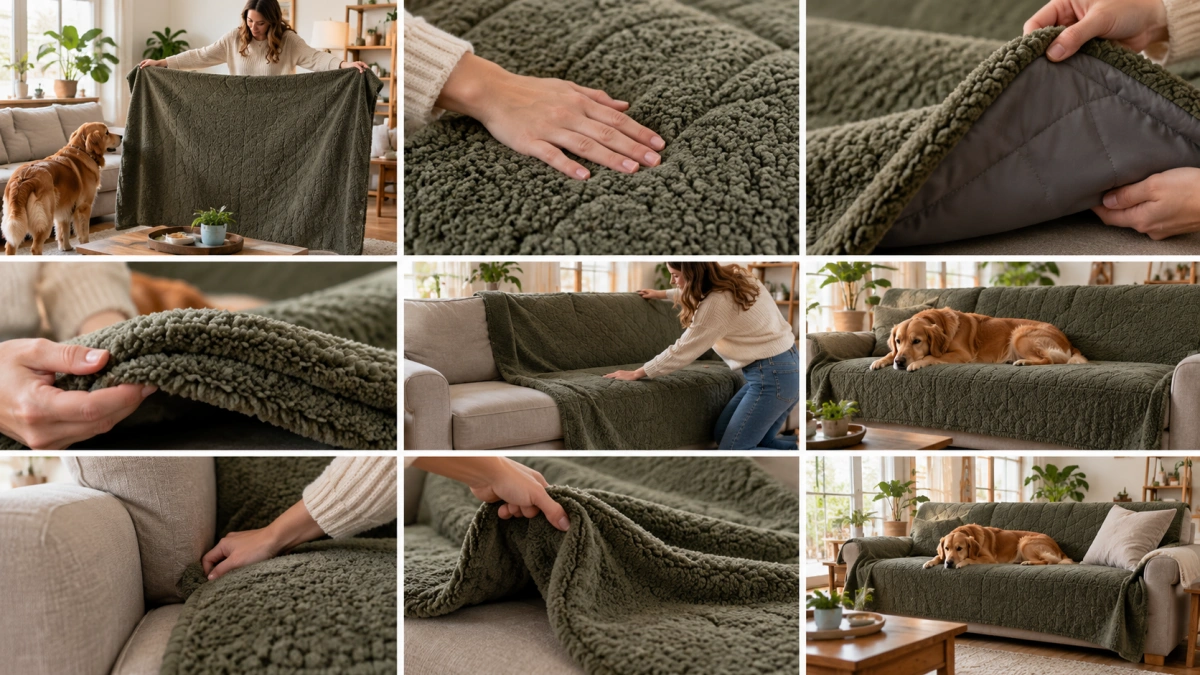
5. Allow Extra Fabric for Tucking
A blanket that exactly matches the visible seat dimensions may move easily because there is no fabric available to tuck between or behind cushions.
A modest amount of extra material can help anchor the blanket.
Avoid excessive overhang if it creates a trip hazard or becomes easy for your dog to pull onto the floor.
Seat-Only Coverage vs Full-Couch Coverage
Seat-Only Coverage
This works well when your dog stays primarily on the cushions.
Advantages include:
- Less fabric to wash
- Faster drying
- Easier removal before guests arrive
- Lower bulk
The limitation is obvious: unprotected back cushions and armrests can still collect hair and dirt.
Full-Couch Coverage
A larger blanket or furniture protector makes more sense when your dog uses multiple surfaces.
It provides broader protection but can:
- Shift more easily
- Require a larger washer
- Take longer to dry
- Be harder to reposition neatly
Choose according to how the couch is actually used rather than assuming maximum coverage is always better.
Waterproof vs Water-Resistant vs Absorbent
These terms describe different functions.
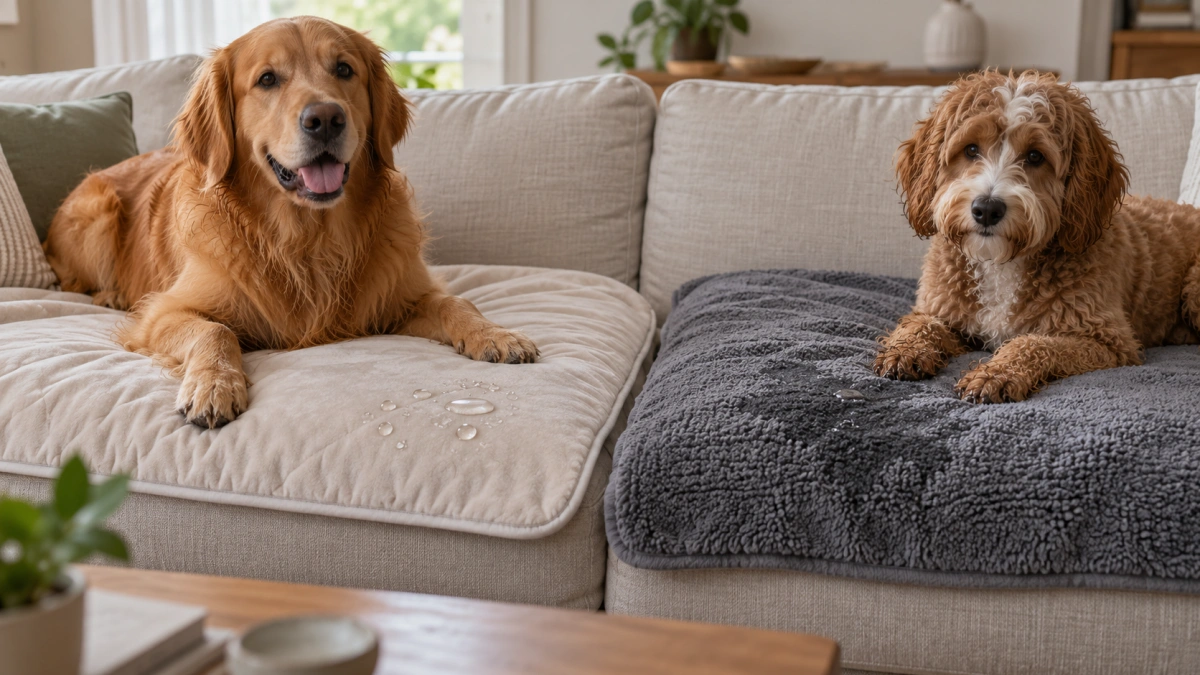
Waterproof
A genuinely waterproof couch blanket normally relies on an internal or backing barrier designed to prevent liquid from passing through to the upholstery.
This can be useful for:
- Urine accidents
- Heavy drool
- Damp dogs
- Small household spills
Water-Resistant
Water-resistant fabric can slow light moisture but should not automatically be expected to stop a larger or prolonged liquid exposure.
Read the manufacturer’s wording carefully rather than treating “water-resistant” and “waterproof” as identical.
Absorbent
An absorbent blanket works differently. It draws moisture into the textile rather than simply preventing it from passing through.
That can be useful for damp paws and wet coats, but an absorbent blanket without a barrier may eventually allow moisture to reach the sofa underneath.
For frequent liquid protection, look at the entire layer construction rather than just the softness of the top surface.
What Fabric Is Best for Dog Hair?
If shedding is your main concern, you want a fabric that releases hair reasonably easily during shaking, vacuuming, or washing.
Smooth or tightly woven surfaces can often be easier to clean than very deep fluffy piles where hairs become embedded.
However, texture also affects comfort and appearance.
A thick sherpa-style blanket may feel cozy but can hold more visible hair between washes.
A smoother microfiber or tightly woven polyester surface may be easier to maintain.
For households where fur management is the primary goal, fabric structure can matter more than waterproofing.
Does Blanket Color Matter With Dog Hair?
Yes, visually.
The blanket does not collect less hair because of its color, but contrast affects how quickly shedding becomes noticeable.
A white dog’s hair may stand out strongly on a dark navy blanket, while black hair can be obvious on cream fabric.
Choosing a tone reasonably close to your dog’s coat can make the couch look tidier between cleaning sessions.
That is a cosmetic decision rather than a cleaning solution, but it can make a noticeable difference in everyday appearance.
Leather Couch vs Fabric Couch
Your sofa material changes how a blanket behaves.
Leather and Faux Leather
Smooth upholstery provides less friction, so loose blankets may slide when a dog jumps up, turns around, or pushes against the cushions.
Helpful features can include:
- A heavier blanket
- A textured underside
- A suitable non-slip backing
- Enough extra material for secure tucking
Before using a rubberized or coated backing, check whether the blanket manufacturer and furniture manufacturer give any warnings about prolonged contact with the upholstery.
Woven Fabric Couches
Textured fabric upholstery often creates more friction than leather, which can help a blanket stay in position.
However, exposed upholstery can also hold dog hair more readily if the blanket shifts.
For a fabric sofa, accurate coverage and easy washing may be more important than an aggressive non-slip backing.
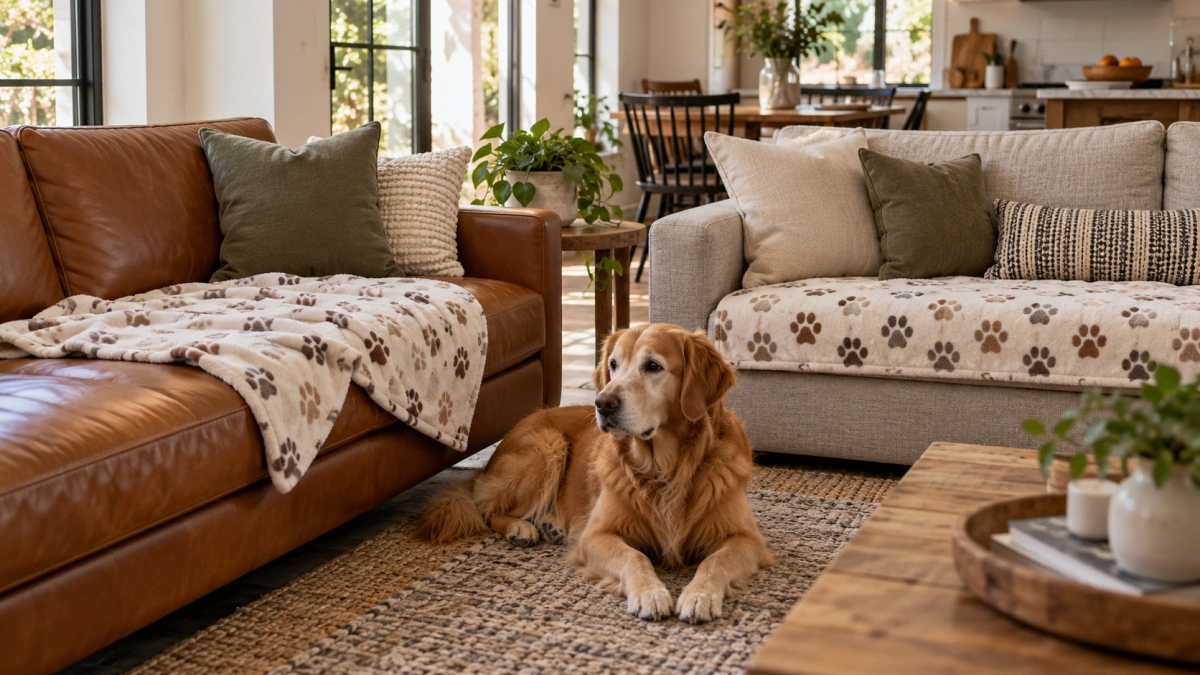
How Do You Stop a Dog Blanket From Sliding Off the Couch?
Sliding is one of the most common reasons an otherwise good blanket becomes frustrating.
Several factors affect stability:
- Blanket weight
- Backing texture
- Couch upholstery
- How much fabric is tucked behind cushions
- The dog’s size
- How energetically the dog jumps onto the sofa
- Whether the dog digs before lying down
Start with fit before adding accessories.
A blanket that is slightly larger than the target area can often be tucked into cushion gaps more securely than one that barely reaches the edges.
If your couch has removable cushions, positioning part of the blanket underneath or between cushions can also reduce movement.
Avoid setups that create hard clips, loose straps, or other items where your dog can become caught.
Is a Non-Slip Backing Always Better?
No.
A non-slip surface can help on smooth couches, but it adds another material layer that affects:
- Washability
- Drying
- Flexibility
- Durability
- Compatibility with upholstery
Some backing materials may eventually crack, peel, or lose grip after repeated washing.
Choose non-slip construction when you actually need it rather than treating it as a mandatory feature.
Dog Blankets for Sectional Couches
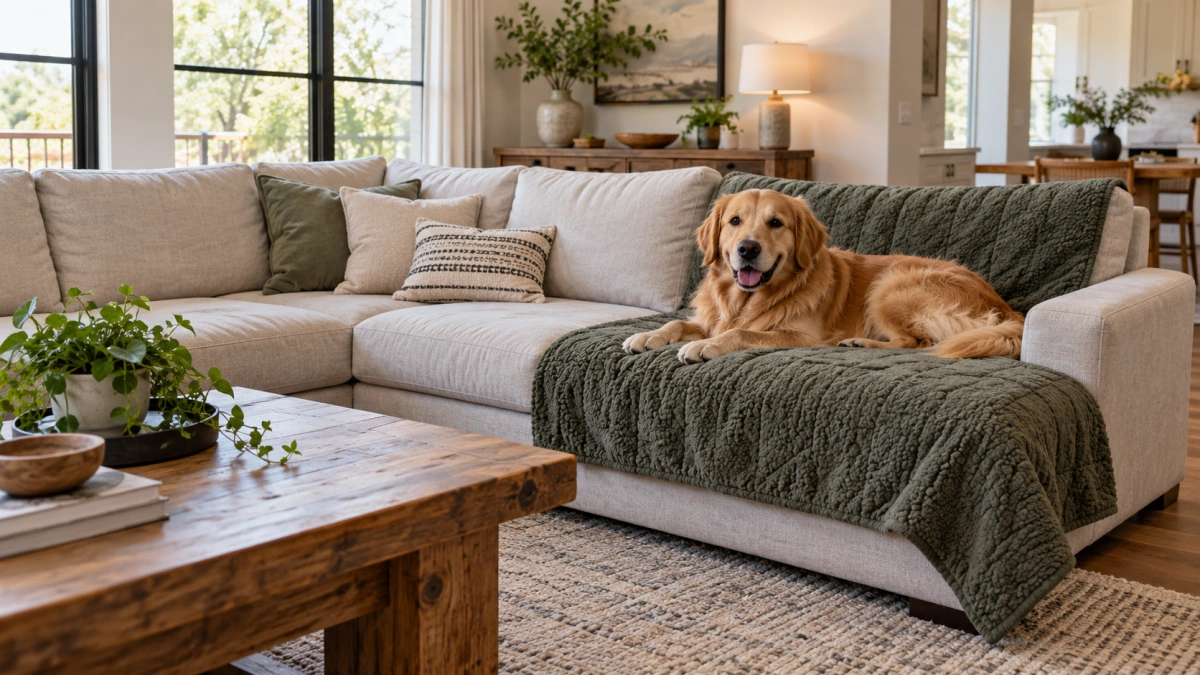
Sectionals create a different sizing problem because the dog may use a corner, chaise, multiple seats, or several disconnected areas.
Do not assume one rectangular throw must cover the entire sectional.
In many homes, a modular approach works better:
- One blanket for the chaise
- One blanket for the dog’s favorite corner
- Separate coverage for the back cushion if needed
This can make laundry easier because you wash the dirty section instead of one enormous blanket every time.
If your dog moves across the entire sectional, then larger coverage may still make sense.
What About Recliners and Moving Furniture?
Use extra caution with loose blankets on reclining sofas, recliners, sleeper sofas, and other furniture with moving mechanisms.
Fabric should not be allowed to enter hinges, tracks, footrest mechanisms, or other moving parts.
Before operating the furniture:
- Check where the blanket has shifted
- Make sure no fabric is caught
- Confirm your dog has moved away from the mechanism
A smaller targeted blanket may be easier to manage than an oversized throw on moving furniture.
Can a Dog Blanket Protect a Couch From Scratches?
A blanket can create a sacrificial fabric layer between paws and upholstery, but it should not be described as claw-proof protection.
A thicker quilted blanket may reduce direct contact from normal walking, turning, and nesting.
However, a dog that intentionally digs or scratches forcefully can move or damage the blanket and may still reach the upholstery underneath.
For scratch-related wear, consider:
- Keeping nails appropriately maintained
- Choosing a durable tightly constructed blanket
- Providing another comfortable resting area
- Addressing repeated digging behavior separately
Do not rely on a thin blanket to stop determined scratching.
Should the Blanket Be Thick or Lightweight?
Thickness should match the job.
Lightweight Blanket
Better when you prioritize:
- Easy washing
- Fast drying
- Hair collection
- Summer use
- Frequent removal
Heavier Blanket
Better when you prioritize:
- Stability
- Winter warmth
- Additional physical separation from upholstery
- Reduced bunching
The trade-off is laundry bulk.
A thick oversized blanket that barely fits your washer may become inconvenient enough that you stop cleaning it as often as needed.
Washability Matters More Than “Machine Washable”
“Machine washable” is useful, but it does not answer every laundry question.
Before buying, check:
- Recommended wash temperature
- Whether gentle cycle is required
- Whether bleach is allowed
- Whether fabric softener is restricted
- Whether tumble drying is permitted
- Recommended dryer temperature
- Whether the waterproof layer has special care requirements
Also ask a practical question:
Will the entire blanket actually fit comfortably in your washing machine?
An extra-large couch blanket may technically be washable but still be inconvenient in a compact household washer.
How to Wash a Dog Blanket Used on the Couch
Follow the manufacturer’s care instructions, particularly when the blanket includes a waterproof membrane, coated backing, or non-slip surface.
A practical routine is:
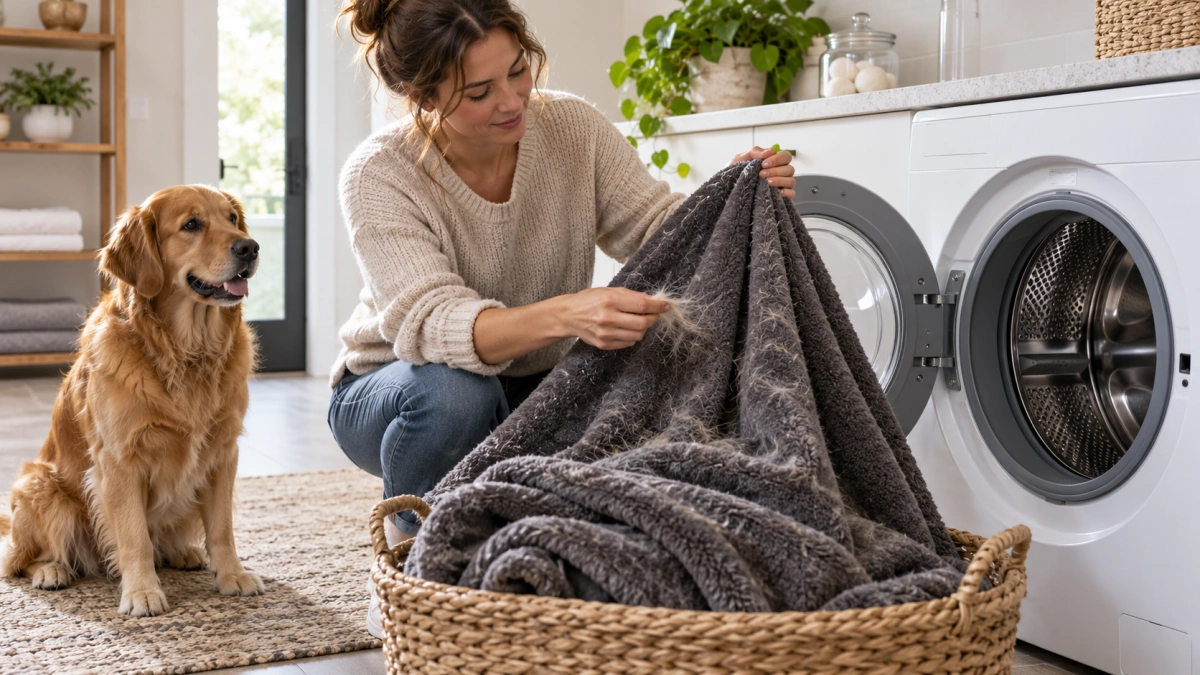
- Shake or vacuum off loose hair.
- Remove visible debris.
- Pre-treat appropriate stains according to the fabric instructions.
- Wash using the specified cycle and temperature.
- Dry according to the care label.
- Make sure the blanket is fully dry before returning it to the couch.
Removing excess hair before washing can also reduce how much pet hair enters your washer.
How Often Should You Wash a Couch Dog Blanket?
There is no universal schedule.
Wash frequency depends on:
- How often your dog uses the couch
- How much your dog sheds
- Whether the dog goes outdoors frequently
- Drooling
- Damp paws
- Skin oils
- Odor
- Accidents
Rather than following a fixed calendar, wash the blanket when hair, dirt, odor, or moisture buildup makes cleaning necessary.
If an accident occurs, deal with the affected blanket and upholstery promptly instead of waiting for the normal laundry routine.
Should You Buy Two Couch Blankets?
For households where the dog uses the sofa daily, having two similar blankets can be practical.
One can stay on the couch while the other is:
- In the washer
- Drying
- Waiting to be cleaned
This is particularly useful for:
- Heavy shedders
- Wet-weather households
- Puppies
- Senior dogs with occasional accidents
A backup blanket can be more useful than buying one highly complicated blanket that is difficult to wash and slow to dry.
Our 7-Point Couch Blanket Check
Use this seven-part framework to compare dog blankets for couches without relying only on product photos or “best” labels.
1. Coverage
Does the blanket protect every cushion, corner, armrest, or backrest your dog actually uses?
2. Mess Type
Are you mainly dealing with fur, dry dirt, wet paws, drool, or true liquid accidents?
3. Barrier
If liquid protection matters, is the product genuinely described as waterproof, or only water-resistant or absorbent?
4. Couch Grip
Will the blanket stay in place on your particular sofa material, or can you tuck it securely?
5. Fabric Surface
Is the surface comfortable for your dog while also being practical for hair removal and everyday cleaning?
6. Laundry Load
Can your household washer and dryer realistically handle the blanket at the frequency you expect to clean it?
7. Dog Behavior
Does your dog simply lie down, or does it dig, chew, drag, bunch, and rearrange blankets before resting?
The best couch blanket is the one that performs well across these seven factors in your home—not necessarily the thickest or most expensive option.
Dog Couch Blanket vs Fitted Couch Cover
A blanket-style protector and a fitted sofa cover solve slightly different problems.
| Feature | Dog Blanket | Fitted Couch Cover |
|---|---|---|
| Easy to remove | Excellent | More effort |
| Targeted coverage | Excellent | Usually full furniture |
| Fast washing | Usually easier | Depends on size |
| Stay-put fit | Varies | Often better |
| Works across different furniture | More flexible | Less flexible |
| Appearance | Throw-blanket look | More fitted appearance |
Choose a blanket when flexibility and easy laundry are priorities.
A fitted cover may make more sense if you want the entire sofa continuously protected and do not want to reposition a throw regularly.
Dog Blankets for Couches vs Dog Blankets for Beds
A couch blanket is chosen primarily around furniture coverage, grip, appearance, and protection from dog-related mess.
A dog blanket for a bed is selected more around mattress dimensions, nesting, sleeping comfort, and how the blanket works with the dog’s primary bedding.
The same blanket can sometimes work in both places, but the sizing decision is different.
When Do You Need a Waterproof Dog Blanket?
Not every couch needs one.
A standard washable blanket may be enough when you mainly want to manage:
- Hair
- Dust
- Light dirt
- Everyday dog contact
Waterproof construction becomes more useful when liquid is a realistic concern.
Examples include:
- A dog that frequently comes inside wet
- Heavy drooling
- A puppy still learning house habits
- A senior dog with occasional accidents
For a deeper comparison of barrier construction, see our guide to waterproof dog blankets.
Common Dog Couch Blanket Buying Mistakes
- Choosing by dog size instead of couch coverage
- Buying a blanket that only covers the center of the dog’s resting area
- Ignoring back cushions and armrests the dog uses
- Confusing waterproof with water-resistant
- Confusing absorbent fabric with a waterproof barrier
- Buying a very slippery throw for a leather couch
- Assuming every non-slip backing suits every upholstery material
- Choosing a blanket too large for the household washing machine
- Buying very deep plush when easy hair removal is the main goal
- Expecting a thin blanket to stop determined clawing
- Ignoring the dog’s digging and nesting behavior
- Using loose fabric around moving recliner mechanisms
- Choosing appearance while ignoring washing instructions
Dog Couch Blanket Buying Checklist
- What part of the couch does my dog actually use?
- What is the width and depth of that area?
- Do I need coverage for the backrest or arms?
- Do I need extra fabric for tucking?
- Is my main problem hair, dirt, moisture, drool, or accidents?
- Do I need waterproof, water-resistant, or absorbent construction?
- Will the blanket stay in place on my upholstery?
- Is the surface easy to remove dog hair from?
- Is the fabric durable enough for normal paw movement?
- Is the blanket machine washable?
- What drying method is required?
- Will the full blanket fit comfortably in my washer?
- Will a waterproof or non-slip backing require special care?
- Does my dog dig or bunch blankets?
- Is the blanket safe around any recliner or moving furniture mechanism?
- Would two smaller washable blankets be more practical than one oversized blanket?
Final Thoughts
The best dog blanket for your couch is not simply the softest, thickest, or most waterproof option.
Start with how your dog actually uses the furniture. Measure the real resting zone, decide whether you are mainly managing hair, dirt, moisture, or accidents, and then choose the fabric and backing that solve that specific problem.
For everyday shedding, a lightweight machine-washable throw may be all you need. For damp paws or drool, absorbency can become more useful. If protecting upholstery from liquid accidents is the priority, a genuine waterproof barrier deserves more attention.
Also consider the couch itself. A blanket that works beautifully on textured fabric may slide constantly on leather, while an oversized protector that covers an entire sectional may become impractical to wash.
The most useful couch blanket provides enough coverage, stays reasonably stable, suits your dog’s habits, and is easy enough to clean that you will actually keep using it.