By
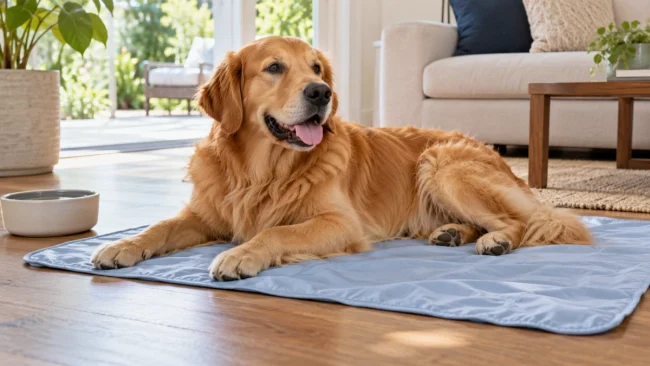
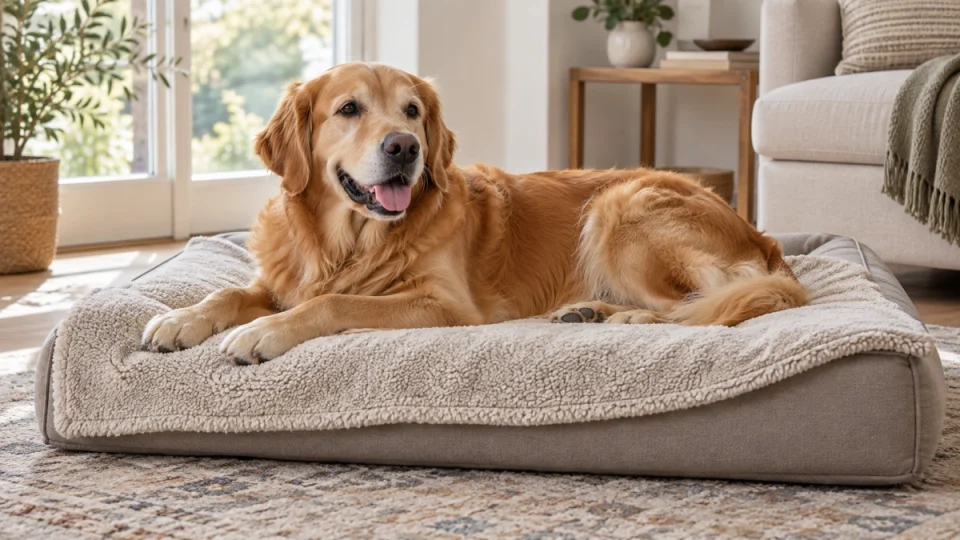
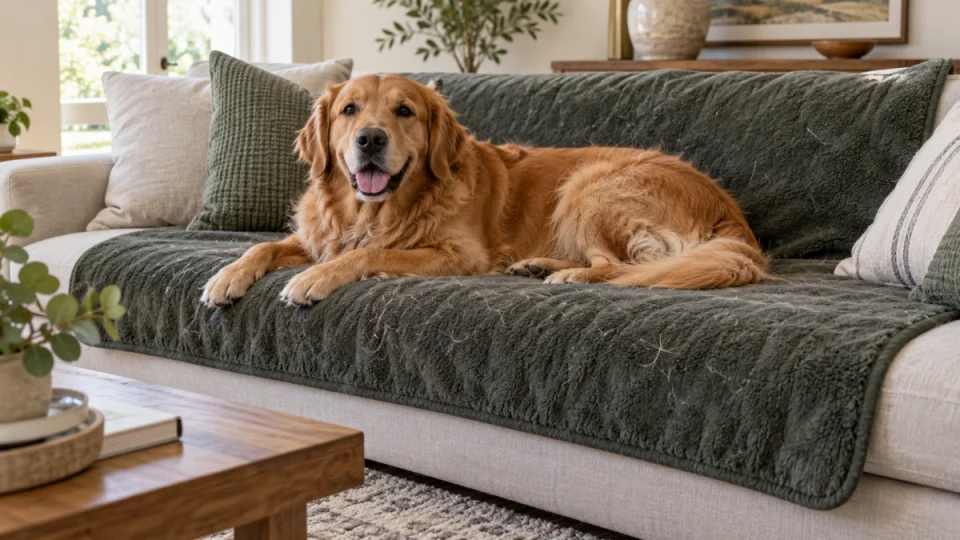
Cooling dog blankets give your dog a lighter resting surface when thick fleece, sherpa, faux fur, or heavily padded bedding feels too warm. They can be used over a dog bed, on a couch, inside an appropriate crate setup, or as a portable resting layer when you travel.
The difficult part is that “cooling” can describe several very different products. Some blankets simply use thin, breathable fabric. Others use a smooth cool-touch textile designed to move heat away quickly at first contact. Reversible models may combine a cooler-feeling face with a softer second side, while other products add moisture protection for furniture.
None of these designs should be confused with air conditioning or veterinary heat treatment. A cooling blanket can improve the feel of a resting surface, but your dog still needs an appropriately cool environment, fresh water, shade, and the ability to move away from the blanket whenever another surface feels better.
For more guides covering pet blanket sizes, materials, cleaning, and everyday uses, visit our Dog Blankets topic hub.
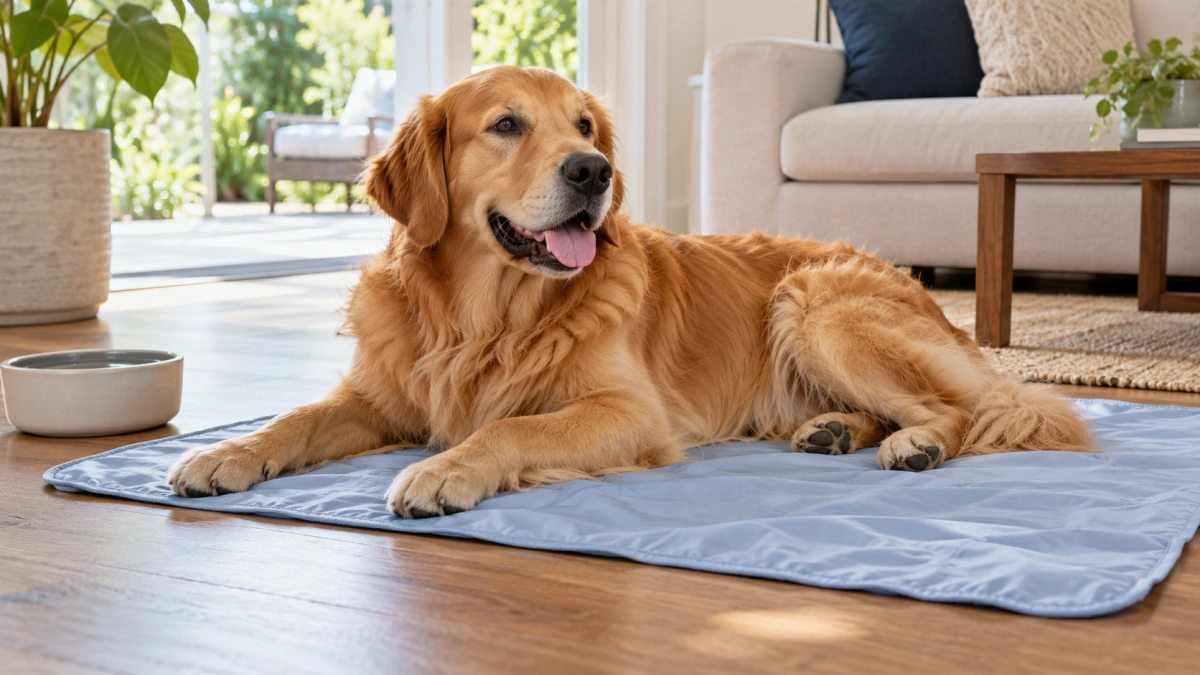
Quick Comparison: Which Cooling Dog Blanket Type Should You Choose?
Start by deciding what problem you actually want the blanket to solve.
| Blanket Type | Best For | Main Advantage | Main Limitation |
|---|---|---|---|
| Lightweight breathable blanket | Everyday indoor summer use | Thin, flexible and easy to wash | May not feel noticeably cold to the touch |
| Cool-touch fabric blanket | Dogs that prefer smooth cooler-feeling surfaces | Stronger first-contact cool sensation | Surface can warm during prolonged contact |
| Reversible cooling blanket | Changing seasons and mixed preferences | Two usable fabric surfaces | Second layer can add bulk |
| Protective cooling blanket | Couches, beds and furniture | Comfort plus surface protection | Protective backing may reduce breathability |
| Structured cooling mat | Dedicated floor resting area | More stable standalone surface | Less flexible and portable than a blanket |
If you mainly want a thin summer layer for a dog bed, a simple lightweight or cool-touch blanket is usually the most straightforward option.
If furniture protection matters just as much as warm-weather comfort, look more carefully at the backing and layer construction.
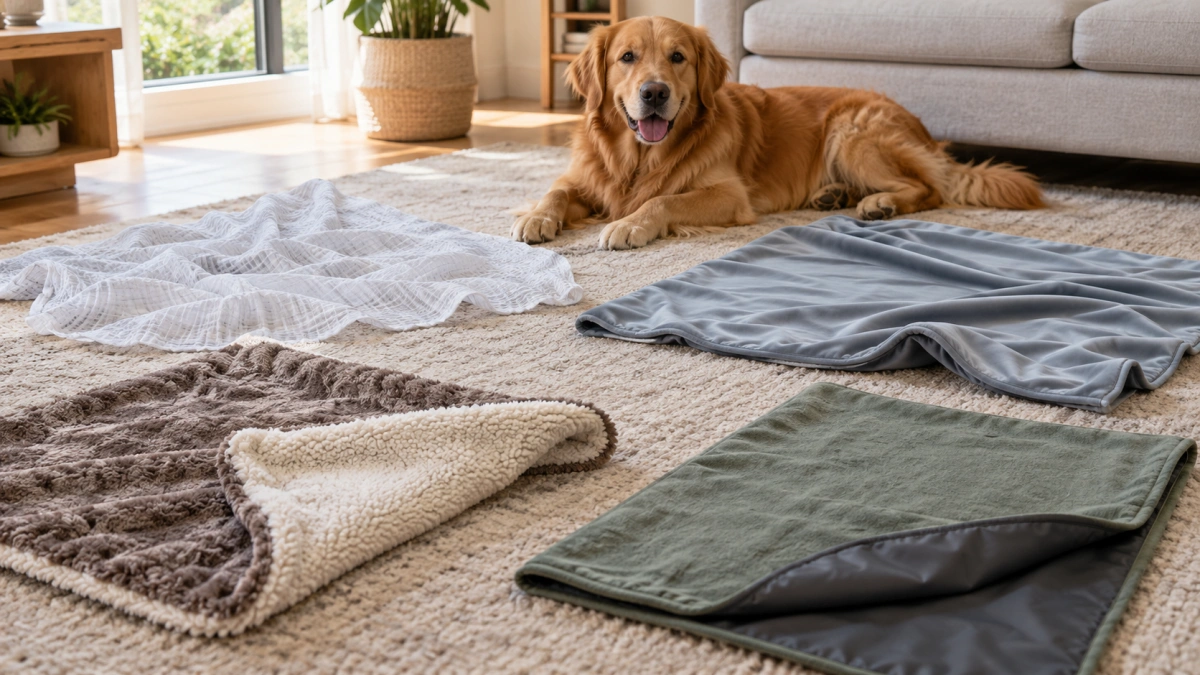
What Is a Cooling Dog Blanket?
A cooling dog blanket is a flexible fabric resting layer intended to feel less insulating than conventional warm bedding or to provide a cooler sensation when the dog’s body first contacts the textile.
Common designs include:
- Thin breathable summer blankets
- Smooth cool-touch textiles
- Reversible warm/cool blankets
- Lightweight bed toppers
- Furniture-protection blankets with cooling-oriented surfaces
The term is not standardized across every product, so two blankets both advertised as “cooling” may use very different materials and construction.
That is why the actual specification matters more than the marketing name.
How Do Cooling Dog Blankets Work?
Most fabric-only cooling blankets use passive rather than powered cooling.
They may feel more comfortable in warm conditions because they combine one or more of the following:
- Low fabric weight
- Minimal insulation
- A smooth surface
- Higher initial heat transfer at contact
- Air-permeable construction
- Fast-drying materials
A thin blanket may simply trap less warmth than fleece. A cool-touch textile may also move heat away from the contact surface more rapidly when the dog first lies down.
The important distinction is that passive fabric does not continuously refrigerate the dog. Once the fabric and body contact area move closer in temperature, the initial cool sensation may become less noticeable.
What Does qmax Mean on a Cooling Blanket?
You may see cooling textiles advertised with a qmax, Q-Max, or similar contact-cooling value.
qmax is used in textile testing to describe the peak heat flow that occurs when a warmer surface first contacts a cooler fabric. A higher value under the same test conditions generally indicates that heat moves into the fabric more rapidly at first contact, creating a stronger cool-touch sensation.
That makes qmax useful for understanding one specific question:
How cool does this textile feel at the moment of contact?
It does not answer every question about long-term comfort.
A qmax number by itself does not tell you:
- How breathable the complete blanket is
- How long the surface will feel cool
- How much filling the blanket contains
- Whether a waterproof backing traps warmth
- How the product performs after repeated washing
- Whether it changes a dog’s core body temperature
NC State’s Textile Protection and Comfort Center describes qmax as a measure related to the instantaneous warm or cool sensation at initial fabric contact.
So if a seller publishes a qmax number, treat it as a fabric-comparison metric rather than proof that the blanket can continuously cool your dog.

Should You Buy the Blanket With the Highest qmax?
Not necessarily.
First, values are most useful when the products were tested under comparable methods and conditions.
Second, the coolest first-touch fabric is not automatically the best complete dog blanket.
You still need to consider:
- Blanket thickness
- Breathability
- Durability
- Size
- Surface grip
- Washability
- Your dog’s texture preference
A high-performing cool-touch fabric wrapped around a bulky insulating layer may behave differently from the same fabric used as a thin single-layer blanket.
Cooling Dog Blanket vs Regular Dog Blanket
A traditional pet blanket often prioritizes warmth and softness. Fleece, sherpa, thick microfiber, faux fur, and plush fabrics can be useful in cold weather but may provide more insulation than your dog wants in summer.
A warm-weather blanket usually places greater emphasis on:
- Thin construction
- Lower loft
- Less trapped air
- Smoother fabric
- Faster drying
- Easier folding
Watch your dog rather than assuming one material is right year-round.
A dog that leaves a plush bed and lies on hardwood, tile, or another exposed surface during warmer weather may be telling you that its usual bedding feels too insulating.
What Materials Should You Look For?
There is no single fiber that automatically makes the best cooling dog blanket.
Many commercial products use nylon, polyester, or blended synthetic fabrics because these fibers can be engineered into thin, smooth, washable textiles.
Instead of choosing by fiber name alone, compare the complete fabric.
Surface Texture
A smooth surface can feel less insulating than a deep plush pile and may create stronger initial cool contact.
Fabric Weight
Lighter material generally creates less bulk around the resting area.
Breathability
Air-permeable construction can be useful when the goal is reducing heat buildup around bedding.
Drying Speed
A blanket used frequently during summer should be practical to wash and fully dry.
Layer Construction
Do not evaluate only the top fabric. A thick batting layer or waterproof backing changes how the complete blanket behaves.
Be Careful With “Self-Cooling” Claims
The phrase “self-cooling” can sound as if a blanket actively generates cold.
Many fabric products marketed this way actually rely on passive material properties. They may feel cooler at initial contact or trap less heat than conventional bedding, but they do not function like a powered refrigeration system.
Look for a clear explanation of the construction.
Useful product information is more specific than a large “COOLING” label. It may explain the fabric composition, test method, blanket thickness, reversible construction, washing instructions, or intended use.
Cooling Dog Blanket vs Cooling Mat
A cooling blanket and cooling mat can both provide a different resting surface during warm weather, but their structures solve different problems.
| Feature | Cooling Blanket | Cooling Mat |
|---|---|---|
| Flexibility | High | Usually lower |
| Can drape over furniture | Yes | Usually no |
| Travel packing | Easy | More bulky |
| Standalone support | Minimal | Often better |
| Bed topper use | Excellent | Depends on design |
| Washing | Often simple | Varies widely |
If your dog already has a supportive bed and you only want a lighter summer contact layer, a blanket can be more practical.
If you want a dedicated floor surface that stays flatter while the dog moves around, a structured mat may be the better format.
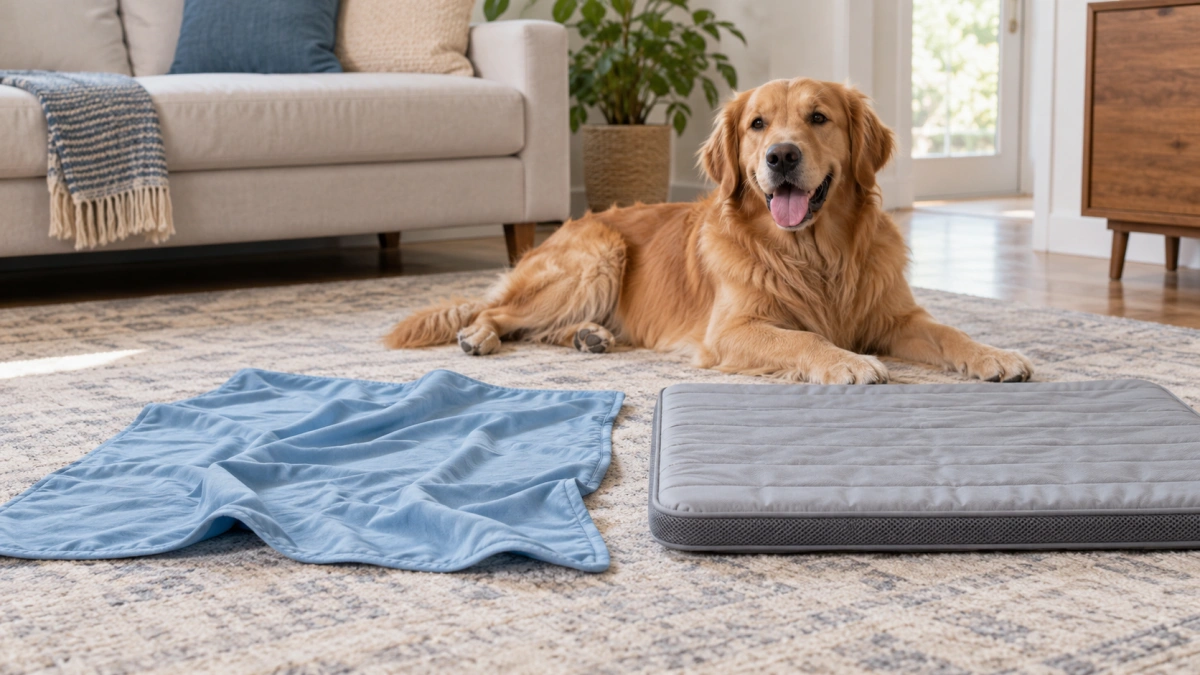
How to Choose the Right Cooling Dog Blanket Size
Do not choose only by the labels Small, Medium, Large, or XL.
Compare actual dimensions.
First decide how the blanket will be used:
- As the dog’s full resting surface
- As a topper over a dog bed
- As furniture coverage
- Inside a suitable crate setup
- As a portable travel blanket
If Your Dog Will Lie Directly on the Blanket
Measure the space your dog occupies while lying in its normal warm-weather position.
Dogs often stretch out more when they are warm, so a summer blanket may need more usable area than a small nesting blanket.
Choose enough space for your dog to:
- Fit the entire body on the surface
- Turn around
- Stretch the legs
- Shift onto a fresh section
If You Are Covering a Dog Bed
Measure the usable mattress surface rather than relying on the bed’s size label.
A blanket that closely covers the mattress is easier to keep flat than an undersized blanket that constantly shifts toward the center.
If You Are Covering Furniture
Measure the couch cushion or furniture zone you want to protect. In this situation, furniture dimensions may matter more than your dog’s body dimensions.
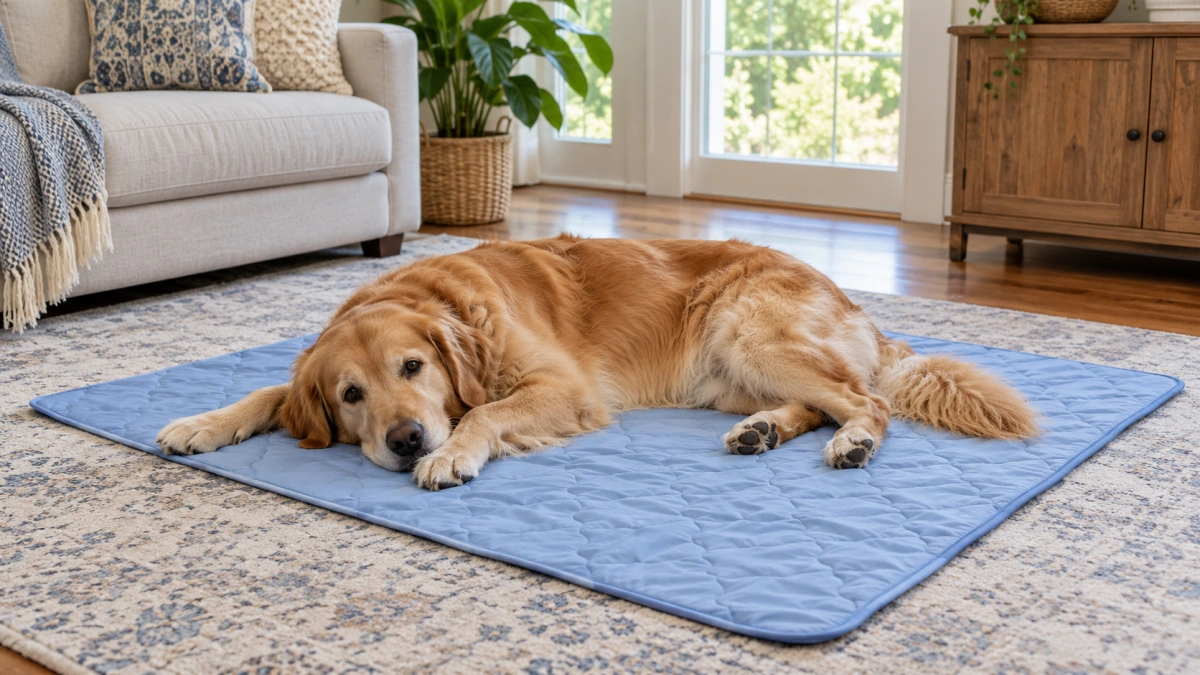
Cooling Blankets for Large Dogs
Large dogs require enough surface area to stretch without constantly sliding off the blanket.
Pay attention to:
- Actual length and width
- Whether the fabric bunches under a heavier body
- Stitch strength
- Whether the blanket stays flat
- How easy the larger size is to wash
A large blanket that becomes extremely heavy when wet may be inconvenient even if the dry dimensions look perfect.
Cooling Blankets for Small Dogs
A smaller dog may need less coverage, but do not automatically choose the smallest available size.
If your dog likes to change position, sprawl, dig, or rearrange bedding, a slightly larger blanket may be easier to use.
Avoid creating several folded layers just to make an oversized blanket fit a small bed. Multiple layers can add insulation and work against the reason you chose lightweight bedding in the first place.
Where Can You Use a Cooling Dog Blanket?
On a Dog Bed
This is one of the most practical uses.
Place the cooling blanket over a supportive mattress so the dog gets a lighter contact surface without losing the cushioning and support of the bed underneath.
A thin blanket should not be expected to replace an actual mattress when your dog needs supportive bedding.
On a Couch
Cooling blankets can also create a designated dog zone on furniture while collecting loose hair, light dirt, and drool.
If furniture protection is the main goal, compare coverage and backing construction carefully rather than buying only by cooling claims.
Inside a Crate
A lightweight blanket can be used in an appropriate crate setup if your dog safely uses fabric bedding.
Avoid loose, heavily bunched material around dogs that chew, shred, or ingest textiles.
During Travel
A foldable blanket can create a familiar resting surface away from home.
It should never be treated as protection against a dangerously hot vehicle. A parked vehicle can become unsafe quickly, and warm-weather travel still requires proper temperature management.
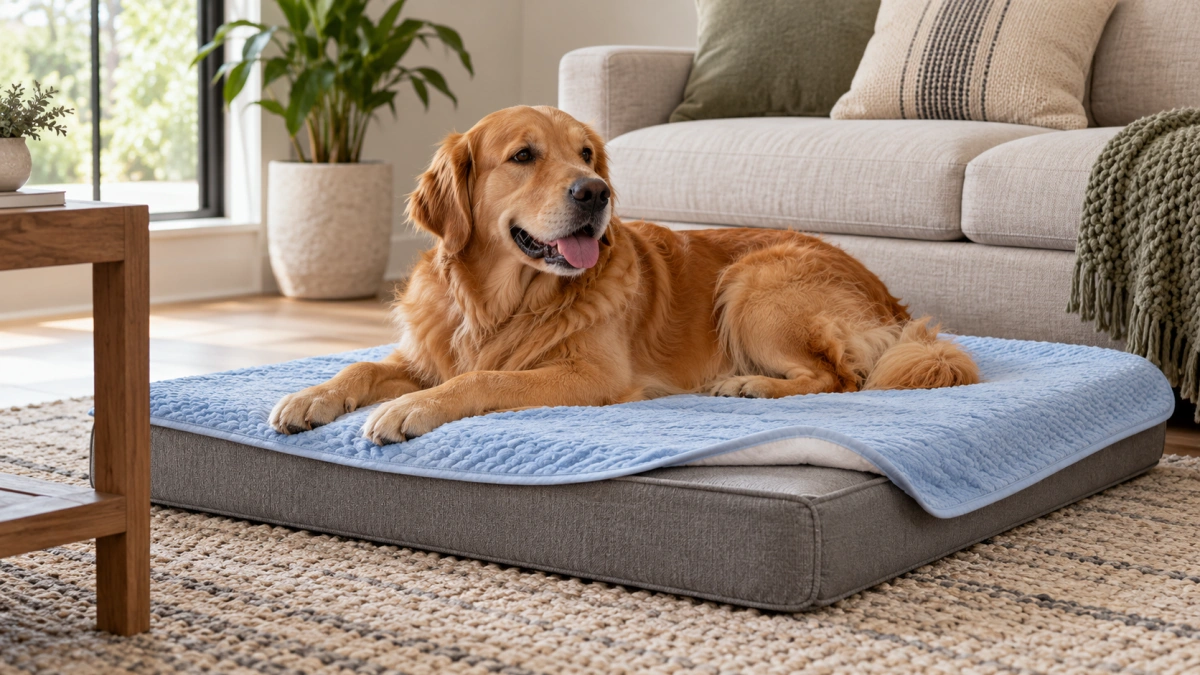
Should a Cooling Blanket Go Under or Over Your Dog?
For most simple fabric cooling blankets, the clearest use is as a surface your dog can lie on and leave voluntarily.
This lets your dog choose between the blanket and another resting location.
Some products may also be marketed for light covering, but avoid tightly wrapping a dog during hot weather.
Your goal is not to trap the dog inside the fabric.
Always follow the instructions for the particular product and make sure your dog can move away freely.
Can You Put a Cooling Dog Blanket in the Refrigerator or Freezer?
Only if the manufacturer specifically states that the product is designed for that use.
A normal cooling textile is not automatically a freezer product.
The fabric may already be designed to provide a cool-touch sensation at ordinary room temperature.
Do not improvise extreme cold exposure in an attempt to make a passive blanket “work better.”
Can a Cooling Blanket Prevent Heatstroke?
No blanket should be treated as a heatstroke-prevention guarantee or a treatment for dangerous overheating.
Dogs primarily dissipate body heat through panting, and all dogs can become overheated in sufficiently hot or humid conditions.
Cornell University College of Veterinary Medicine identifies short-muzzled dogs, older dogs, overweight dogs, dogs with thick or dark coats, and dogs with certain heart or breathing problems among groups that may face increased heatstroke risk.
The American Veterinary Medical Association also emphasizes access to fresh water and shade, avoiding the hottest periods for exercise, and never leaving pets in parked vehicles.
A cooling blanket can be a comfort accessory within a safe environment. It cannot make an unsafe hot environment safe.
What Signs of Overheating Should Owners Watch For?
Do not judge your dog’s heat status by whether the blanket still feels cool.
Watch the dog itself.
Warning signs can include:
- Unusually heavy or persistent panting
- Excessive drooling
- Restlessness
- Weakness
- Unsteadiness
- Vomiting
- Confusion
- Collapse
If your dog appears to be overheating, move it to a cooler environment and seek veterinary guidance. Severe or progressing signs can be a medical emergency.
What If the Blanket Stops Feeling Cool?
A passive cool-touch textile can warm during prolonged contact.
That is not surprising: the initial cooling sensation depends partly on heat moving from the warmer body into the cooler textile.
Your dog may:
- Move to another part of the blanket
- Change position
- Move onto the floor
- Choose another bed
Allow that choice.
A useful cooling setup gives the dog several comfortable temperature options rather than trying to keep it on one surface continuously.
How to Wash and Maintain a Cooling Dog Blanket
Washability is especially important because blankets collect fur, skin oils, dirt, drool, and debris.
Before washing, check the manufacturer’s care instructions.
Important questions include:
- Is machine washing allowed?
- What water temperature is recommended?
- Can the blanket be tumble dried?
- Should fabric softener be avoided?
- Can high heat damage the cooling surface?
- Does the blanket need to air dry?
A cooling textile may require different care from a basic cotton or fleece throw.
Also inspect the blanket after repeated washing.
Check for:
- Loose seams
- Fraying edges
- Pilling
- Separated layers
- Damaged backing
- Changes in surface texture

Are Waterproof Cooling Dog Blankets a Good Idea?
They can be useful when you need both furniture protection and warm-weather comfort, but waterproof construction adds another layer to evaluate.
A moisture barrier can help protect:
- Couches
- Human beds
- Dog beds
- Vehicle upholstery
However, a less permeable backing may change airflow and overall heat retention.
If cooling is your first priority, compare the complete layer construction rather than assuming that adding more functions always makes a better summer blanket.
Our 6-Point Cooling Blanket Check
Use this six-part check to compare products without relying only on marketing language.
1. Cooling Method
Does the manufacturer explain whether the product is simply lightweight, uses a cool-touch textile, publishes a contact-cooling test, or uses another design?
2. Full Construction
Look beyond the top fabric. Check whether the blanket contains batting, plush layers, waterproof membranes, or other materials that change heat retention.
3. Usable Size
Make sure your dog can actually fit on the blanket in its normal warm-weather sleeping position.
4. Washability
Choose a care routine you can realistically follow. A summer blanket that is difficult to wash may quickly become impractical.
5. Stability and Durability
Check seams, edges, backing, and how easily the blanket slides or bunches when the dog turns or digs.
6. Freedom to Move
Your dog should always have the option to leave the blanket and choose another surface.
A product that performs well across these six areas is more useful than one that simply carries the strongest cooling claim.
Cooling Dog Blankets vs Heated and Warm Dog Blankets
These products solve opposite seasonal problems.
A cooling blanket aims to reduce unnecessary insulation or create a cooler-feeling contact surface during warm conditions.
A heated or warm dog blanket is intended for situations where additional warmth is useful.
Some dogs may need different bedding at different times of year.
Do not try to make one blanket solve every temperature situation.
Common Cooling Dog Blanket Buying Mistakes
- Assuming every product labeled “cooling” works the same way
- Buying by marketing claims instead of construction
- Comparing qmax numbers tested under unknown or different conditions
- Assuming a high qmax means all-day cooling
- Ignoring the blanket’s complete layer structure
- Choosing a size based only on Small, Medium or Large labels
- Buying a blanket too small for a stretched sleeping position
- Choosing waterproof backing without considering breathability
- Ignoring washing instructions
- Folding a lightweight blanket into several insulating layers
- Using damaged fabric around a dog that chews textiles
- Expecting the blanket to compensate for an excessively hot room
- Treating a cooling blanket as a heatstroke prevention device
Cooling Dog Blanket Buying Checklist
- How does the product say it creates a cooler feel?
- Is the blanket genuinely lightweight?
- What is the complete layer construction?
- Does it publish a meaningful cool-touch test such as qmax?
- If a qmax value is listed, is the test method identified?
- What are the actual length and width?
- Can my dog lie fully on the surface?
- Will it cover the intended dog bed or furniture area?
- Is the blanket machine washable?
- What drying method is required?
- Are the seams and edges durable?
- Does it bunch or slide easily?
- Is there a waterproof layer, and do I actually need one?
- Can my dog move away from the blanket whenever it wants?
- Am I using the blanket as comfort bedding rather than relying on it for heat safety?
Final Thoughts
Cooling dog blankets can be useful when your dog prefers a lighter resting surface during warm weather, but the word “cooling” is only the beginning of the buying decision.
Look at how the product actually works. A thin breathable blanket, a smooth cool-touch textile, a reversible blanket, and a waterproof-backed furniture cover can all behave differently even when they appear under the same cooling category.
If a product publishes qmax or another contact-cooling measurement, remember that this primarily describes initial fabric sensation rather than guaranteed long-duration cooling or a reduction in body temperature.
The strongest choice combines a suitable cooling method with enough usable space, practical washability, durable construction, and a design that works in the place you actually plan to use it.
Most importantly, give your dog choices. A summer blanket can improve comfort, but safe warm-weather care still depends on appropriate environmental temperature, water, shade, sensible activity, and recognizing signs that your dog is becoming too hot.