By
By 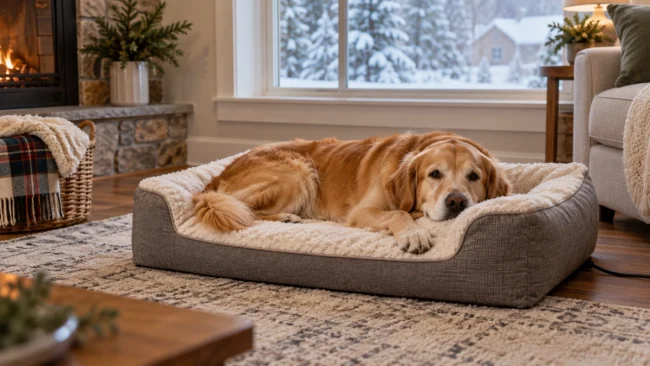
Heated dog beds can give your dog a warmer place to rest during cold weather, but not every warm bed works the same way. Some use electricity to produce gentle heat, while self-warming dog beds rely on insulating or heat-reflective materials and your dog’s own body warmth.
The right choice depends on your dog’s size, sleeping habits, coat, environment, and ability to move away from the warm surface whenever it wants. With electric designs, safety features, cord placement, temperature control, and manufacturer instructions matter just as much as softness.
Before buying, look at the complete sleeping setup rather than choosing the bed with the highest temperature setting. Your dog still needs enough sleeping space, appropriate cushioning, washable components, and a safe way to leave the heated area.
You can also explore our complete Dog Beds hub for more guides about sizing, materials, seasonal comfort, and different dog bed styles.
What Is a Heated Dog Bed?
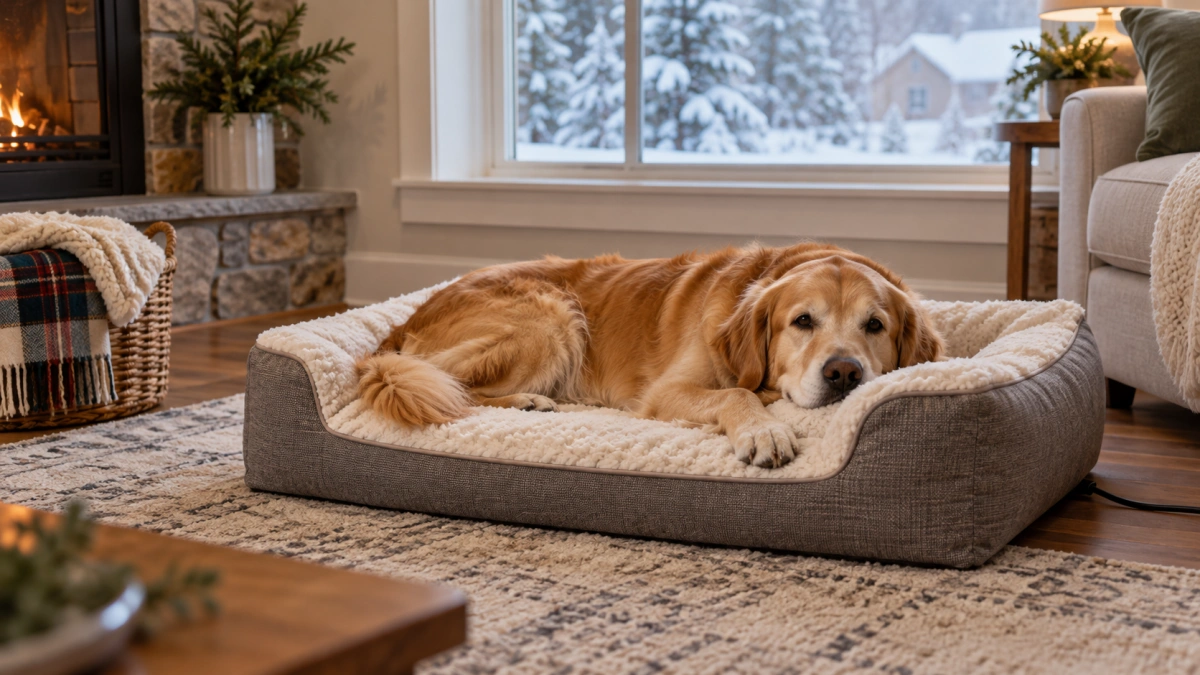
A heated dog bed is a pet sleeping surface designed to provide more warmth than a standard dog bed.
The two main categories are:
- Electric heated dog beds that use a powered heating element
- Self-warming dog beds that retain or reflect some of your dog’s own body heat
Some products are complete beds with cushioning and covers, while others are thin pet heating pads intended to be used with an existing sleeping setup.
That distinction matters because heating is only one part of comfort. Your dog still needs enough room to lie down, turn around, change positions, and leave the warm surface easily.
Electric vs Self-Warming Dog Beds
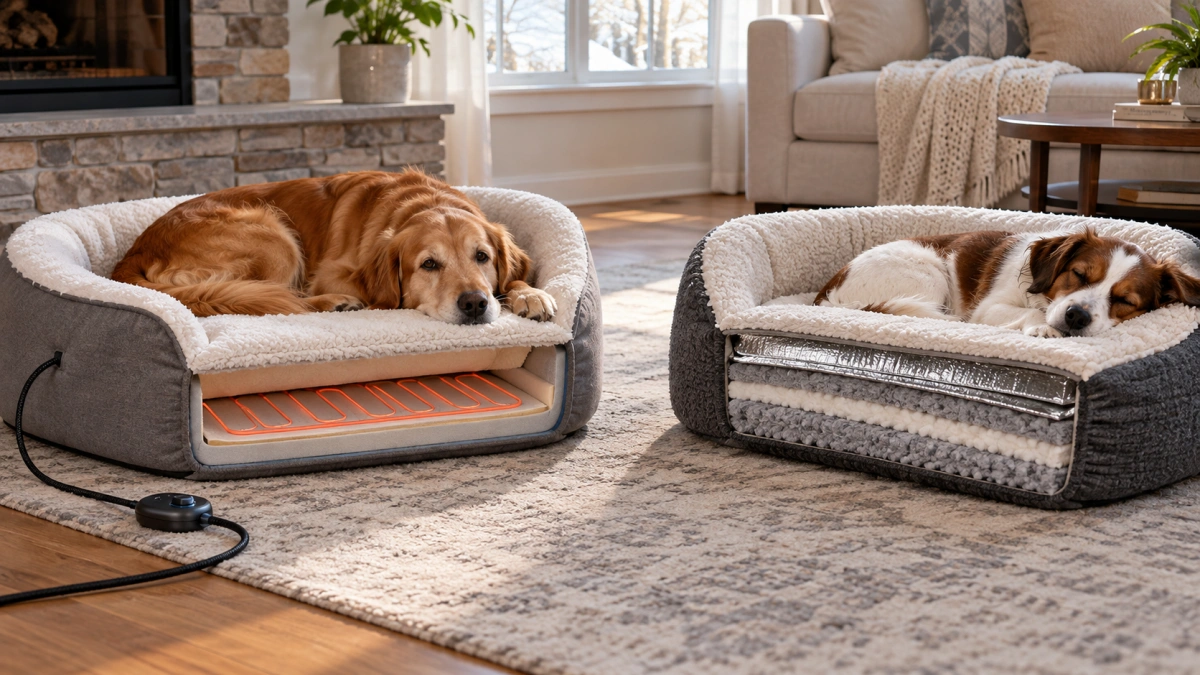
Electric and self-warming beds may both feel warmer than ordinary bedding, but they work in very different ways.
| Feature | Electric Heated Bed | Self-Warming Bed |
|---|---|---|
| Heat source | Powered heating element | Your dog’s body heat |
| Electrical cord | Usually required | None |
| Active heat | Yes | No |
| Portability | Depends on outlet access | Usually easier to move |
| Main safety focus | Heat, cord and electrical use | Fit, materials and normal bedding safety |
An electric model may make sense when you specifically want an active source of warmth. A self-warming bed may suit your home better if you want a cord-free option that simply helps retain some of the warmth your dog already produces.
Heated Dog Bed vs Pet Heating Pad
A complete heated dog bed includes both the sleeping surface and the warming system. A pet heating pad is usually thinner and may be designed to sit inside or underneath another pet bed, depending on the product instructions.
A complete bed may be more practical when you need:
- A new primary sleeping area
- Cushioning and warmth in one product
- A fitted washable cover
- A heating element designed for that specific bed
A pet warming pad may be more useful when your dog already has a suitable bed and the manufacturer specifically allows the pad to be used with that setup.
Do not assume that any household heating pad can be placed inside your dog’s bed. Use products specifically designed for pets and follow the product instructions for placement and operation.
How Self-Warming Dog Beds Work
Self-warming dog beds do not plug into an outlet and do not generate heat electrically.
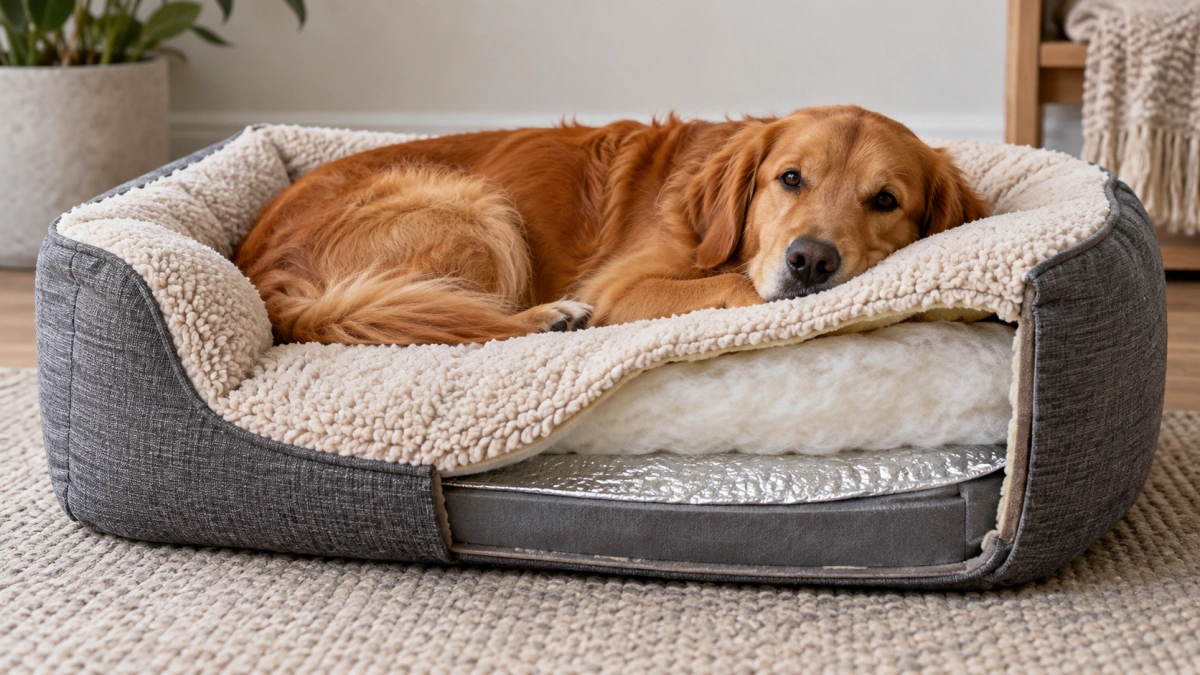
Instead, they typically use insulating and heat-reflective layers that help retain some of the warmth produced by your dog’s own body.
A typical construction may include:
- A soft outer sleeping fabric
- Cushioning or insulation
- A reflective internal layer
- A non-slip or fabric base
Because there is no powered heating element, self-warming beds are fundamentally different from electric heated beds.
They can add a warmer-feeling sleeping surface, but they should not be treated as an active heater for a very cold environment.
Are Heated Dog Beds Safe?
Pet-specific heated dog beds can be used safely when the product is appropriate for your dog and you follow the manufacturer’s instructions, but an electric heated bed still requires more attention than ordinary bedding.
Before using one, consider:
- Whether the product is specifically designed for pets
- Whether your dog can move away from the heated area
- Whether the cord is protected and out of easy chewing reach
- Whether the bed has appropriate temperature controls
- Whether the product is being used in its intended indoor or outdoor environment
- Whether your dog can change position easily
Extra caution is appropriate for puppies, dogs that chew cords, and dogs that have difficulty standing, turning, or leaving the bed independently.
If your dog has a medical condition, reduced mobility, or difficulty regulating body temperature, ask your veterinarian whether a heated sleeping surface is appropriate before relying on one regularly.
Why You Should Use Pet-Specific Heating Products
A human heating pad or electric blanket is not automatically an appropriate substitute for a heated pet bed.
Pet-specific products are designed around their intended animal use, while household heating products may have different temperature ranges, surfaces, controls, and safety assumptions.
Avoid improvising by placing an ordinary human heating pad under your dog simply because it feels comfortable to you.
Instead, choose a product specifically intended for pets and use it only in the way described by its manufacturer.
Make Sure Your Dog Can Move Away From the Heat
Your dog should always have the option to leave the warm surface.
This becomes especially important if the heated bed is placed inside a crate, pen, or other limited space.
Do not fill the entire available resting area with heat if doing so leaves your dog nowhere cooler to move.
A practical setup gives your dog access to:
- The heated resting area
- A nearby unheated surface
- Enough room to stand and reposition
- An unobstructed route away from the bed
Your dog’s behavior is useful feedback. If your dog repeatedly leaves the warm bed, avoid assuming that more heat is needed.
Cord, Timer and Temperature Safety
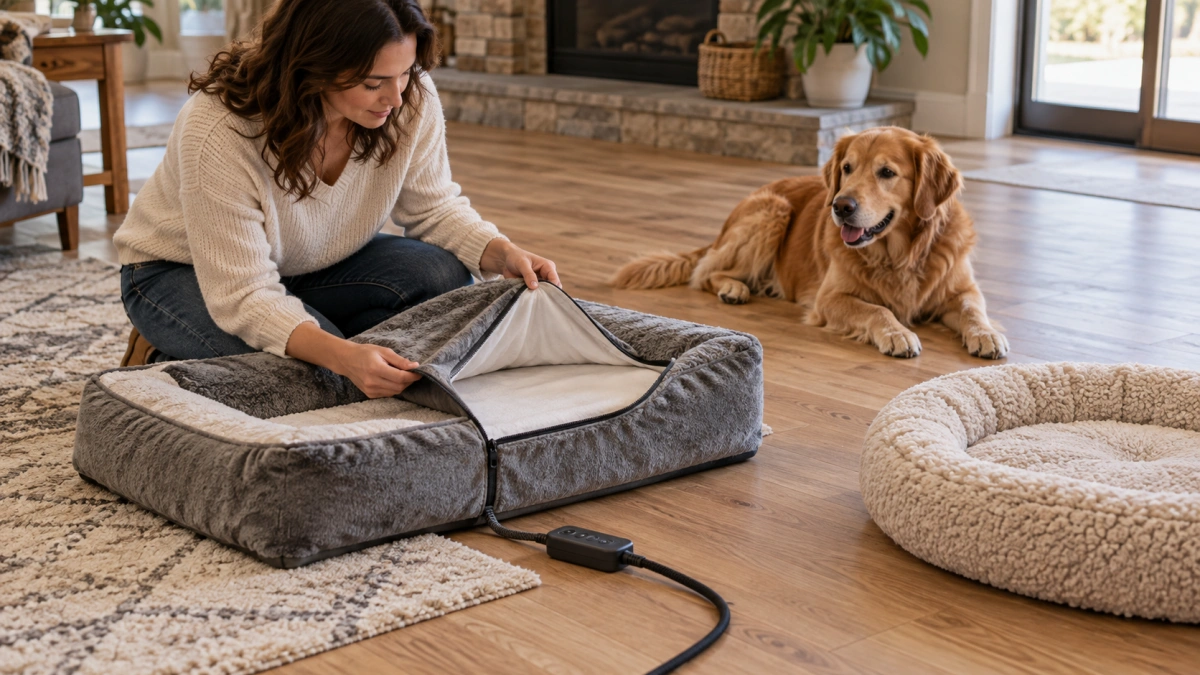
With an electric heated dog bed, inspect the electrical setup as carefully as the mattress.
Look for:
- A protected or chew-resistant cord design
- A cord route your dog cannot easily reach
- A stable electrical connection
- Temperature control appropriate to the product
- A timer or automatic shutoff when included
- A stable non-slip bed base
Keep the cord away from areas where your dog regularly chews, digs, or scratches.
You should also inspect the bed and cord periodically. Stop using the product if you notice damaged wiring, exposed components, unusual heat, or other signs that the bed is no longer in good condition.
Higher temperature settings are not automatically better. A heated pet bed should provide gentle warmth rather than feel excessively hot.
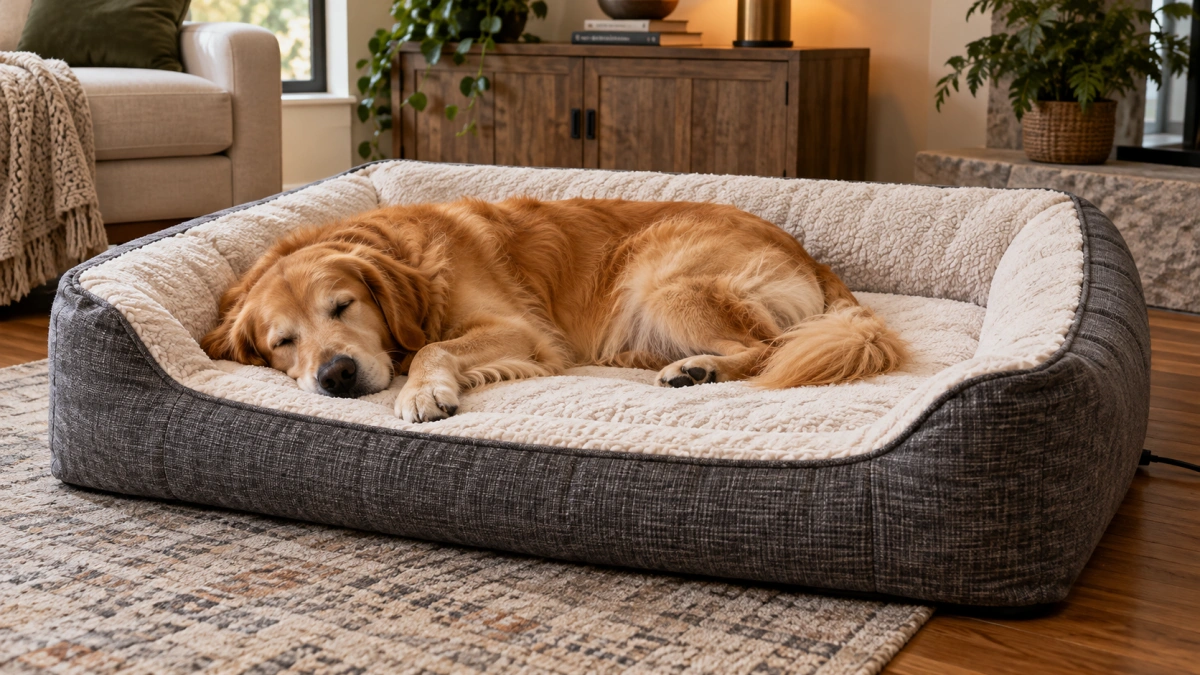
Heated Dog Beds for Large Dogs
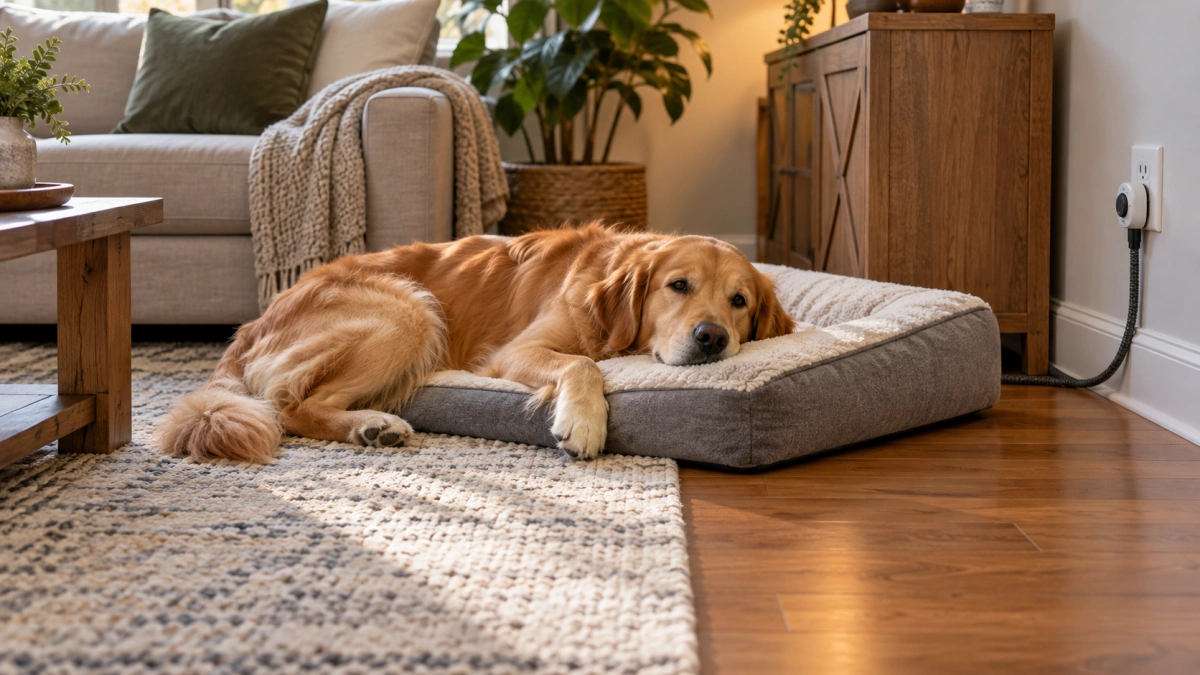
A heated dog bed for a large dog needs enough room for the dog to rest without hanging substantially beyond the sleeping area.
Check:
- Total bed length and width
- Usable sleeping dimensions
- Heated area dimensions
- Published weight guidance
- Cushion or foam thickness
- How easily your dog can leave the bed
The heated section may not always cover the entire outer dimensions of the bed, so compare both measurements when the manufacturer provides them.
If your dog normally sleeps fully stretched, choose enough space for that position rather than relying only on a Large or XL product label.
Heated Dog Beds for Small Dogs
Small dogs can also use warm sleeping spaces, but the smallest available bed is not automatically the right size.
Your dog still needs enough room to:
- Lie comfortably
- Turn around
- Change sleeping positions
- Move toward a cooler part of the setup
Avoid choosing such a tight heated sleeping area that your dog is surrounded by warmth with little ability to reposition.
If your dog curls tightly, a smaller bed may feel comfortable, but make sure that fit does not prevent normal movement.
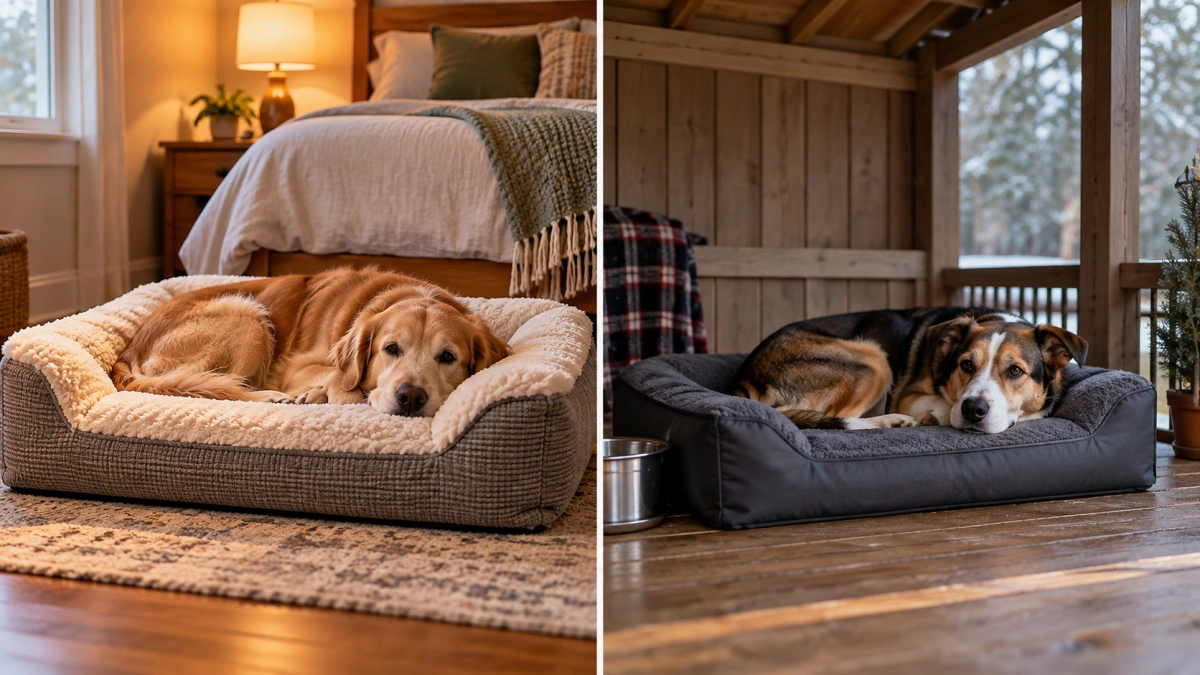
Indoor vs Outdoor Heated Dog Beds
Indoor and outdoor heated beds should not be treated as interchangeable.
| Feature | Indoor Heated Bed | Outdoor-Rated Heated Bed |
|---|---|---|
| Environment | Dry indoor rooms | Sheltered outdoor areas when specifically rated |
| Moisture exposure | Usually limited | Requires greater attention |
| Electrical setup | Indoor outlet arrangement | Must follow outdoor-use instructions |
| Main comfort focus | Warm sleeping surface | Warmth within a protected environment |
If you plan to use a heated bed outside, check that the manufacturer specifically allows outdoor use.
Do not assume that a waterproof-looking cover makes an indoor electrical product suitable for a porch, kennel, garage, or other exposed location.
An outdoor-rated heated dog bed also does not replace appropriate protection from cold weather, wind, rain, or snow. It should be part of a suitable sheltered setup rather than the only source of protection.
What About Heated Beds for Senior Dogs?
Some older dogs may enjoy a warmer sleeping surface, but age alone does not tell you whether an electric heated bed is appropriate.
The most important question is whether your dog can recognize discomfort and move away from the heated area easily.
Pay particular attention if your dog:
- Has difficulty standing
- Changes position slowly
- Needs help getting into or out of bed
- Has a medical condition that could affect heat sensitivity or mobility
A dog that might enjoy extra warmth may also require closer supervision if it cannot leave the heated surface independently.
If you are considering a heated bed because of arthritis, pain, circulation concerns, or another medical issue, discuss the use of heat with your veterinarian rather than treating the bed itself as a medical treatment.
How Warm Should a Heated Dog Bed Feel?
A heated dog bed should provide gentle warmth rather than feel hot.
Do not assume that the highest available temperature setting provides the best comfort.
Instead:
- Follow the manufacturer’s temperature guidance
- Start conservatively when adjustment is available
- Watch whether your dog stays comfortably or repeatedly leaves
- Keep an unheated area available
- Never modify the heating system to make it hotter
Avoid adding thick layers over or around an electric heating element unless the product instructions specifically allow that setup, because additional materials can change how heat is retained.
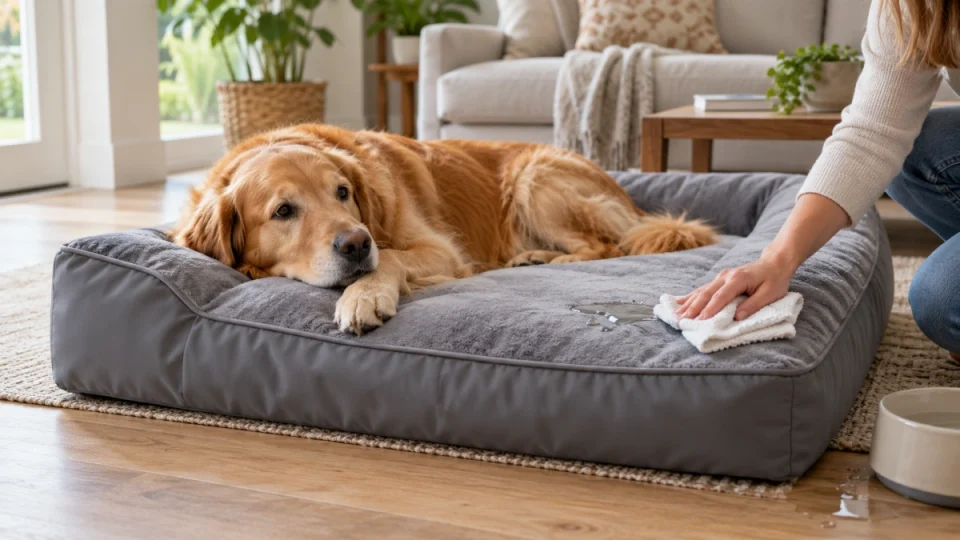
Cleaning and Maintaining Heated Dog Beds
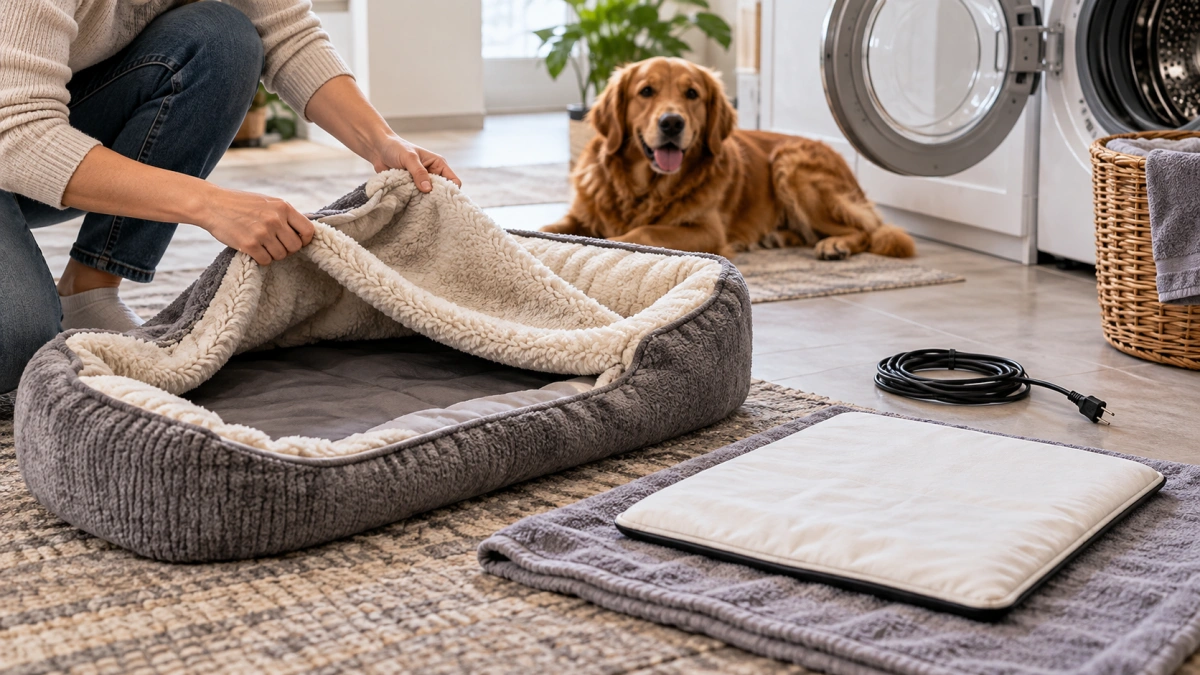
Electric heated beds require a different cleaning routine from ordinary fabric dog beds.
Before cleaning:
- Unplug the bed
- Allow it to cool
- Check whether the cord or heater is removable
- Remove only the components the manufacturer says can be removed
- Follow the care label for the cover and heating element separately
A removable fabric cover may be machine washable even when the heating element is not.
Do not assume that the entire bed can be submerged in water just because the outer cover is washable.
After cleaning, make sure all approved washable components are completely dry before reassembling and reconnecting the bed.
Self-warming beds are usually simpler because they do not contain electrical heating components, but you should still follow the care instructions for their insulating or reflective layers.
Heated Beds vs Cooling Dog Beds
Heated and cooling beds address opposite seasonal comfort needs.
| Bed Type | Main Goal | Common Features |
|---|---|---|
| Heated dog bed | Add or retain warmth | Electric heating or self-warming layers |
| Cooling dog bed | Reduce heat buildup | Airflow, mesh, gel, foam or cooler-feeling surfaces |
Heated beds focus on cold-weather warmth, while cooling beds are designed around airflow and reducing heat buildup. If your dog tends to seek cooler sleeping surfaces in warmer weather, our guide to cooling dog beds explains those options separately.
Heated Dog Bed Buying Checklist
Before choosing a heated dog bed, evaluate the warming system and the bed itself.
- Decide between electric and self-warming designs
- Choose a product specifically intended for pets
- Measure the usable sleeping area
- Check the dimensions of the heated area
- Make sure your dog can move away from the warmth
- Check the power cord and cord protection
- Review temperature controls and timers
- Check the manufacturer’s indoor or outdoor rating
- Consider your dog’s chewing behavior
- Check cushion or foam support
- Look for removable washable components
- Read the cleaning instructions before washing
- Consider a self-warming bed if you prefer a cord-free option
- Ask your veterinarian if your dog’s medical or mobility needs make heat use uncertain
Final Thoughts
Heated dog beds can provide a warmer sleeping surface during colder weather, but the safest choice starts with understanding how the bed produces or retains warmth.
Electric beds offer active heating but require careful attention to cords, temperature, placement, supervision, and cleaning. Self-warming dog beds provide a simpler cord-free option by retaining some of your dog’s own body heat.
Whichever style you choose, make sure the bed fits your dog, provides appropriate cushioning, and allows your dog to leave the warm area whenever it wants.
Warmth should add comfort to an appropriate sleeping environment—not replace safe shelter, sensible winter care, or veterinary advice when your dog’s health or mobility affects how safely it can use heat.