By
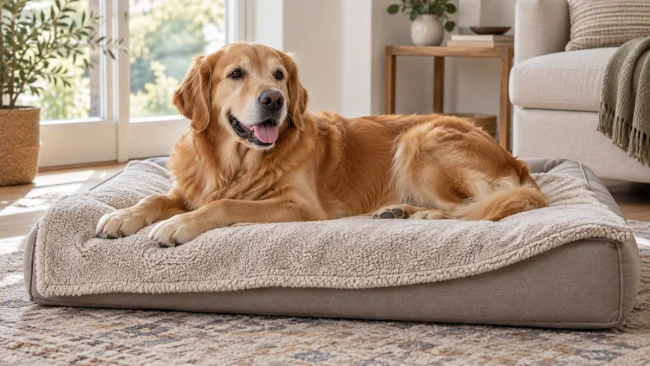
Dog blankets for beds add a removable layer between your dog and its main mattress. They can provide seasonal warmth, give a dog something soft to nest into, collect hair and dirt, and make routine cleaning easier without requiring you to wash the entire dog bed every time.
The blanket should complement the bed rather than replace it. A thin fleece, cotton, plush, or lightweight blanket can change the surface feel, but it does not provide the same structural support as a properly sized mattress or padded dog bed.
The right choice depends on how your dog sleeps, the size and shape of the bed, the season, the type of mess you manage, and how often you are willing to do laundry.
For more guidance on materials, sizes, cleaning, and seasonal options, visit our Dog Blankets topic hub.
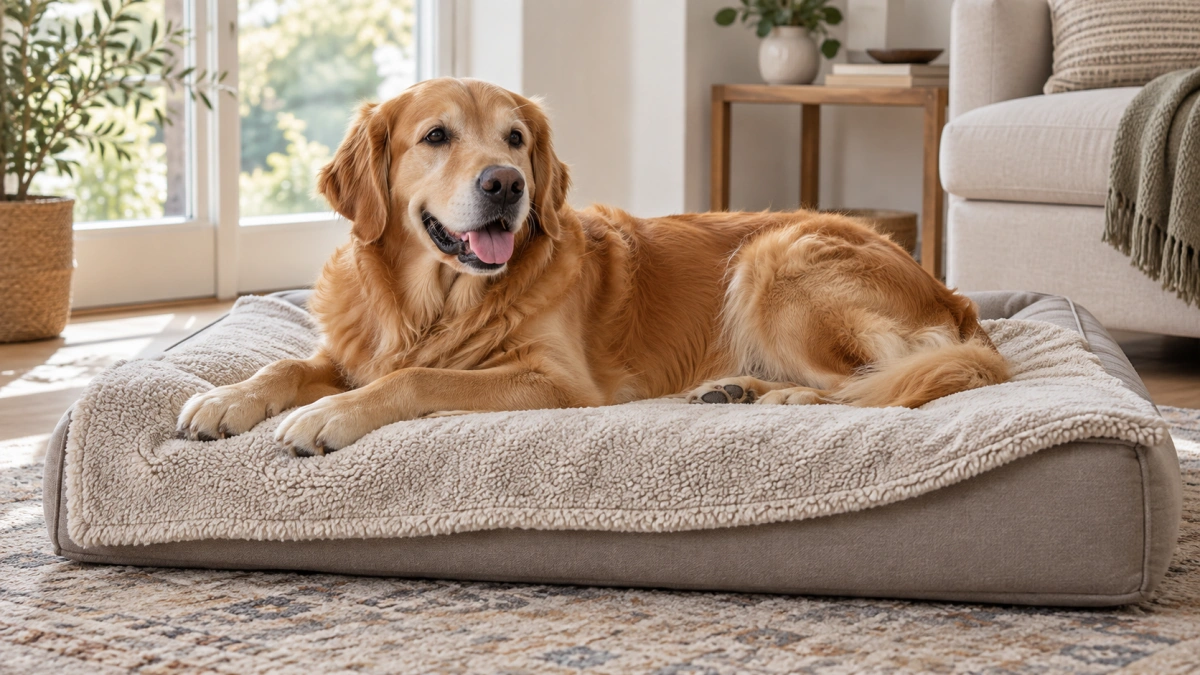
Quick Comparison: How Should a Blanket Fit a Dog Bed?
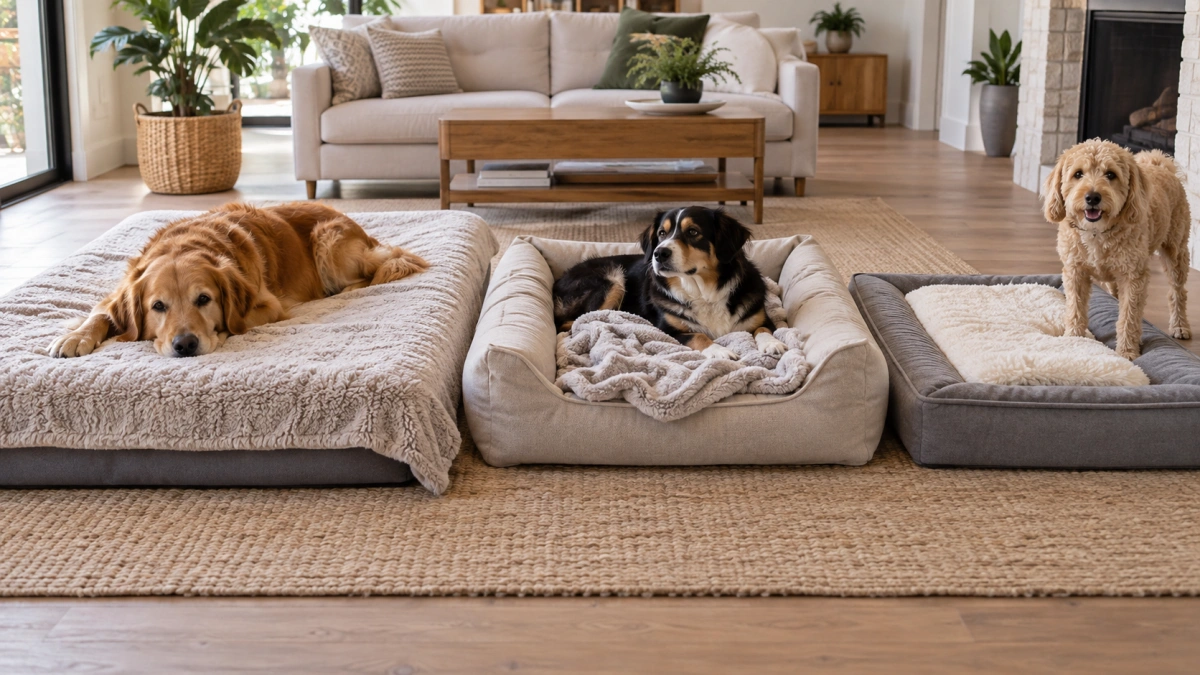
There are three practical ways to use a blanket with a dog bed.
| Setup | Best For | Main Advantage | Main Limitation |
|---|---|---|---|
| Full surface cover | Heavy shedding, dirty paws and routine protection | Protects most of the mattress surface | Needs accurate sizing to stay flat |
| Loose nesting blanket | Dogs that curl, burrow or rearrange bedding | Allows the dog to shape its own resting area | Can bunch or become messy |
| Partial topper | Seasonal comfort or a favorite sleeping zone | Easy to wash and replace | Leaves part of the mattress uncovered |
The best setup depends on your dog’s behavior.
A dog that stretches flat across the entire mattress often does better with a blanket that stays relatively flat. A dog that naturally gathers bedding before curling up may prefer some loose material to reposition.
Why Put a Blanket on a Dog Bed?
A removable blanket can solve several practical problems without changing the whole bed.
Common reasons include:
- Adding warmth during cooler weather
- Creating a lighter contact surface in warmer seasons
- Giving a dog material to nest or burrow into
- Collecting loose hair
- Reducing direct contact between dirty paws and the mattress cover
- Making frequent cleaning easier
- Changing the texture of an otherwise firm bed surface
This is particularly useful when the bed itself is bulky or difficult to wash.
A small removable blanket can often be cleaned more frequently than the entire mattress.
A Blanket Does Not Replace a Supportive Dog Bed
Several folded blankets can feel soft at first, but softness and structural support are not the same thing.
A blanket usually compresses quickly under body weight.
If your dog needs cushioning from a hard floor, room to stretch, or a stable sleeping surface, use an appropriate bed underneath.
Think of the blanket as the contact layer and the bed as the main support layer.
This distinction becomes more important for large dogs and dogs that spend long periods resting in one location.
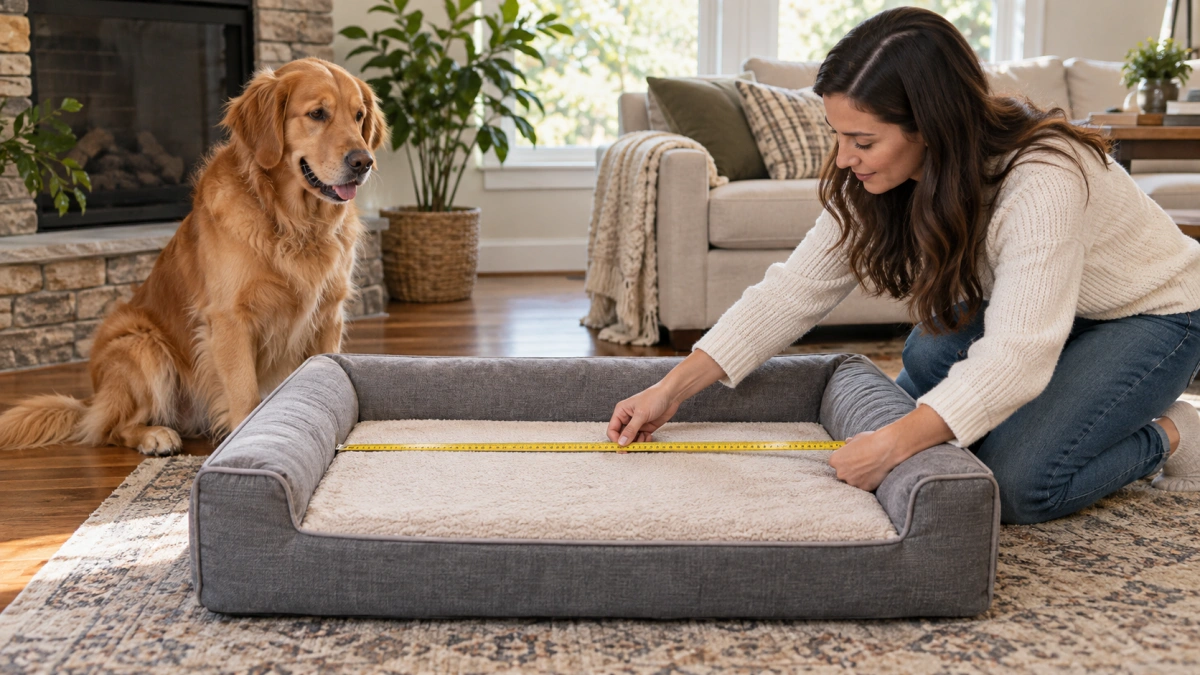
How to Measure a Dog Bed for a Blanket
Do not start with the blanket’s Small, Medium, Large, or XL label.
Measure the actual bed.
For Flat Mattress Beds
Measure:
- Usable mattress length
- Usable mattress width
If you want a full surface cover, choose a blanket that reaches across most or all of those dimensions.
For Bolster Beds
Measure the interior sleeping area rather than the outer dimensions.
A bed may appear large from the outside while raised side bolsters reduce the actual space available to the dog.
For Round Beds
Measure the usable interior diameter.
A rectangular blanket does not need to match the circular shape exactly, but it should fit without creating a large pile of excess material.
Should the Blanket Be Larger Than the Dog Bed?
Sometimes, but not always.
A slightly larger blanket can be useful if your dog likes to pull, fold, or nest in the material.
Extra fabric also allows a blanket to drape slightly over the mattress edges.
However, an extremely oversized blanket may:
- Create thick folds
- Hang onto the floor
- Be dragged around the room
- Become harder to wash
- Add more insulation than intended
If your goal is simply to protect the mattress surface, a blanket close to the usable bed dimensions is often easier to manage.
Should You Tuck a Blanket Into a Dog Bed?
Light tucking can help keep a blanket flat on some beds, but do not turn the setup into a tightly wrapped sleeping space.
The dog should be able to:
- Step onto the bed easily
- Change position
- Push the blanket aside
- Leave the bed freely
If your dog likes rearranging bedding, tightly securing the blanket may simply cause frustration.
Instead, use a blanket size and weight that remains reasonably stable while still allowing natural movement.
Match the Blanket to Your Dog’s Sleeping Style
How your dog sleeps can tell you more than body weight alone.
Dogs That Stretch Out
Dogs that sleep on their side with the legs extended generally benefit from a flatter blanket arrangement.
Choose enough surface area so the dog’s full body remains on the fabric.
Dogs That Curl Up
A curled sleeper may use less surface area and may enjoy a softer or slightly thicker textile around the body.
Dogs That Nest or Burrow
Some dogs naturally paw, circle, fold, or push fabric before settling.
A smaller loose blanket can work well for this behavior as long as the fabric remains intact and the dog does not chew or swallow it.
Dogs That Avoid Blankets
Do not assume every dog wants an extra layer.
A dog that repeatedly pushes a blanket aside may prefer the uncovered mattress surface, particularly during warm weather.
Which Material Is Best for a Dog Bed Blanket?
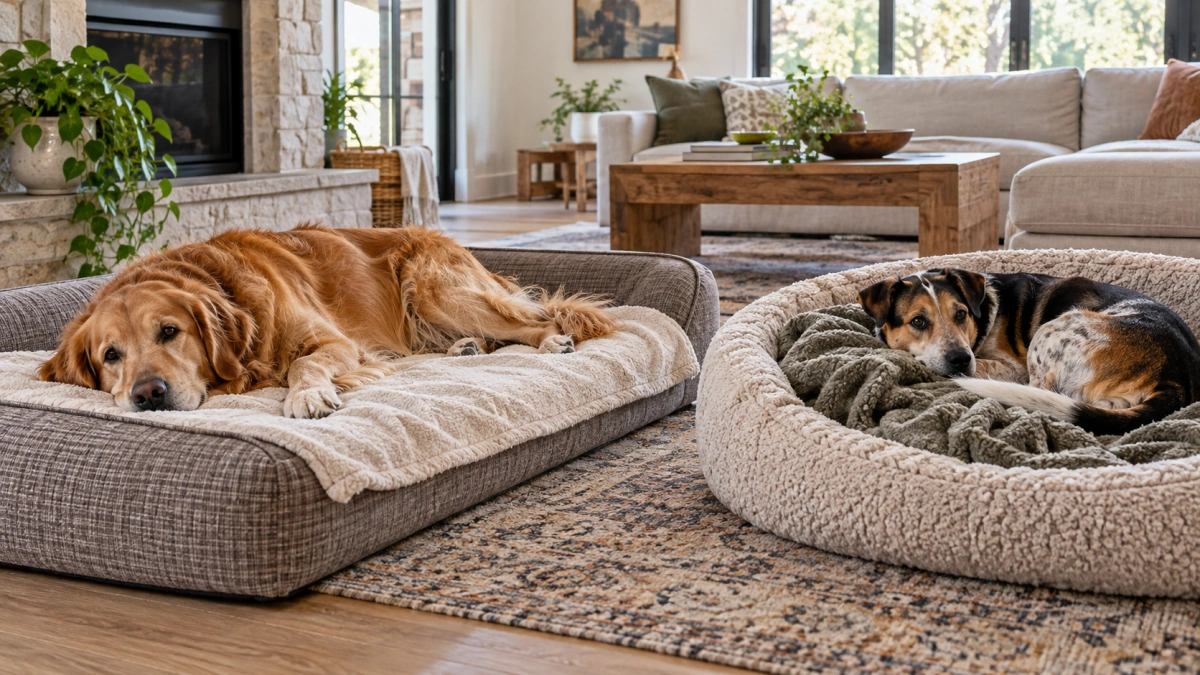
The best material depends on temperature, texture preference, cleaning routine, and the dog’s habits.
Fleece
Fleece is commonly used because it is soft, insulating, lightweight relative to its warmth, and usually practical to wash.
It works particularly well for cooler indoor conditions.
Plush and Sherpa-Style Fabrics
Deep plush surfaces provide more texture and warmth.
Dogs that enjoy soft nesting surfaces may like them, but thick piles can hold visible hair and may take longer to dry.
Cotton and Cotton Blends
Cotton-based blankets can provide a familiar textile feel and may work well when heavy insulation is unnecessary.
Check the care instructions because different weaves and blends can shrink or dry differently.
Lightweight Smooth Fabrics
A thinner smooth blanket can be useful during warmer conditions when your dog still likes having a defined bedding layer but avoids deep fleece.
For detailed material comparisons, keep the bed-use question separate from material-specific buying guides. The best fabric for a dog bed still depends on how and where that bed is used.
Avoid Very Loose or Easy-to-Snag Weaves
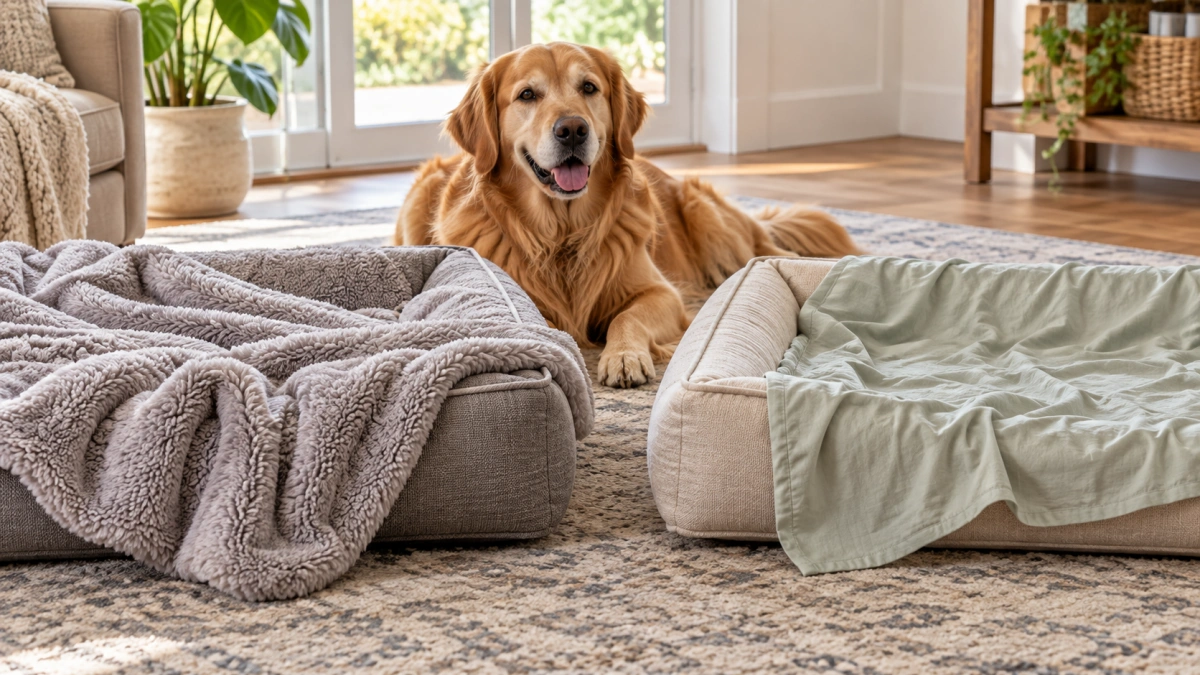
Open decorative knits can look attractive, but large loops may catch on dog nails or teeth.
For everyday bedding, a more stable fabric structure is often easier to manage.
Inspect the blanket regularly for:
- Pulled threads
- Large loops
- Torn seams
- Loose stuffing
- Chewed edges
Remove or replace damaged bedding if your dog may swallow loose pieces.
Summer vs Winter Dog Bed Blankets
The same blanket does not need to stay on the bed all year.
Warm Weather
Consider:
- Thinner fabrics
- Lower loft
- Smoother surfaces
- Less folding
- Easy drying
If your dog actively avoids thick bedding when temperatures rise, our guide to cooling dog blankets explains warm-weather options in more detail.
Cold Weather
Consider:
- Fleece
- Plush
- Sherpa-style surfaces
- Moderate layering
Do not keep adding layers automatically. Watch whether your dog seeks or avoids the warmer surface.
Should the Blanket Go Over or Under the Dog?
The simplest setup is usually to place the blanket on the bed and let the dog decide how to use it.
The dog may:
- Lie directly on top
- Push part of it aside
- Pull it into a small nest
- Burrow lightly underneath
Avoid tightly wrapping the dog or creating a setup it cannot easily leave.
Choice matters because dogs change position and surface preference as they become warmer or cooler.
Dog Bed Blankets for Large Dogs
A large dog’s blanket needs enough usable area to cover the body without requiring the dog to curl unnaturally.
Large blankets also create practical laundry issues.
Before choosing an oversized design, ask:
- Will it fit in my washing machine?
- How heavy will it become when wet?
- Can I dry it fully?
- Will it stay flat on the bed?
For giant beds, two manageable blankets can sometimes be easier to rotate and wash than one extremely heavy oversized blanket.
Dog Bed Blankets for Small Dogs
Small dogs do not automatically need very thick bedding.
Match the material to:
- Coat type
- Room temperature
- Sleeping habits
- Whether the dog likes burrowing
Avoid using an oversized blanket folded into many layers simply because the product was sold as one universal size.
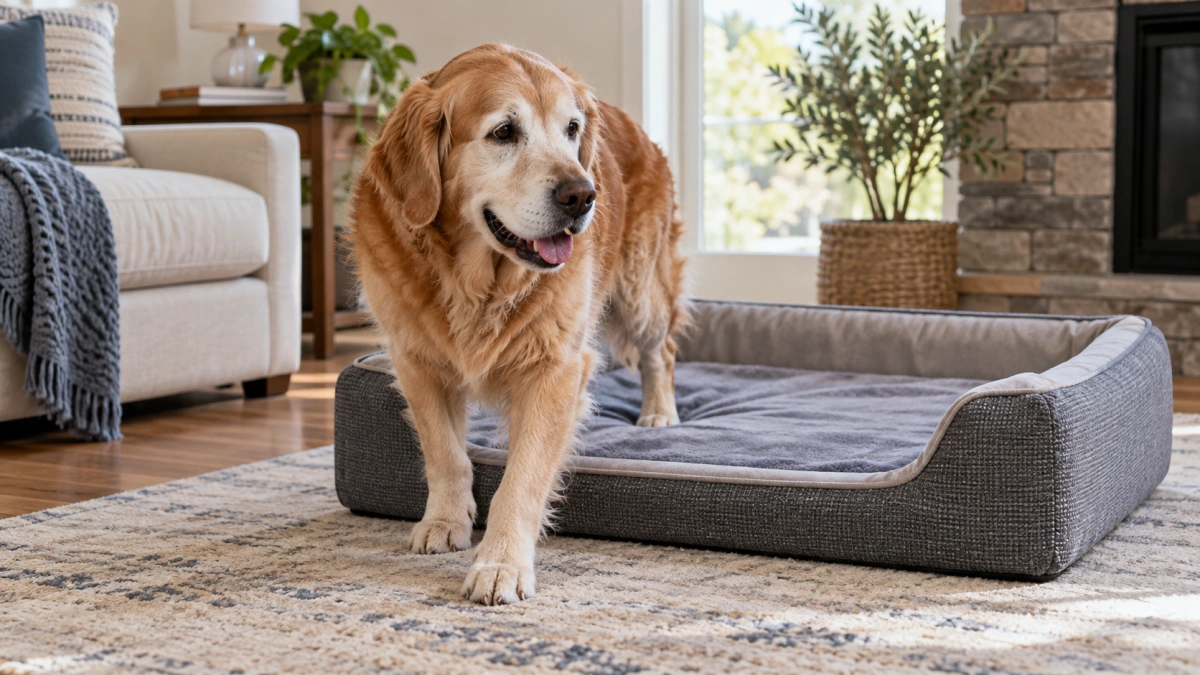
Dog Bed Blankets for Senior Dogs
For older dogs, keep the sleeping surface practical and easy to enter.
A large pile of loose bedding near the front edge can make a low-entry bed unnecessarily awkward.
Consider:
- A flatter blanket surface
- Minimal bunching near the entrance
- A stable mattress underneath
- Easy machine washing
- Enough room to change position
If your older dog suddenly struggles to get onto a bed, changes sleeping position, appears painful, or becomes reluctant to rise, that is more important than choosing a different blanket and deserves veterinary attention.
Dog Bed Blankets for Puppies
Puppies can create different bedding challenges because they may:
- Chew fabric
- Pull at seams
- Have toileting accidents
- Drag blankets around
- Dig energetically
Choose a simple washable blanket that is easy to inspect.
Avoid heavily damaged or loose fabric if the puppy chews and swallows textile pieces.
For frequent accidents, a waterproof protective layer beneath a washable top blanket may be more practical than trying to make one fabric do everything.
Do You Need a Waterproof Dog Bed Blanket?
Not every dog bed needs waterproof top bedding.
A standard washable blanket may be enough for:
- Hair
- Light dirt
- Normal sleeping oils
- Everyday comfort
A waterproof barrier becomes more useful when liquid exposure is realistic, such as:
- Puppy accidents
- Senior-dog accidents
- Heavy drooling
- Wet dogs
- Frequent spills near the bed
For those situations, the barrier is usually most effective when it protects the mattress underneath rather than simply creating a stiff or uncomfortable top surface.
How to Wash Dog Bed Blankets
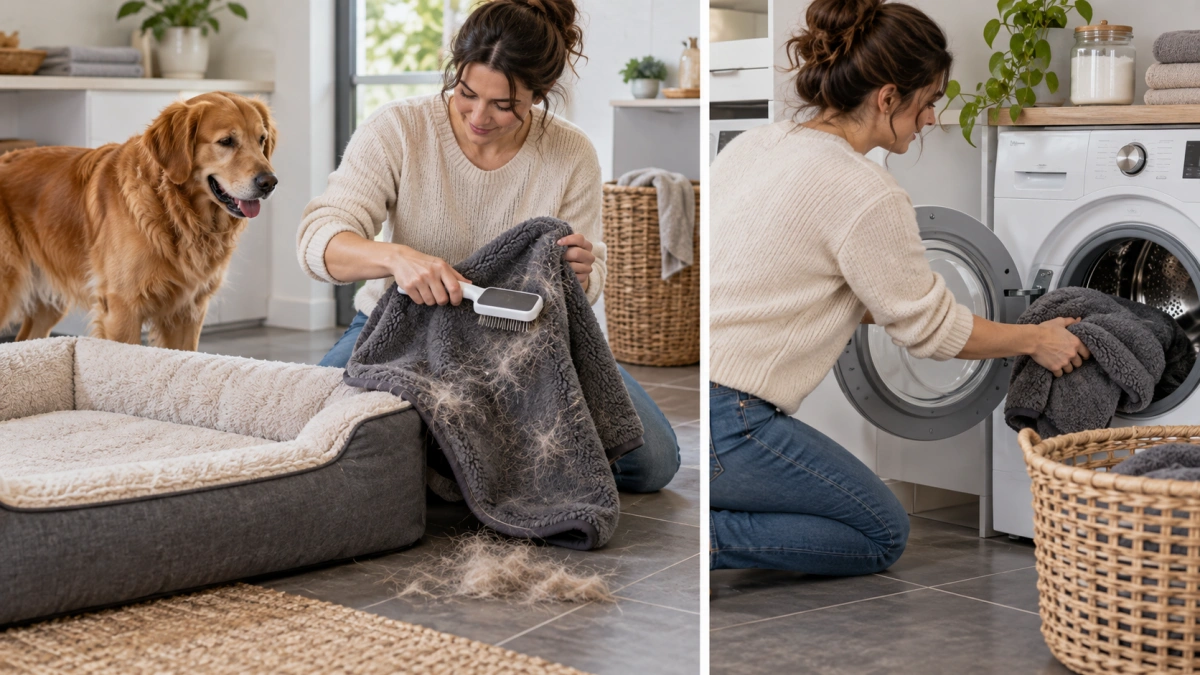
One of the biggest advantages of adding a blanket to a dog bed is that the blanket can often be washed more frequently than the bulky bed itself.
A practical routine is:
- Remove the blanket from the bed.
- Shake or vacuum away loose hair.
- Check for tears or damaged seams.
- Pre-treat appropriate stains if the care instructions allow.
- Wash according to the manufacturer’s label.
- Dry completely before returning the blanket to the bed.
Do not assume that every pet blanket can be washed at high temperature or tumble dried on high heat.
Fabric, waterproof membranes, non-slip backing, and decorative finishes can all have different care limits.
How Often Should You Wash Dog Bedding Blankets?
There is no single schedule that fits every household.
Cleaning frequency depends on:
- How much the dog sheds
- Outdoor activity
- Drool
- Wet paws
- Skin oils
- Odor
- Accidents
- How many hours the dog uses the bed
If the blanket looks dirty, smells, becomes damp, or collects substantial hair, wash it.
A removable blanket also gives you a practical way to clean the most frequently contacted layer without washing a large mattress every few days.
Why Two Dog Bed Blankets Can Be Better Than One
A rotation system is simple but useful.
Keep:
- One blanket on the bed
- One clean replacement
When the first blanket goes into the wash, you can replace it immediately without leaving the bed uncovered.
This is particularly practical for:
- Heavy shedders
- Dogs that go outdoors frequently
- Puppies
- Senior dogs
- Homes with several dog beds
Dog Bed Blanket vs Dog Bed Cover
These two products can overlap, but they are not identical.
| Feature | Dog Bed Blanket | Fitted Dog Bed Cover |
|---|---|---|
| Easy to remove | Very easy | Usually requires unzipping or stretching off |
| Can be rearranged by dog | Yes | No |
| Good for nesting | Yes | No |
| Stays tightly fitted | Not always | Usually better |
| Seasonal material change | Easy | Possible but less convenient |
| Mattress protection | Partial to good | Usually more complete |
A fitted cover is often better when you want continuous mattress protection.
A loose blanket is better when you want a removable comfort layer that your dog can interact with.
Dog Bed Blankets vs Dog Blankets for Couches
The two categories can use similar materials, but the sizing logic is different.
A dog bed blanket is chosen around:
- Usable mattress dimensions
- Sleeping position
- Nesting behavior
- Seasonal comfort
A dog blanket for a couch is chosen more around furniture coverage, upholstery grip, appearance, and protection of human seating.
A blanket can sometimes serve both purposes, but the correct dimensions may be very different.
Our 7-Point Dog Bed Blanket Check
Use this seven-part framework before choosing a blanket for an existing dog bed.
1. Usable Bed Size
Measure the actual sleeping surface, not the outside dimensions or the Large/XL label.
2. Sleeping Style
Decide whether your dog stretches, curls, nests, burrows, or pushes blankets away.
3. Seasonal Warmth
Choose enough insulation for the room and season without automatically adding the thickest fabric.
4. Surface Stability
Check whether the blanket stays reasonably flat or constantly bunches under the dog.
5. Fabric Safety
Avoid damaged seams, large loose loops, or materials your dog repeatedly chews and swallows.
6. Laundry Practicality
Make sure the blanket fits your washing machine, dries fully, and can be cleaned as often as your household requires.
7. Bed Compatibility
The blanket should improve the bed without blocking a low entry, hiding a useful bolster, or replacing the support of the mattress underneath.
A blanket that passes these seven checks is more useful than one selected only because it looks soft in a product photo.
Common Dog Bed Blanket Buying Mistakes
- Choosing by dog weight instead of bed dimensions
- Measuring the outside of a bolster bed instead of the usable interior
- Buying a blanket too small for a stretched sleeping position
- Using a huge blanket folded into many unnecessary layers
- Assuming every dog wants thick plush fabric
- Ignoring seasonal temperature changes
- Using a blanket as a substitute for a supportive bed
- Ignoring the dog’s nesting or digging behavior
- Choosing decorative loose-knit fabric that snags easily
- Ignoring chewing and fabric ingestion
- Buying a blanket too large for the household washer
- Assuming “machine washable” means every wash temperature is safe
- Leaving damp bedding on the mattress
- Using a bulky pile of fabric that blocks a senior dog’s easy entry
Dog Bed Blanket Buying Checklist
- What are the usable length and width of the dog bed?
- Does the bed have bolsters that reduce interior space?
- Does my dog stretch, curl, nest, or burrow?
- Do I want a full surface cover, loose nesting blanket, or partial topper?
- Is the material appropriate for the season?
- Is the blanket thick enough without creating unnecessary bulk?
- Will the fabric stay reasonably flat?
- Does the weave resist snagging during normal use?
- Does my dog chew or swallow bedding?
- Do I need liquid protection?
- Can the blanket be machine washed?
- What dryer settings are allowed?
- Will the blanket fit my household washer?
- Can I keep a second blanket for laundry rotation?
- Does the blanket leave the bed entrance clear?
- Does the mattress underneath still provide the support my dog needs?
Final Thoughts
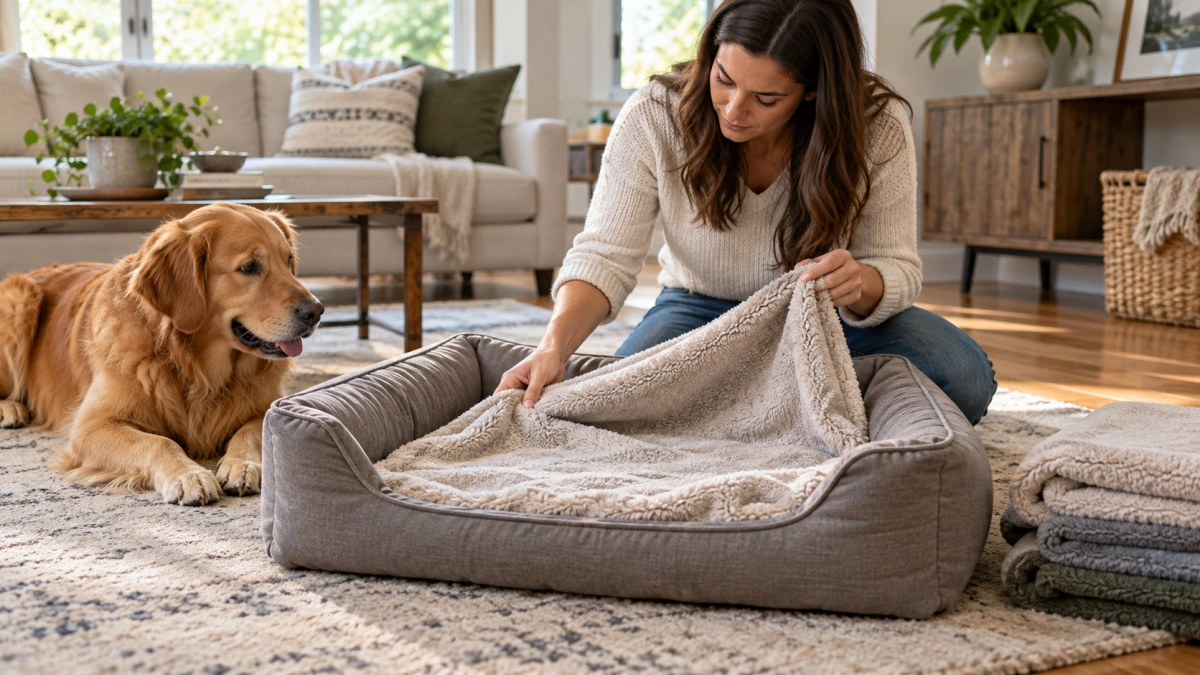
The best blanket for a dog bed should work with the bed rather than overwhelm it.
Start with the actual usable sleeping area, then consider how your dog sleeps. Stretchers usually need flatter, broader coverage, while dogs that naturally nest may prefer some loose material they can rearrange.
Next, match the fabric to the season and your cleaning routine. Fleece and plush provide more insulation, while lighter fabrics can work better when warmth is not the priority.
Washability matters because one of the biggest advantages of a dog bed blanket is that you can remove and clean the most frequently used surface without washing a bulky mattress every time.
Finally, keep the roles clear: the dog bed provides the primary sleeping structure and support, while the blanket adds a removable layer for comfort, warmth, nesting, and easier maintenance.