By
By 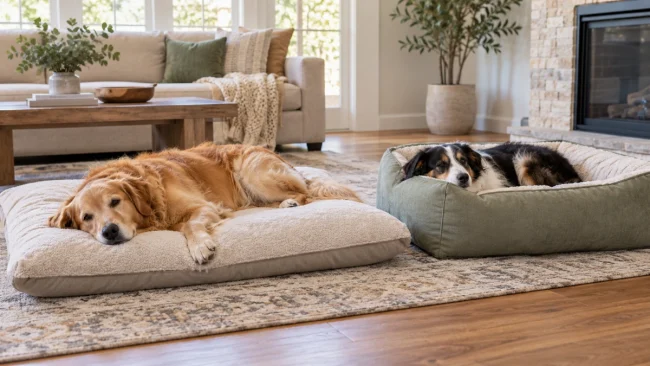
Pillow dog beds and bolster dog beds both provide soft resting surfaces, but they support different sleeping styles. Pillow beds usually give your dog a wide, open area to stretch across, while bolster beds add raised padded sides that your dog can lean against or use as a headrest.
The better choice depends on how your dog actually sleeps. A dog that stretches fully may prefer an open pillow surface, while a dog that curls up or rests its head against furniture may be more comfortable with raised sides.
Before choosing either style, look beyond the overall dimensions. Check the usable sleeping area, fill type, base support, bolster height, entry design, cover construction, and how easily the bed can be cleaned in your home.
You can also explore our complete Dog Beds hub for more guides about dog bed styles, materials, sizing, and cleaning features.
What Is a Pillow Dog Bed?
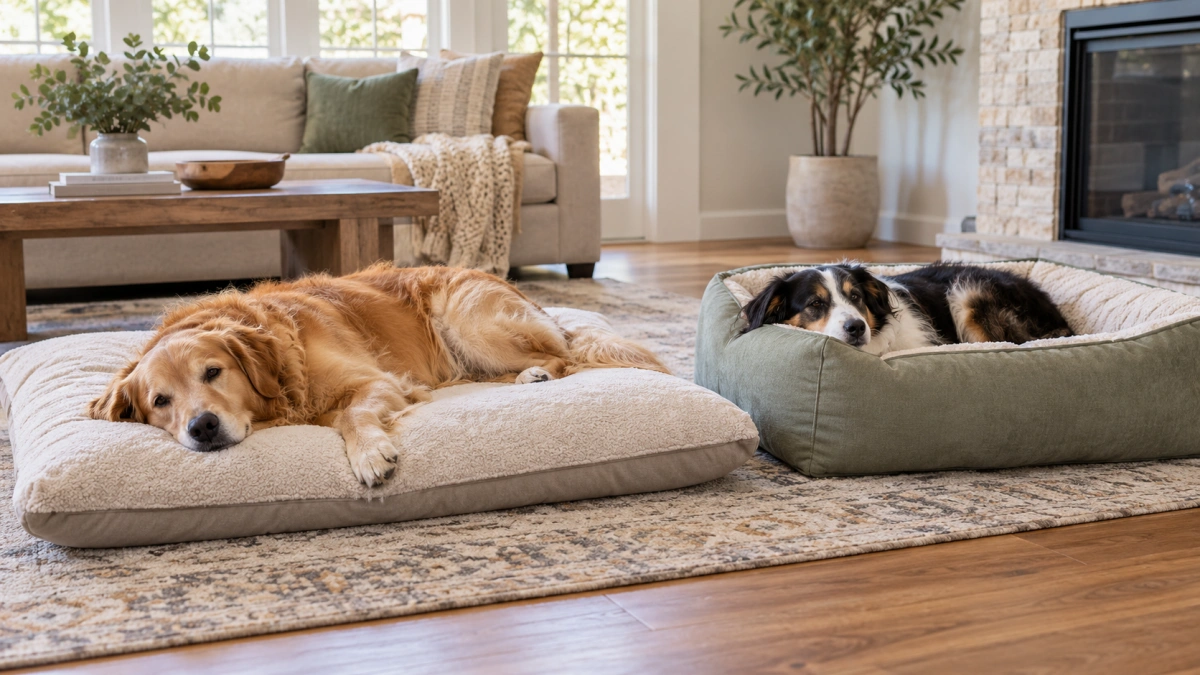
A pillow dog bed is usually built around a broad cushioned sleeping surface with few or no raised sides. The shape is similar to an oversized floor cushion.
This open design gives your dog room to:
- Stretch out across the surface
- Change positions easily
- Approach the bed from different sides
- Sleep without raised edges limiting leg room
Pillow beds can range from lightly filled cushions to thicker designs made with shredded foam or structured inserts.
The word “pillow” mainly describes the bed’s shape and feel. It does not tell you how supportive the inside materials are, so you should still check the filling and construction before choosing one.
What Is a Bolster Dog Bed?
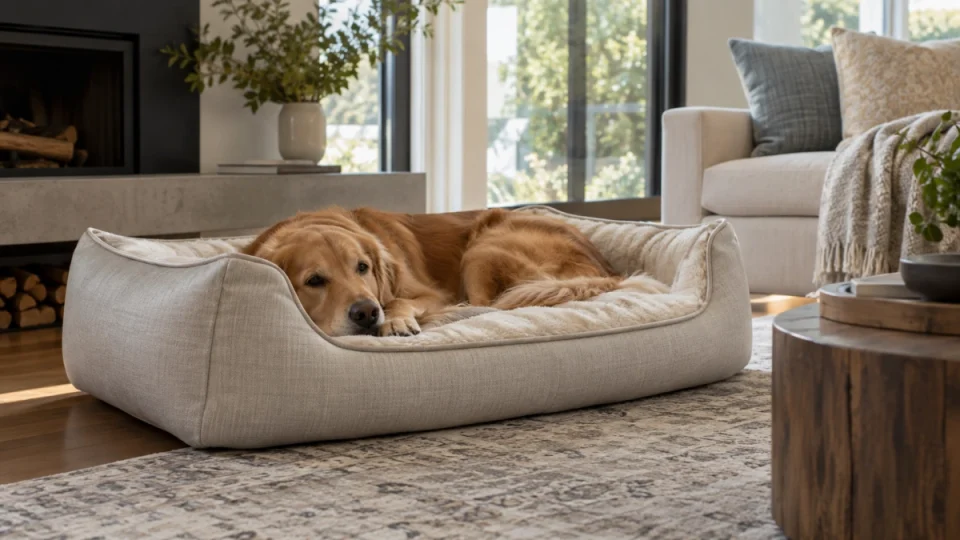
A bolster dog bed adds one or more padded raised sides around the main sleeping surface.
Common designs include:
- Three-sided sofa-style beds
- Four-sided beds with a lower front opening
- L-shaped bolster beds
- Chaise-style beds with support along two sides
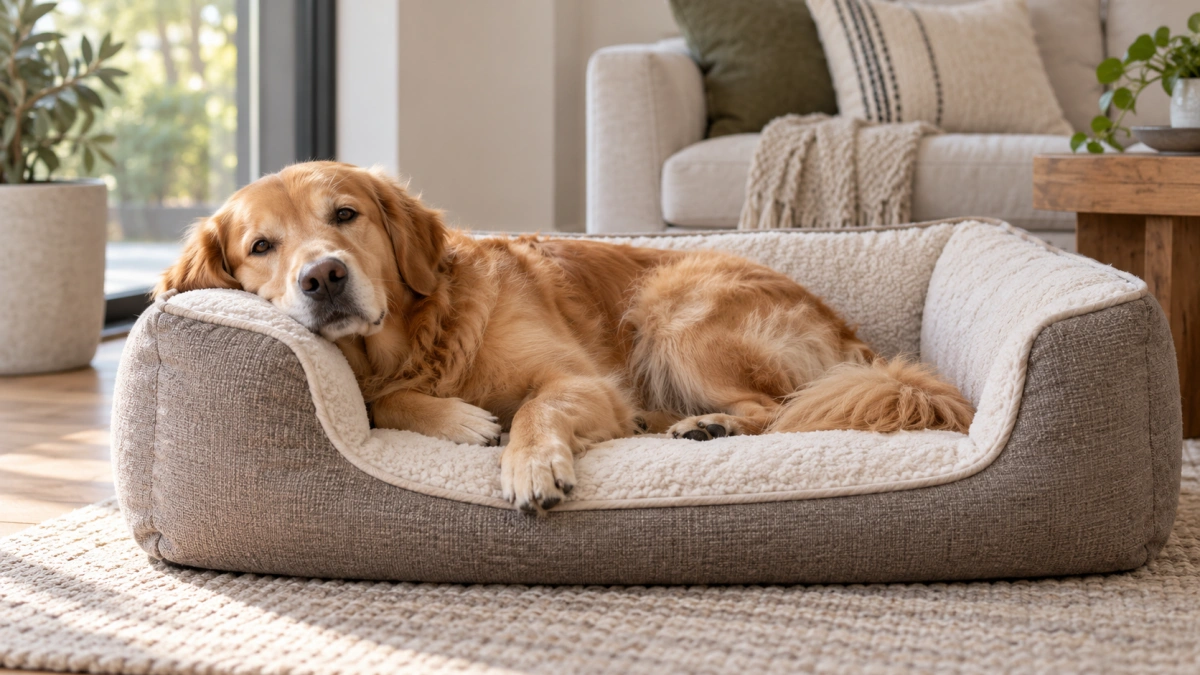
The raised section can give your dog a place to lean against or rest its head while still keeping the center mattress available for sleeping.
A bolster does not automatically make the base more supportive. The raised sides and the mattress underneath are separate parts of the design, so check both.
Pillow vs Bolster Dog Beds
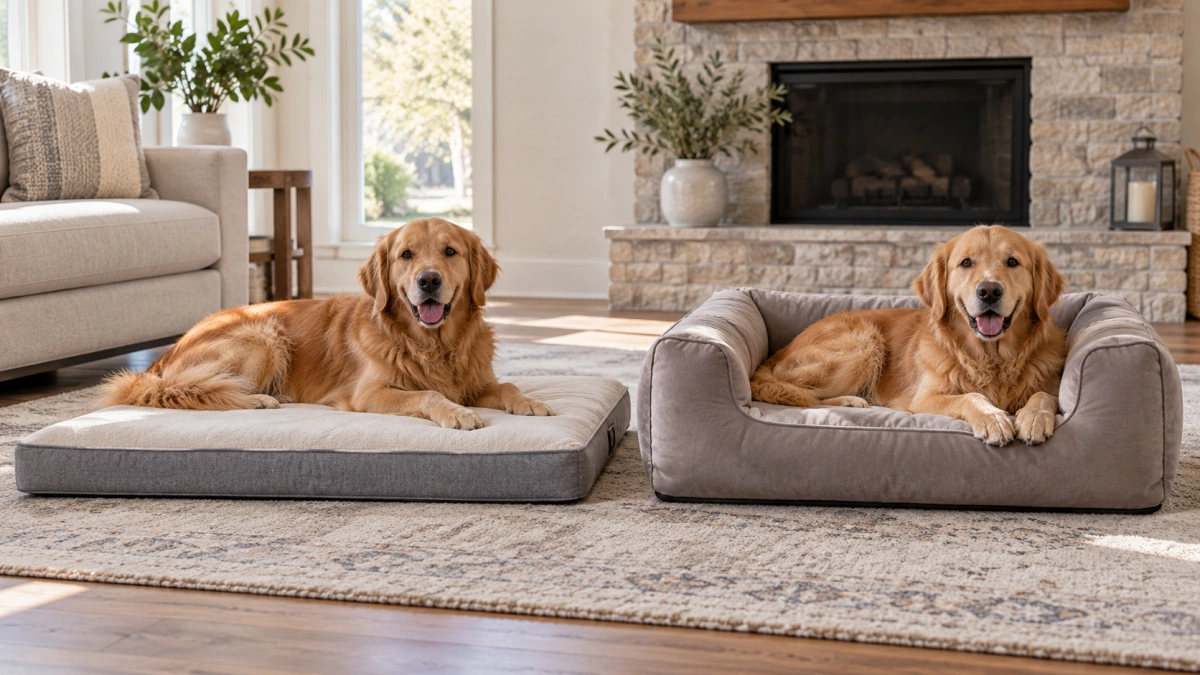
The main difference is whether your dog has an open sleeping surface or padded edges around part of the bed.
| Feature | Pillow Dog Bed | Bolster Dog Bed |
|---|---|---|
| Sleeping surface | Mostly open | Partly surrounded by raised sides |
| Best for stretching | Often very good | Depends on usable inner space |
| Headrest | Usually none | Built into the raised sides |
| Entry | Open from most directions | Often through one lower side |
| Interior space | Close to overall cushion size | Reduced by the bolsters |
| Cleaning | Depends on fill and cover design | Also depends on whether bolster inserts are removable |
Neither style is automatically better. The most useful question is whether the bed matches your dog’s sleeping position and gives enough usable room.
Match the Bed to Your Dog’s Sleeping Style
Watching how your dog sleeps can tell you more than the product name.
If your dog usually stretches out fully, look for:
- A wide open mattress
- Minimal raised edges
- Enough length for extended legs
- A surface that does not slope sharply toward the center
If your dog likes resting its head against a sofa arm, wall, or cushion, a bolster may provide a similar type of edge.
If your dog curls into corners, a two-sided or three-sided bolster may feel more natural than a completely flat pillow bed.
You do not need to choose the most enclosed design simply because your dog curls up occasionally. Make sure there is still enough room to change position comfortably.
Check the Usable Sleeping Area
Overall product dimensions can be misleading, especially with bolster beds.
For example, a bed may be listed by the outside dimensions of the full frame, but the raised sides can take several inches away from the flat sleeping surface.
Before buying, compare:
- Overall bed length
- Overall bed width
- Interior mattress length
- Interior mattress width
- Bolster thickness
This difference matters most when your dog is large or likes to sleep with its legs fully extended.
If the manufacturer provides only exterior dimensions, look closely at product diagrams or interior measurements before assuming the bed will fit your dog.
Pillow Dog Bed Fill Types
The filling inside a pillow dog bed affects softness, shape retention, and how the surface feels under your dog’s weight.
| Fill Type | Typical Characteristics |
|---|---|
| Polyester fiber fill | Soft and lightweight, but may compress or shift over time |
| Shredded foam | Soft with more structure than loose fiber, but quality varies |
| Solid foam insert | Creates a more uniform sleeping surface |
| Layered foam | Can combine different densities or comfort layers |
| Mixed fill | May combine fiber and foam for a softer feel |
Do not assume the fluffiest bed provides the most support. A tall-looking cushion can compress substantially once your dog lies on it.
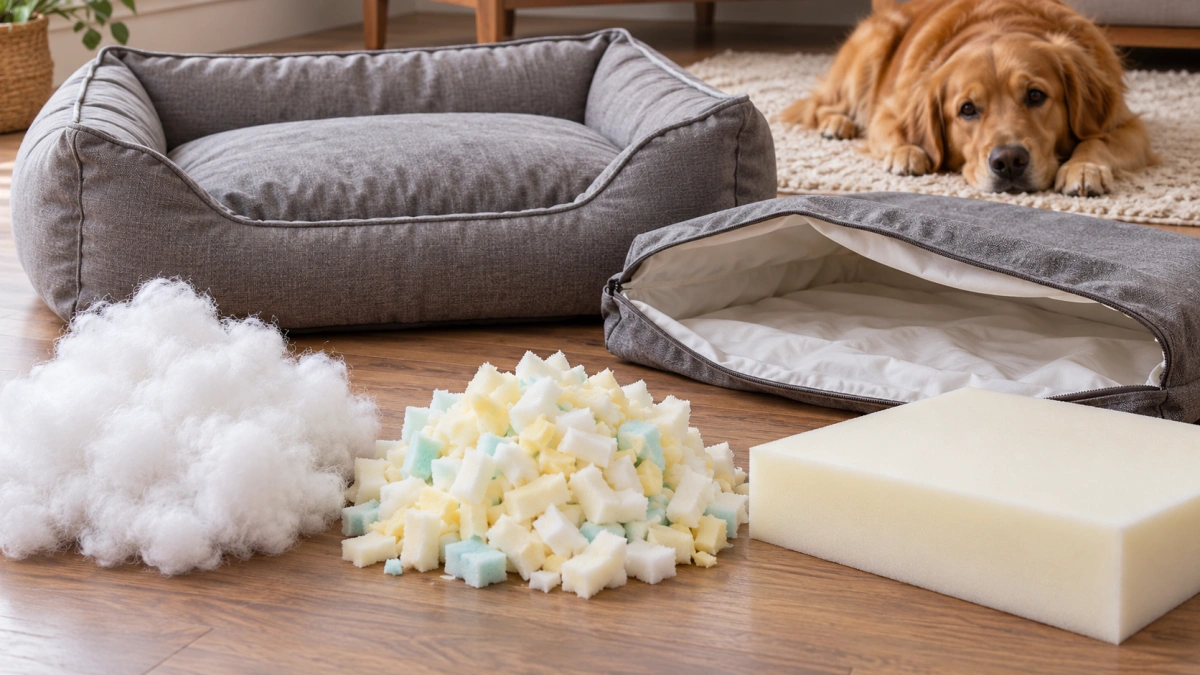
Softness vs Support
Softness describes how the surface feels. Support describes how well the bed maintains a usable cushion beneath your dog.
These are not the same thing.
A very soft pillow bed may feel comfortable to the touch but compress close to the floor under a heavier dog. A firmer foam base may feel less fluffy while maintaining a more consistent sleeping surface.
When comparing beds, consider:
- Your dog’s weight
- How deeply the cushion compresses
- Whether the filling shifts toward the edges
- Whether the base stays evenly padded
- How quickly the bed regains its shape
For a larger dog, base construction often matters more than simply choosing the thickest-looking cushion.
How to Tell if a Pillow Bed May Flatten
Soft-filled pillow beds can gradually lose loft as your dog repeatedly sleeps in the same area.
Before choosing one, look for clues about how the filling is managed.
Useful features may include:
- Internal channels or compartments
- Dense shredded foam
- A separate structured insert
- Refillable filling compartments
- A cover that fits tightly enough to hold the cushion’s shape
A large single cavity filled with loose material may allow more shifting than a bed with internal structure.
If the bed can be refluffed or the insert can be replaced separately, long-term maintenance may also be easier.
Bolster Height, Shape and Entry Design
Raised sides can be comfortable, but more bolster is not always better.
A four-sided bolster may create a more enclosed sleeping space, while a three-sided design leaves a clear front opening.
A lower entry can be useful when you want raised sides without requiring your dog to climb over a thick padded wall every time it enters the bed.
When comparing designs, look at:
- Bolster height
- Bolster firmness
- Number of raised sides
- Width of the entry opening
- How much sleeping area the bolsters occupy
Your dog should be able to enter easily and still have enough room to use the center mattress comfortably.
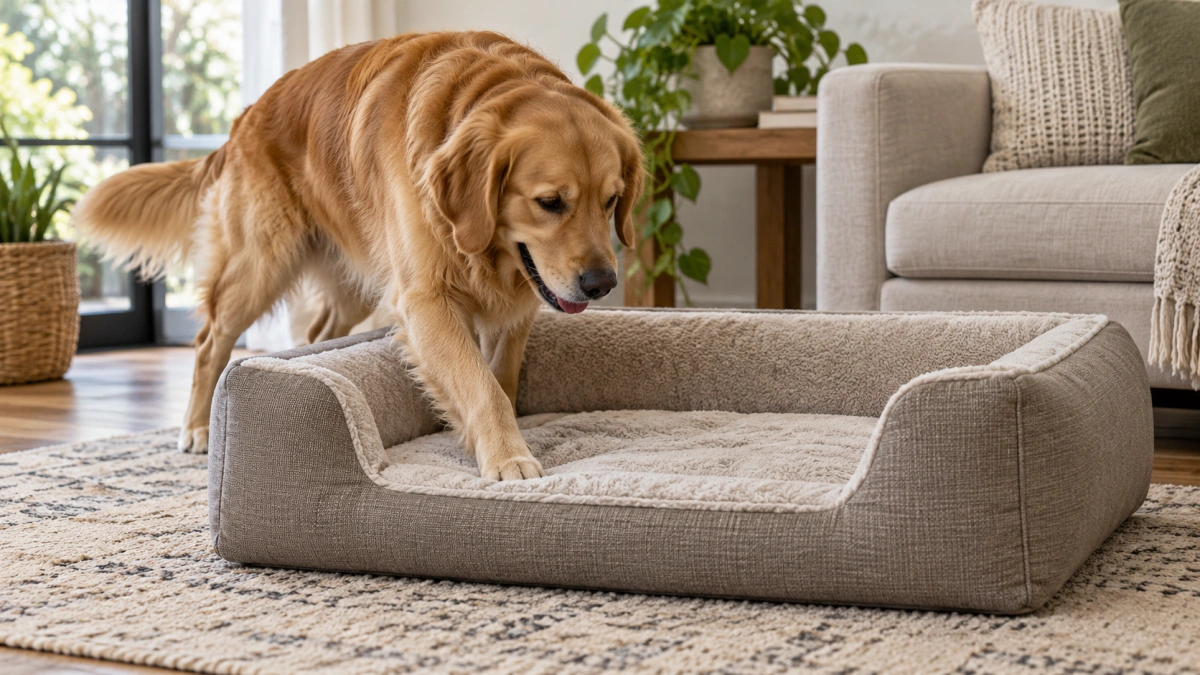
Bolster Dog Beds for Large Dogs
Large bolster dog beds need to provide enough interior sleeping space after the raised sides are taken into account.
For a large dog, check:
- Interior mattress length
- Interior mattress width
- Base thickness
- How much the cushion compresses
- Bolster height
- Entry width
- Published weight guidance when available
A large exterior frame can still feel cramped if thick bolsters reduce the usable center area.
If your dog likes to stretch, prioritize interior dimensions over the outside dimensions of the bed.
If your dog mainly curls up and rests against the sides, a slightly more enclosed shape may still work well as long as your dog can turn and reposition freely.
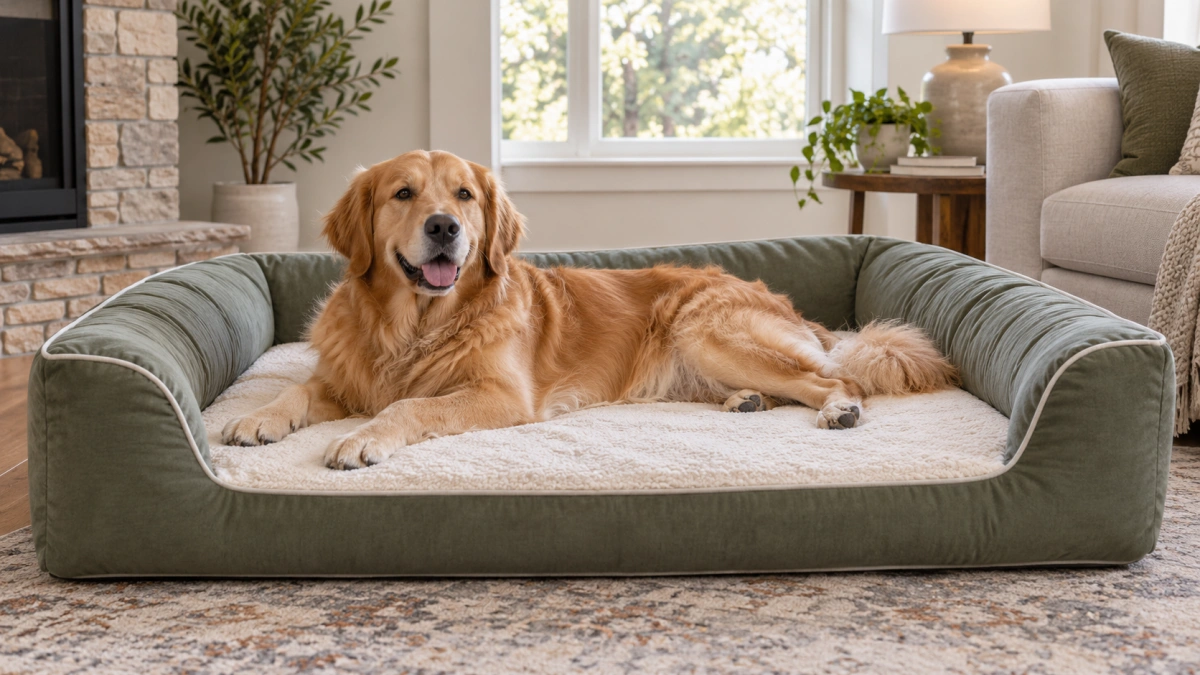
Does Your Dog Sleep Hot?
Fabric choice can matter just as much as bed shape.
Plush fleece, sherpa, faux fur, and thick padded fabrics can create a warmer sleeping environment. Some dogs enjoy that feeling, while others regularly leave soft beds and move to tile, wood, or another cooler surface.
Watch what your dog already chooses at home.
If your dog often moves from a plush bed to the floor, you may want to consider:
- A smoother cover fabric
- Less fluffy surface material
- A more open pillow design
- A bed placed away from direct heat
Choosing a softer-looking bed is not always useful if your dog avoids it because it feels too warm.
Cleaning Pillow and Bolster Dog Beds
Cleaning can be one of the biggest practical differences between similar-looking beds.
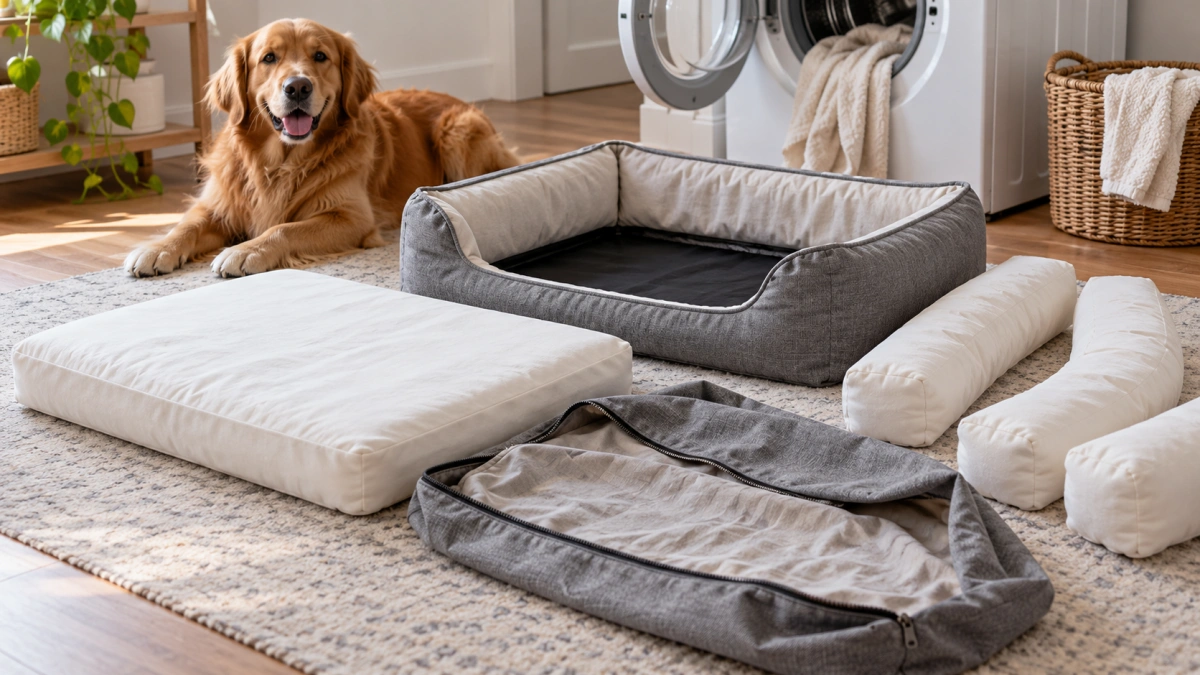
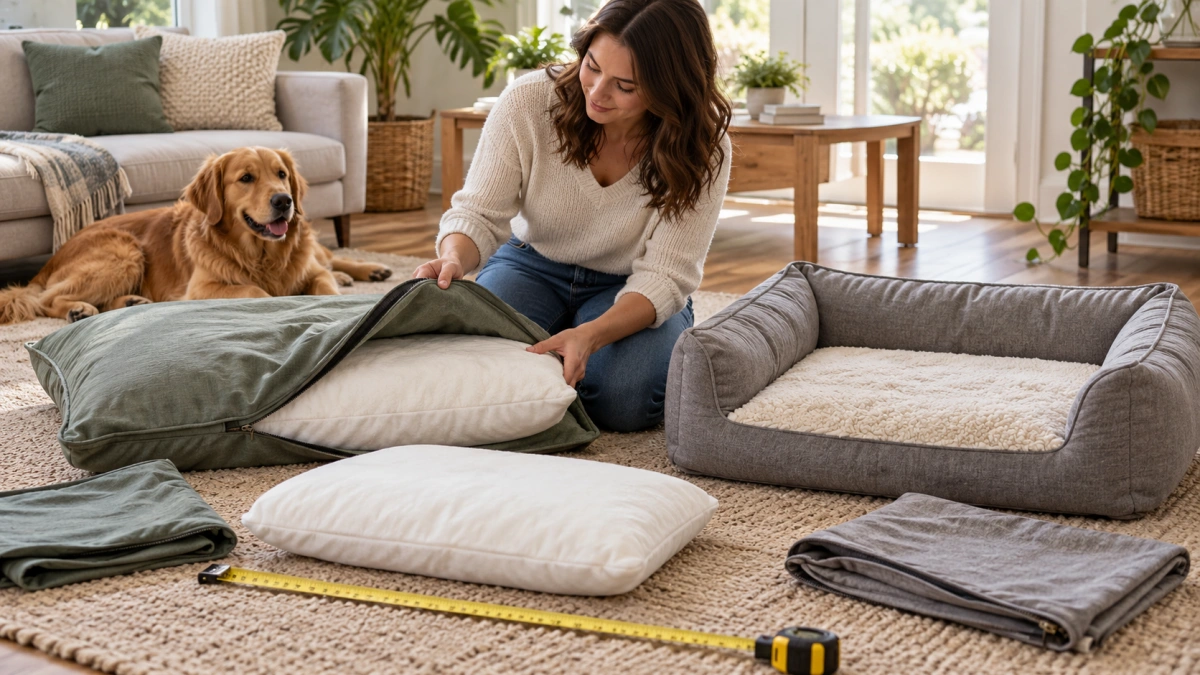
The easiest designs usually separate the bed into multiple washable or removable components.
Look for:
- A fully removable outer cover
- Separate base cushion or foam insert
- Removable bolster inserts
- Accessible zippers
- Clear care instructions
A cover described as “removable” is not always completely separate from the bolsters. In some designs, padded sides remain sewn into the cover, which can make the whole piece bulky to wash.
If easy maintenance matters in your home, check whether both the center cushion and side bolsters can be removed before washing the cover.
You should also consider how easily hair collects along seams and inside corners where the bolsters meet the mattress.
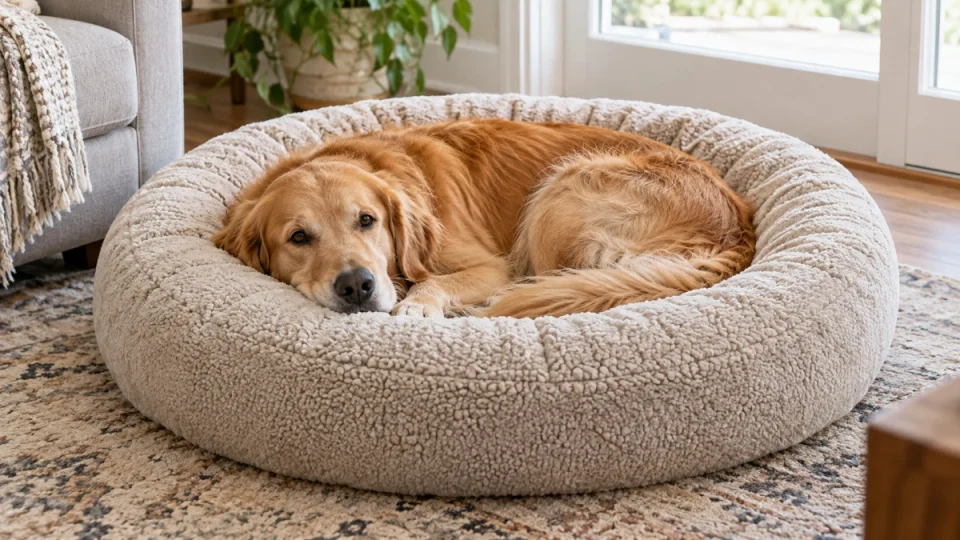
Pillow and Bolster Beds vs Donut Beds
Pillow, bolster, and donut beds can all feel soft, but their shapes create different sleeping spaces.
| Bed Type | Main Shape | Typical Sleeping Style |
|---|---|---|
| Pillow bed | Open flat cushion | Stretching and flexible positioning |
| Bolster bed | Flat center with raised sides | Leaning, head resting, or curling near an edge |
| Donut bed | Round center with surrounding padded ring | Curling into a circular sleeping area |
If your dog prefers a round sleeping space surrounded by a padded ring, our guide to donut dog beds explains that design separately.
When a Simple Flat Bed May Be Better
A pillow or bolster bed is not automatically the best choice simply because it looks soft and inviting.
A simpler flat bed may work better if your dog:
- Prefers a firmer surface
- Frequently sleeps fully stretched
- Does not use raised sides
- Runs hot in thick plush materials
- Needs a bed that is very easy to clean
Your dog’s existing sleep habits are often a better guide than the appearance of the bed.
Pillow and Bolster Dog Bed Buying Checklist
Before choosing a pillow or bolster bed, check the features that affect your dog’s actual sleeping space and your daily maintenance routine.
- Watch how your dog normally sleeps
- Measure the usable interior sleeping area
- Check the filling or foam construction
- Consider how much the cushion may compress
- Check whether the fill can shift or flatten
- Compare bolster height and firmness
- Look for a low entry if that suits your dog better
- Check whether the bolsters reduce too much interior space
- Choose fabric based on your dog’s temperature preference
- Look for a fully removable cover
- Check whether bolster inserts can be removed separately
- Make sure the bed can be cleaned realistically in your home
Final Thoughts
Pillow dog beds give your dog an open cushioned surface, while bolster dog beds add raised sides for leaning, head resting, or curling near an edge.
The right style depends on how your dog sleeps rather than which design looks softer in a product photo.
Pay attention to usable sleeping dimensions, fill construction, cushion compression, bolster height, entry design, fabric temperature, and whether the cover and inserts can be removed for cleaning.
When the bed matches your dog’s sleeping position and your home’s maintenance routine, both pillow and bolster styles can provide a comfortable everyday resting space.