By
By 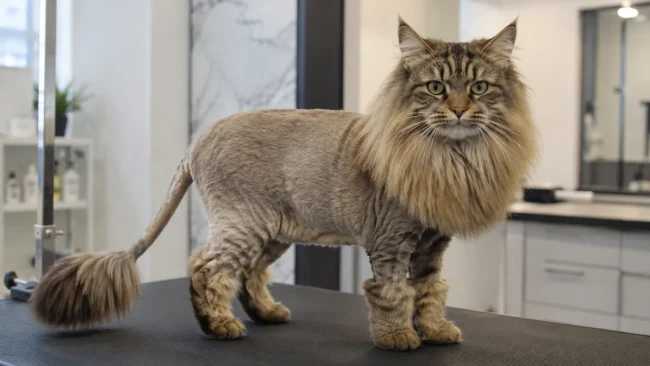
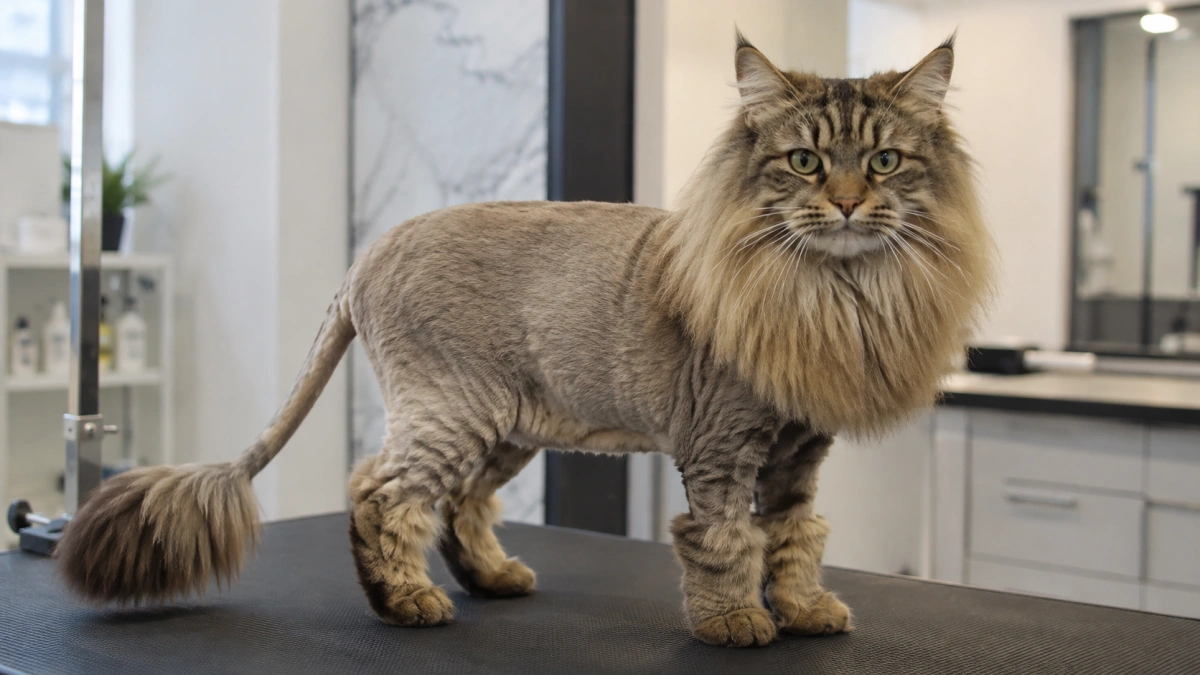
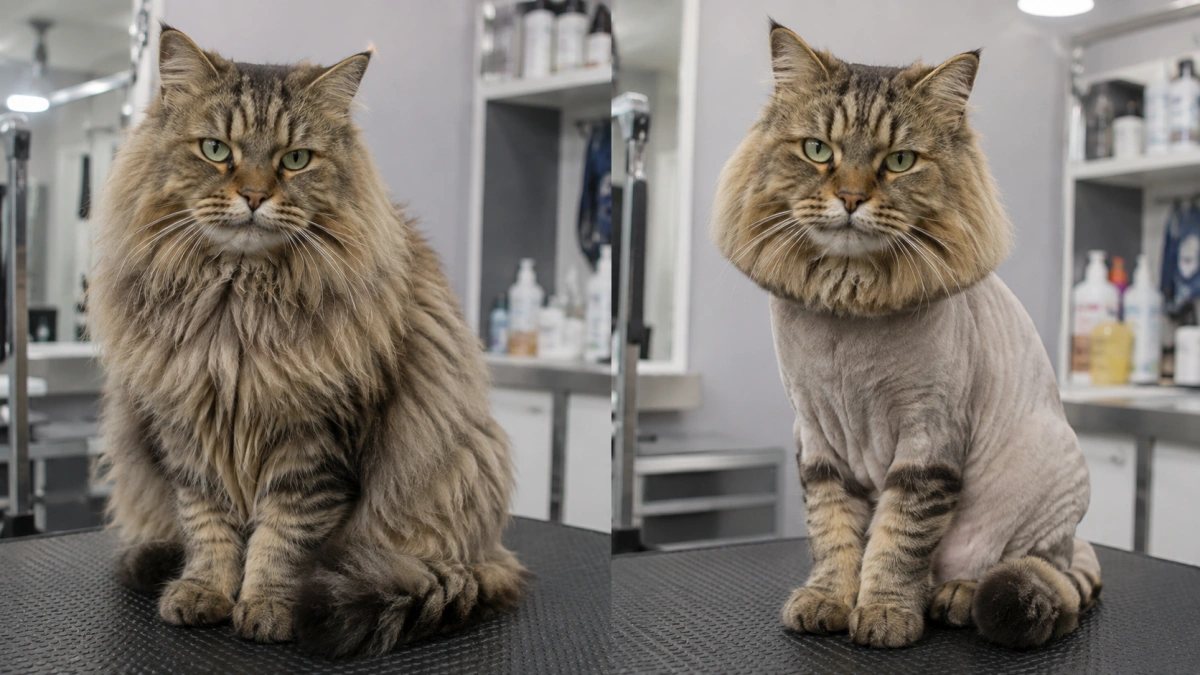
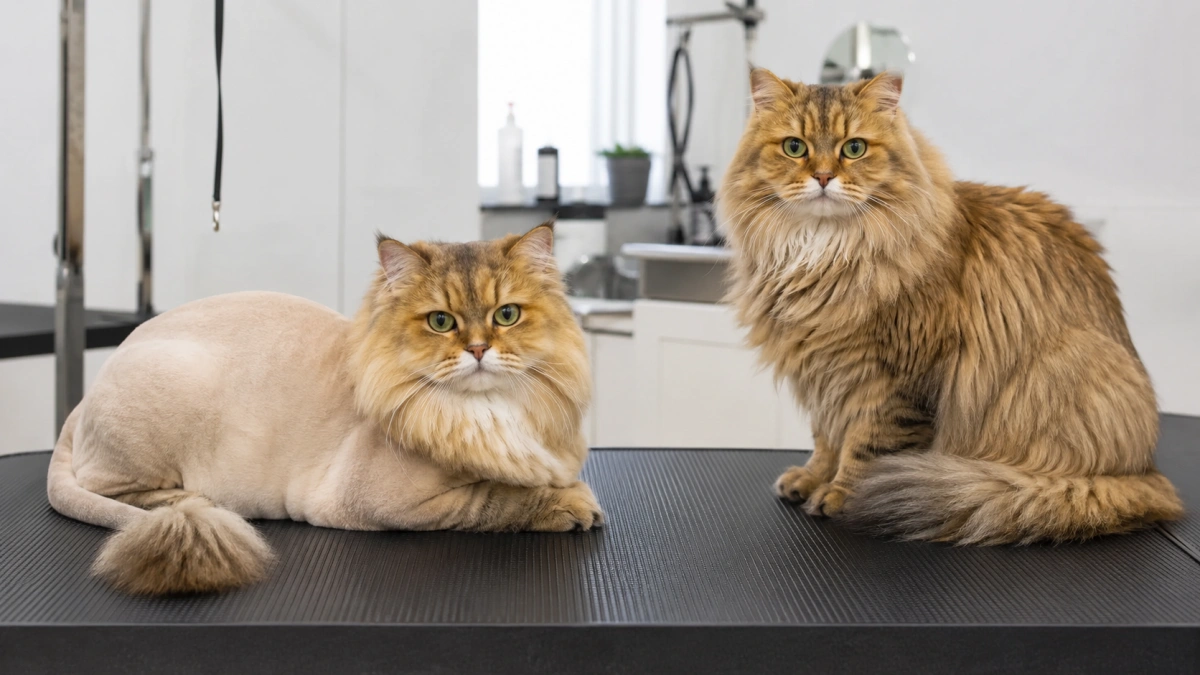
A lion cut is a cat grooming style in which most of the body coat is clipped short while fuller fur is left around the head and neck, lower legs, and usually part of the tail. The finished appearance resembles a small lion, which is where the name comes from.
Despite the dramatic look, a lion cut is not something every long-haired cat needs. It is most useful in specific situations, such as difficult coat maintenance, recurring severe matting, or when a cat can no longer maintain its own long coat effectively.
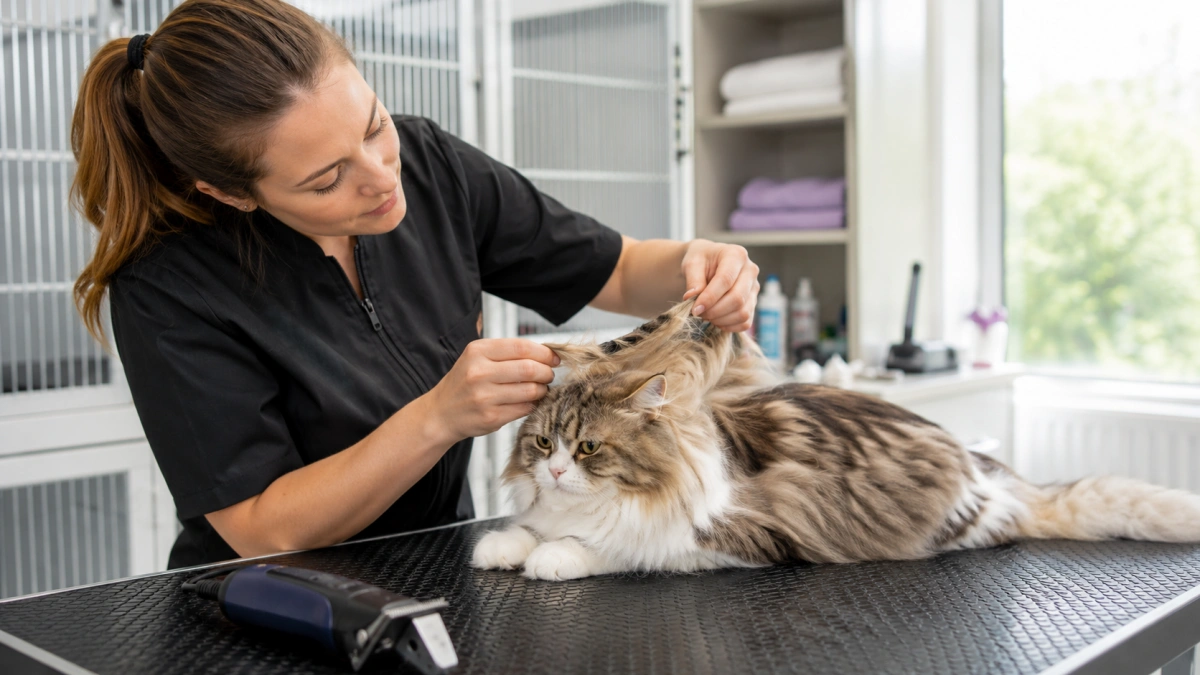
Because a lion cut requires extensive clipping across areas where feline skin can move and fold, it is one of the more advanced procedures involved in grooming a cat and is generally better handled by an experienced cat groomer or veterinary grooming team.
What Is a Lion Cut on a Cat?
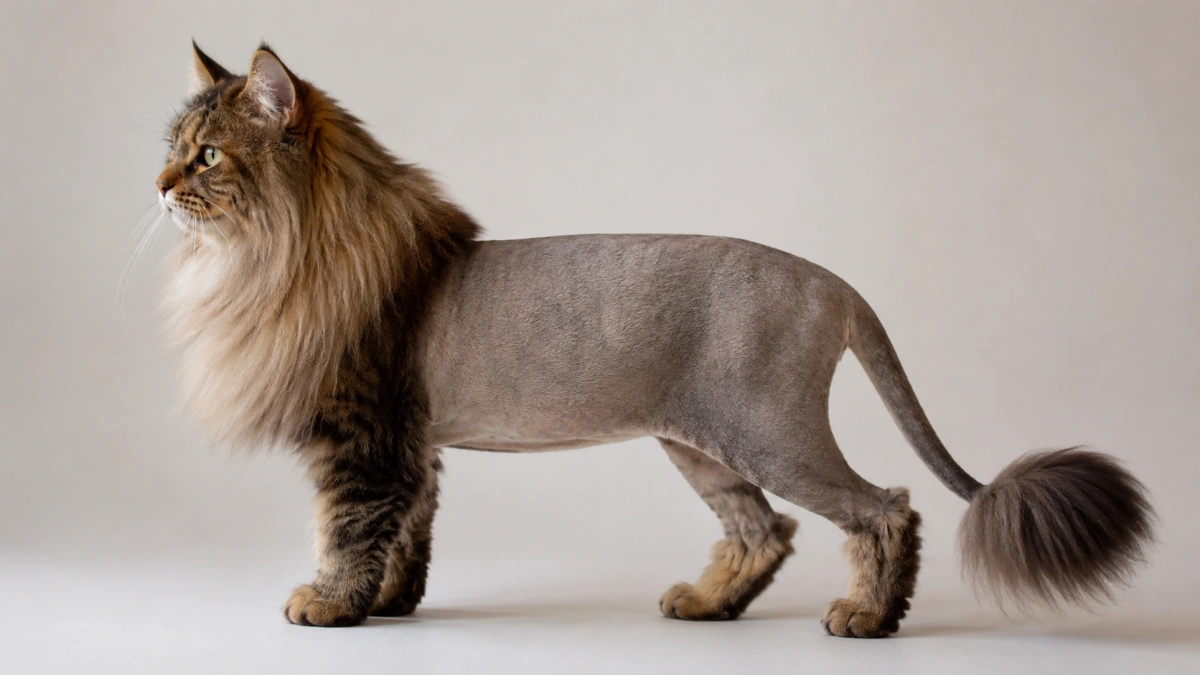
The basic lion cut shortens most of the coat across the body while preserving selected areas of longer fur.
A typical version leaves:
- Full fur around the head and neck
- Short fur across most of the torso
- Fuller fur around the lower legs or paws
- A fuller tail tip or sometimes more of the natural tail coat
Exact styling varies between groomers and depends on the cat’s coat condition, temperament, and why the haircut is being performed.
Why Do Cats Get Lion Cuts?
There is no single reason. Some lion cuts are cosmetic, while others are chosen to make a difficult coat easier to maintain.
Severe or Recurrent Matting
Long-haired cats can develop mats when loose undercoat, friction, moisture, and movement cause hairs to bind together.
When matting becomes extensive, brushing may no longer be appropriate. Removing severely matted coat can provide a fresh starting point for future coat maintenance.
A Cat Cannot Maintain Its Own Coat
Cats normally perform a large amount of their own grooming. Age, mobility limitations, body condition, or other problems can sometimes make it difficult for a cat to reach certain areas.
If a cat suddenly stops maintaining its coat, however, the first step should be understanding why rather than simply shaving the problem away.
Repeated Problems With a Long Coat
Some owners struggle to keep up with a very dense or long coat despite regular brushing. A shorter coat can temporarily make maintenance simpler.
Sanitation Problems
Long fur around the hindquarters can sometimes trap litter or waste. In many cases a limited sanitary trim is enough and a full lion cut may be unnecessary.
Does a Long-Haired Cat Need a Lion Cut in Summer?
Usually not simply because the weather is warm.
A cat’s coat serves functions beyond appearance, and healthy long-haired cats do not routinely need to be shaved every summer.
Instead of assuming that a shorter coat automatically keeps a cat safer in heat, focus on normal heat-management measures such as access to shade, indoor cooling, water, and avoiding dangerous temperatures.
A lion cut may still be considered during warm months if there is another genuine grooming reason, such as severe matting, but summer alone is not enough reason for most cats.
Potential Benefits of a Lion Cut
| Potential Benefit | When It Matters |
|---|---|
| Easier coat maintenance | Very long or difficult coats |
| Removes severely damaged or matted coat | When professional assessment supports clipping |
| Less long fur around the home temporarily | During coat regrowth |
| Easier hygiene management | Some cats struggling with rear-coat cleanliness |
| Fresh start for coat-care routine | Owners rebuilding regular brushing habits |
Possible Downsides of a Lion Cut
The Grooming Process Can Be Stressful
A lion cut takes substantially longer than a small sanitary trim. Clippers are used over a large area of the body, which may be difficult for a cat that dislikes handling, noise, or vibration.
The Skin Loses Some Coat Protection
Once much of the coat is shortened, the skin has less physical coverage from sunlight, scratches, and environmental contact.
This matters particularly for cats that spend time outdoors.
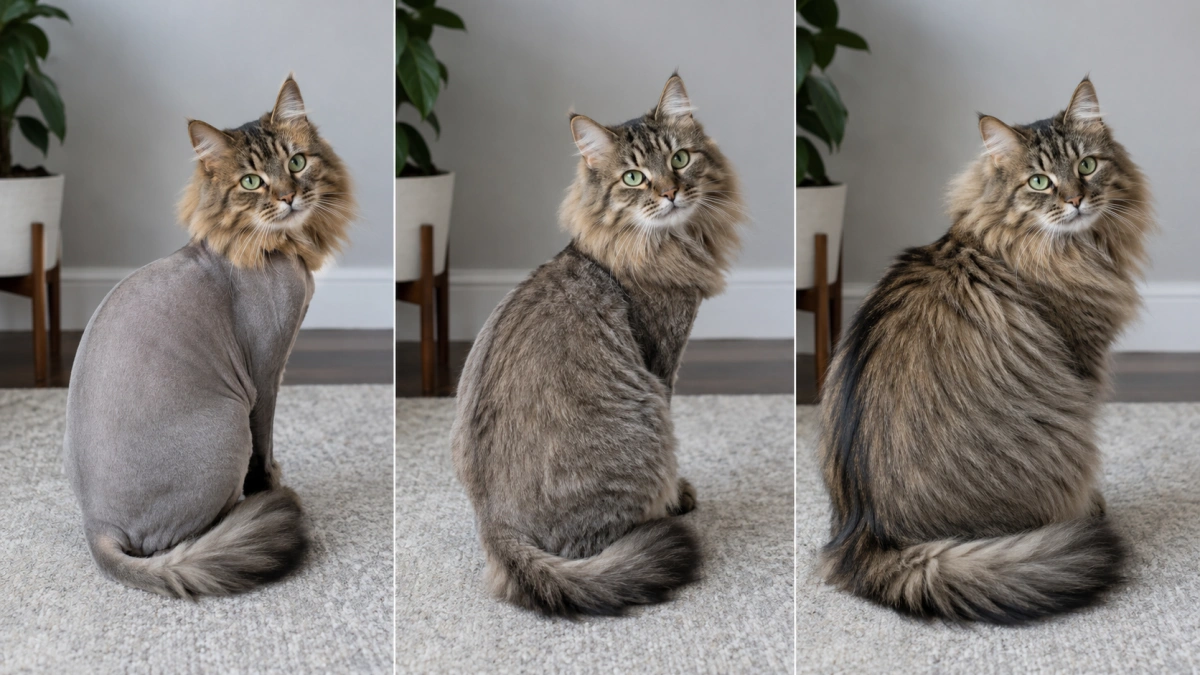
The Result Can Look Uneven During Regrowth
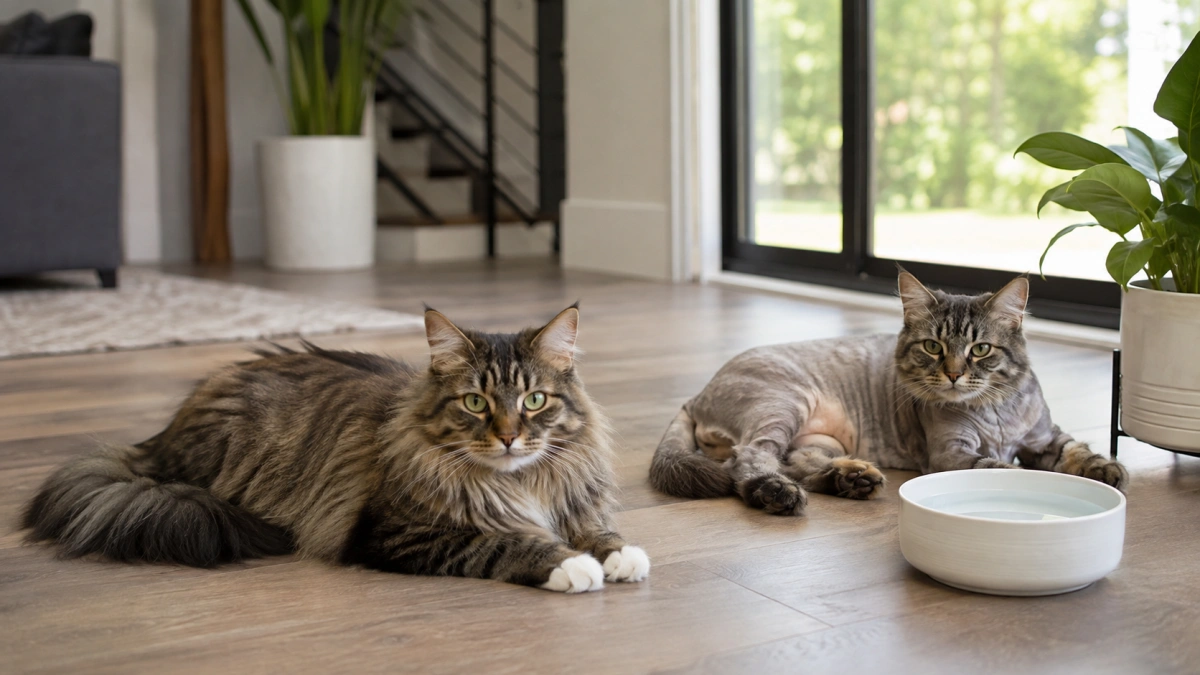
Cat fur does not instantly return to its original appearance. Different sections can look uneven while the coat is growing back.
Clipping Has Injury Risk
Cats have loose, flexible skin, and body contours around the belly, legs, armpits, and groin require careful technique.
This is one reason extensive clipping should not be treated like an ordinary human haircut.
Is a Lion Cut Safe for Cats?
A lion cut can be performed safely by an experienced professional, but safety depends on the cat, coat condition, handling, tools, and technique.
Some cats tolerate professional grooming reasonably well. Others become too stressed or defensive for an extensive clip to continue safely.
A groomer may stop the appointment if the cat’s behavior makes clipping unsafe. In some cases, veterinary involvement may be appropriate rather than forcing the procedure.
Should You Give Your Cat a Lion Cut at Home?
For most inexperienced owners, a full lion cut is not a good beginner grooming project.
It requires much more than moving clippers across the back. The groomer has to work around loose skin, legs, belly, armpits, hindquarters, tail, and changing body contours while the cat may move unexpectedly.
If you are only researching equipment, our cat grooming clippers guide explains the difference between clippers and trimmers and where home clipping becomes more difficult.
Lion Cut vs Sanitary Trim
A full lion cut is sometimes unnecessary when the real problem exists only around the rear.
| Feature | Lion Cut | Sanitary Trim |
|---|---|---|
| Area trimmed | Most of the body | Small hygiene area |
| Coat change | Major | Minimal |
| Main purpose | Overall coat management | Hygiene |
| Grooming time | Longer | Shorter |
| Skill required | High | Still requires care |
What Happens at a Professional Lion Cut Appointment?
Exact procedures differ, but a professional groomer will generally assess the cat and coat before beginning.
Important considerations include:
- How tightly the coat is matted
- Where mats are located
- The cat’s tolerance for handling
- Skin condition beneath the coat
- Whether a full cut is actually necessary
- Which areas should remain longer
A responsible professional may recommend a different trim if a full lion cut would provide little benefit.
What Will Your Cat Look Like After a Lion Cut?
Expect a dramatic change.
The body will look much slimmer because the long coat often adds significant visual volume. The head may appear disproportionately large at first because the mane remains full while the torso is clipped short.
This appearance is normal for the style.
How Long Does a Lion Cut Last?
There is no single regrowth timeline that applies to every cat.
Regrowth depends on coat type, genetics, age, health, season, and how short the coat was clipped.
You should expect the appearance to change gradually over weeks and months rather than return to full length quickly.
Can the Coat Grow Back Differently?
During regrowth, color, texture, and length can appear different from the original coat, particularly before the full growth cycle has completed.
Temporary unevenness does not necessarily mean something is wrong. However, if coat regrowth appears abnormal or the skin becomes irritated, ask your veterinarian rather than assuming it is only a grooming issue.
How to Care for a Cat After a Lion Cut
Keep the Cat Indoors
A shortened coat provides less environmental and sun protection. Keeping the cat indoors is the simplest way to control those exposures.
Watch the Skin
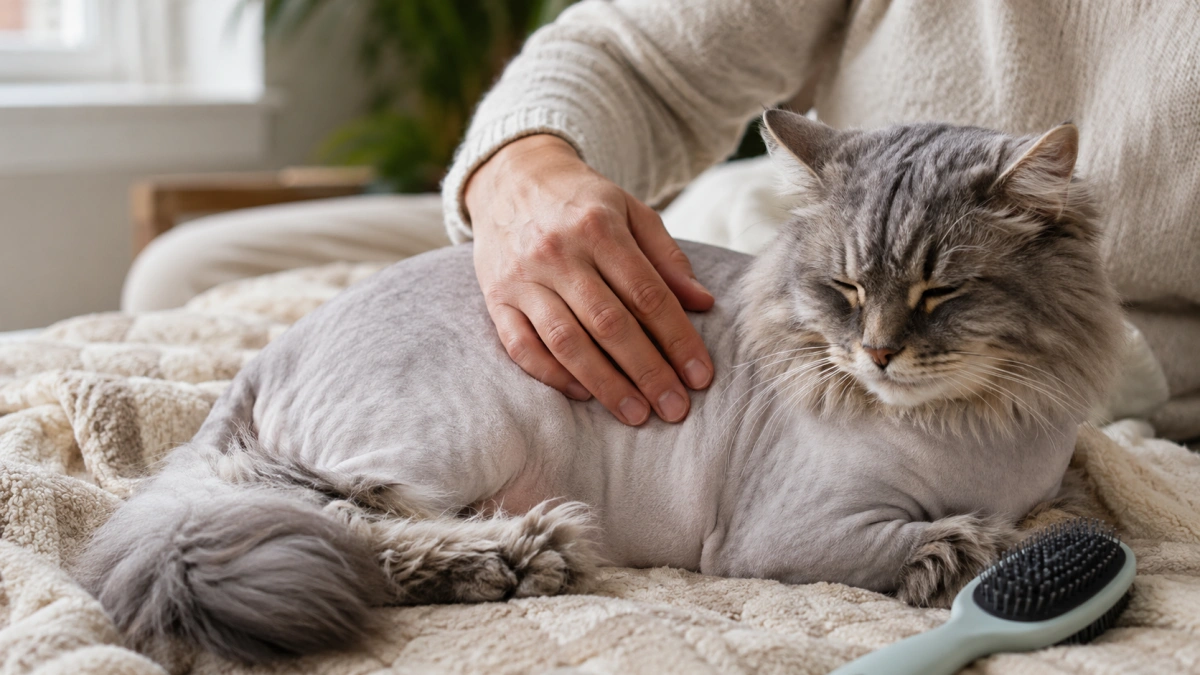
With much of the coat removed, skin is easier to see. Check for irritation, redness, or areas your cat repeatedly licks or scratches.
Restart Grooming Before the Coat Becomes Long Again
Do not wait until the coat has fully regrown and begun tangling before restarting maintenance.
Gentle brushing during regrowth can help rebuild a routine that prevents the same coat problem from returning.
Keep Handling Positive
If the grooming appointment was stressful, keep follow-up coat handling short and calm rather than immediately beginning long brushing sessions.
Who May Benefit Most From a Lion Cut?
- Long-haired cats with recurring severe mats
- Cats unable to maintain parts of their coat adequately
- Cats whose coat management has become impractical despite appropriate brushing
- Selected cats with hygiene problems involving a large amount of long fur
Who Probably Does Not Need One?
- A healthy long-haired cat with a manageable coat
- A cat being shaved only because summer has arrived
- A short-haired cat without a coat-management problem
- A cat whose minor rear hygiene problem could be solved with a smaller trim
- A highly stressed cat when the grooming benefit is mainly cosmetic
Questions to Ask a Cat Groomer
- How often do you perform lion cuts on cats?
- Do you specialize in feline grooming?
- Does my cat actually need a full lion cut?
- Could a smaller trim solve the problem?
- How do you handle cats that become stressed?
- What coat length will remain?
- What aftercare do you recommend?
Final Thoughts
A lion cut can be a useful grooming option, but it should solve a real coat-management problem rather than be treated as a routine haircut every long-haired cat needs.
Severe matting, difficulty maintaining a long coat, and certain hygiene problems are reasonable situations to discuss with an experienced cat groomer. Hot weather alone usually is not.
When a full-body clip is genuinely appropriate, professional grooming offers better control over the difficult areas and gives you an opportunity to restart coat maintenance before the long fur grows back.